We Need to Talk About Anita
Posted 8 Jul 2026-2
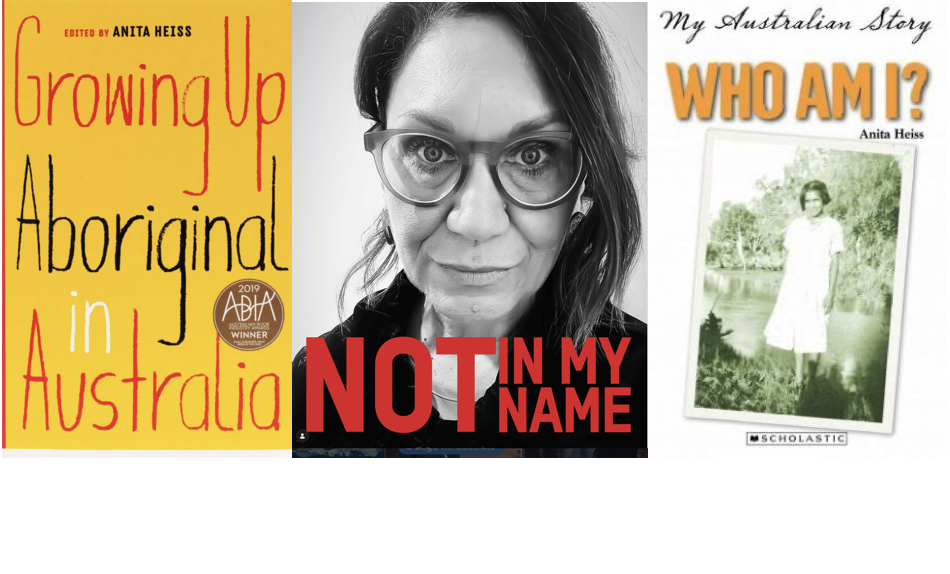
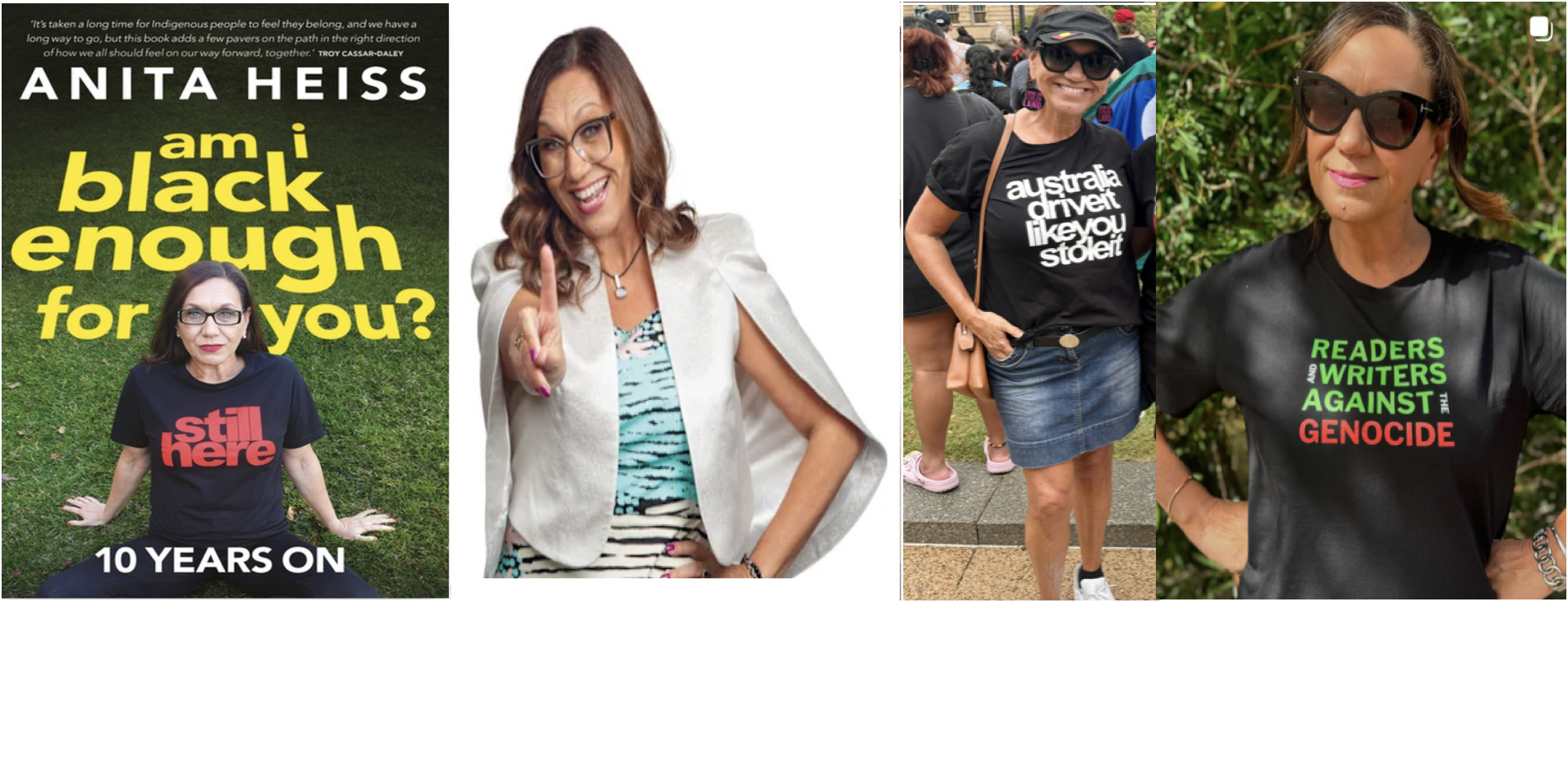
Dr Anita Heiss is a very successful Wiradyuri Aboriginal Australian writer. She is the:

author of [more than twenty] books of non-fiction, historical fiction, commercial women’s fiction, poetry and many articles on social commentary and travel. She is a regular guest at writer’s festivals and travels internationally performing her work and lecturing on Aboriginal literature. She is a lifetime ambassador of the Indigenious Literacy Foundation and a proud member of the Wiradyuri nation of Central NSW. (Source)
She describes herself, “affectionately”, as:
“an urban, once-beachside-now-riverside Blackfella, a concrete Koori with Westfield Dreaming and I apologise to no-one” (Reference 1);
and she gets very upset, perhaps understandably, but then again perhaps not, when commentators such as Andrew Bolt cast aspersions on her motives when she promotes her views on her race, politics and career:
Meet now Associate Professor Anita Heiss, who says she’s a “member of the Wiradjuri nation” ... Heiss’s father was Austrian, and her mother only part-Aboriginal. What’s more, she was raised in Sydney and educated at Saint Claire’s Catholic College. She, too, could identify as a member of more than one race, if joining up to any at all was important. As it happens, her decision to identify as Aboriginal, joining four other “Austrian Aborigines” she knows, was lucky, given how it’s helped her career. Heiss not only took out the Scanlon Prize for Indigenous Poetry, but won plum jobs reserved for Aborigines at Koori Radio, the Aboriginal and Torres Strait Islander Arts Board and Macquarie University’s Warawara Department of Indigenous Studies. (Reference 2: Bolt, 2009)
Heiss disputed this:
“What Mr Bolt failed to mention is that I am an established writer and highly qualified with a PhD in Media and Communication ... none of the jobs he mentioned were actually ‘reserved’ or identified Aboriginal positions, and the Koori Radio role was actually voluntary and unpaid.” (Reference 3: Heiss 2011)
In this series of posts titled, We Need to Talk About Anita, I will explore Dr Heiss’ writings, commentary and politics through the lens of her family’s ancestry and her upbringing. She has published many details of her own ancestry and her family’s history and woven these stories into narratives that explore her politics, her thoughts on race, racism and her fellow Australians, and her activist causes for Aboriginal and Palestinian peoples.
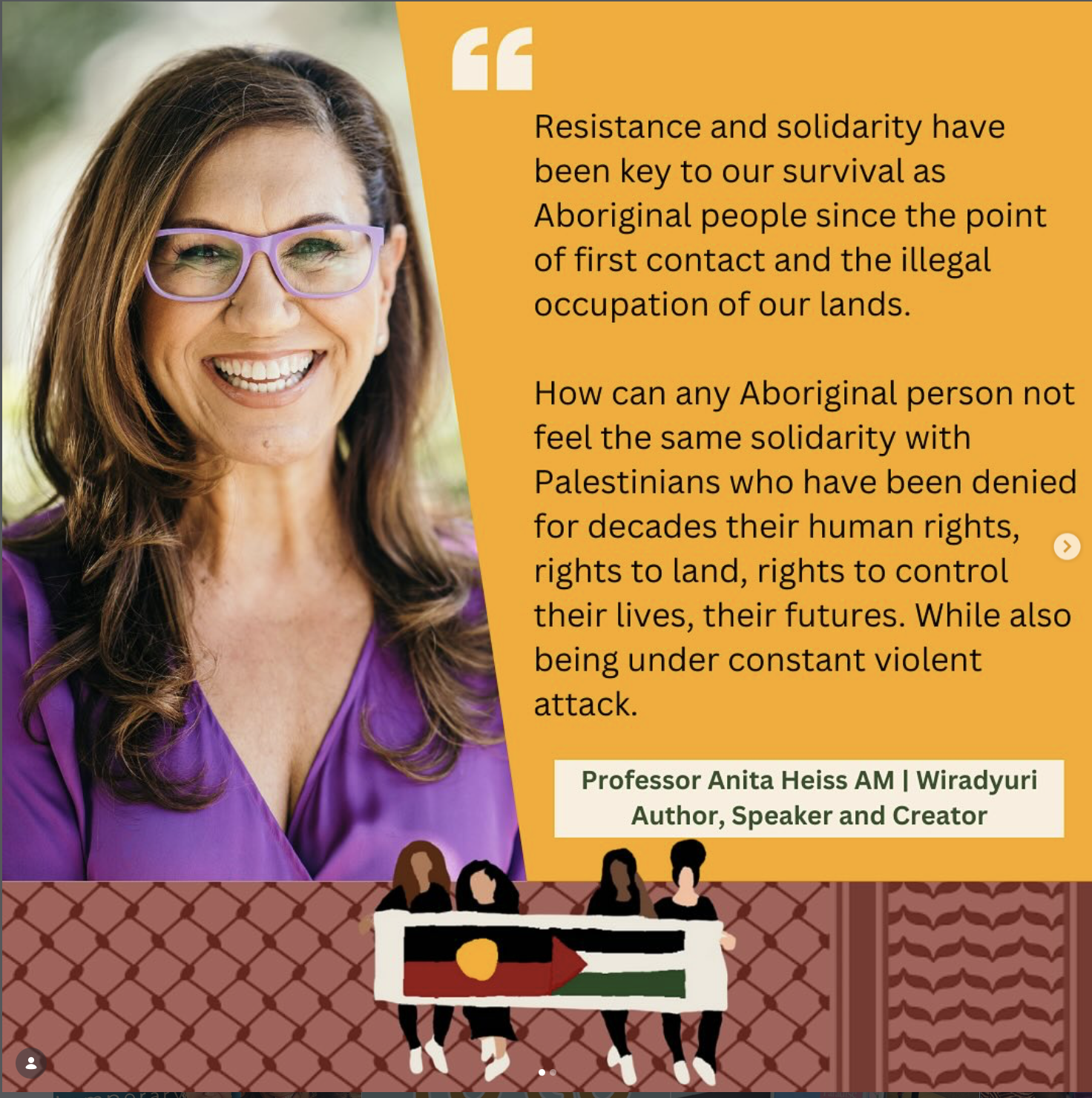
Dr Heiss’ family story is thus a perfect proxy to explore these issues, within debates about Australia’s history, given that she is a public figure and she has received various levels of public funding from the tax-payer for her work. This ensures that there will be a public interest aspect to my commentary and critiques. Additionally, she has offered up all these details of her family quite voluntarily; so obviously she would expect some critiques, such as mine, to be advanced from time to time and she cannot claim these critiques are an invasion of her privacy.
Just to be clear, I have nothing but admiration for Dr Heiss personal commitment to her career - she is very professional at her craft and deserves all the success she has achieved with her reading public. She must have worked incredibly hard to achieve her current professional status. Nothing in these posts should be seen to be disparaging of her personally.
Where I have an issue however, is with her political work and commentary, and the disparaging comments and narratives she appears to promulgate about Australia.
I will provide critiques that I believe show her historical narratives and political writings and commentary are in fact deeply unfair to Australia and the Australians.
I will provide evidence and arguement that her work contains misinformation and her narratives appear to be devised to denigrate Australian governments and our society and history with regard to the treatment of our fellow Aboriginal Australians. More worryingly still is that I believe her work appears to have potentially deep seated, racialist undertones that she probably is not even aware.
Ideological capture can have that effect on people - when we are young, of goodwill and starry-eyed, and trying to find our way in this thing called ‘life’, we sometimes embark on, or are beguiled by others to follow, a particular path that we are led to believe is virtuous. However, at some point, in pretty much every path in life, we come to a fork in the road - a fork where we have to make a choice, a very important, internal, moral choice.
One fork leads to an immediate gain, and maybe ultimately, fame and fortune as well. But it requires that we compromise our values in some way - or we take onboard new ideological values that in the past we may have shunned. Either way, we are left carrying a seed in our head of a mistake, a dishonesty, a small white, or Noble, lie, an important omission, an injustice, an hypocrisy or a moral conflict.
The other fork available to us leads to a path that is nondescript. We can’t see where it will ultimately take us. Although this path looks poor, and we may not have that much to gain, it does at least look like an honest track. A track along which we can sleep peacefully each night as we have not compromised ourselves for the sake of an ideology or an ill-gotten gain.
So, come stand with me at the forks in Anita’s literary roads, where we need to talk about Anita, and have a conversation about the choices she may have taken in her quest for “Aboriginal writing and literature as a political tool”.
References
Heiss, A., am i black enough for you - 10 years on, Vintage Books, 2022, p2. Note: Westfield is a large chain of Australian shopping centres.
Bolt, 2009: Andrew Bolt, ‘It’s so hip to be black’, Herald Sun, 15 Apr 2009.
Heiss 2011: Anita Heiss, ‘Bolt decision: Anita Heiss hopes for ‘more responsible media”, Crikey, 28 Sept 2011.