Mea Culpa at the University of Sydney
Posted 30 June 2026
Alleged Defamation of Mr Roger Karge 26 May 2026
Mr Roger Karge Correction and Apology
On Thursday 1 May 2025, Professor Jakelin Troy presented a workshop titled Insider Indigenous Anthropology: a personal perspective, which contained statements which may have been understood to be about Roger Karge, including that he is a neo-Nazi and would carry out violence towards Aboriginal people or encourage others to do so.
Professor Troy did not intend to identify Mr Karge in this way and these allegations were incorrect.
Professor Troy and the University of Sydney apologise to Mr Karge for any hurt or distress these statements may have caused.
A Correction and Apology admitted to by the University of Sydney, 26/5/2026
In modern Australia, the civility of public discourse seems to be disappearing at a fast rate. One particular area of concern is in the universities. The public expect highly paid and educated academics to be exemplars of good manners, capable of robust yet civil debate about the important intellectual matters facing our society.
This post is about my very small, personal experience in trying to hold to account academics at supposedly one of Australia’s oldest and finest institutions, the University of Sydney. The post is also intended to be an introduction to the legal complexities of defamation law for any readers who may be tempted to undertake a defamation action themselves.
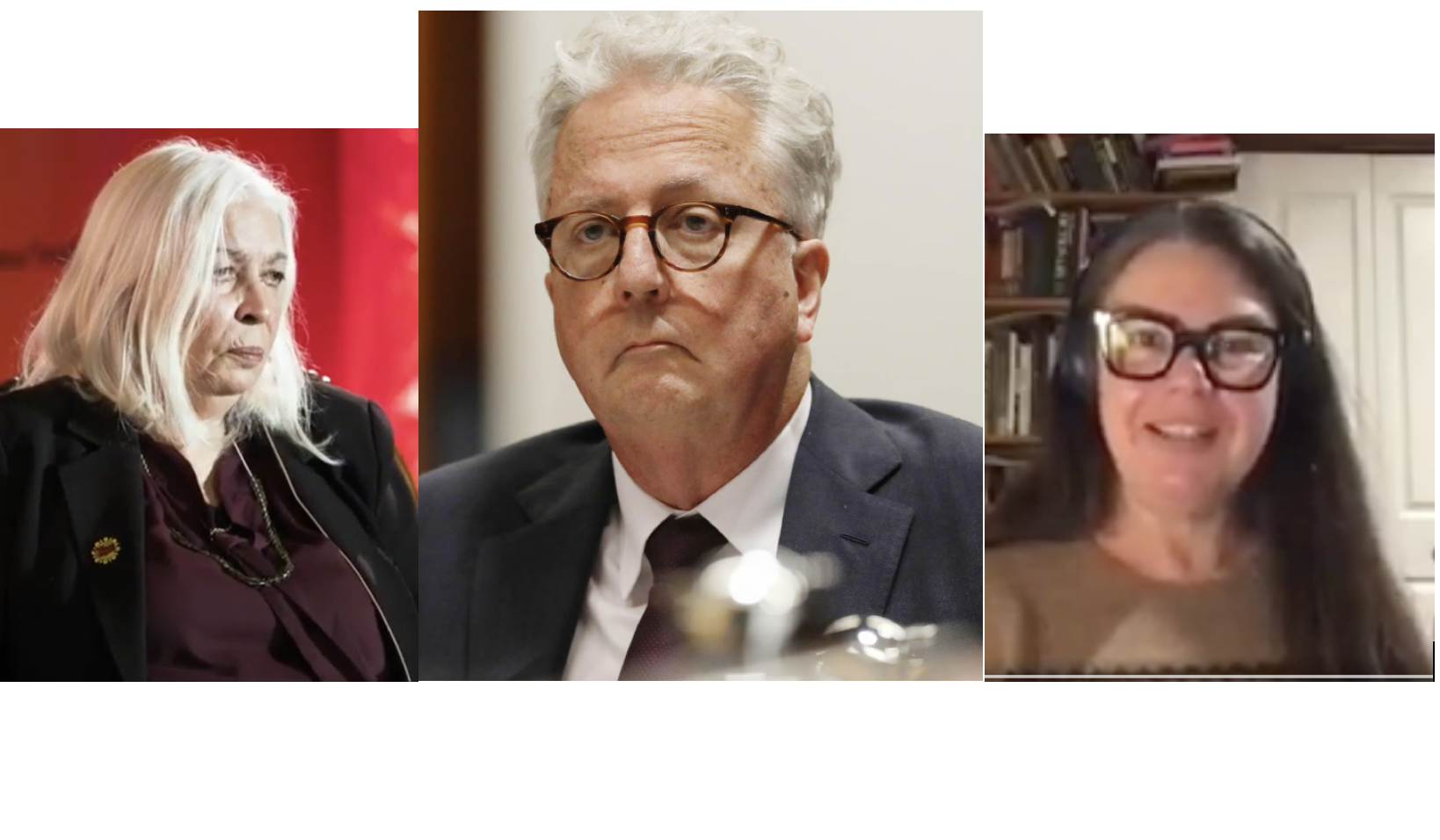
Professor Marcia Langton AO Goes Too Far
On 3 August 2023, prominent anthropologist and geographer Professor Marcia Langton AO gave a keynote address on the Indigenous Voice to Parliament and the upcoming Voice referendum.
Professor Langton was joined on stage for a conversation hosted by the self-proclaimed Aboriginal woman, Professor Lisa Jackson Pulver, Deputy Vice-Chancellor, Indigenous Strategy and Services at the University of Sydney. [who appears to have been mistaken about her Aboriginal ancestry]
During her talk, Professor Langton AO made, to my mind, very derogatory, and possibly defamatory, comments about this website, Dark Emu Exposed, and by implication myself, as the editor of that website.
In front of her high-powered audience, which included the university’s Vice-chancellor, Mark Scott, and many other luminaries who no doubt would consider themselves to be from the upper echelons of Australia’s virtuous, intellectual class, the professor spoke of:
Trump-like cult groups, and if you read their garbage on Dark Emu Exposed, on the Advance Australia and various other sites, you try to think about what kind of people write this garbage.
I think of them as, you know, sort of old stock traders that are losing money sitting around in their underpants in their mother's basement. [titters from the audience] [listen from 01:00 in video below]
After this example of crude behaviour that involved language unbecoming to a professional academic, it was decided to monitor events at the University of Sydney more closely in the hope of finding something that could be used to try to educate the university to understand this level of public discourse was not acceptable to Australians.
Professor Jaky Troy Goes Beyond the Pale
Definition: "beyond the pale" means behavior, actions, or ideas that are entirely unacceptable, improper, or outside the bounds of what society deems reasonable and civilized
On 1 May 2025, a self-proclaimed, Ngarigu Aboriginal woman, Professor Jaky Troy [it appears she is mistaken to belive that she is of Aboriginal ancestry] told a lecture theatre that,
there are four neo-Nazis who started a blog called Dark Emu Exposed. Don't click on it. It just gives them more credibility, I think … But their mission is to exterminate Aboriginal people. And they have said if they can't destroy us by destroying our reputations, they will, um we should be shot. It's that simple.
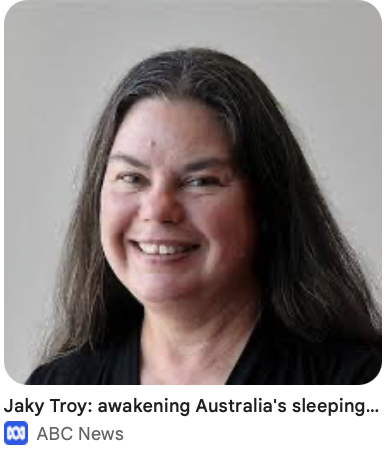
Figure 1 - Professor Jaky Troy University of Sydney. Source ABC
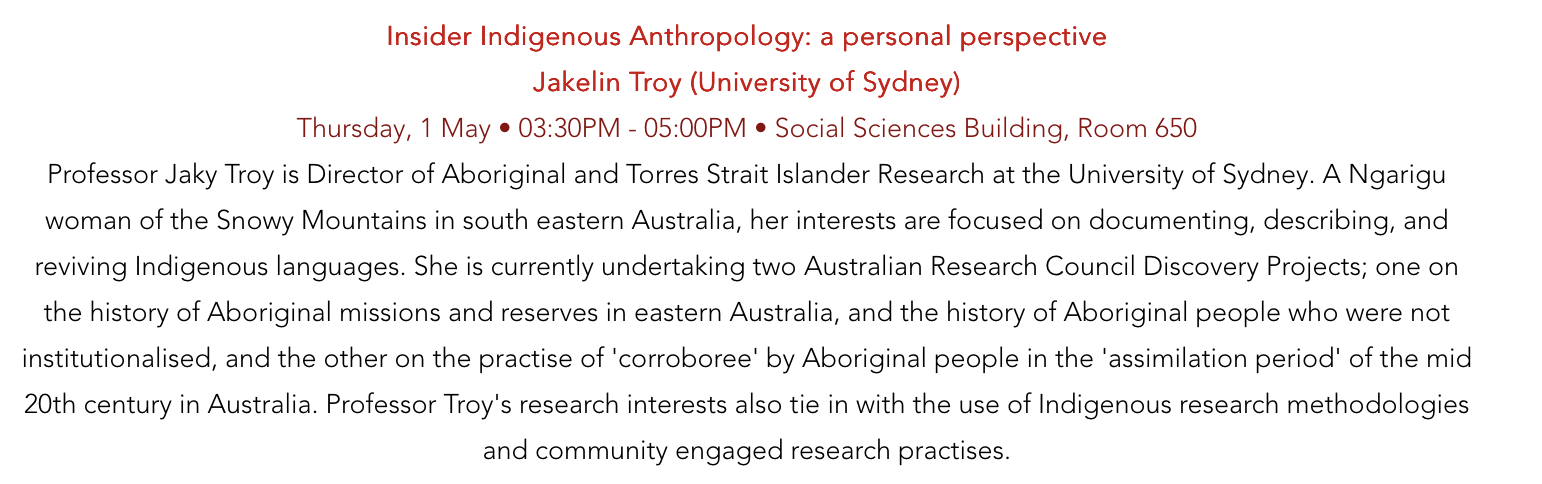
Figure 2 - Announcement of Prof Troy’s Lecture
I had been sent the audio recording of the lecture by a ‘real’ Aboriginal woman in the audience who was appalled at Professor Troy’s commentary [see links below].
Needless to say there was clearly a case of potential defamation by Troy’s commentary against Dark Emu Exposed ,and by implication against me myself, for being one of the alleged “neo-Nazis” on a mission to shoot Aboriginal people.
Readers might find the following legal to-and-fro information interesting in regard to defamation proceedings, which necessarily start with the issuance of a Concerns Notice by the aggrieved party (me) against the potential defamer (Troy and the University of Sydney).
Fortunately, the professional legal team engaged by the University were able to advise their clients that a Correction and Apology plus all my costs was in order, which I accepted based on the hope that the University and one of its academics had learnt the lesson that the public expect a much higher standard of professional conduct from the University of Sydney and its staff. (See Figure 3).
I was also mindful of my late father’s wise advice - “if you go to court and win, you lose. If you lose, you are rooted.”
Anatomy of a Defamation Case - The Concerns Notice
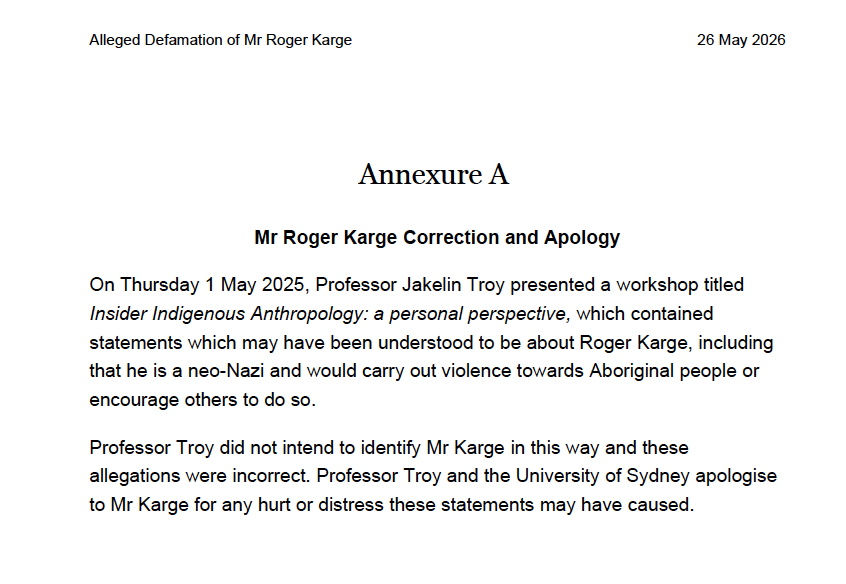
Figure 3 - Result of the succesful settlement of Defamation Concerns Notice against the University of Sydney
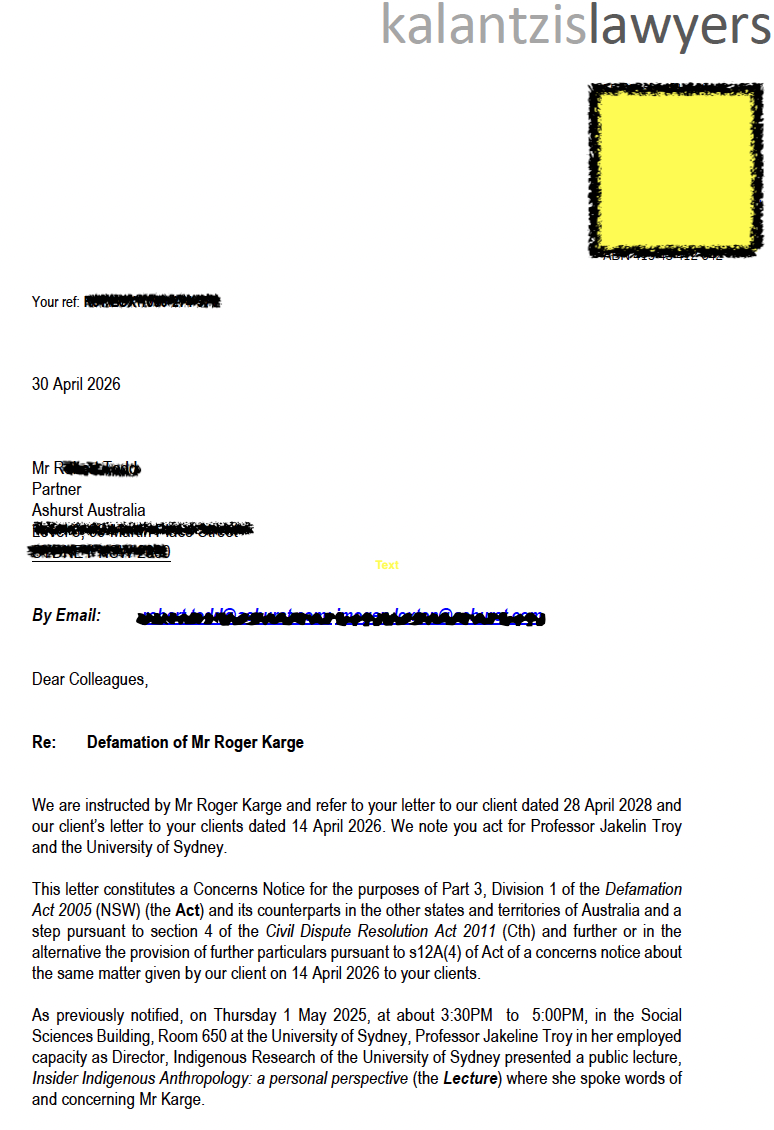
Figure 4a - My Concerns Notice p1
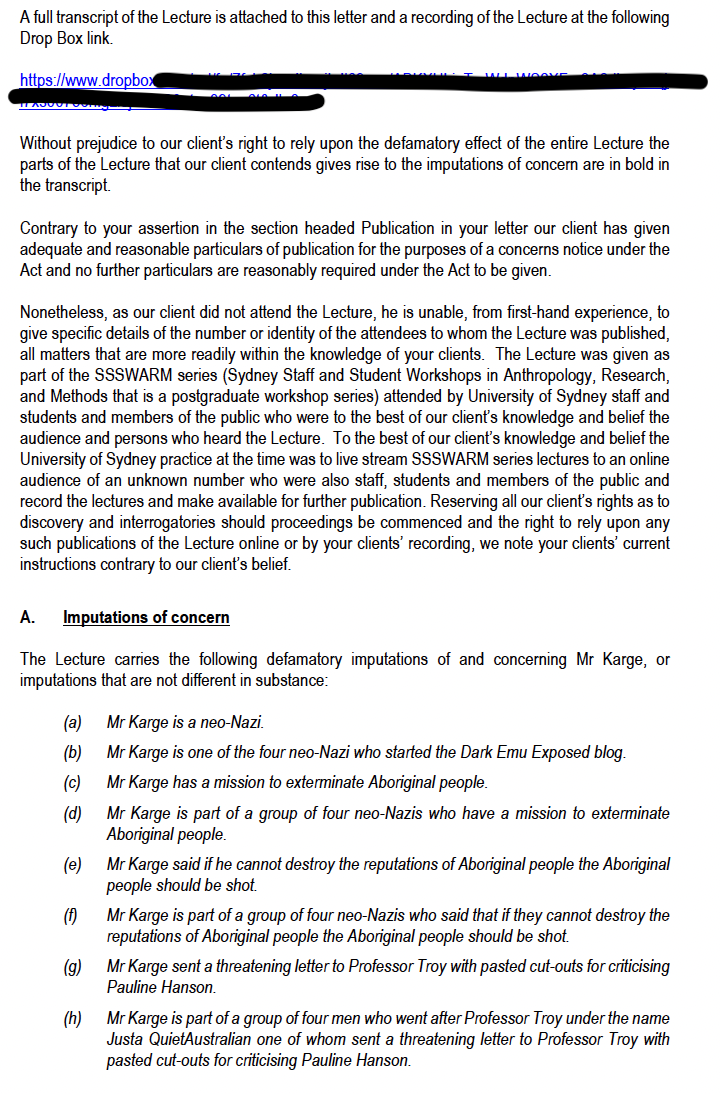
Figure 4b - My Concerns Notice p2
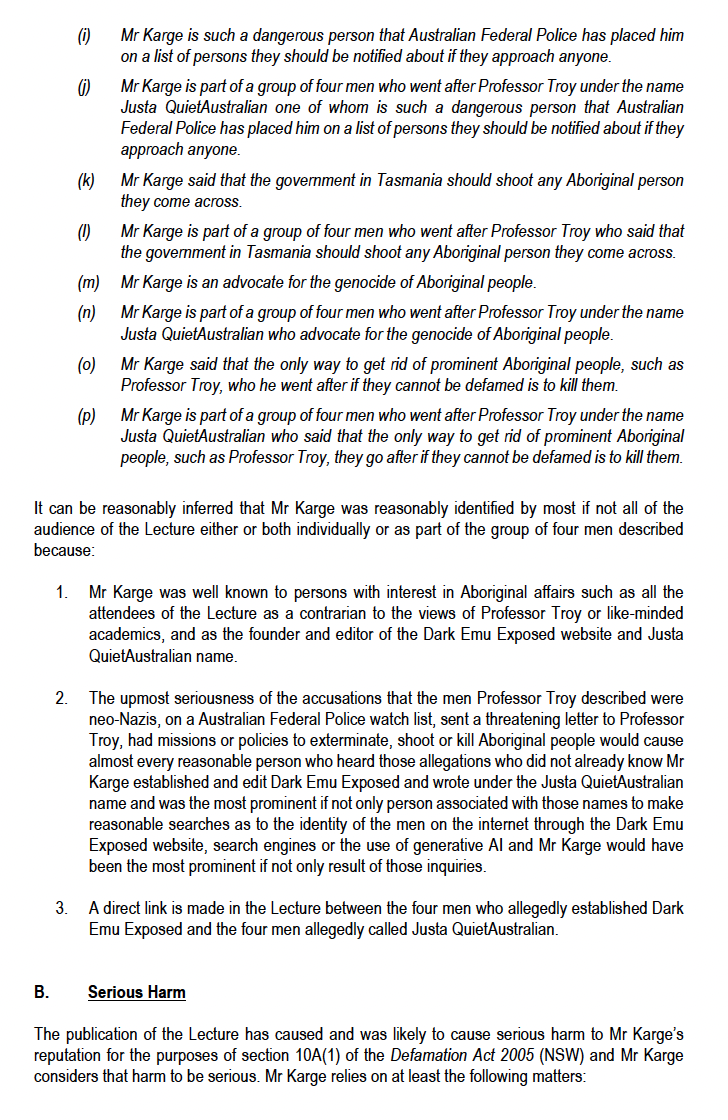
Figure 4c - My Concerns Notice p3
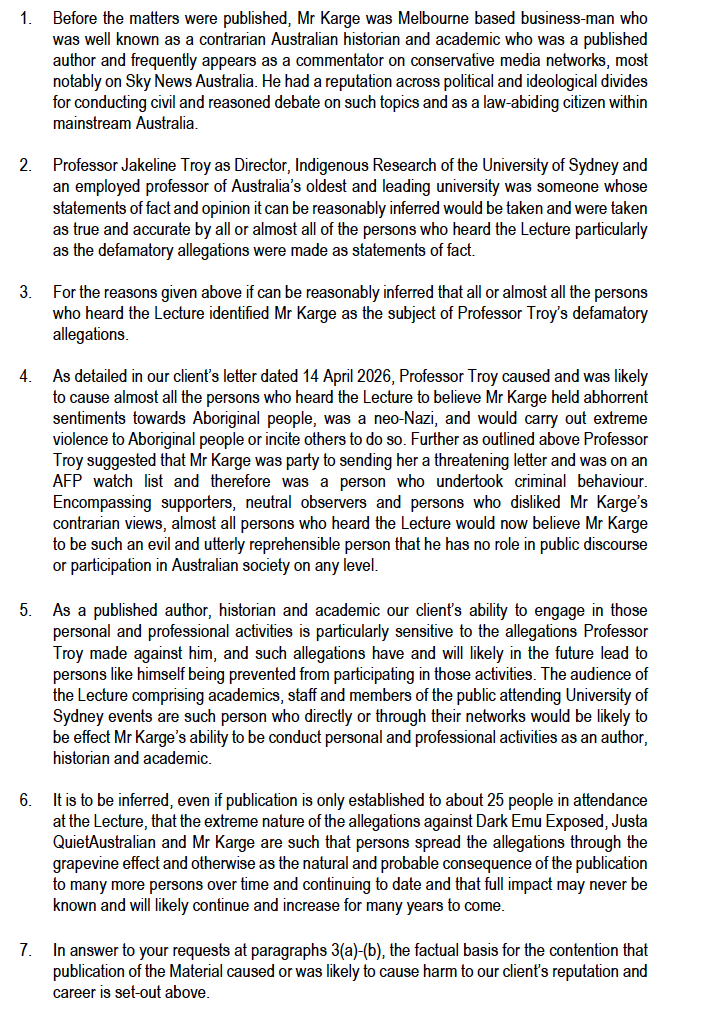
Figure 4d - My Concerns Notice p4
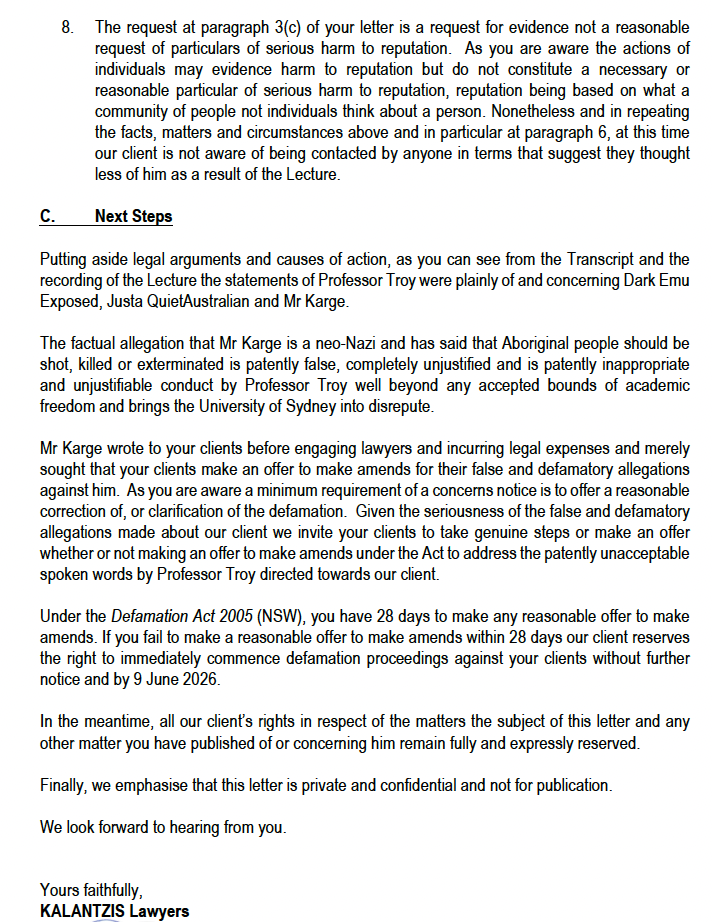
Figure 4e - My Concerns Notice p5
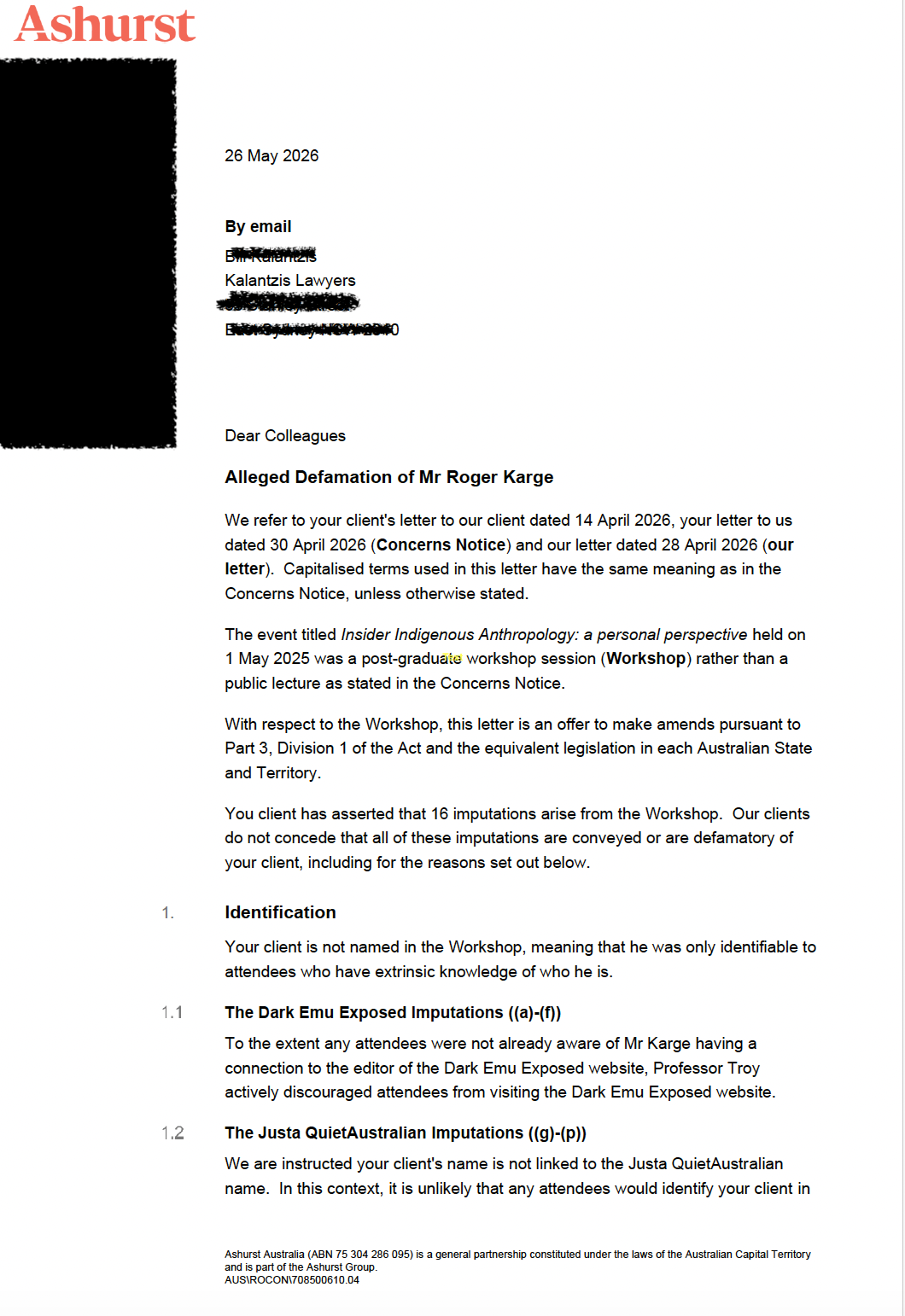
Figure 5a - Professor Troy and University of Sydney’s Response and Offer p1
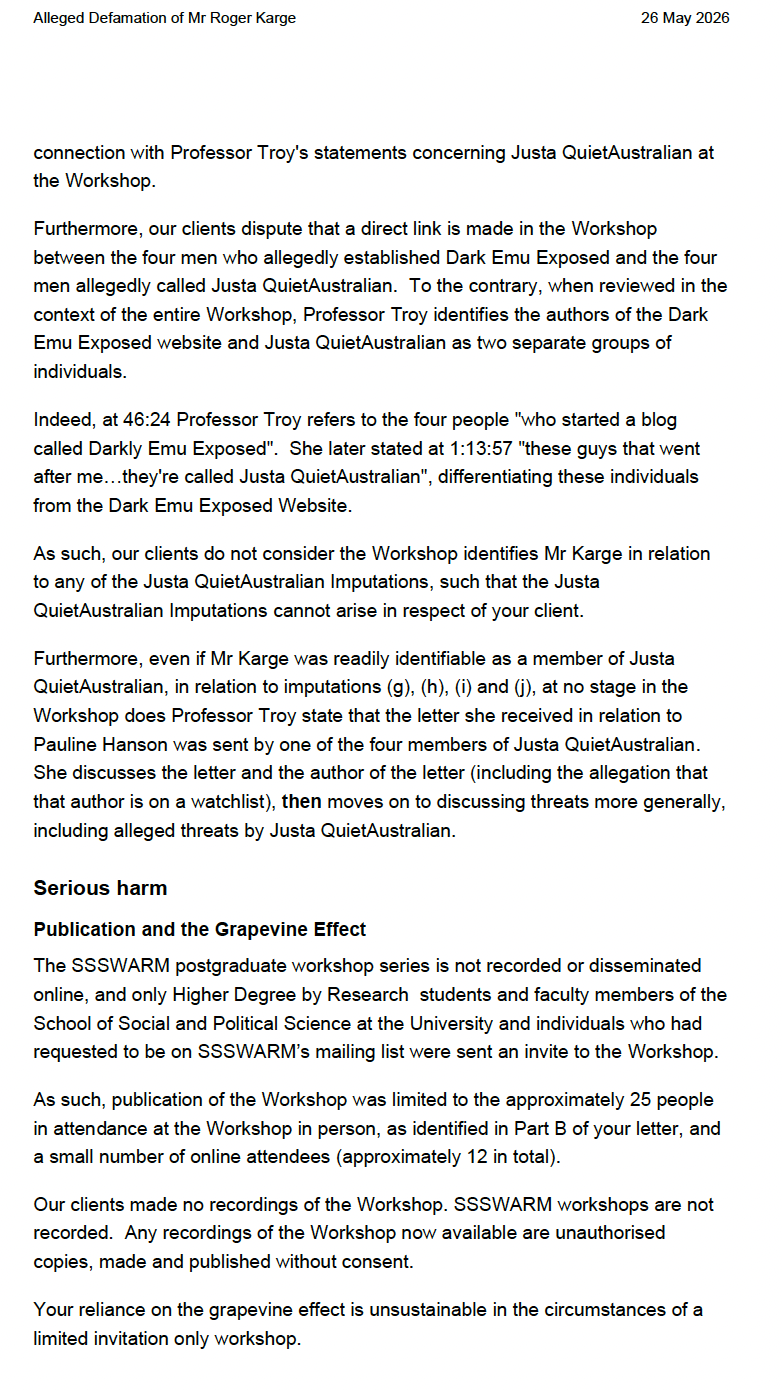
Figure 5b - Professor Troy and University of Sydney’s Response and Offer p2
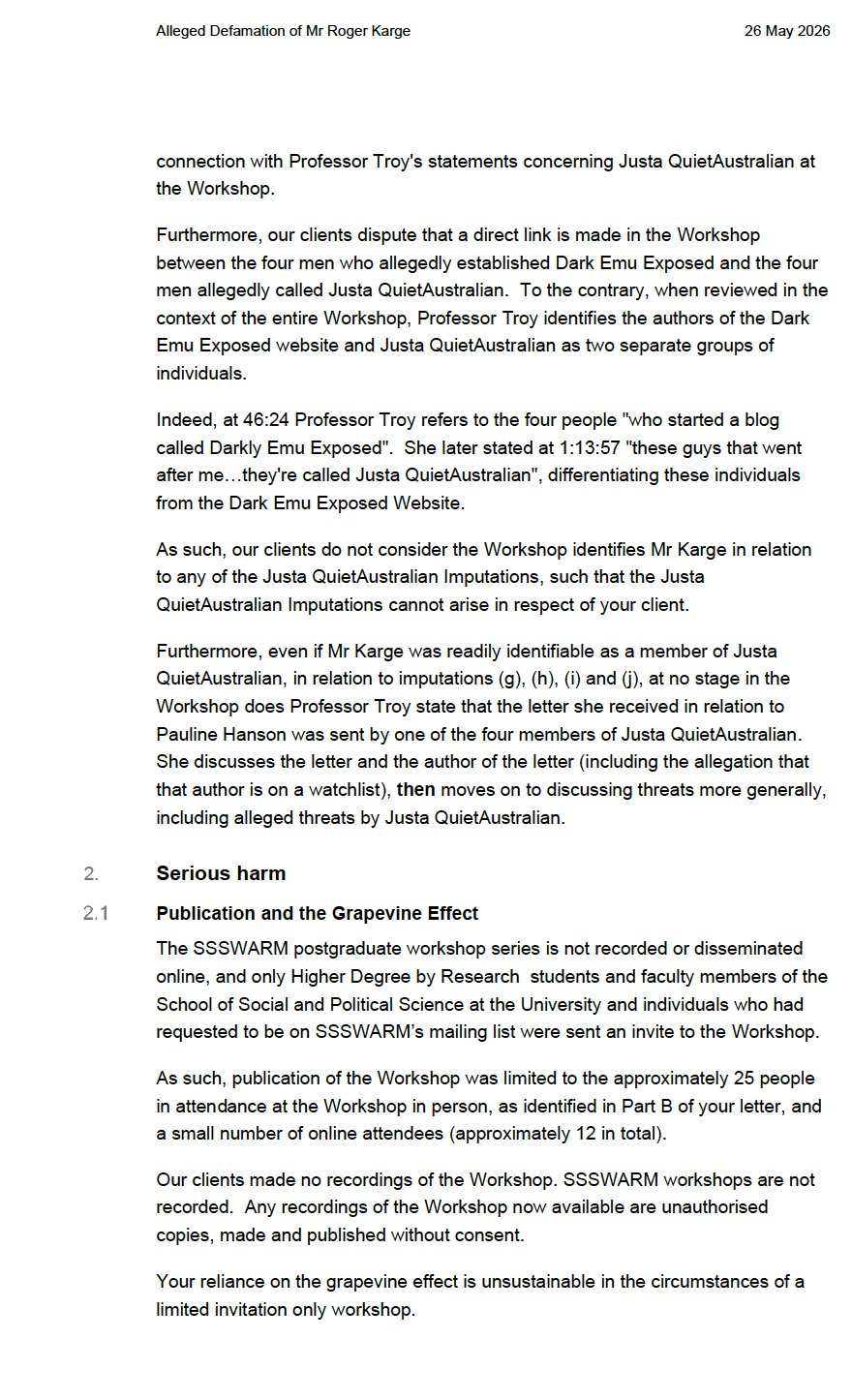
Figure 5c - Professor Troy and University of Sydney’s Response and Offer p3
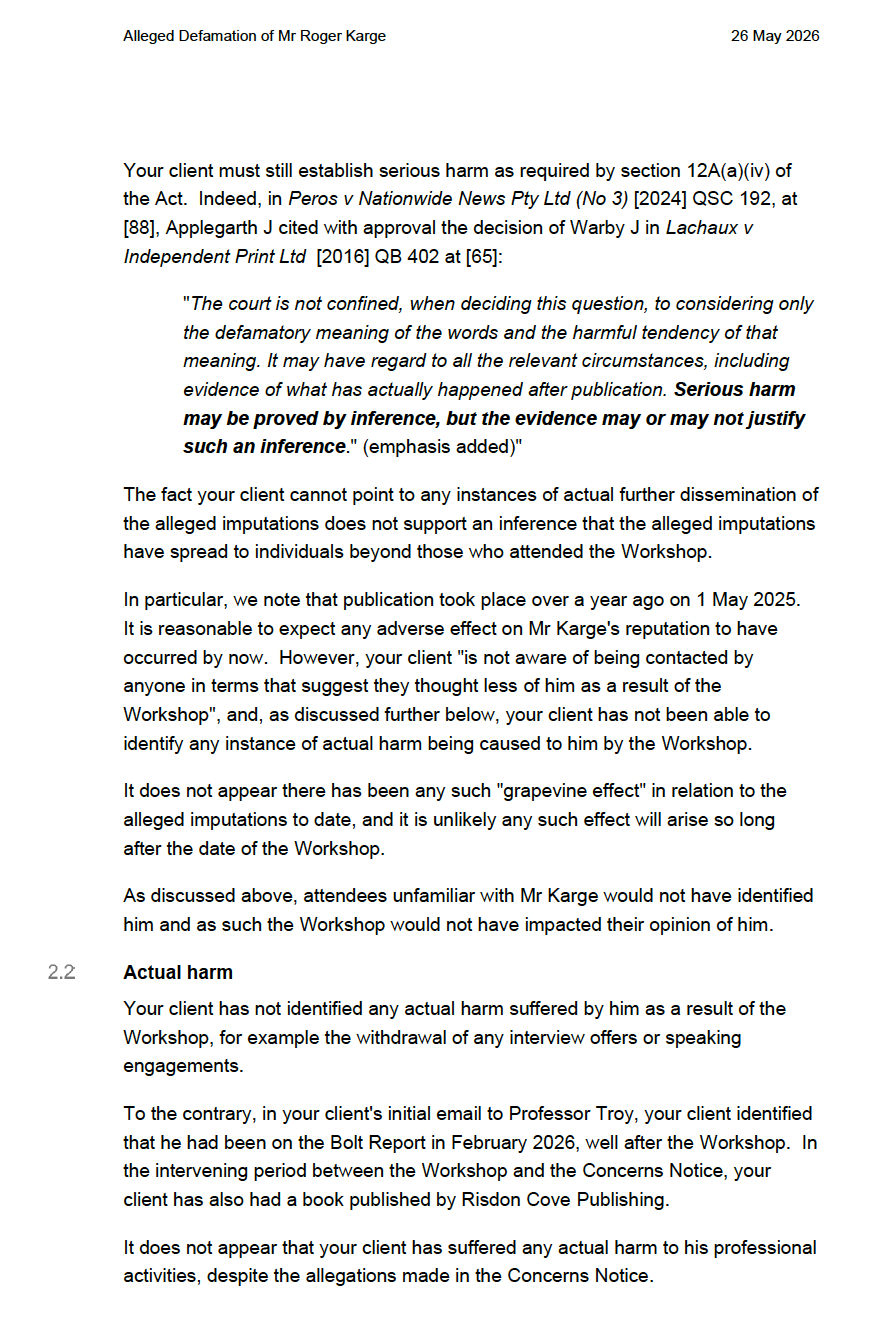
Figure 5d - Professor Troy and University of Sydney’s Response and Offer p4
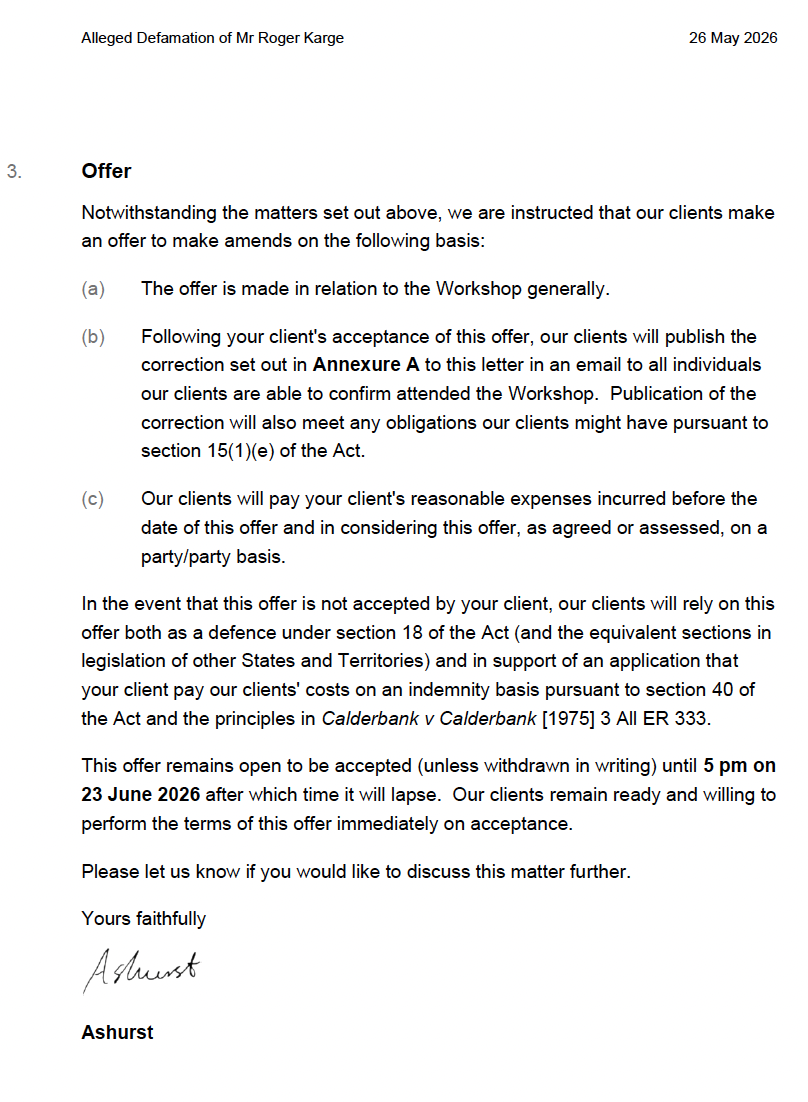
Figure 5e - Professor Troy and University of Sydney’s Response and Offer p4
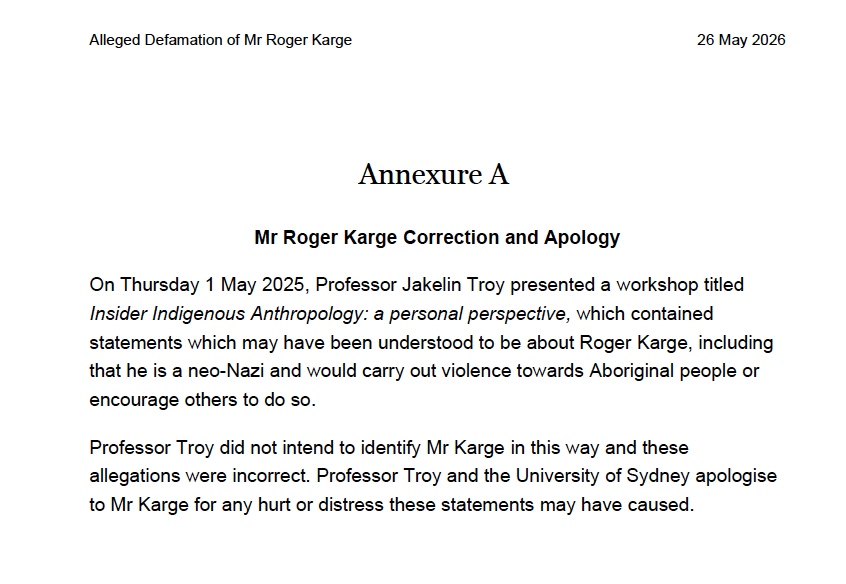
Figure 5f - Professor Troy and University of Sydney’s Response and Offer p5
The transcript below (as best as possible) is from audio recorded at the lecture given by Professor Jaky Troy (University of Sydney), presented as part of SSSWARM [Sydney Staff and Student Workshops in Anthropology, Research, and Methods - a postgraduate workshop series]. Her lecture was titled, Insider Indigenous Anthropology: a personal perspective and given on Thursday, 1 May 2025 , 03:30PM - 05:00PM, in Social Sciences Building, Room 650.
Highlighted text below in bold outlines the important points that are potentially defamatory claims by Roger Karge, Editor of the Dark Emu Exposedwebsite and user of the email and pseudonym handle, Justa Quiet Australian.
Listen to the full Youtube audio
The time-stamped transcript is below:
0:00 [Moderator Introduction] - Um oh I think we'll make a start. It's a it's a pleasure to welcome everybody to what I think is the third session of
0:07 – SSSWARM for this semester. Um, I want to start by acknowledging that we meet on the unseated sovereign lands of the Gadigal people and pay respects to elders past and present. And also to
0:23 - acknowledge um Aboriginal and Torres Strait Islander scholars and students here with us in the room today.
0:33 -Um, I also want to thank Leanne Williams Green who's done so much work in organizing today's session and indeed
0:41 -all the SSSWARM sessions um for the whole the whole year. In fact, um before I introduce our speaker for today, I just want to say something very brief about context. Um, you know,
0:59 - anthropologists are pretty obsessed with context. I think it's fair to say. And maybe I'll say
1:06 - I just want to sort of name two contexts in which we meet today. So cool. So two contexts two contexts in which we meet today.
1:19 - The first of course is during a week in which um acknowledgements of country like the one I just made and welcomes to country are
1:32 - very much under attack. Um together with the wider politics commitments, um claims, obligations that they at their best might entail or represent. and under
1:48 - attack not just from um neo-Nazis as we saw this week in in Melbourne but
1:56 - also from someone seeking to be our next prime minister. So that's one context I think which it's worth naming. It's a
2:05 - real pleasure to introduce Professor Jackie Troy our speaker for today. So Jackie is uh Director of Aboriginal and Torres Strait Islander Research here at the University of Sydney but um more
more importantly I think she's also Professor of Anthropology here at the University of Sydney. She's a Narugu woman from the Snowy Mountains. [An Aboriginal tribe] Um her work has focused on language, indigenous languages,
2:41 - documenting, describing, reviving indigenous languages here in this place,
2:46 - but elsewhere to um far around the world. She's currently working on two ARC projects. one on the history of Aboriginal missions and reserves in eastern Australia and the other on the practice of corroboree by Aboriginal eople in the assimilation period “quote unquote” of the mid 20th century. Um, but
3:10 - also Jackie's research ties very much in with the sort of questions that we've been thinking about in SSSWARM questions of research methodology, indigenous research methodology in particular, and thinking seriously about community engaged research and attendant
3:28 - So, a really good fit for this particular seminar series. She's the author of many works including um the Sydney language and also more recently um she has an essay in and is one of the co-editors of this volume everywhere Australia and the language of deep history. And when I um when I went to buy my copy of this book at my local independent book seller, the young woman behind the counter was so excited and she said, "Um, oh my goodness, I've
4:08 - just heard one of these people give the most extraordinary talk." Um, this last person, Jacqueline Troy, it was it was totally mind-blowing.
4:18 - Um so no pressure Jackie. Um but also of course I was very proud to be able to say that Jaky’s colleague. Um so Jaky’s talk today is entitled, Insider indigenous anthropology, the personal perspective. Um and I think the format is going to be pretty loose. Yeah. Yeah. Yeah. Cool. So please join me in welcoming um [inaudible due to clapping, Jaky Troy]
4:54 [Prof Jaky Troy] - Well, uh, Michael, thank you very much.
That was, um, really, uh, a very heart-warming, um, acknowledgement of me as a speaker today. Um, I just, um, and “fish, thank you, finish bringing trout”[?] But um anyway um so this is kind of a I guess a first attempt at a sort of personal narrative of um my myself and my family and connecting it to ancestral stories of country. Um, another thing I did and if anybody wants to, I just had to bring a copy of the link, but I wrote a paper um about a song of the women of the [inaudible] um or it was um a reconstruction with Linda Bowie who's a musicologist. Um on that one of those graphs that was listed I um of a song that looks to me like it's a snow increase ceremony song. So Aboriginal people do these sort of increased ceremonies to make sure country keeps doing what it's meant to do. So we keep our bargain, country keeps its bar and we sort of symbiotically work together. Um so and that song um I've been with my country people performing it down in the snow down at a place called Dundeni [?] on a bend of a river where when the man who heard this song in 1834.
6:21 - And remembered it when he got to Sydney got his friends to put it to music and he wrote down the text. Um he, we Linda and I were able to work out exactly what he said it was under a full moon in 1834. We worked out which full moon he would have been there under. So it would have been in late March 1834 Frosty Moon coming um on the bend of the river. You can imagine the scene though in the night and um the women singing this song and possibly doing a beat like that um on their on their um blossom skin drums and um this song.
7:00 - Whenever we sing it within a few days the snow comes. So whether you believe in this kind of [inaudible] behavior or not I love it. I love the fact that and my whole lot of my community love it too.
7:12 - There've been detractors as well. That is always what will happen. And I think one thing I would say about doing very personal anthropology now, very personal research and writing about myself and my family, it has drawn a lot of people out of the woodwork. That's the neo-Nazis.
7:30 - I've had four, there are four neo-Nazis who started a um a blog called Dark Emu Exposed. Don't click on it. Um it just gives them more credibility, I think.
7:41 - But anyway, they've gone after everybody that I know, including myself, Linda Burney.
7:47 - Um, you know, it's just anyway, I won't go on about that. But they their mission is to exterminate Aboriginal people. And
7:55 - they have said if they can't destroy us by destroying our reputations, they will um we should be shot. It's that simple.
8:02 - So, it's actually what it says. And they came after me because I said the man from Snowy River could have been um
8:11 - you know an Aboriginal person. Yeah. So and the whole range of the way people related to their ancestors um not without some danger you could say
8:29 - as I said there are some pretty nasty people out there. Um and interestingly that on that um identification my mother's birth certificate actually [be]cause she's 1928 so they were still putting Aboriginality onto births. So she had
8:44 - Aboriginal because her but her mother just is Aboriginal but her mother I can't remember whether it's octaroon or whether she, no it wouldn't have been, it would have been, she was it might have been quarter caste or half caste but because her mother had that on hers then
8:59 - she did something on hers but by me in 1960 because I wasn't in a, I wasn't on a mission or anywhere like that I was just born in Sydney they didn't take into account what had been put on my mother's [inaudible]. So, I'm just I've got nothing on my own. Um, but my great grandmother and my great grandmother, great great grandmother had nothing.
9:22 - She's got no birth to she was just born up in the mountains and not recorded in the sort of mid 19th century. And then her daughters um I don't know whether they had I'll have a look but you know it changes. It's funny. It goes from being or a bit to oh are you just Aboriginal or too but none of it for us in the southeast there was especially people born who weren't on missions or reserves there was no real status around it you were just but people like I even when I lived at college here I had
9:54 - people using that term a touch of the tar brush and that's in the 1980s so I would have men from the colleges because the women I lived at women's college [be]cause we lived in the country but most of the women were very light and you know blue-eyed blonde and they um came from very upper class like schools in Sydney.
10:11 - I came from Bathurst. It's a complex question. Very complex. Yeah. But I was yeah I was sort of targeted as looking looking different you know. So um the language…….
[Discussion continues with question and answers from audience]
One I'm really glad you raised that because that's so interesting. Um, and yes, when I was doing my research about
10:30 – pigin and creol languages, Aboriginal English assistants, the one that's being circulated, even my father said to me, he helped me edit it. And he was born in 195.
10:40. He said, "Why are you why are you writing about this rubbish language, you know, like people just thought this?" And Bob Dixon who was the great Doyan of Australian linguistics was furious that I actually used a Commonwealth Fellowship to continue this research about language contact where now it's very normalized in research and
11:00 - in fact studying the anthropology of contact between people and you know is a very normal the sort of things that Dianne you were always interested in. Um yeah so thanks. Yeah thank you. Yeah,
11:14 – 11:56 [Dianne in audience speaks]
[Jaky Troy continues]
11;56 - and using historical data. I I actually but I chose to do historical research piece because even as a so how
12:04 - old was I then when I started it was well I was you know I was in my early 20s so I already thought look we've been so researched and there was all this quite strong kind of rhetoric dialogue from community particularly about not being included in research. There was already this rise and rise of you know look it's not okay this uncomfortable look nothing about us without us was beginning then and I thought I didn't want to go and do research on anything I wanted to do something that to me felt collaborative so in a sense I collaborated with myself I wanted to know what had happened to our languages and I thought one of the and also what happened in this contact how did I come to be and so in a sense that's really what this was a study of. So I spent hour I spent so much time I took seven years to do my and not for this this was like a short pest of my PhD but I spent so much time in the state archives and for my PhD I continued that but I also did a reconstruction of the language of the Sydney area from this very small amount of material that exists for it from the early colonial period and then the Sydney mob um had run with that. They even got it re-editioned in 2019. It was first published in 1993 as a consolidated little book for my answers and then it was republished by answers because they wanted as a resource you know and now to have I I quoted just and other people in my PhD and
13:38 - now you know decades later to have a Sydney Darug woman to do her PhD with me through Sydney um and write she's referring to my work and it's just I thought this would have to be for me one of the sort of happiest outcomes of anthropology at Sydney is that you know this and this language is really cranking along. Now
14:01 - that's not due to me but I provided a resource that helped people a bit in the early stages of it and you know now there are people you know you can do online language classes on Darug [inaudible] the um community you're doing I'm going to go to Anna next
14:17 - yeah thanks and then we can have another question.
Question: “Thanks has been really interesting um I'm if you feel comfortable I'd like to know more about how you've navigated this threat you talked about from neo Nazis as you come as because I think this is something that anyone of a non-appearing minority group is experiencing right now. Jews are experiencing it as well. [14:41] Um that when you start to the work starts to become more biographical um and engaging as you say with your own family history in an open way and perhaps also more publicly just scholarly texts. How have you navigated that? And I'd be interested to know what kind of support university or otherwise has provided to you.”
15:06 – [Jaky Troy answers] - Oh well. Okay. So that's Yeah. Yeah.
Well, look, I have to say I spent I won a Yahood [?] Foundation fellowship and I spent nearly two months in Israel in 2010-11 and I went to a whole lot of um museums um and I went to a lot of lectures and I lectured I was a fellow of the University of Tarif University. What I learned there because
15:34 - I've got Jewish ancestry actually on my grandfather's side. I don't to be honest I'm not a family historian. I'm an anthropologist and I'm terrible at this.
15:41 - My mother can sort of recite everything but and I also I'm a bastard. I'm legitimate. So even
15:50 - though I was registered as um the daughter of the man that my mother's been recorded is Oh, but my mother's comfortable about this guy. Yeah. So I have a really complex history myself.
16:02 - Um, so I've really I've really um the Troy family my mother married into were really not happy with um my father marrying my mother who was a lot older than my father. They just thought and
16:15 - she's Aboriginal. They're like this is nothing about this is okay. So I was embedded in um being “othered” and racist. Sorry, this is really hurtful to say and it is hard to talk. So yes and I feel very similar to the stories I saw
16:33 - in places like you know these great museums of the Holocaust and the Jewish diaspora. I felt in those places this kind of I gained a strength in a way from those places that okay even telling
16:50 - the worst stories about your life actually can be um instructive for other people. So I push on, you know, it's not easy. Um, but the reason why I identified very much with the mother line in my family, female line, is it's actually quite a classical classically Aboriginal, but I I also um it's a um
17:15 - uh it's something that I've always known. My mother is my mother and my mother's cared for me through thick and thin, through terrible times in my life.
17:23 - Um she was much more identifiably Aboriginal. Um at times, um I wouldn't say she's denied being Aboriginal, but she certainly passed as anything. She could never pass as white, but she passed as Mexican. Um that's then she ended up studying in Mexico and the swap, you know, but it's uh you know, so it's it is really really difficult because it then it becomes the point at
17:49 - which do you say right, no, I'm only going to. I'm going to stop at this point. Um, I have often thought, do I
17:56 - wish I didn't do the interview [this interview here on ABC?] that then set the hare running with these guys coming after me? Um, and I've been a little cautious about making sure people don't necessarily know where I live. Um,
18:09 - because I've had death threats. I've had all sort not since I've done the family history stuff, but the thing that really really got people angry about me was that I'm Aboriginal and I do research about Aboriginal things, but um I also do research with Muslim people I do. As soon as I started doing research in Pakistan. So that's fairly recently.
18:30 - I um had, there's this one guy who hates Aboriginal people and hates Muslims. So, I get the double whammy. And I did this um conversation article about um how I there was a whole lot of hate stuff going on. Um now when I say this is the um there was a it might have been around the chocolate shop bombing where you know the incident in Sydney um actually there was something that's maybe more the fiasco but um there was something that what not
19:10 - but anyway but there was some something suddenly there was all this hate, hate, hate and Pauline Hanson who turned her guns in that direction and she stopped thinking about Aboriginal people for a while. She just sort of stopped and she was all anti-Muslim and remember she put on a hijab-burka in parliament and walked in and was just being an absolute Pauline Hanson and so I wrote this piece for the conversation and I said and it was around Eid and I had my assistant from Pakistan as well and I said look I give you and I was furious about what was going on I said I give thanks to my um, Muslim brothers and sisters for taking the attention away from us for a while, but I also decry what's going on.
19:57 - So, straight after that, I got this um letter and I didn't take it seriously and my daughter um looked up the person's name [be]cause it was all it was one of those classic cut out for the paper, you know, pasted. I mean, I've had so many of these over the years over things I've done. Nothing about me personally, but just about my positioning, right? And um she said, "Actually, this person is on a list that the federal police, if anybody's had any approaches from him, you need to let them know." And I was like, "Oh yes, okay." So I have thought at times, is this actually going to endanger? You know, now it's just my
20:35 - mother, myself, and my daughter. We sort of live together in Canberra, and then I live up in Sydney. And there's a chance that I, you know, there's a chance something could happen. and if anything happens to me, what will my children and my mother do? She's 96. So, um I do think about that. So, I think but I think I also think that um by talking about these things and not being I'm not going to be um. These guys that went after me and went after a whole lot of other Aboriginal people. They said on various sites they're on, they're called Just a Quiet Australian, another thing and they've got this
21:14 - picture of themselves with a blue eye and no eye and this sort of dark thing you know these they're these four men. I've got their names [be]cause they put themselves on a on a site. So if you ever see Just a Quiet Australian just watch out because they're, they're really nasty and they're ex-military and they do military history and then they got really shitty about Tasmania and Aboriginal people in Tasmania. So they went after every Aboriginal person in Tasmania and they said what we need to do is bring back the black line which was when in the 19th century a shooting party was sent by the Governor to cross Tasmania and shoot any Aboriginal people they came across. So, if they and, um of course at that time they didn't, but these guys are saying this is the only way to get rid of these you know jumped up blackfellas basically these fancy Aboriginal people. It's just so if they can't defame us they'll kill us. So the other thing they did was um do an AI
22:11 - so the stories they write are done using AI and which like most of these things is you know if I did an AI photograph of these books or if you've ever done an AI um you know literature search it'll actually make up entire references including DOIs [?]. So they made up all the stuff they link me to people I have absolutely no connection with. You know,
22:33 - they've got me linked to sheep rustlers, cattle rustlers. They've got my great great grandmother, um, faking her own funeral, running up with an Aboriginal man to Victoria, coming back and alive, and then she dies and has another funeral. So, what's happened is the AI has got all these bits of information about anybody with the family name Thomas, which is our family name for the mountains, and it's all around that area, and just linked anything to do with these people and cobbled a story together. They even said, "I can't possibly care about trees because my family and I write about this in here.
23:08 - My family um started my mother started the first ski club in Thredbo." Oh, well, snow bunnies. So, you knocked down all the trees to build your lodge. No, actually, it was a shack. And not only did they not knock any trees down, they planted around the shack.
23:26 – [Compere interrupts] – “I'm going to say, we have two minutes, two more questions. I'm ask I could go on forever about that. Um a very short question and then a very ….”
23:45 [Question from audience member] “…conscious of the time. Thank you”. Hi Jackie. It's been a while. It's been a while. I was so glad that you mentioned um I was so glad that you mentioned that because that's when I first met you. That's amazing. Um, so that's when I first met you um at when you were doing the tourism and I'll never forget you said one thing to me which was stuck
in my head um doesn't matter what you're writing just so long as you're writing [be]cause I wanted to do you know other creative writing and all that kind of thing. So I was just kind of curious um just you know focusing because I was really quite surprised that you've self-identified um as Aboriginal since I knew you. Um, was any of that work because, you might remember Vic Shaman, he was doing that work, I think, with you. Yeah.
23:40 – [Jaky Troy interrupts] Oh, no. No. Vic was my boss and um Yeah. Did you work in that sector, too? I didn't know. I didn't remember that.
24:38 – [Questioner continues] - But I met you. Yeah. Well, yeah.
[Jaky Troy (JT) ] I wouldn't say I'd self- identify then. I I've always No, since then.
24:45 - [Questioner continues] Yeah. Yeah. Cuz we were, you know, I met Shirley and Bobby and Yeah. Um, look, I'm just kind of it's we are running out of time, but I did want to make a kind of um, yeah, [be]cause I was kind of a bit disappointed that you had to, you know, acknowledge the room. I was thinking, but that's okay. That's fine.
25:04 - I was just kind It's really the question really for everybody else and you know, we talk about yarning and all this kind of stuff and you know what anthropology is. Um, and I've been talking with a
number of the [Aboriginal] Ngarigu women and they asked me to make mention to because is anybody here know any other Ngarigupeople apart from no. So they've asked me to say no recognize her as Aboriginal let alone Ngarigu. Why is the University of Sydney validating these individuals as Aboriginal when Aboriginal people don't validate them? Because the University of Sydney does have a major issue about box ticking and stuff.
Are you Chris? “No.” No. Okay. Sorry. So, it's Chris um NAF I think that was um doing the issues there. So, the University of Sydney has a major issue, a major problem and we're seeing that reflected in the census numbers. So, the Aboriginal population grew over a million people last June.
So, we're going to see that um uh continuing. But the main question really comes down to particularly you know with you as ,I mean for heaven's sakes, you know Professor of Anthropology this is a really quite a critical question around how the discipline is going and, I'm kind of curious what is it that qualifies the university non-Aboriginal people to recognize an Aboriginal person on behalf of Aboriginal people so when I started the other thing too [interuptions “sorry, sorry” and pushback from JK] just one other thing I just want to I just want to the critique is actually really quite important and to have that linked with neo-Nazism I think is really quite problematic, because it's actually Aboriginal people that are asking these questions. Is that okay? Thank you.
26:45 – [JT] - Okay. Well, I will first I'll respond um. I recall first meeting you [the questioner] actually in a different context altogether and I have never denied my Aboriginality. This is not a new thing and as I said the identification of Ngarigu. So, I'd like to know maybe you could uh. So, you're saying I'm not Aboriginal? Is that…
27:06 [Questioner] - I'm saying I've spoken with a number of Ngarigu women who you're claiming to be part of the kinship system. I think that's up to them really. So, the thing is that nobody here knows nobody here knows any other Ngarigu people. I'm saying that these are the people that spoke to me ..[inaudible] As a matter of fact, Oh, excellent. Okay, great. All right.
27:25 [Questioner] - So, um you must be familiar then with the questions that people must be asking. No? . Uh or
27:33 – [Comments from the moderator] - JK has just mentioned there are things going on but there is no such solid thing as somebody asked direct I know some so you've heard them through Jackie some of them through Jackie but some of them independently look. Look I understand it's a difficult situation
27:52 [JT] I'm just going to say here now, no Ngarigu person has ever come to me and said you're not Ngaragu.
27:58 [Questioner] – Okay, I'll take that back, I'll take that back to them. Okay. No, it's actually from them directly.
28:02 [Third Person] - A bit unreasonable to just issue this hearsay of these accusations.
28:07 [Questioner] - That's unfair that you call it. [inaudible] Actually, I've actually spoken to these people just today.
28:14 [Third Person] - And when I does seem to be a bit rude and uh inappropriate.
28:21[Questioner] - What is rude and inappropriate is the race shifting that is actually affecting Aboriginal people. And you're not going to Aboriginal people in terms of this recognition. Why aren’t you doing this recognition?
28:31[Third Person] - I don't recognize I'm So you don't recognize [inaudible]
28:37 - You're not recognizing Jackie. You're not recognizing Jackie as Aboriginal. You're not recognizing her as Aboriginal?
28:40 [Third Person] - She has been recognised, She recognizes.
24:41 [Questioner] - Are you though? My question is are you?
24:45 [Third Person] - Yeah, of course.
28:45 [Questioner] - Okay. All right. So, and do you recognize me as Aboriginal?
28:49 [Third Person] - I don't know who you are.
28:50 [Questioner] - Okay. Exactly the point. Exactly the point. So, how are you qualified to recognize an Aboriginal person?
28:55 – [Questioner and JT] - [inaudible] assume I have Aboriginality like I just in university 10 years ago…The certificates don't come into it Jackie, you know that. And we did know each other and no you didn't make any mention you self-identified since then. I was really quite surprised.
29:10 [Moderator] - I'm actually going to um I'm going to wrap up this this conversation..
29:16 [Questioner] - Look it's important to have that on the record. It does need to be on the record this is just you sharing the…
29:19 [Muffled noises and interjections]
29:24 [Questioner and JT] …one understand that they un that they letter to the university. So you got a king's council was a queen's council originally and's dead by the way. So I'm sorry to hear I'm sorry.
I'm sorry because I'm sorry too. So and I remember you in the context of Jody Bruins's [?] partner who you were on with at the time. So that's when I remember you.
I don't remember you at AiATSIS at all. Vic Shan [?] was my boss. I didn't do any research with um David,
you know. Anyway, so David Milroy. Yes. Yeah
29:59 So I um So did you say Hang on. Sorry, I missed something. Jody's partner, David Milroy.
30:07 [Moderator] - Excuse me. I'm going to let Jackie finish this and then we're going to
30:11 [JT] So the university had me investigated because there were complaints and the King's Council who looked into it. She was a Queen's Council originally and then Queen's dies, then King's Council, found that the university should absolutely accept everything that I have said about everything about my family. And as I said that um previous um person who was speaking just then said you know what is a you know in her case she was
30:39 talking about other communities like the Jewish community what should you share. So tragically because of this kind of, you know threat, including death threats, not from anybody who's Ngarigu I have to say, or identifies as Ngarigu. I will limit what I want to talk about with myself now because I don't think it's necessarily going to be safe for my daughter and my mother. So, this kind of lateral violence does lead, well, it is violence like what you've just done.
31:13 [Questioner] - I've done an analysis on lateral violence. I've done an analysis on lateral violence. It's not a thing.
31:19 [JT] you just done now publicly calling me out as a non-Aboriginal person um is …and I've explained how difficult it is you know as you know for Aboriginal people to identify you were even in a campaign as I recall where it was um there was I've still got this beautiful postcard all of you together saying too beautiful to be Aboriginal because there used to be this idea that Aboriginal people couldn't even be attractive intelligent
31:48 [Questioner] - I might, we might look like, but no, that wasn't me.
31:50 [JT] - Well, there's this beautiful postcard and I remember I thought it
31:54 [Questioner] - No, that wasn't me. I know who that was. I just can't remember her name.
31:56 [JT] - Anyway, so all I can say is that there been we haven't been able to be ourselves. Now we can.
32:01[Questioner interjecting] - You're claiming Ngarigu, the Ngarigu people I know have said exactly what I just recorded. It's as simple as that.
32:09 – [inaudible] There's another woman. There's another woman. Do you know her? I think so. So, no.
32:19 [Moderator] - I think I think what we're going to do now is wrap up. I really I'm sorry that the conversation has ended like this [Interjecting by Questioner – Why?] because prior to this, it was a really wonderful contribution, Jack. And thank you so very much. We're so thrilled to have you in in anthropology and the start of it more such conversations across this year and beyond. So, please do join me in thanking
[applause]
32:53 - people do join us at the pub um where we I think we all deserve a drink and um and to continue.
Thank you. Thank you very much.
Thanks very much. Thanks everyone for having me.