Rachel Perkins & The War Memorial - Transparency or a Hall of Mirrors?
Posted 30 Aug 2026
by Roger Karge, editor
I pushed the send button and off went the email:
Re: Ms Rachel Perkins
Hello,
We are genealogical researchers and are seeking to pass onto Ms Perkins some research into her family tree that we have been commissioned to undertake. This research will be published shortly by our clients and, as a courtesy, we would be pleased to pass the research on to Ms Perkins prior to publication for her information, comment or potential correction should she wish. Please let me know if she would like an advance copy of this information and, if so, to which email address we should send it. Please feel free to contact me should you require further information.
Mr Roger Karge, Editor, Dark Emu Exposed, etc., etc.,
Not having Perkins’ email details, I had sent the email to her literary agent early on Thursday morning. Later in the day, I noticed a missed call on my mobile phone, followed by a text, “Hello Rodger this is rachel perkins. Would you mind calling me? Thank you. Rachel”
This post is about our email exchange and subsequent, one hour, Zoom meeting.
1 - Background
But first some background on filmmaker and producer Rachel Perkins. She is a strong proponent of the so-called ‘Frontier War’ theory - the idea that Australia was not settled legally and relatively peacefully, compared to other parts of world, by the colonising British. Her 2022 documentary [mockumentary according to her severest critics] series, The Australian Wars, appeared on SBS TV and she co-edited an accompanying book (Figure 2).
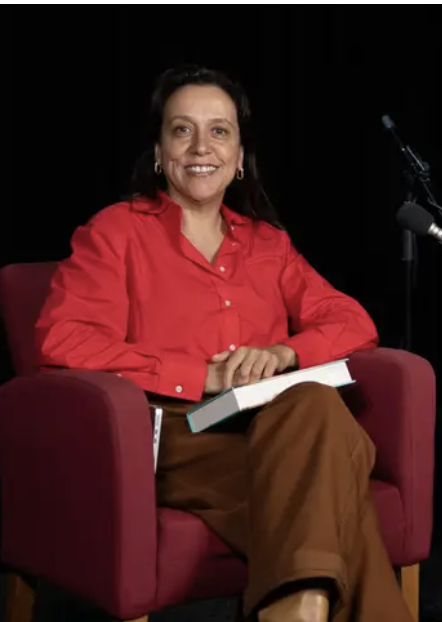
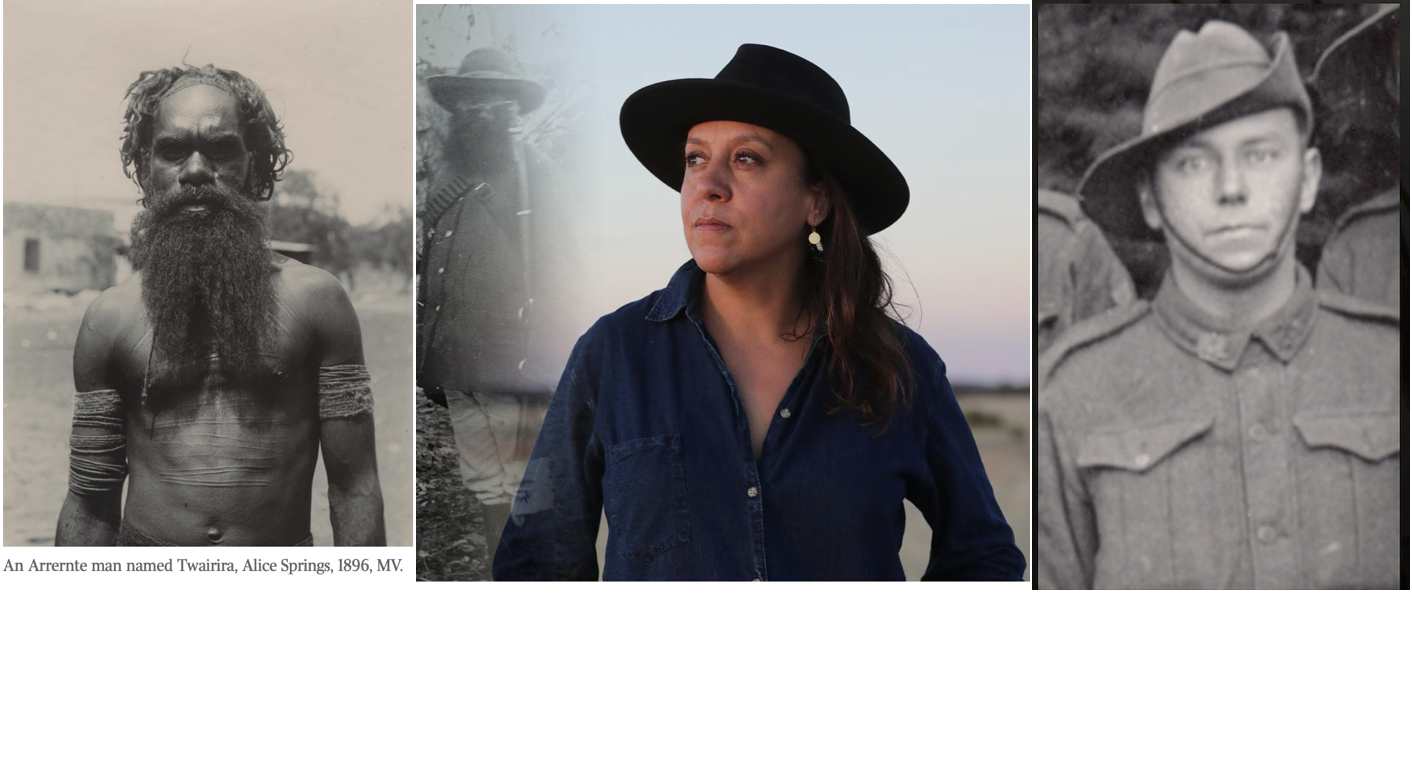
Figure 1 - Filmmaker Rachel Perkins, proponent of the so-call ‘Frontier Wars.’ Source
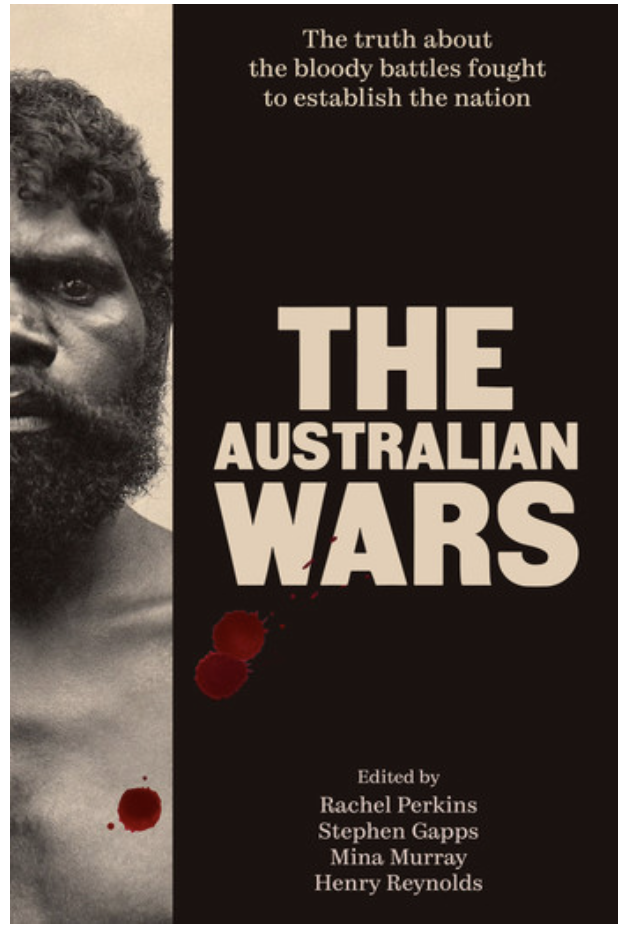
Figure 2 - Source
Perkins comes to the topic of the so-called ‘Frontier Wars’, and their proposed inclusion within the Australian War Memorial (AWM), after many, many years of activism. She believes deeply, and is passionately invested, in this campaign, not just for what she calls reasons of historical ‘truth-telling’, or from family connections to those ancestors who suffered frontier violence, but also because she is a convert to the Pan-Aboriginal political response to colonisation and so-called Aboriginal dispossession. As she says, regarding colonial frontier violence:
It may not appear as war in the same way as it has been quantified at Vietnam and all those other theatres of war … but it's the nature of the things that it was fought over, not the way it was fought. It was fought over our lives, our livelihood, our culture, and our land. (Source: AWM 27 Aug 2026)
To quote the activist, the late Pat Eatock, ‘the personal is political’ for Rachel Perkins.
2 - The Email
Prior to our Zoom meeting I had emailed Perkins an explanatory letter (Figure 3) and two attachments, one of which was an apparent branch of one part of her maternal Family Tree (Figure 4):
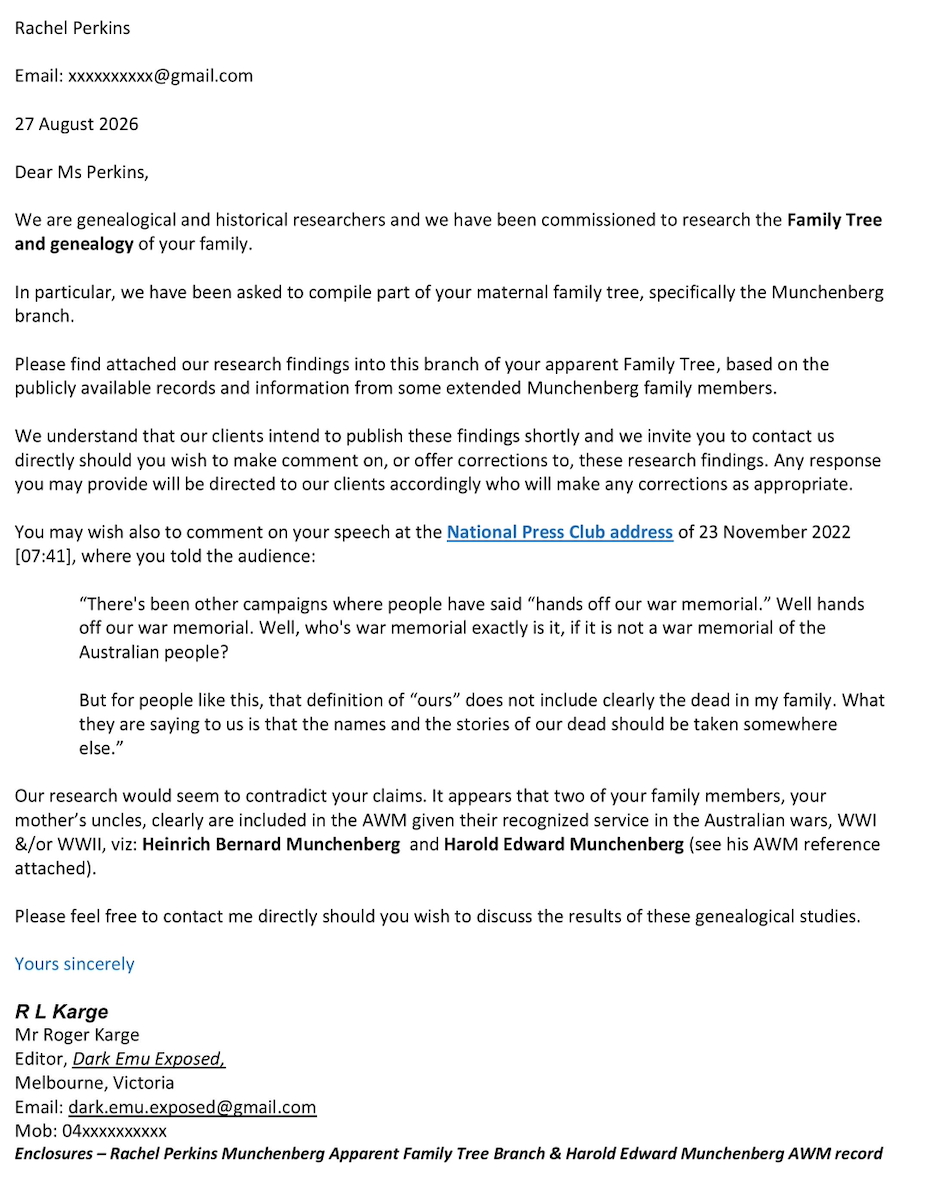
Figure 3 - Letter sent to Rachel Perkins. See Link to National Press Club Address Here
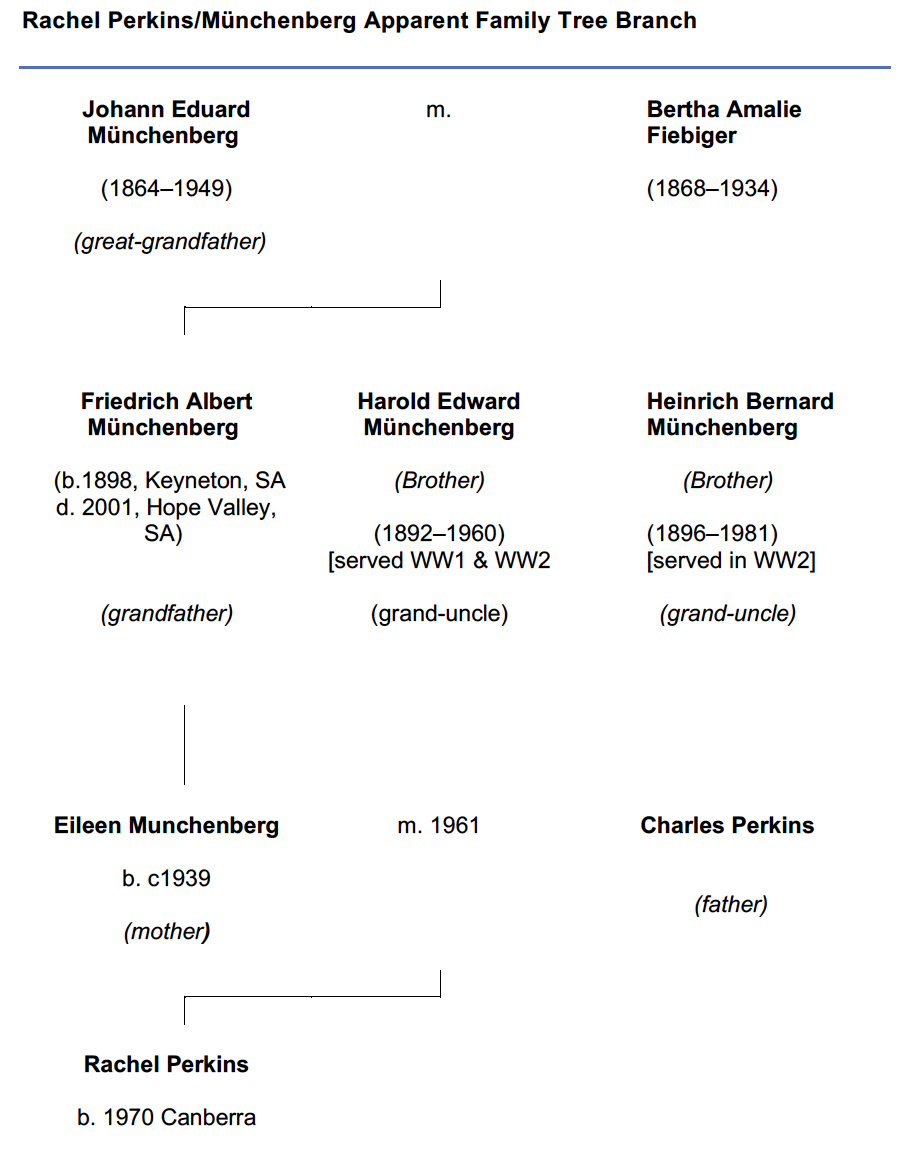
Figure 4 - The Apparent Munchenberg Branch on the Maternal Family Tree for Rachel Perkins. Source: Archival and publicly available records plus information from other Munchenberg family members
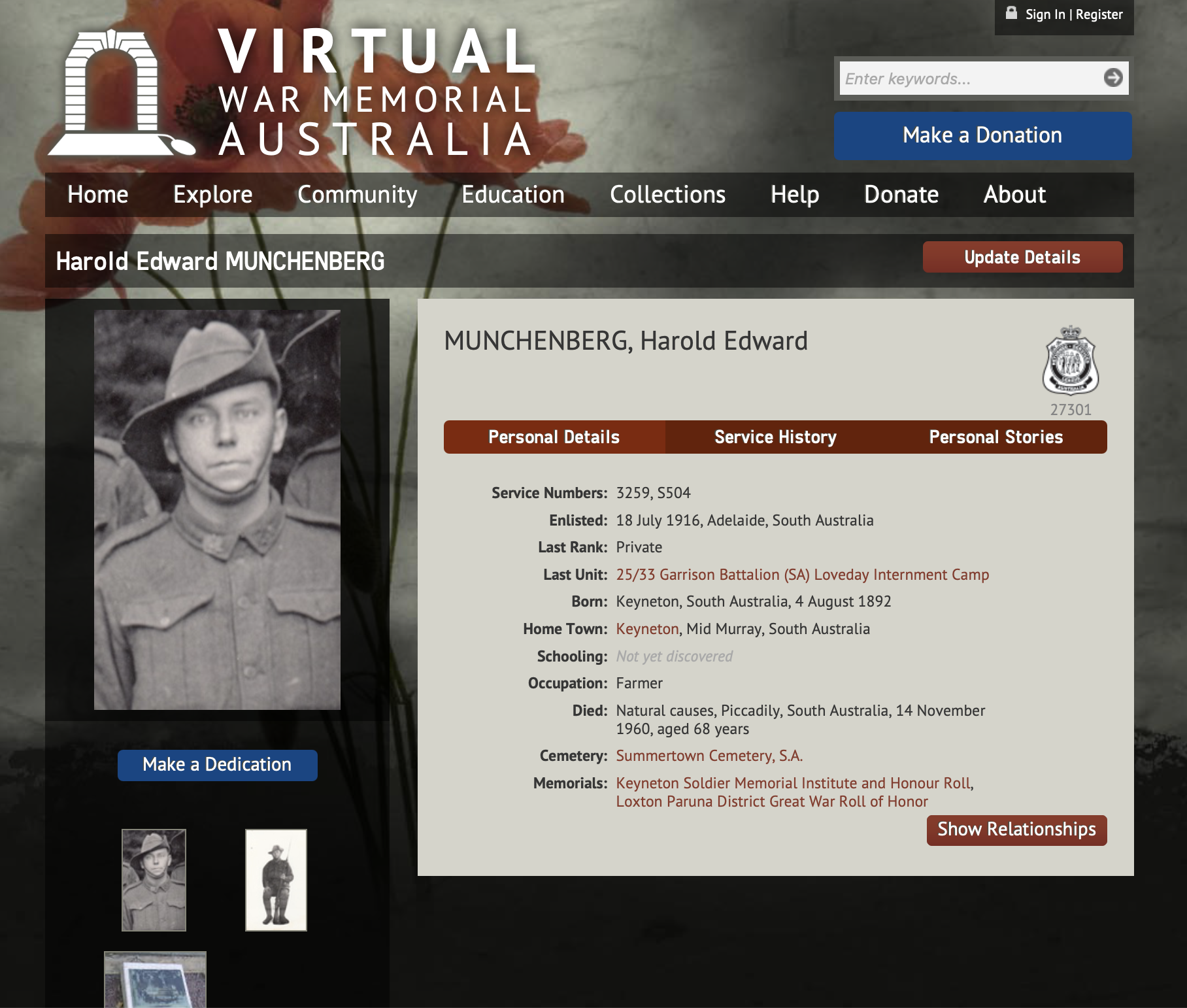
Figure 5 - Listing in the Virtual AWM for Harold Edward Munchenberg [Rachel Perkins’ grand uncle] Source
The thrust of my email was to point out that I believed Perkins was not being transparent in her advocacy - her family members who had served in the defence forces of Australia were included in the War Memorial.
These were two of her mother’s uncles - Harold Edward Munchenberg, who incredibly had served in both WWI and WWII; and his brother, Heinrich Bernard Munchenberg. Their military files, housed in the National Archives of Australia, recorded that both had signed an oath of allegiance to “serve our Sovereign Lord, the King”. (Figures 6, 7 & 8).
Clearly, they fitted the legislative definitions of the War Memorial Act and were thus included and commemorated at the AWM.
If Perkins means to ignore these two ancestors in her advocacy, but still wants to claim other “dead in my family” for inclusion, the reason why this hasn’t happened to date is because, as I will show below, these alleged and unnamed dead family members do not fit within the legislative ambit of the War Memorial Act (see section 6 - War Memorial Act below).
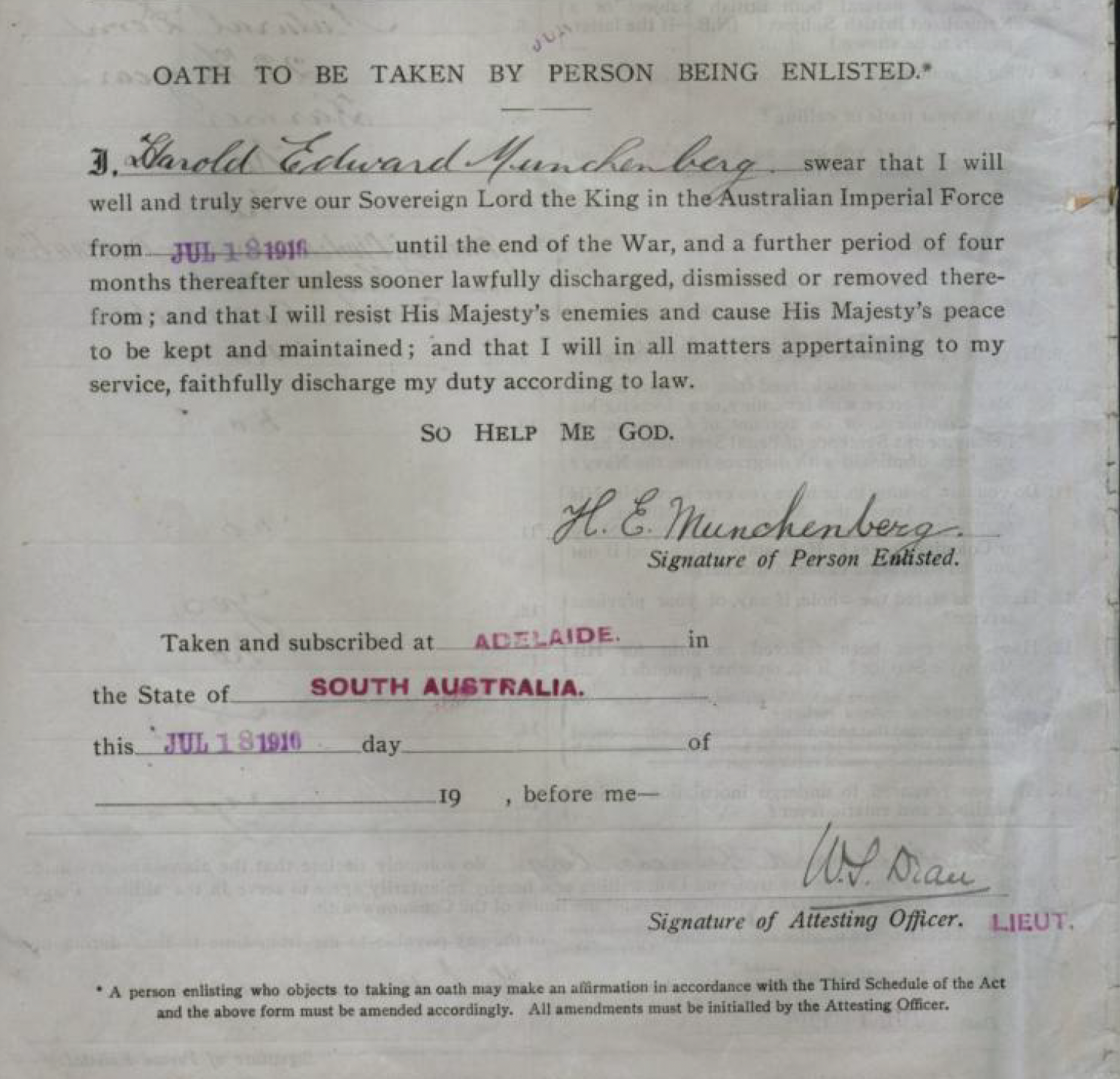
Figure 6 - Extract of Harold Edward Munchenberg’s WWI military file showing his oath of allegiance to serve “our Sovereign Lord the King”. Source : NAA B2455/7983704
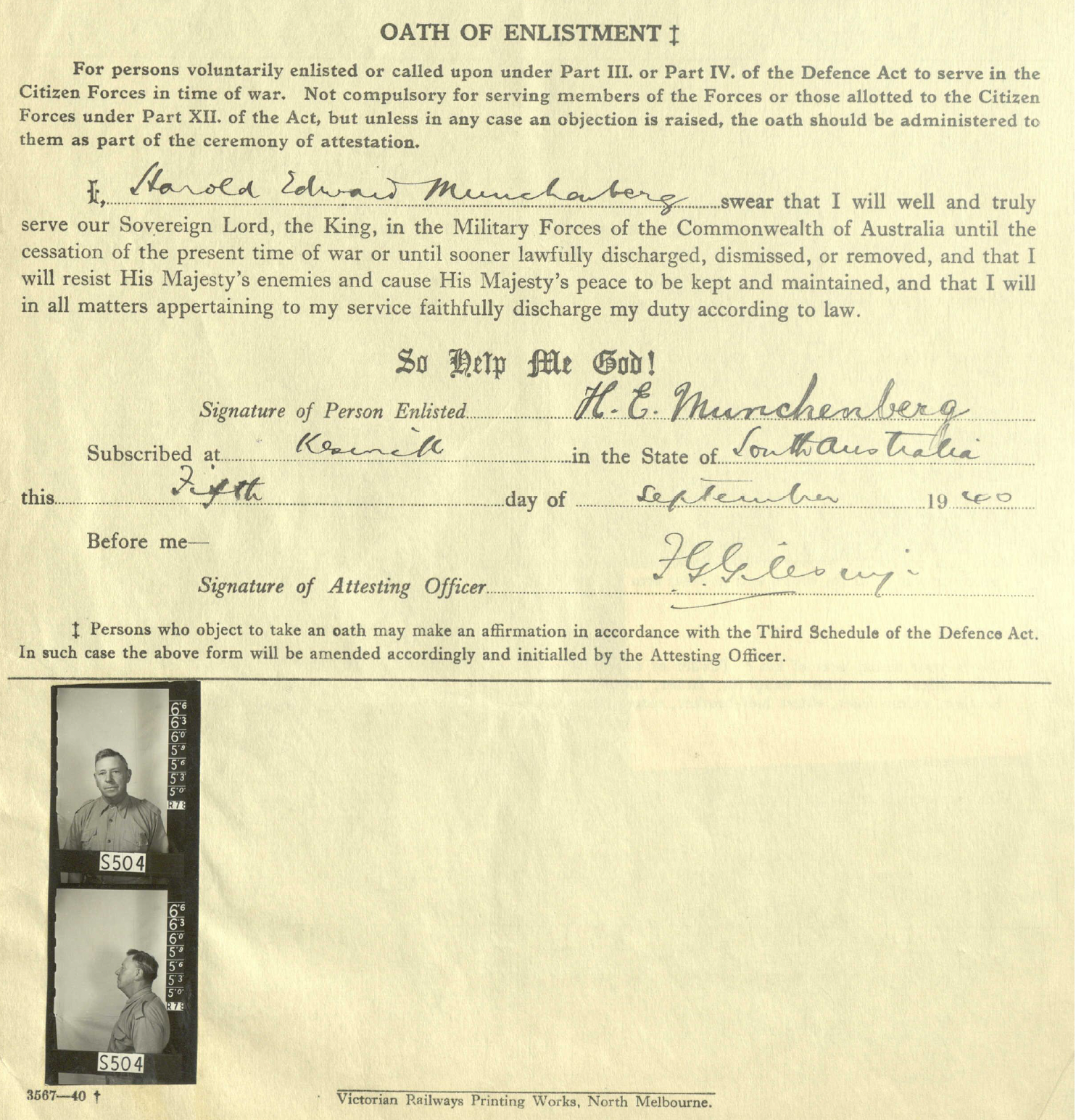
Figure 7 - Extract of Harold Edward Munchenberg’s WWII military file showing his oath of allegiance to serve “our Sovereign Lord, the King”. Source : NAA B884/6338706
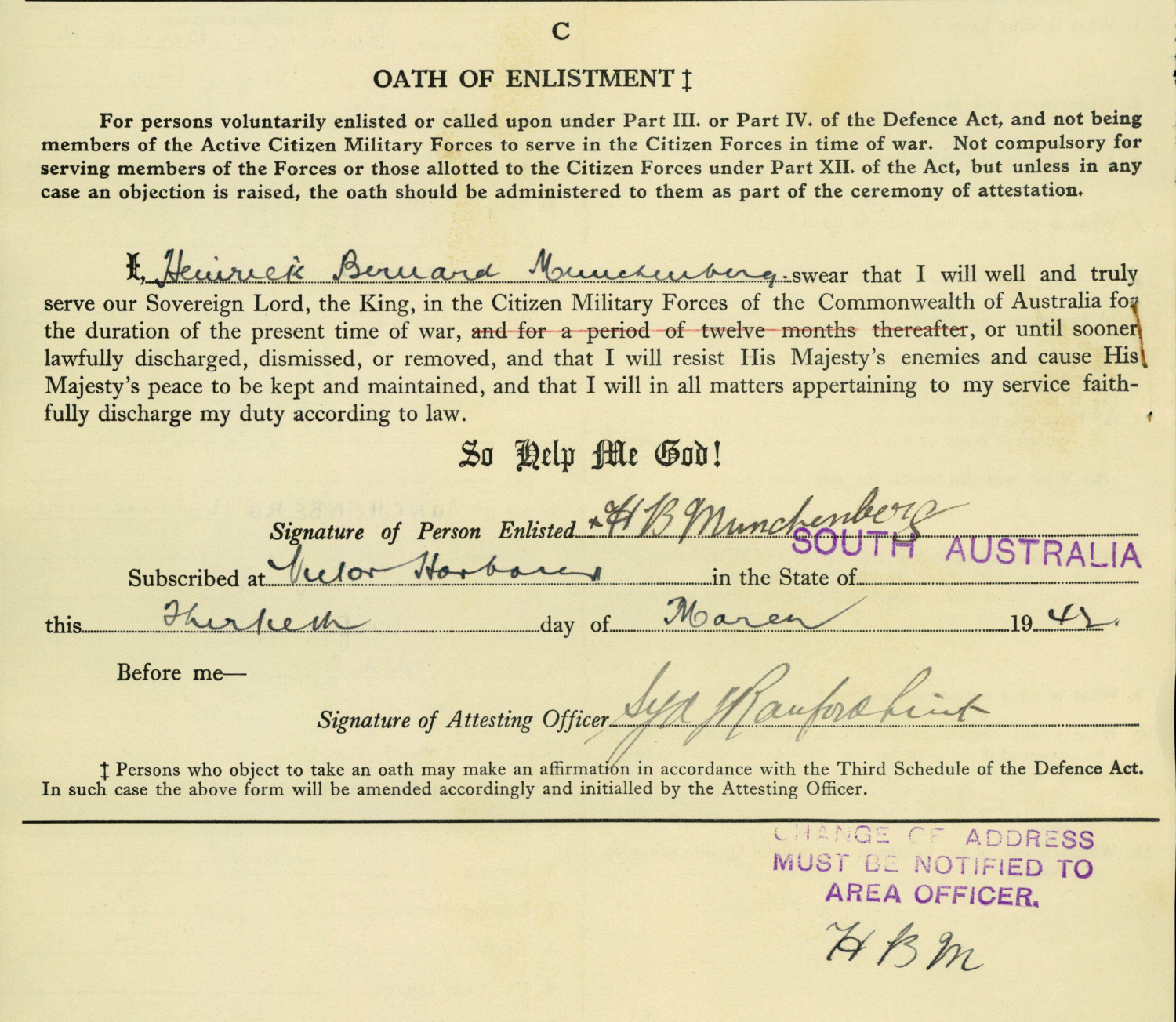
Figure 8 - Extract of Heinrich Bernard Munchenberg’s WWII military file showing his oath of allegiance to serve “our Sovereign Lord, the King”. Source : NAA B884/6466570
3 - The Zoom Meeting
Rachel Perkins and I had a very civil, although lively and animated at times, Zoom meeting. She believes passionately in her cause - I struggled to get a word in edgewise from time to time (LOL!) - but we both, I think, benefitted from being able to hone our arguments, for and against the inclusion of the so-called ‘Frontier Wars’ in the AWM. It was a good example of free and constructive debate.
I won’t go into much detail on the specifics of our discussion except to confirm the most important point: Perkins acknowledged the Munchenberg family connections were correct as per the Family Tree I had supplied (Figure 4). She said she was aware of them and this information was not news to her.
4 - So What?, Some Readers Might Ask. Why Does This Private Family Information Matter?
Well, it does matter because here we have Rachel Perkins using her family’s ancestry to advocate for public policy. She is a very highly respected filmmaker and commentator in her own right, but she is also the daughter of Charles Perkins, who could legitimately be described as the ‘father’ of modern-day Aboriginal activism due to his work from the 1960s to the 1980s.
What Rachel Perkins says, and advocates for, carries considerable influence with many Australians and within government, the media and the cultural spheres of our nation.
So here I was, with a sense of sadness slowly creeping over me as I watched and listened to Rachel elaborate on her clearly deeply researched and genuinely held beliefs regarding her family and ancestors, and their part in the so-called ‘Frontier War’ theory; and how angry she felt at the resistance from political opponents, who pushed-back against the inclusion of frontier violence history in the AWM.
Yet, as I will point out, she only focused on one part of her family - the Aboriginal part, from the ‘other side of the frontier’. Where was her acknowledgement of the part played by her family from ‘this side of the frontier’ - the Munchenbergs, the forebears of her two grand uncles now recognised in the War Memorial, who arrived in South Australia in 1839, led by the missionary, August Kavel ?
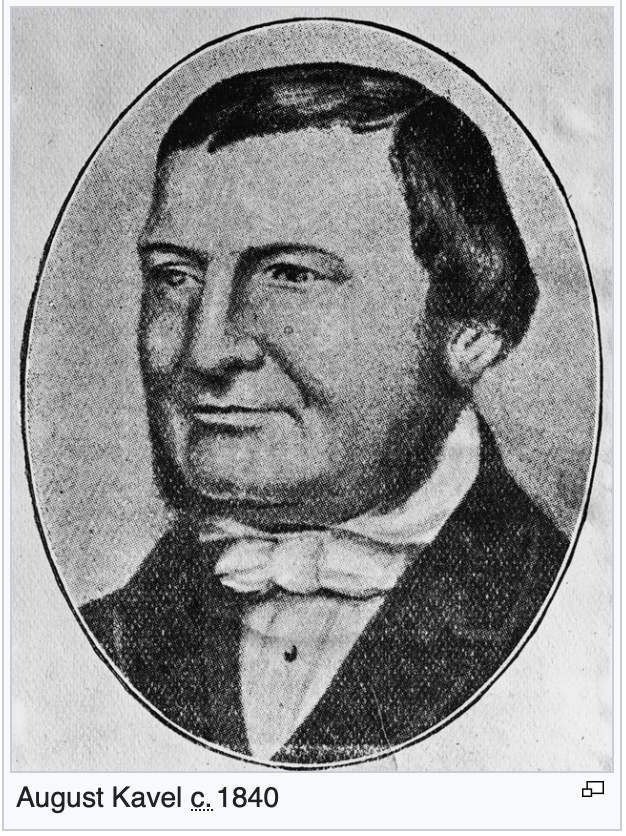
Figure 9 - Source
It was Kavel who met with George Fife Angas, the chairman of the South Australia Company, to negotiate securing land, previously solely occupied by the Kaurna Aboriginal people, for the new settlers, including Perkins’ Munchenberg ancestors.
My sadness came from the fact that I couldn’t believe where our country had ended up - so divided and at such a political dead end.
On the one side we had ‘Rachel Land’ where people thought one’s race, ancestry and historical grievances were paramount in setting public policy; and on the other side, all we had left was the memory of my lost world, a world that should have been: ‘our Lucky country’, which from the late 1950s to the late 1980s, including the period of her father’s much needed political advocacy, had been so successful. It was a time which offered so much opportunity and hope, based on an equality of citizenship for all Australians, from all walks of life, regardless of their background, race, ethnicity or ancestry.
Yet, here we were thirty years later with Rachel Perkins, an incredibly hard-working, talented and successful Australian filmmaker, blinded and completely captured by the divisive ideology of identity politics, decolonisation and racial hierarchy.
I didn’t mention it to her, and there was no way for her to guess by looking and listening to both of us, that she was in conversation with her metaphorical “half-brother.”
I say this because, to my mind, as I watched and listened to her speak, I was actually hearing the voice of one of my “mob”. She and her supporters would probably have been horrified at this suggestion, given that a common way for her to be identified is as, “a proud Arrente and Kalkadoon woman, with German and Irish heritage.”
Yet, not only were we both Australian citizens, big-city born and raised, steeped in the same society, with a mother-tongue of English and all the cultural conditioning that imposed in shaping both of us, we were also both of 50% Prussian German Lutheran ancestry.
Biologically, and for my purposes of argument here, metaphorically, Rachel Perkins was more my mob, Prussian German, than she was Arrernte or Kalkadoon. Her mother Eileen was of Prussian German Lutheran descent, as was my dad, Egon (see Figures 12 & 13).
For what the genealogical research has shown, and what Perkins herself knew but apparently has not actively explored publicly, is that her mother Eileen is from a very long line of Munchenberg Prussians. They were “dispossessed”, for religious and political reasons, in Prussia some 180 years ago. After being expelled, they emigrated to the British colony of South Australia in 1839 as, well, “colonisers” and “religious missionaries”. They were part of Kavel’s Catharina Group.
Some observers might think this “coloniser” ancestry is “problematic” for an advocate of Aboriginal-supremacist, raced-based, public policy, like Perkins appears be. Maybe it is, especially if she has not been transparent about the apparent selectivity she uses in deciding which ancestry to pull out of her mixed bag of heritage to represent her political and social views. But that, I think, is an issue for her to address with the public and her supporters.
For our purposes here, notwithstanding her lack of transparency, it is more interesting for us to consider the arrival of the colonising Munchenberg’s in 1839. Coincidently this puts them right in the middle of the time of the so-called ‘Frontier Wars’, and thus puts their descendent, Rachel Perkins, in a rare position - she is a person who could metaphorically speak for both sides of the frontier conflict in Australia, if she wanted to.
What a great ambassador for a meaningful Makarrata she could be if she jettisoned the Left’s radical apartheid policies of racial division and instead moved her politics to the centre, to attempt to represent all of us Australians equally in rebuilding the ‘Lucky Country.’
The Perkins’ family photos say it all. The optimism of the continuing success of race relations during Australia’s ‘Lucky Country’ period are best summed up by the ultimate test of reconciliation - who would you marry? How much more reconciled can you be as a country or as a person if you are willing to inter-marry with someone of an historically antagonistic race, faith or ethnic nationality?
Very sadly, the activism of Rachel Perkins today, promoting the politics of Aboriginal self-determination, a form of apartheid in fact, threatens to undo all these past gains.
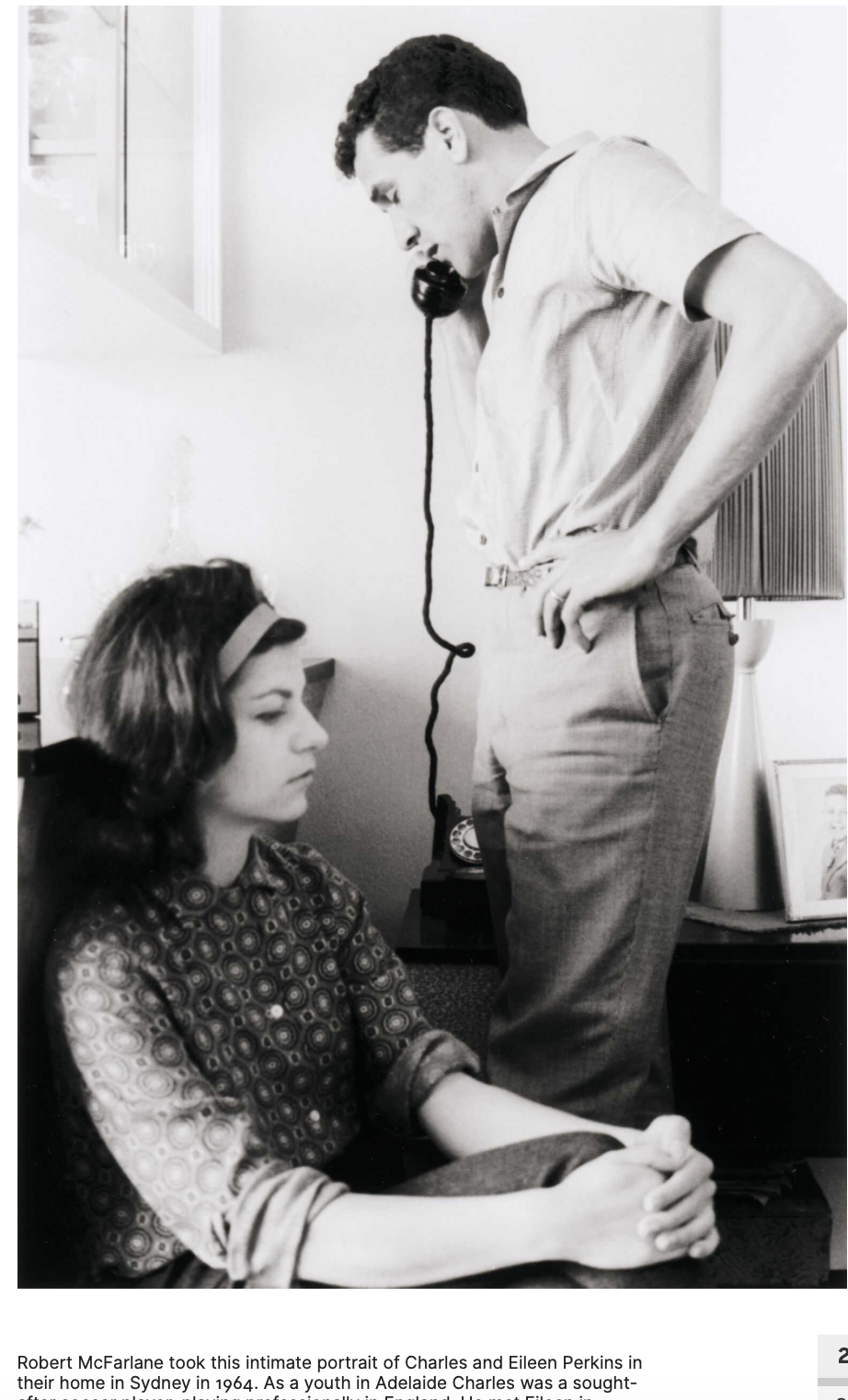
Figure 10 - Eileen Perkins (nee Munchenberg) and her husband Charles Perkins in 1964, parents to Rachel Perkins. Source See also - “My mum, Eileen, is non-Indigenous. Her background is German and she was the first in her generation to marry outside of the German community.” - Hetti Perkins (Sister to Rachel)
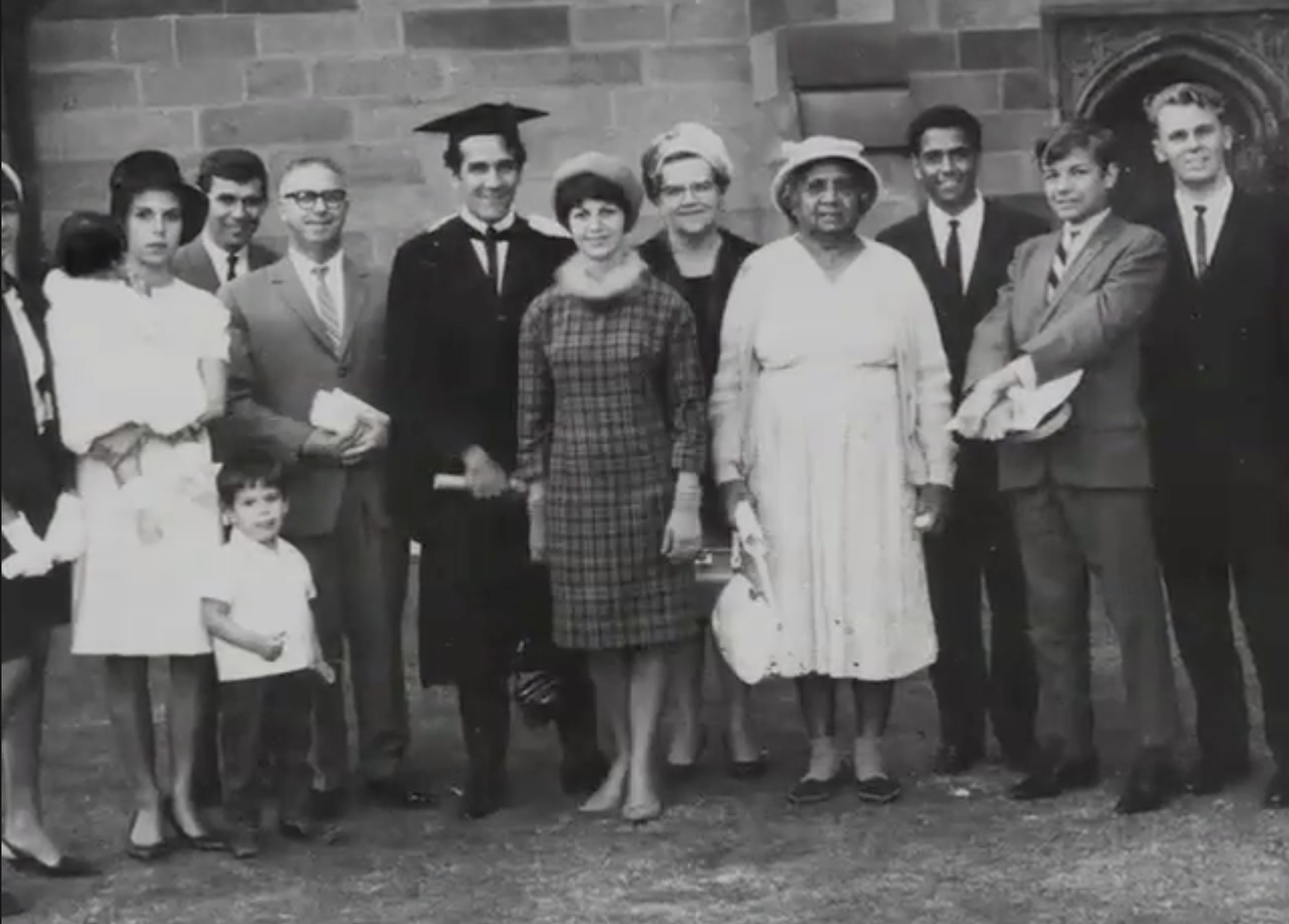
Figure 11 - Charles Perkins and family on his graduation. Source
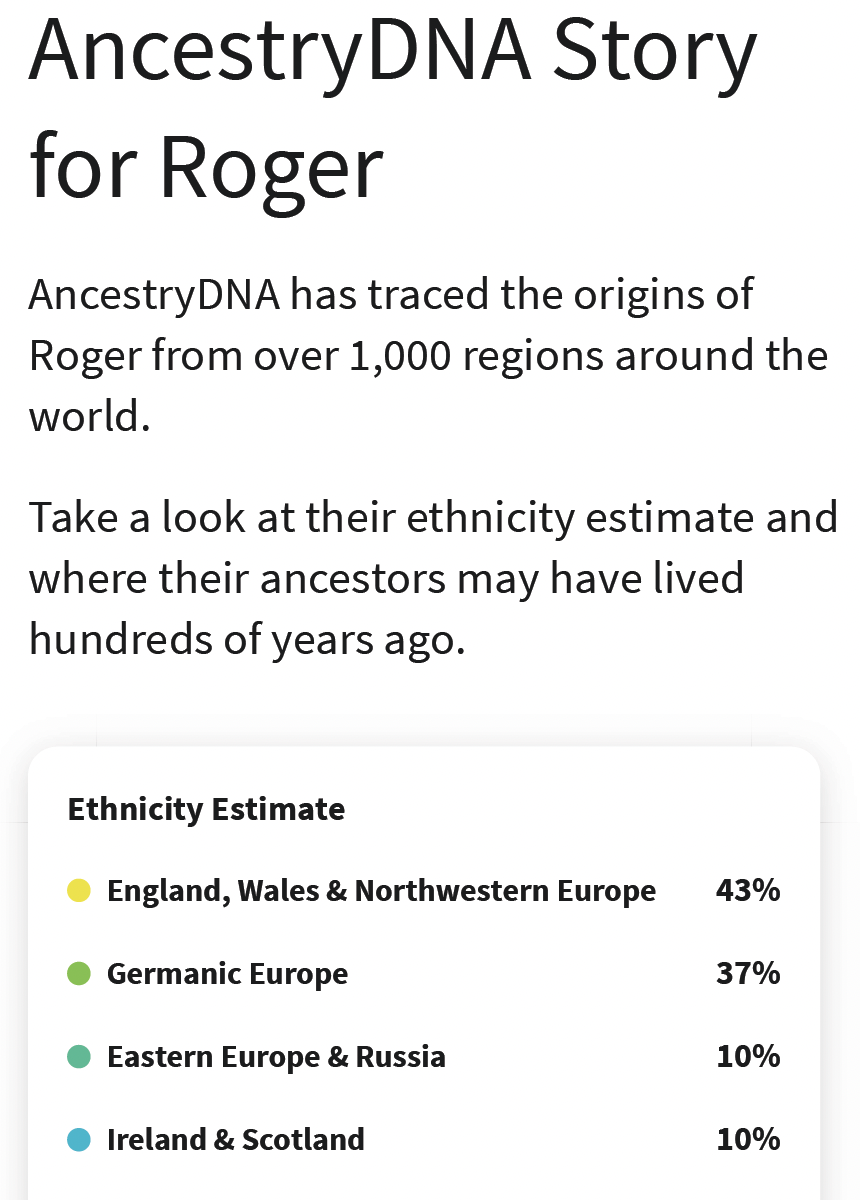
Figure 12 - DNA Scan for Roger Karge, Editor of DEE reflecting the c.50% British maternal ancestry of his 1823 convict forebear, and the c50% ancestry of his Prussian German immigrant father. Source: Ancestry.com
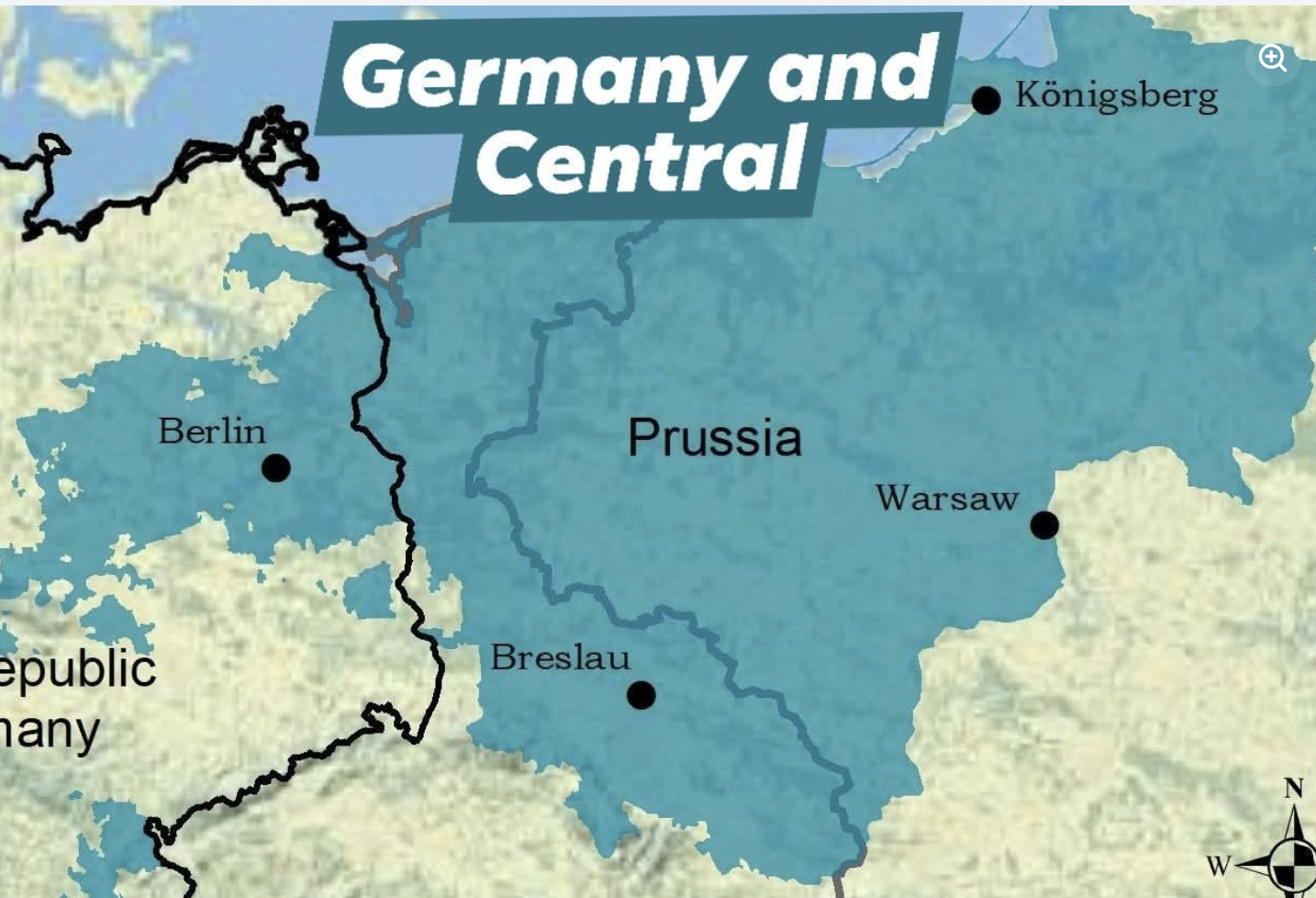
Figure 13 - Prussia’s Heartland - The ancestral lands or ‘Country’ of the Munchenbergs and Karges
A unifying and proper outcome for activists such as Rachel Perkins is, I believe, to respect the operation of the Australian War Memorial as it is currently described by the actual words in the legislation.
It is legislated as a memorial to all Australian servicemen and women, regardless of their race or ethnicity, who swore an allegiance to the Sovereign of Australia that they would defend Australia. Their service, how it was raised and how it was conducted and complied with, is all defined by the words of the Act. These servicemen and women included many Australians of Aboriginal descent - a descent that was not of relevance to their inclusion in the War Memorial.
The War Memorial does not, and should not, memorialise some ‘sovereign citizen’-type of Aboriginal warrior, whose belief, no matter how passionately held in their own mind at the time, or in the minds of their descendants today, convinced them that they were defending their own so-called ‘nation’ or ‘country’.
The War Memorial only serves one country and one nation: that of the Commonwealth of Australia. Inclusion within the AWM is strictly for those Australians who served defending the internationally recognised, sovereign entity, or state, that is Australia, whose sovereignty is held by all the Australian people equally as citizens under the Crown.
The Aboriginal warriors who were killed in pre-Federation frontier conflict were British subjects, even if, as Perkins told me, they weren’t asked if they wanted to be defined as such.
So any conflict between the Aborigines and the police, settlers and/or British soldiers, who were all British subjects as well, could only be considered as an affray, disturbance, criminal act, rebellion or a mutiny between equal subjects or ‘citizens’ under the law. Australia did not have a state-sanctioned ‘war’ with itself, or between ourselves. We had conflict between the Aborigines and others that was covered by criminal codes in the Common Law or, in rare, severe cases of disturbances, under Martial Law..
If the Aborigines were fighting a ‘war’ as Perkins claims, who was their official ‘enemy’? The civilian settlers? The British soldiers, or the Aboriginal Native Police, or all three?
If Perkins wants to include Aboriginal warriors in the War Memorial, fighters who never signed any legal document affirming their allegiance to the Sovereign of Australia, to where would she relegate the memory of the British soldiers, Native Police and settlers that the warriors killed? Would it be to some ‘other’ graveyard designated for the ‘enemy’? Or would they be housed in the same AWM?
Are we thus to label these British subjects, killed while fighting for the Crown, as the enemy? Or are we expected to house both the nation’s heroes and its enemies within the same War Memorial?
If we go down this track much further, the War Memorial will no longer be primarily a scared place of reflection, but rather it will convert entirely to a general museum/memorial to war-like operations. Are we then to include memorials to the miner’s ‘war’ at Eureka Stockade or the Irish convict ‘war’ at Vinegar Hill? Both involved the British military killing British subjects on Australia soil.
I think this would be absurd and it is incredible that this proposal for inclusion of the frontier conflicts in the War Memorial has gone as far as it has in being accepted within the AWM hierachy.
Yet, if that is what is wanted, then Kim Beazley and his AWM committee should come clean and instead of making these decisions by stealth, they should standup, along with Rachel Perkins and the other advocates, and have the proposals debated in parliament to get the wording changed in the legislation to specifically allow the inclusion of frontier violence.
The Australian people, those that served their country and, most importantly the memory of those who paid the ultimate sacrifice, deserve nothing less than open transparency in the workings of the Australian War Memorial.
Further Reading
6 - The Defence of Australia, its Sovereignty and the War Memorial Act 1980
In the book, Australian Wars (Figure 2) contributors Rachel Perkins and Mina Murray lay out how they see the history of frontier conflict and their understandings of its political consequences for today:
Indigenous nations resisted colonial occupation of their lands, territory by territory, as the frontier moved forward. This is why the violence and warfare that occurred in Australia during this period, is described as frontier violence or Frontier Wars… But as Mina Murray points out, even when the frontier broke across our people and Country and moved on, we still held, as we do today, that it is our Country: Always Was Always Will Be whatever tenure is staked across it.
- Rachel Perkins, p.xiv
What Perkins and Murray are saying here is that Aboriginal ‘nations’ were at ‘war’ with the colonisers, who had proclaimed ‘tenure’ over the land, initially as sovereignty under the Crown, and in modern-day parlance, under the Commonwealth of Australia.
Adopting the ideology espoused by the Far Right ‘sovereign-citizens’ movement, Perkins and Murray thus do not seem to recognise the Australian government’s sovereignty over Australia in general, and over their former tribal lands or so-called ‘Country’ in particular.
This is at odds with the Australian government’s understanding of the country’s sovereignty which is:
The capacity of a people [Australians], through their government, to determine their own circumstances and to act of their own accord, free from any coercive influence. [While] Defence capability is a key factor in sovereignty, it does not define sovereignty.
- Statement by The Hon Richard Marles MP, Deputy Prime Minister, Minister for Defence, 9 February 2023
Our government clearly believes the sovereignty of the Commonwealth of Australia is held by all Australians as citizens, acting through their democratically elected government. It is independent of any self-proclaimed notions of prior rights or tenure and it certainly is not based on race.
Also, Marles’ statement implies that just because a polity (government, state or tribe) has a “defence capability” that doesn’t mean it has sovereignty by definition. This has implications for activists who believe that because Aborigines “resisted” colonisation by use of their “defence capabilities” (warriors, spears, weapons, guerilla tactics, etc.) they were defending their sovereignty. No it doesn’t according to Marles.
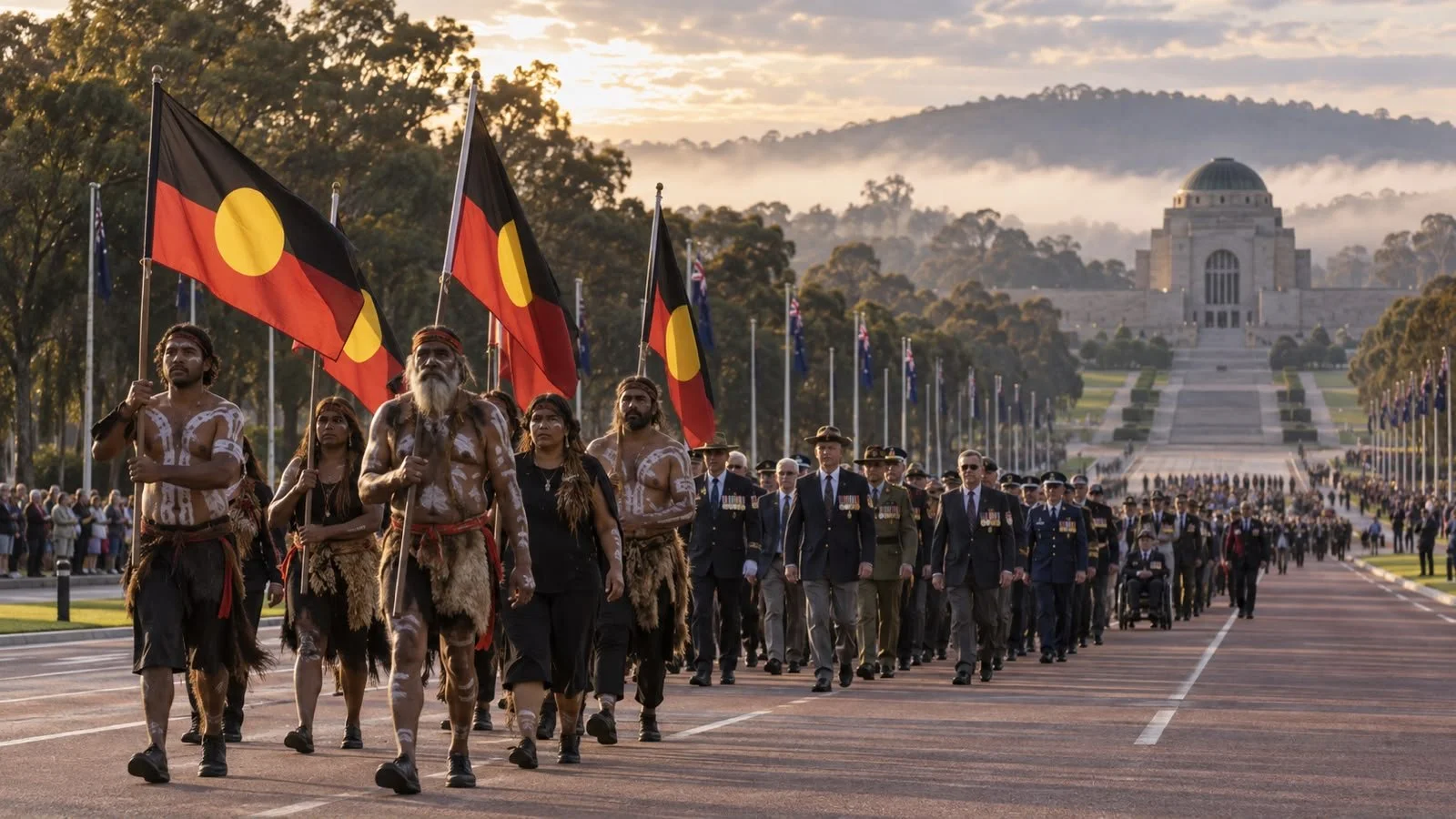
When Murray chants her claim that Australia, ‘always was, always will be’ Aboriginal land, this would seem to put her at odds with the Australian War Memorial’s remit to memorialise the Defence Forces of the Crown and the Commonwealth (Figure 14).
This then begs the question - why would activists such as Perkins and Murray want to have their Aboriginal warrior fighters memorialised in an institution whose legitimacy they have explicitly rejected?
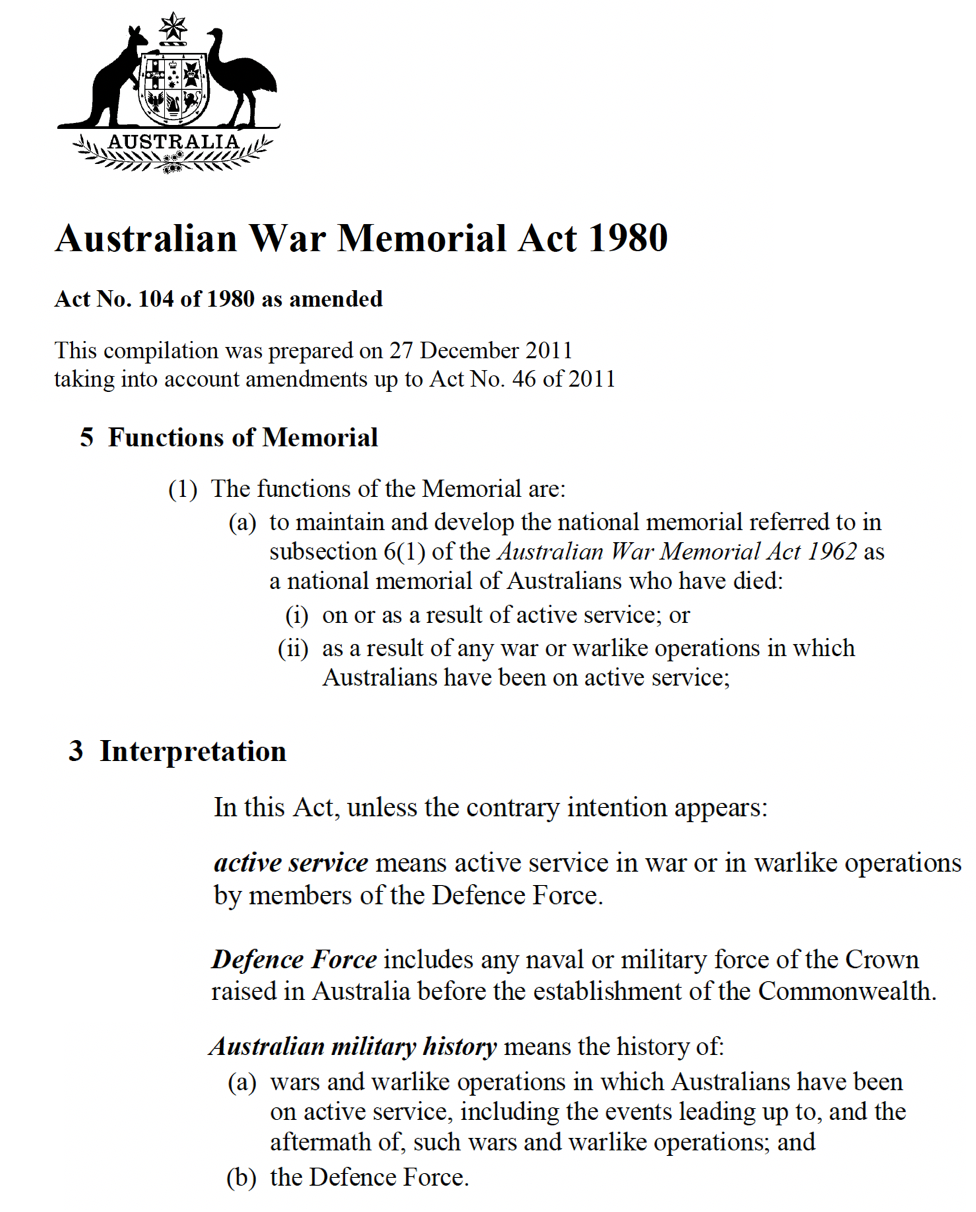
Figure 14 - Selected extracts from the legislation governing the scope and definitions for the operation of the Australian War Memorial. Source
7 - How to Memorialise the Aboriginal Deaths on the Frontier Then?
The Aboriginal deaths in these clashes should be memorialised, if so wished by their descendants, at each of the individual sites identified. In fact this is what is already happening - at Pinjarra WA, Myall Creek in NSW and at Burrundie in NT, amongst many others.
Localised decision making by the descendants of those on either side of the frontier is a much more appropriate and less controversial and divisive way to commemorate frontier violence.
8 - Post script
Readers should note that this research work is conducted in good faith and is not in anyway to be regarded as a personal critique of Rachel Perkins herself. Rather, this work is strictly limited to a critique of the writings, speeches and political opinions that she herself has expressed regarding the AWM and where she has relied upon her own ancestry to make or emphasise certain political and public policy claims. She has also freely put her ideas into the public square for comment, which is what this post aims to critique.
9 - Acknowledgments to J.Hunter Esq