So Goes the War Memorial, So Goes Australia
If obviously young people, the next generations coming through, go to the Australian War Memorial, what should they take away from a visit, a solitary visit to that place?
Just that, I think, that the country had depth. And that many people thought it was worth fighting for; and what we had created here, was worth defending; and, in the defence, they laid down the largest sacrifice of all, their lives; and I think that's what that memorial says.
- The Hon. Paul Keating, former Prime Minister of Australia, interviewed in 2013 (@48:45)
This post is about the decades-long campaign by a number of intellectuals, public servants, historians and Aboriginal activists to have the so-called ‘Frontier Wars’ memorialised within the Australian War Memorial (AWM).
Many Australians have been opposed to this plan.
Unfortunately however, it has now been formally ratified by the Australian War Memorial Council, under the chairmanship of former Labor politician, Kim Beazley. When the new galleries currently under construction are opened, the Aboriginal belligerents engaged in colonial violence will be memorialised within our nation’s shrine. (see 7:30 Report in 2023 and ABC News in 2023.)
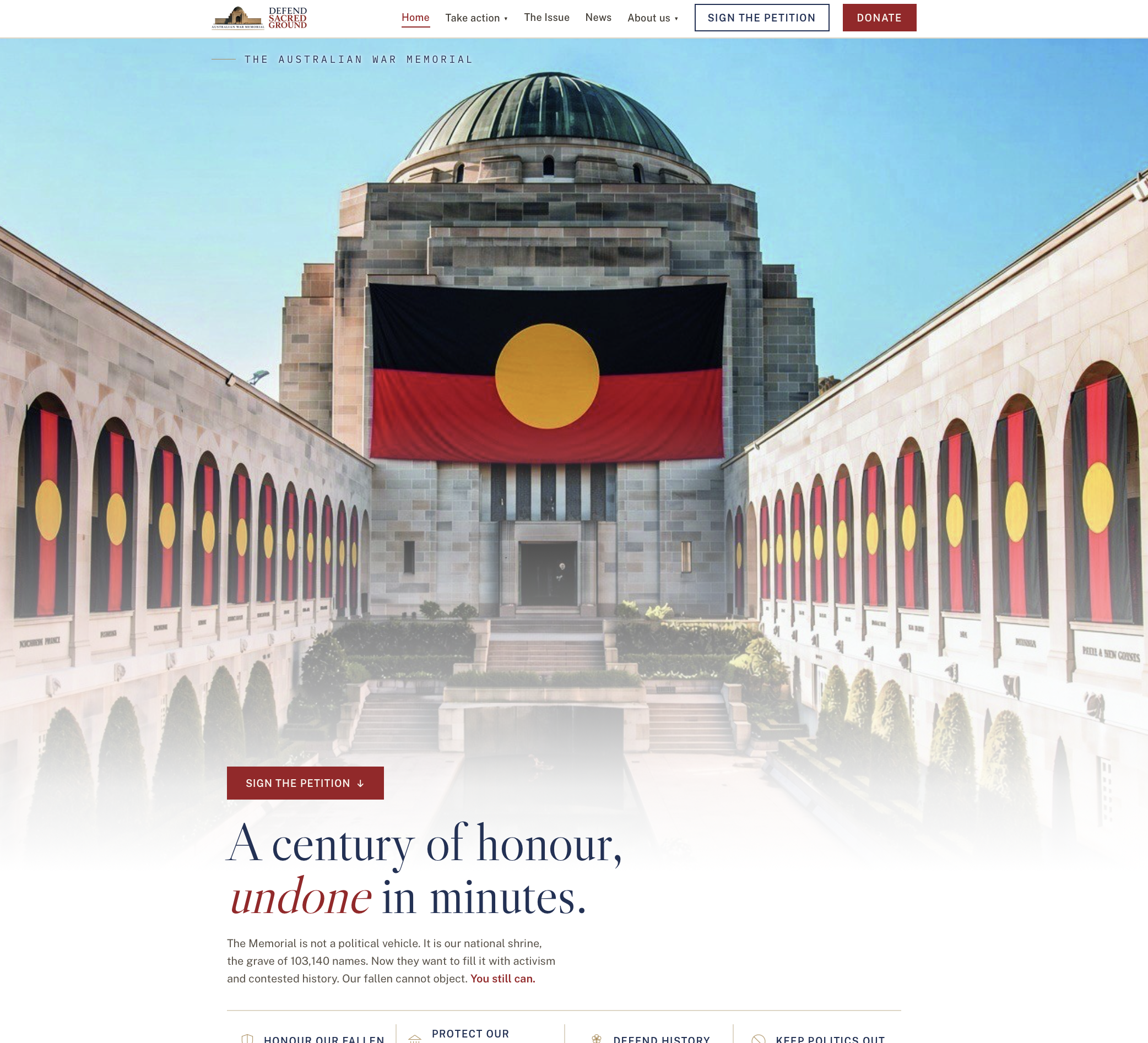
A counter-advocacy is now being undertaken by Dark Emu Exposed in collaboration with others, such as the Defend Sacred Ground petitioners, to oppose these plans and have them reversed by the War Memorial Council.
There are three main themes to our opposition.
1 - The Sacred versus the Profane
To lay down one’s life to protect or save the life of another, is the highest personal sacrifice - the ultimate sacrifice - that our society recognises, and duly honours.
In the theatre of war, 103,140 Australians are honoured in this way at the Australian War Memorial. Their deaths are sanctified at our nation’s shrine, in a building designed to create an initial feeling of solumness but which then seeks to inspire and unite us all as Australians.
As we enter this sacred ground, the architecture leads us to leave the ordinariness of our daily lives, the profane, at the door. Instead, we are moved towards the sacred, along a path of deep reflection as to what these 103,140 Australians and, through their great loss, their families also, gave to secure our safety and the freedom of our country.
And just as importantly, we begin to understand that our own lives will at times require some personal commitment if we are to protect this sacred ground and uphold the honour we accord those who gave their lives for us.
The shrine’s sacredness prompts us to rise above our own personal concerns and ask: How would we act if we were called upon one day to risk our own lives to protect our children and our nation in the face of a new enemy? Do we have the civic pride and moral fibre to stand up against those who seek to denigrate the ANZAC tradition and the memory and honour of those who have already fallen?
How this ANZAC tradition and memory of the fallen is curated, respected and maintained on sacred ground is the primary, and to some, the only, responsiblity of Kim Beazley and his War Memorial Council. This responsibity must be above any party, activist or ideological politics.
Yet activists today have succeeded in overturning the basis as to why these 103,140 Australians meet the criteria for our honoured dead. Instead, the activists have had the rules changed by Beazley’s Council so as to allow the inclusion of 100,000 un-identified Aboriginal claimants onto the Roll of Honour alongside Australia’s war dead.
This is just not acceptable; it is sacrilegious and a deeply amoral decision to politicise the War Memorial and its sacred ground. It diminishes the sacred meaning of a shrine to 103,140 uniformed Australians who died defending future generations and our country from our enemies. Instead, their sacrifice becomes just another contested statistic in the ongoing ‘history wars’ that have been waged by the activists against British colonisation in Australia.
2 — Enemies Can be Respected But They Can’t Be Revered
The second issue to consider are the apparently contradictory claims being made by the activists. The nation honours the 103,140 servicemen and -women at our nation’s most sacred shrine because they were Australians who made a pledge that met the criteria of the War Memorial Act: they agreed to don our country’s uniform, swear an allegiance “to serve our Sovereign Lord, the King” in the “military forces of Australia under the Crown” and to “resist His Majesty’s enemies.” A number of these Australians were Aboriginal and all were fighting to preserve the legacies of the British colonisation of Australia.
In contrast, none of the Aborigines killed in colonial violence could in any way be deemed to have met the War Memorial criteria for inclusion: none were signed-up members of the “defence forces” raised by the Crown; none wore an Australian military uniform; none swore an allegiance to our “Sovereign Lord, the King or Queen”; and, far from “resisting His Majesty’s enemies”, the activists openly admit the Aboriginal warriors were in fact His Majesty’s enemies in their so-called ‘war of resistance’ against British colonisation.
These two peoples - the Aboriginal warriors and the Australian war dead - could not be more different: Aboriginal warriors whose names we don’t know, fighting against colonisation and the Crown; the other, Australians fighting as named British subjects for the Crown and the preservation of our British colonial legacies.
It is thus patently absurd to memorialise and honour, on an equal basis, these Aboriginal “enemies” of the Crown alongside the 103,140 Australians who gave their lives defending the Crown from its enemies. Are we now expected to consider honouring other “enemies” of the Crown at our national shrine also - the Germans, Japanese and Viet Cong perhaps?
Quite simply, this is a contradiction that the activists have never explained: how can the colonial Aboriginal belligerents be, at the same time, both First Australians and enemies of the Crown, yet also be, Australians who have met the criteria of being memorialised in the War Memorial by pledging an allegiance to our Majesty and the Crown, and fighting His enemies.
The Australian War Memorial is one of the last of the great institutions in Australia that has not been fully infiltrated by the Far-Left activist class and their deeply divisive, political and racist ideas.
Yet the activists have finally succeeded in their two-decade long campaign to insert their political presence within the War Memorial. But this begs the question: why would the anti-British, un-Australian activists even want to ‘honour’ their Aboriginal ‘war dead’ within the coloniser’s war memorial?
The only reason can be ideological - they are doing it simply to be politically divisive, vengeful or for sacrilegious reasons. This will divide us, not unite us as a nation.
3 - The Historiography - Does Colonial Violence meet the Criteria of being a War?
The third main theme to consider in the activist take-over of the War Memorial is the activist use of historiography to justify their claims.
The decades long historical work by the War Memorial’s own Military History Section has concluded that, “some precolonial conflict equated to warfare and could be termed war", although “the topic of frontier violence remains an area of ongoing historical research.” (Figure 1)
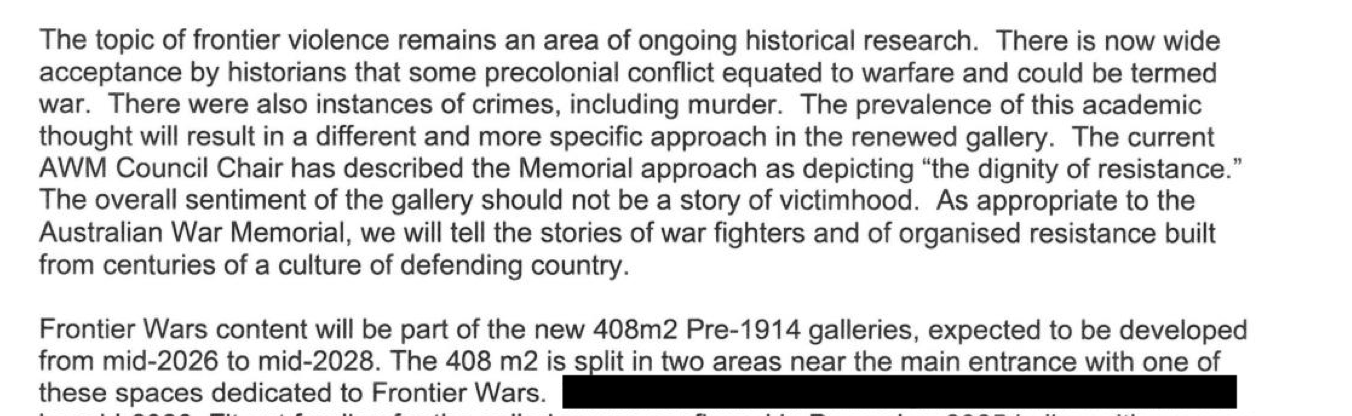
Figure 1 - Extract of a submission by the Australian War Memorial Director, Mr Matt Anderson to a parliamentary enquiry, dated 29 May 2026. Source: Download Full Letter here
Accordingly, the AWM council has relied upon this so-called “wide acceptance by historians” in their decision to incorporate the memorialisation of the claimed 100,000 un-named (because they are unknown) Aboriginal victims of this now self-proclaimed “war”.
Sadly, Mr Anderson’s advice is poorly supported by evidence or fact.
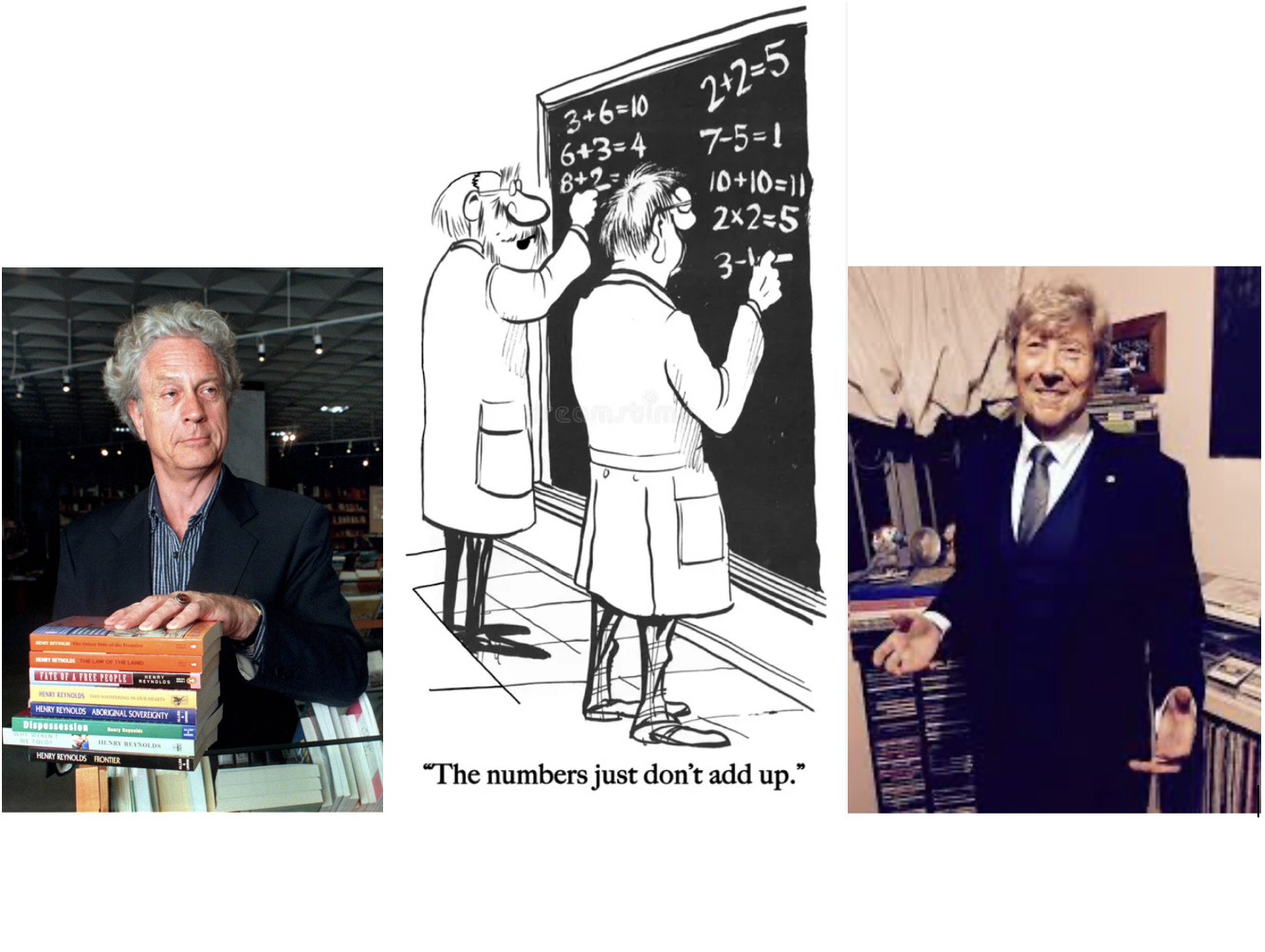
The mere fact that modern day historians, such as Henry Reynolds have been able to ‘discover’’ the theory of Frontier War, a hundred years and more after the events, is that previous generations of military personnel, government administrations and historians, on the ground in colonial times, never witnessed anything approaching a genuine “war”. They never formally acknowledged “war” because it didn’t happen.
Reynolds’ theory is just that, a theory, worthy of investigation for sure, but on closer analysis it just does not stack up. Any violence that did occur was generally localised and sporadic and more like civil unrest, petty theft and plain criminal activity leading to, fairly uncommonly, murder and plunder.
Contrarian historians, who question some of the narrative and statistical ‘evidence’ presented to support the “war” theory have been downplayed, ridiculed and even cancelled when trying to present their findings.
And the findings are pretty damning. For example, if it was “war” how is it possible that only fifteen British soldiers were killed (using the AWM approved historians own figures) over years from 1788 until 1870 when the last British soldier left; yet Henry Reynolds and his theorists claim 100,000 Aborigines were killed and the huge land mass of Australia was conquered by a British military that was never many more than a few thousand at any one time - and most of that time was spent guarding convicts! This must go down as the greatest military conquest of all time - a prize of 7million km2 of land with a puny military force of 2,000 redcoats at any one time, armed largely only with front-loading muskets; and all for only 15 dead against 100,000 dead Aborigines, a third of the Aboriginal population at the time. How is this possible? It’s a patently absurd theory.
If the Aborigines were at “war” why did so many decide to voluntarily ‘come in’ to the settlements to integrate, work and assist the British colonisation? Why did Bennelong willing agree to acompany Governor Phillip to England? Why did Bungaree join Flinders’ Australian circumnavigation party and, on his return, dress in a military redcoat and welcome sea-borne visitors to Sydney?
And why did the Torres Strait Islanders welcome the British missionaries to their islands peacefully, an event still celebrated today as the Coming of the Light?
Even historians such as Professor Peter Stanley, who supports the changes at the memorial, recognise that the use of even ‘dodgy’ historiography is not enough to lawfully comply the charter of the Australian War Memorial Act 1980. Stanley is calling for amendments to the Act to be put before parliament to clarify and lawfully support the Council’s decision (Figure 2 & 3).
We agree wholeheartedly with Stanley on this - parliament should visit this contentious issue and amend the Act, after a rigorous democratic process, to either completely rule in the so-called ‘Frontier Wars’ or, as we prefer, clearly rule them out of being memorialised within our nation’s shrine.

Figure 2 - Extract of a Canberra Times Letters to theEditor exchange, 26-92026. Source: Full Letters here
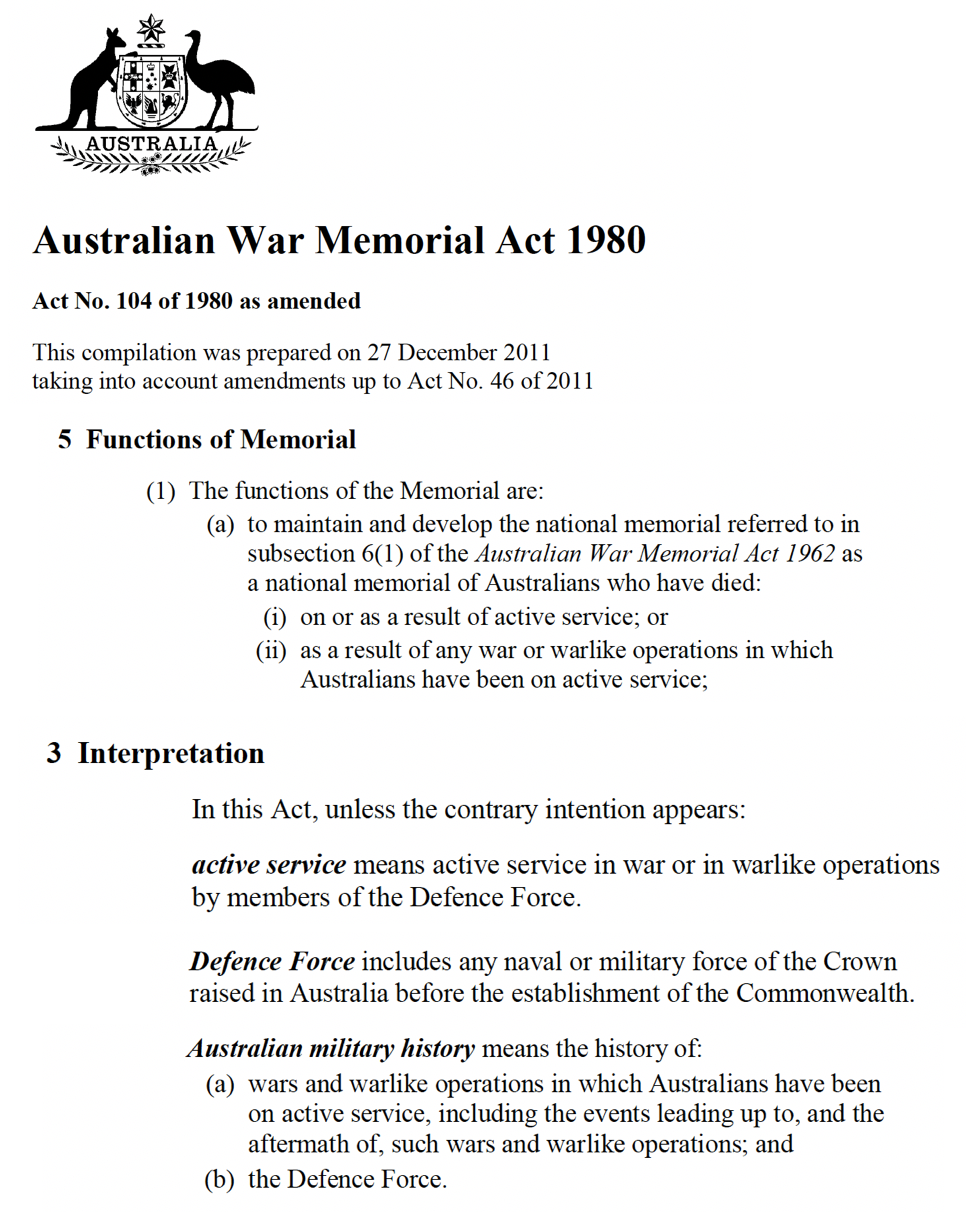
Figure 3 - Extract of the relevant definitional details of the Act. A close reading clearly rules out Aboriginal warriors fighting the Crown.
Posted: 5 October 2026
By: Roger Karge, Editor
Further Reading
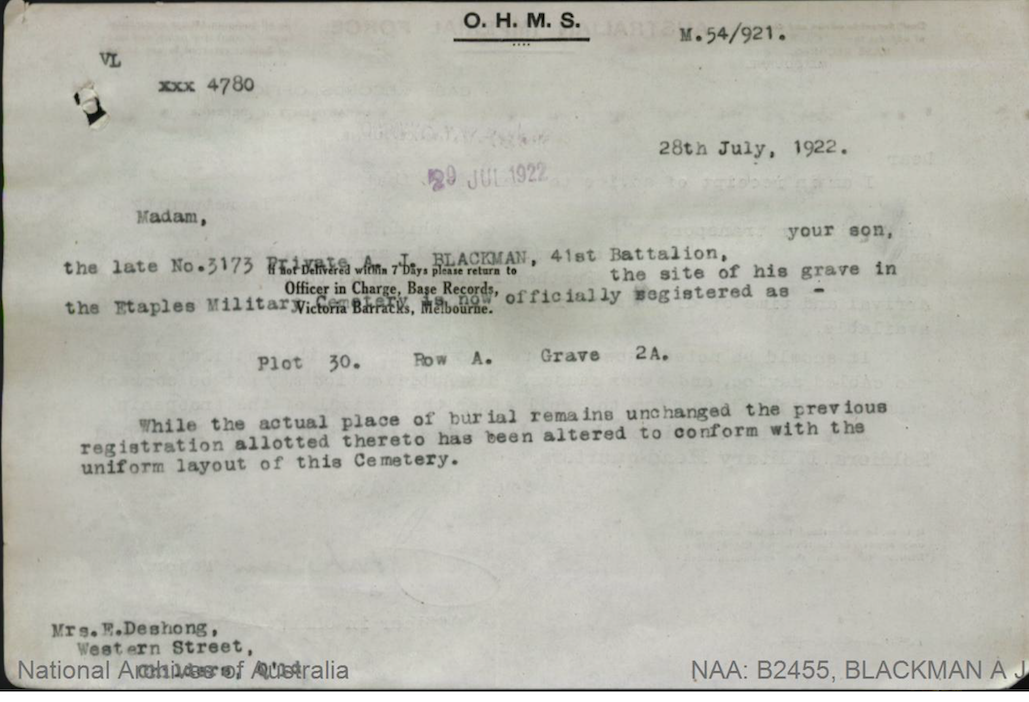
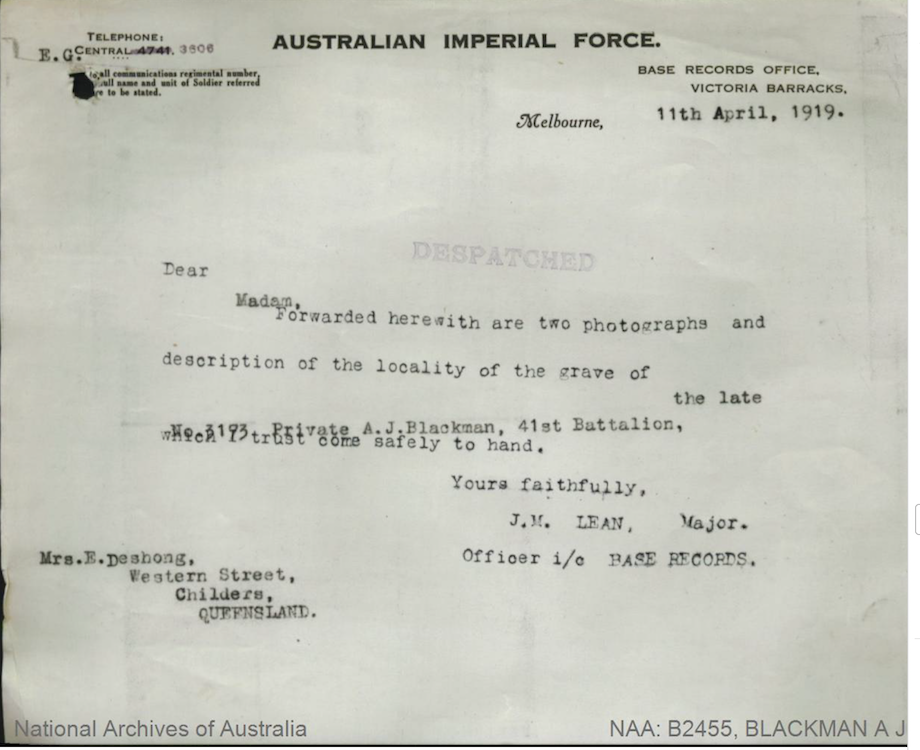
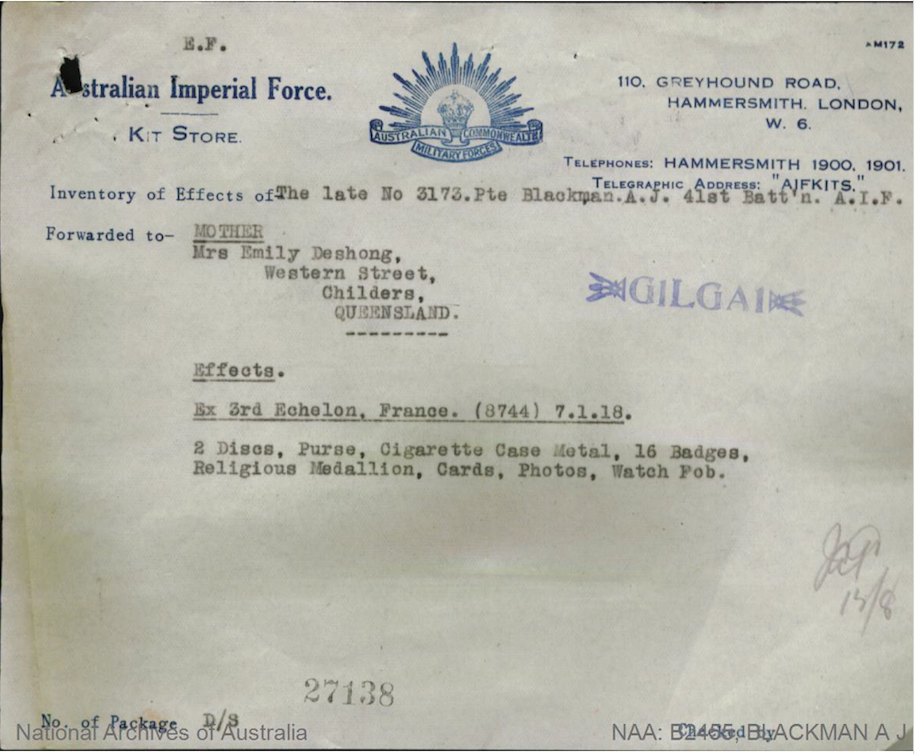
A typical oath made by a soldier, in this example Aboriginal man Alfred John Blackman, killed during the First World War and memorialised in the Roll Of Honour as one of the 103,140 Australian War dead, is shown in Figure 5.
In Figure 4A, Blackman is in the front row, seated on step. The “K” signifies those in this photograph who were known to have been killed (at least 3 out of 13).
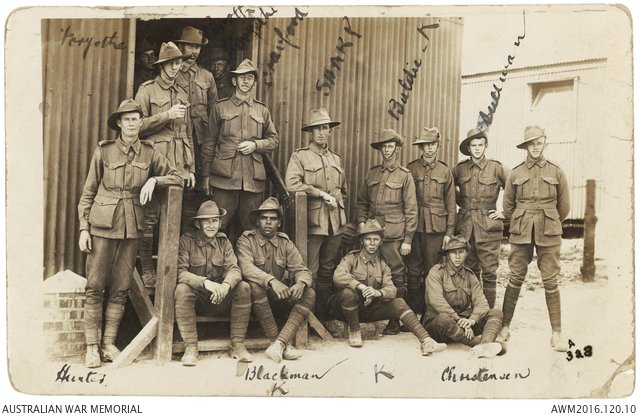
Figure 4A - Source AWM
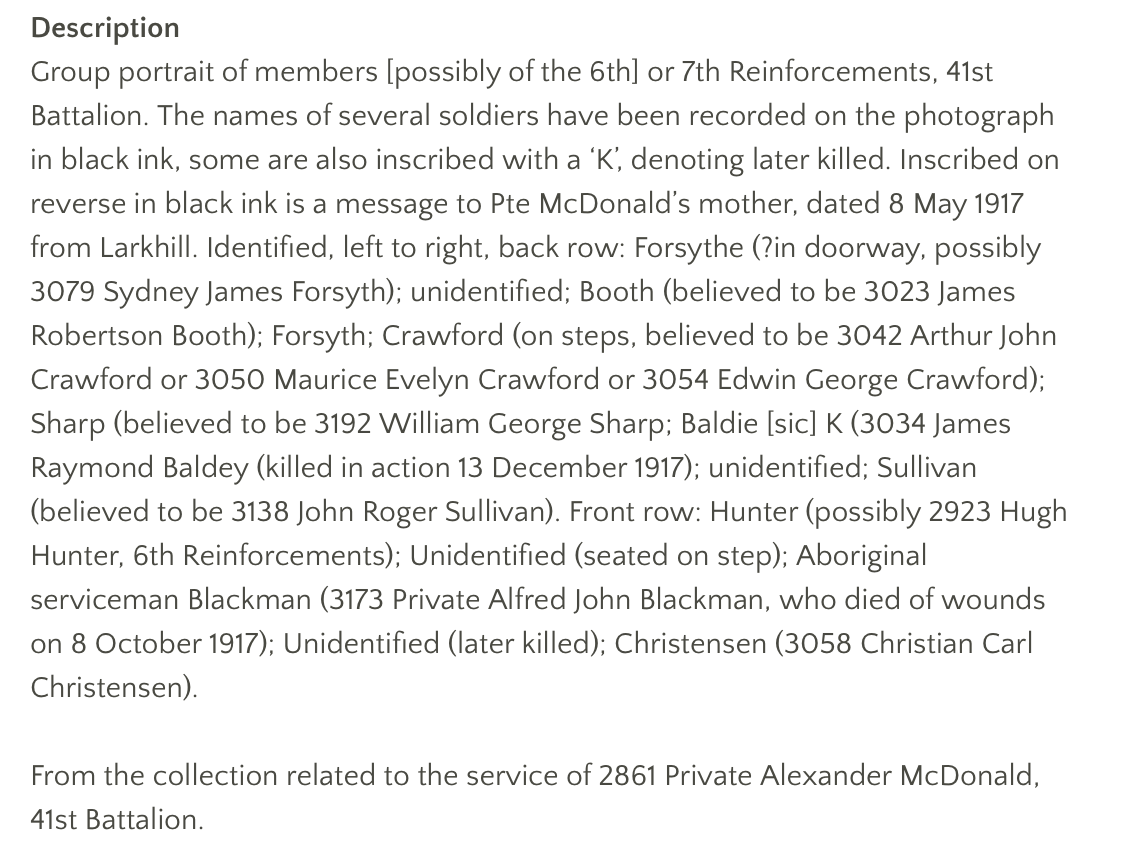
Figure 4B
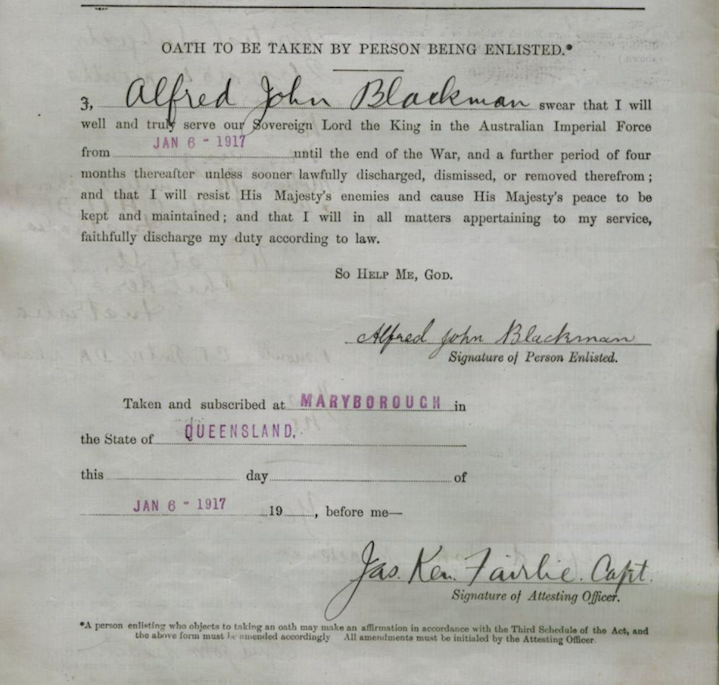
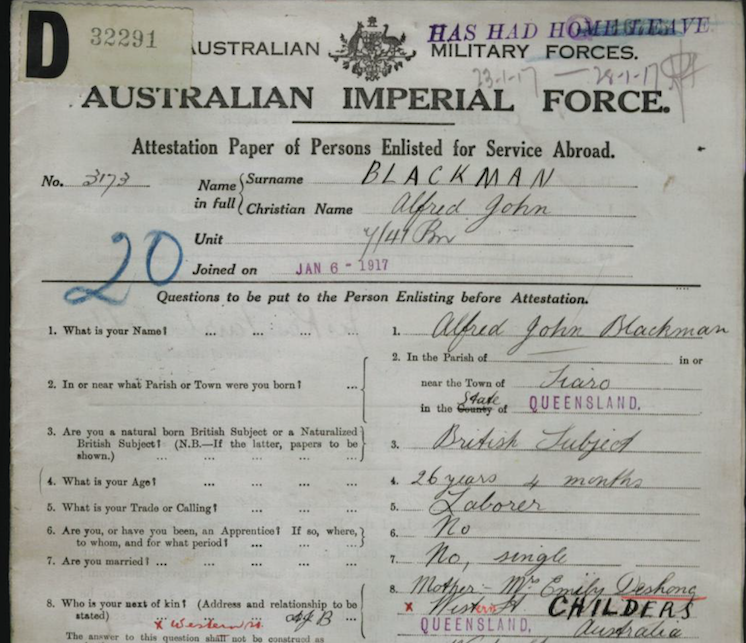
Blackman considered himself Aboriginal as well as a “British Subject”
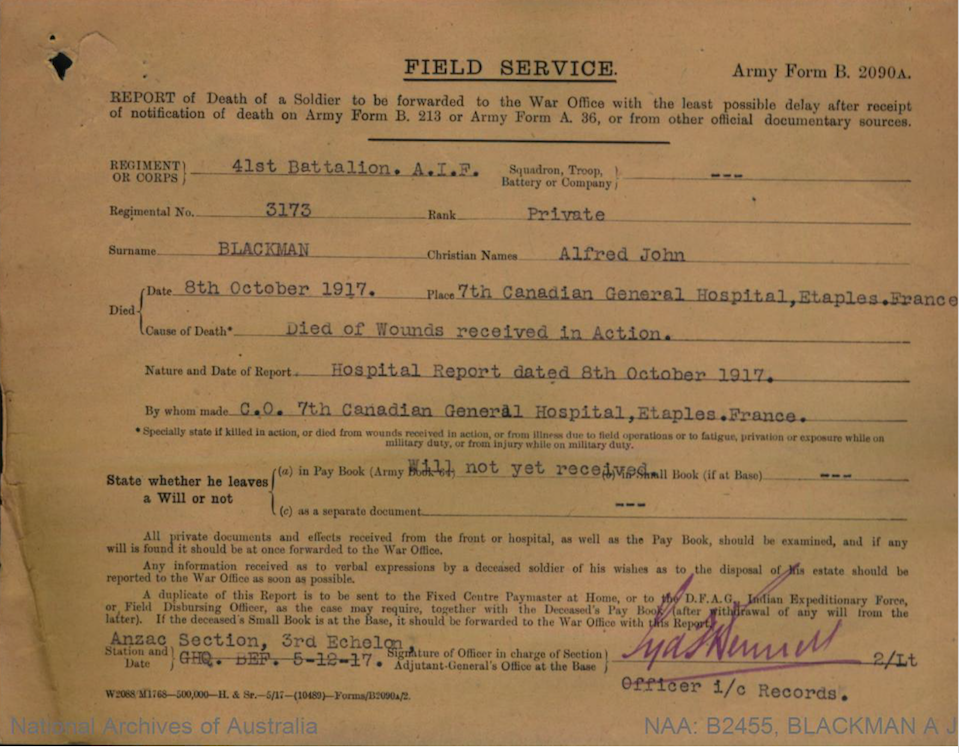
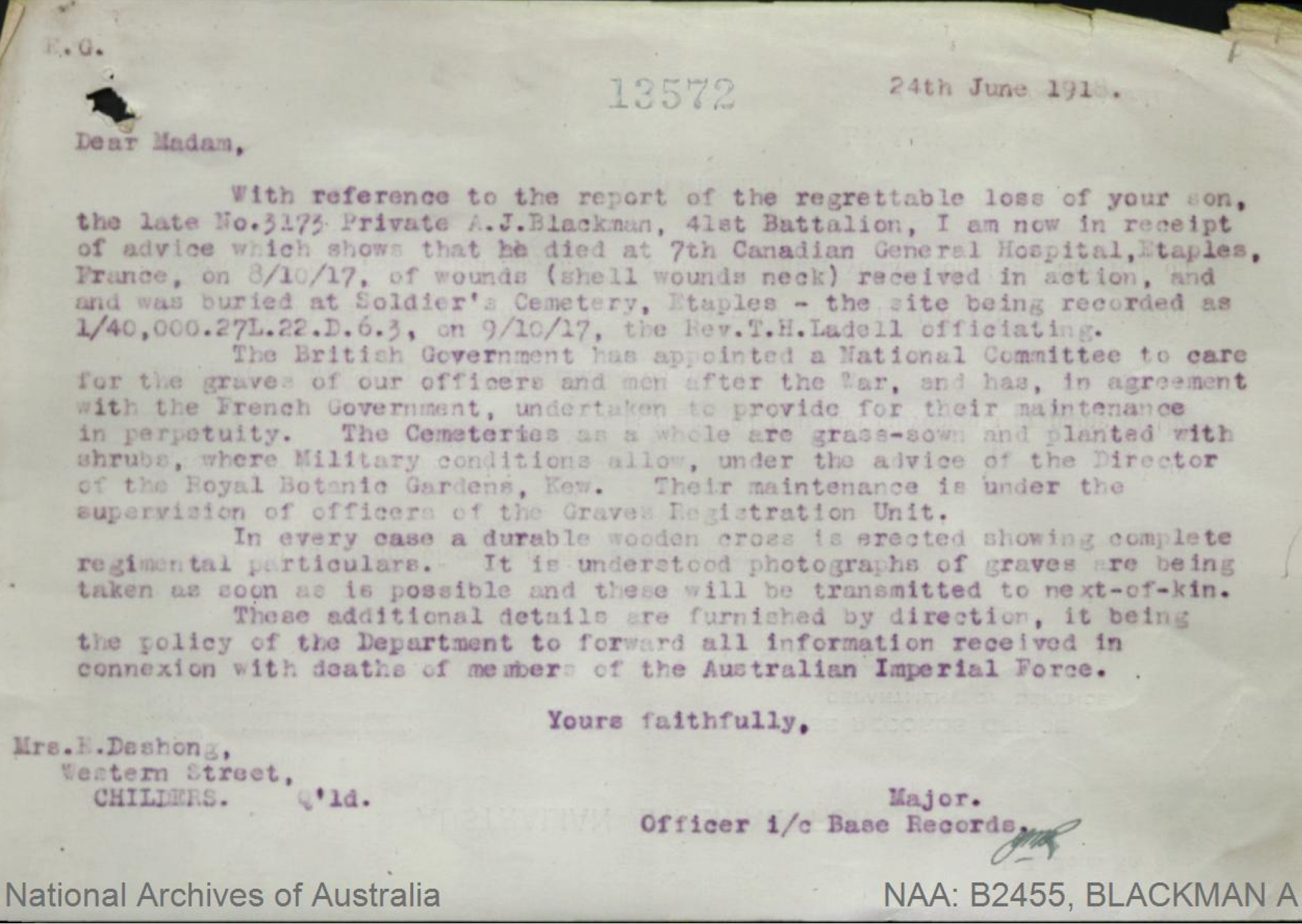
The letter every family back home dreaded: This one to Blackman’s mother, advising of her son’s death.