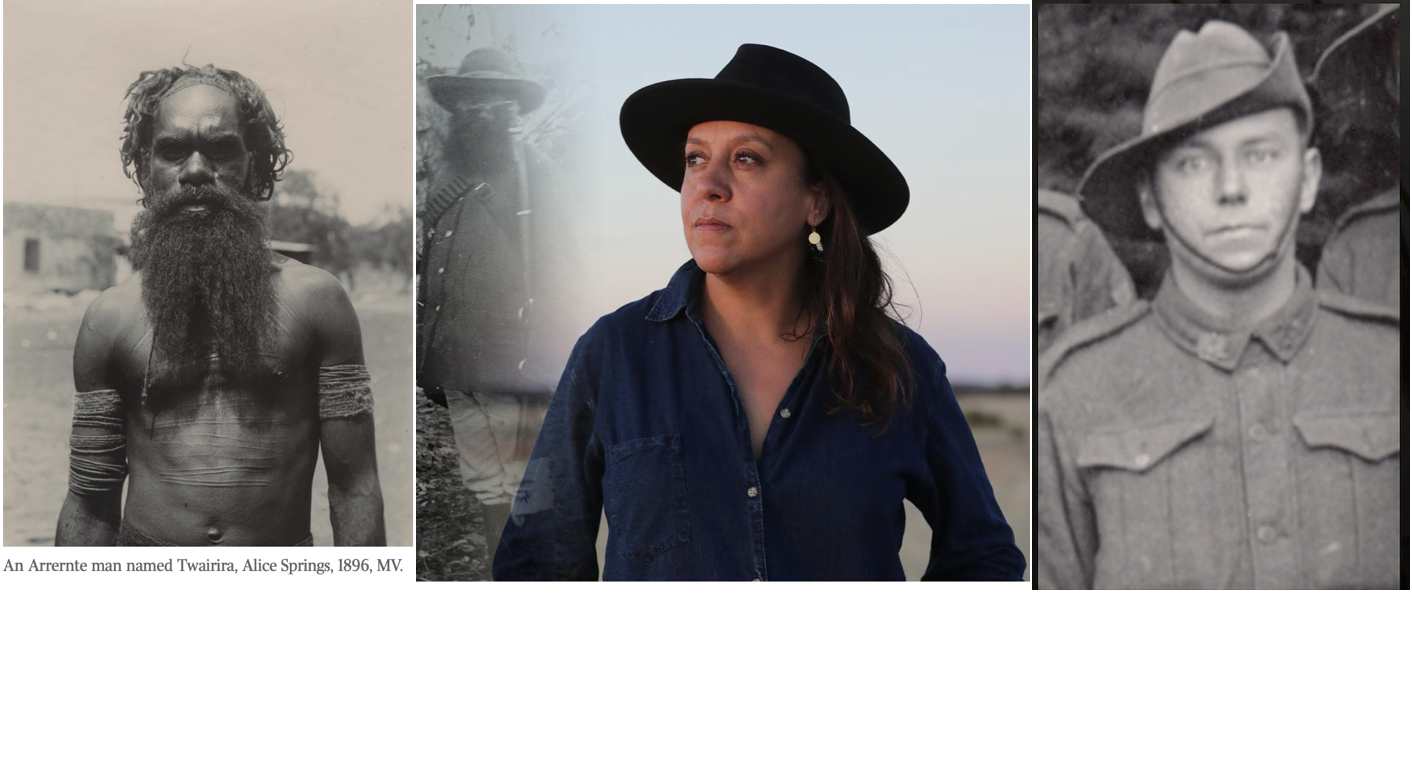
'On Country' with Rachel Perkins and Family in Prussia
Posted 12 Sept 2026
by Roger Karge, editor
Let’s go beyond racial pride. Beyond black and white. Let’s be proud only of being human beings set on this land together, determined to find what unites us and not to invent such racist and trivial excuses to divide. Deal?
- Andrew Bolt, 2009
In a previous post, we revealed the surprising family ties that filmmaker and producer Rachel Perkins had with the old German empire of Prussia.
A little known public fact is that her ancestry, via her mother, Eileen Perkins (nee Munchenberg) is a solid 50% Lutheran Prussian German.
Also revealed in that post, is that my ancestry too is 50% Lutheran Prussian German.
Incredibly however, after a little more research by the Dark Emu Exposed German-speaking genealogist, we can now reveal an even more surprising story.
Documentary evidence has come to light that Perkins and I really are of the same “mob”, metaphorically speaking. We are both born of the same “blood and soil” - she on her mother’s side; me on my father’s side - that derives from the Lutheran German Prussians who came from a very specific area of Prussia around Meseritz in Posen. This is our shared tribal ‘Country’.
Rachel’s maternal “clan”, the Munchenberg’s, emigrated from the region of Meseritz in 1839 and became well known as some of the first colonists in South Australia. As part of the Lutheran German Prussian “tribe” they are deeply integrated into South Australian colonial history.
The early colonial German settlers brought traditions to South Australia which maintained their Deutschtum or German identity. The most fundamental traditions were embodied in the Lutheran Church. Throughout the nineteenth century close-knit congregational life was a powerful force in preserving the German language and cultural traditions. Often the church was the first permanent building in a new settlement, and it was also frequently used as a school. The pastor had full authority over his flock. He was the guardian of both traditional religious practices and German values in the new land.
The 2016 census recorded 10,118 German-born South Australians, while 129,920 people said that they were of German descent (Source)
A typical Munchenberg tribal story is how they initiated the wine industry in South Australia (Figure 1).

Figure 1 - Extract from the History of Tangerides Vineyard. Source
Many of these Munchenberg clans came from the town area of Meseritz in Posen, Prussia.
The records show this is also where one of my own Karge clan members (Maria Schubert) came from, as indicated in my paternal family tree (Figure 2).

Figure 2 - Paternal Family Tree for the author of this post, Roger Karge, editor Dark Emu Exposed. Source: publicly available records
The following map of the region surrounding Meseritz indicates places where other members of the Karge clan were born, lived and married, on ‘Country” in Posen, Prussia (Figure 3 - see red flags, with distances from Meseritz indicated in boxed section of map.)
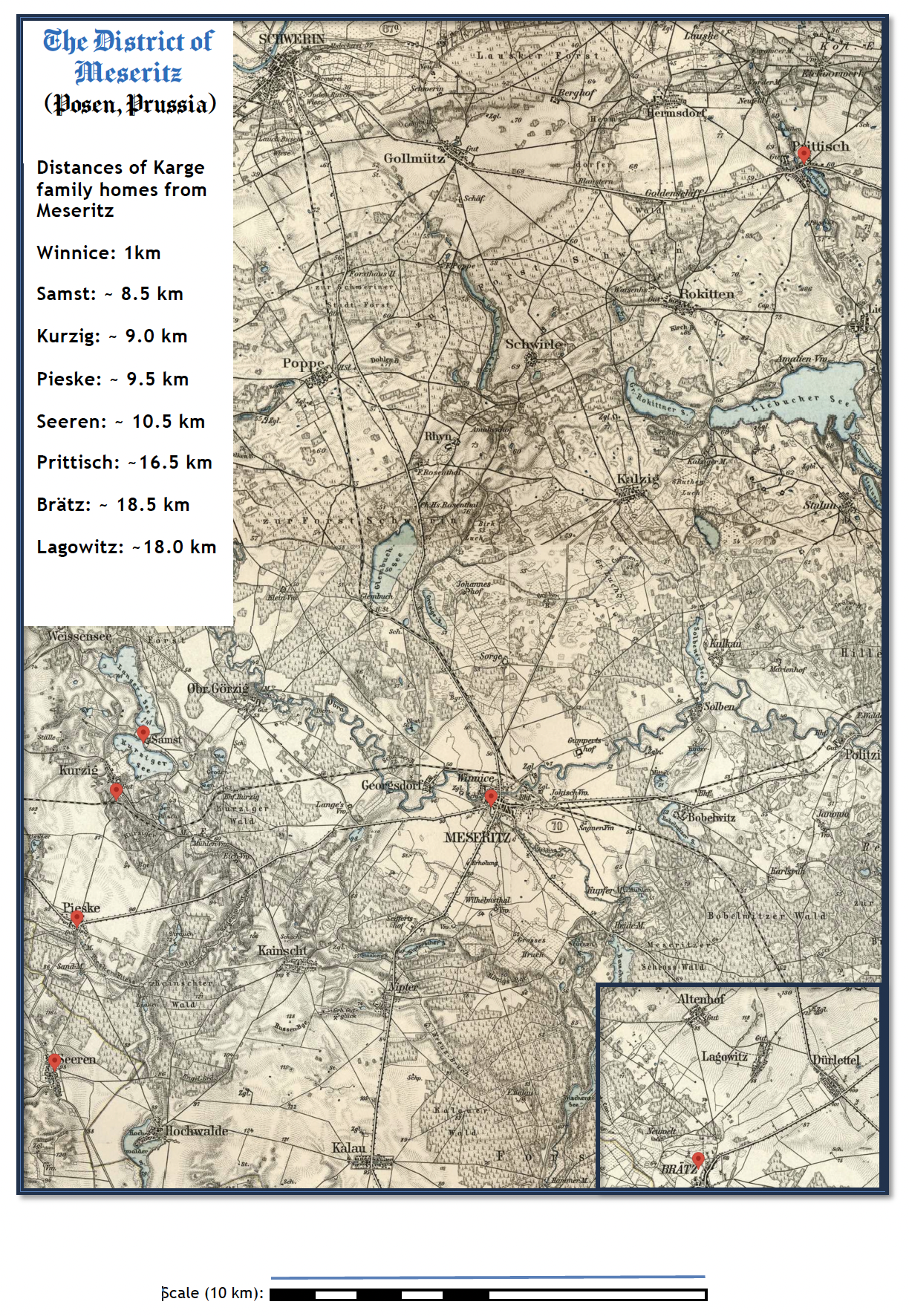
Figure 3 - Map of area around the “clan Country” of the Munchenbergs and Karges
The story so far indicates that the Karges and the Münchenbergs were practically neighbours around Meseritz, a predominately German-speaking area in Posen in the Prussian Empire. It seems Rachel’s family had a long history of Imperialism well before the British turned up on her father’s Country around Alice Springs.
A final piece of evidence was the finding of a death register - the Meseritz Sterberegister of 1849. One page recorded the burial of an Ernestine Pauline Muenchenberg (No. 60 in Figure 4) and another on the same page referred to my very distant ‘cousin’, Johannes Ludwig Karg[e] (No. 64), a landowner in Winnice, just across the river from Meseritz.
You don't get much more neighbourly, or indeed from the same “mob” of Lutheran German Prussians, than that.
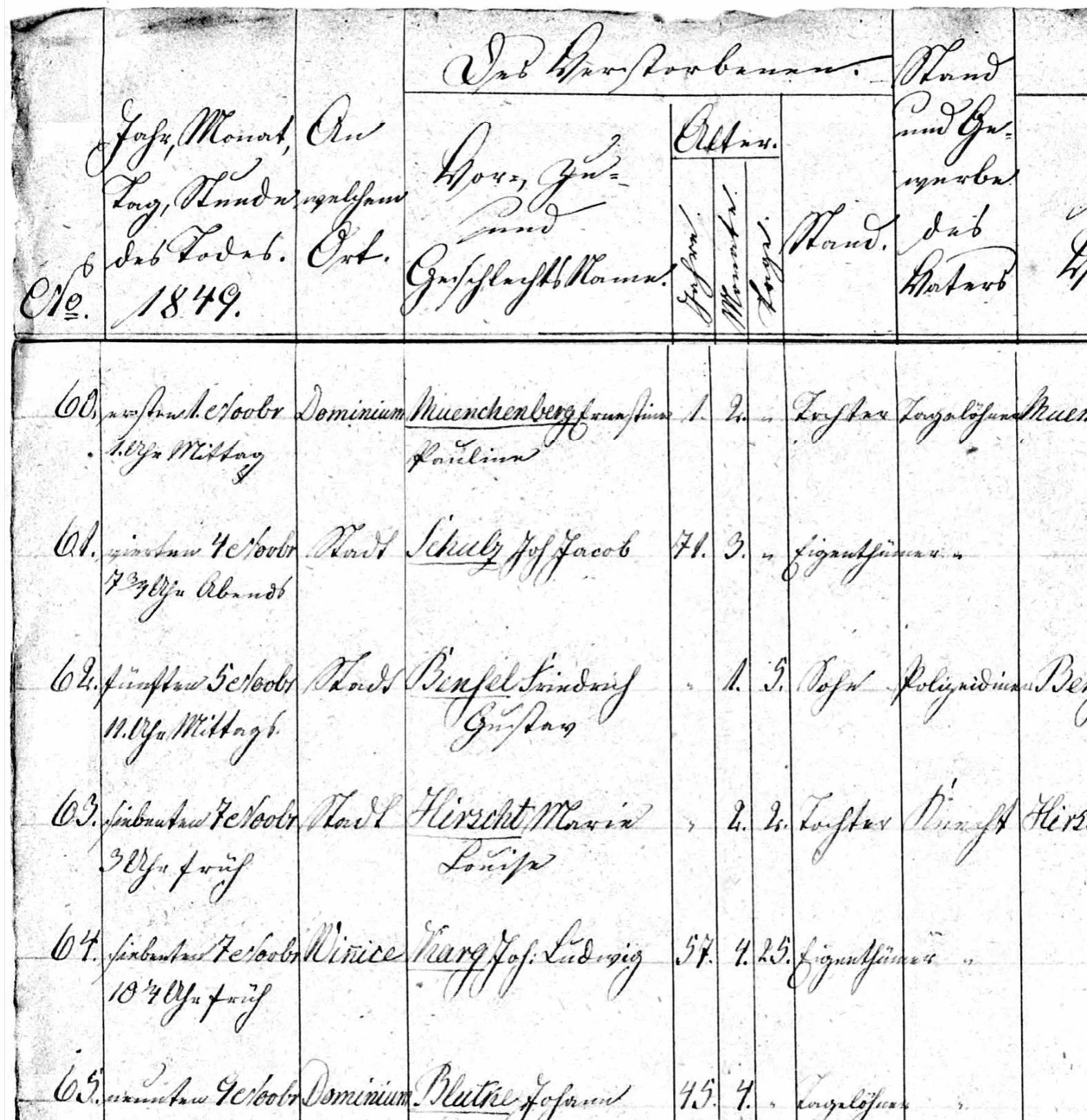
Figure 4 - A page from the Meseritz Sterberegister (Death register) of 1849, showing a “Munchenberg” (#60) and a “Karg[e]" (#64) . Source: public records
The following map shows part of the Prussian Imperial Empire in the 18th-19th Centuries (Figure 5)
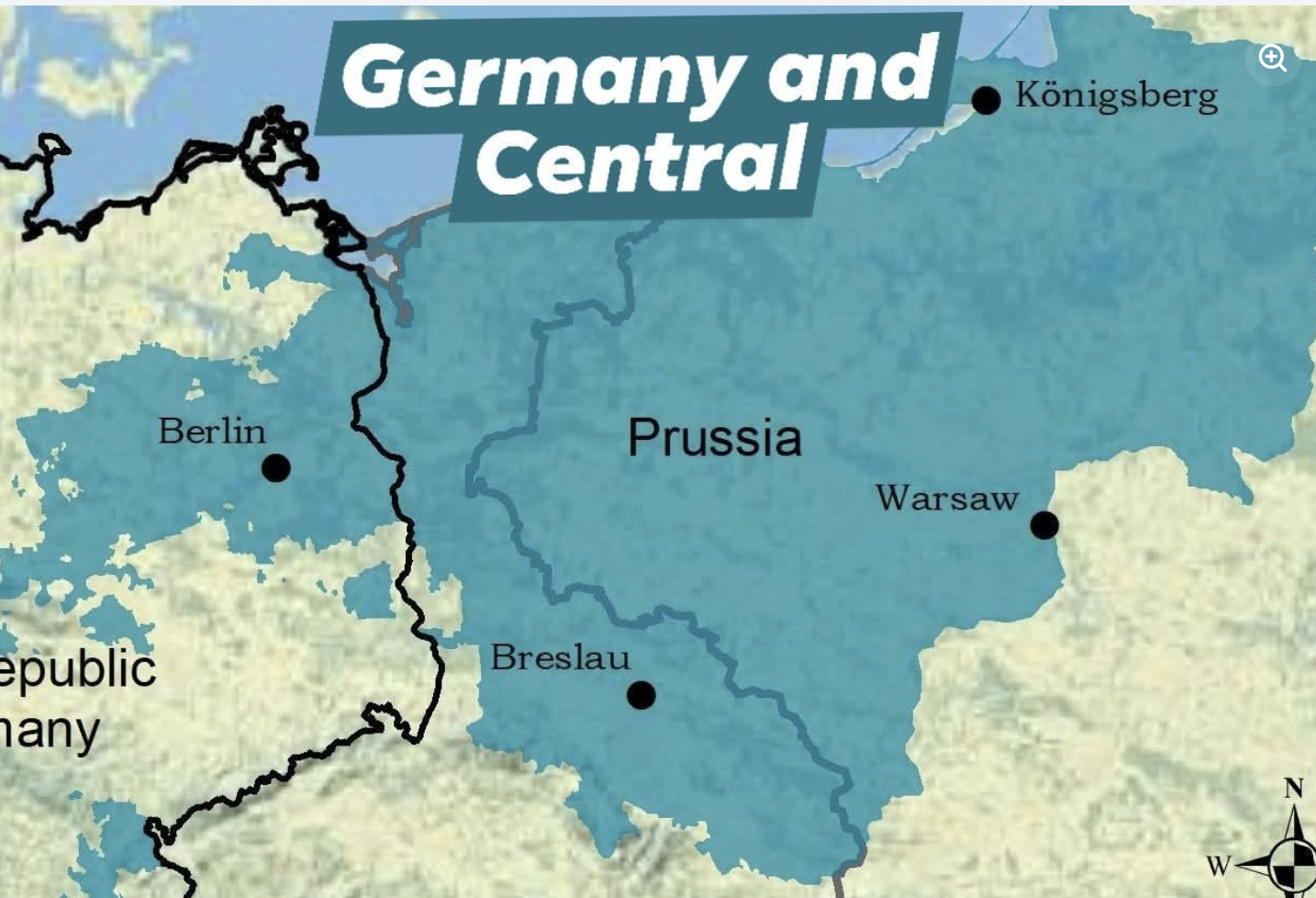
Figure 5 - Prussia’s Heartland - The ancestral lands or ‘Country’ of the Munchenbergs and Karges
Conclusion
The great sadness that many Australians feel, when they look at the advocacy of activists such as Rachel Perkins, comes from the realisation that she is wasting her obvious talents, and a lot of public money, on a cause that only leads to a political dead-end.
Championing race-based policies and the ideology of self-identifying Aboriginal sovereign citizens will only lead to divisions amongst Australians. The potential endgame of this advocacy is a full-blown system of apartheid.
Perkins would do well to consider deeply the opening quote by Andrew Bolt, as well as an insightful quote of Brian Lapping from his 1987 book, Apartheid - A History. Lapping had firsthand experience that South Africans were:
not uniquely evil or racist or authoritarian people. They did not go suddenly wrong in 1948, when the National Party came to power and imposed a rigid form of racial segregation; they went wrong because every previous step along the fatal road had seemed to work. When they launched into full-blown apartheid it seemed to nearly all of them the only way forward.
Rachel Perkins and other advocates for 'the ‘steps along the fatal road’ - Mabo, Reconciliation, the Uluru statement, The Voice, the Frontier War theory, all essentially part of a new Black Australia Policy - should realise that the dystopia of modern South Africa awaits Australia at the end of this fatal road.
Acknowledgments to J.Hunter Esq
Further Reading
See here on how my DNA (my SNP-y-DNA) was common to me and Australian Aboriginal men some 42,300 years ago.
That is, plus or minus a few thousand years, we were common brothers/cousins until our “mob” broke apart and my ancestors moved North East following the receding ice-sheets into northern Europe; and my Aboriginal “bros” headed South East over Sunda and ultimately to Sahul and the continent of Australia.
Yet the Rachel Perkins’ of this world still want to use the outdated ideology of race to divide us. Go figure.