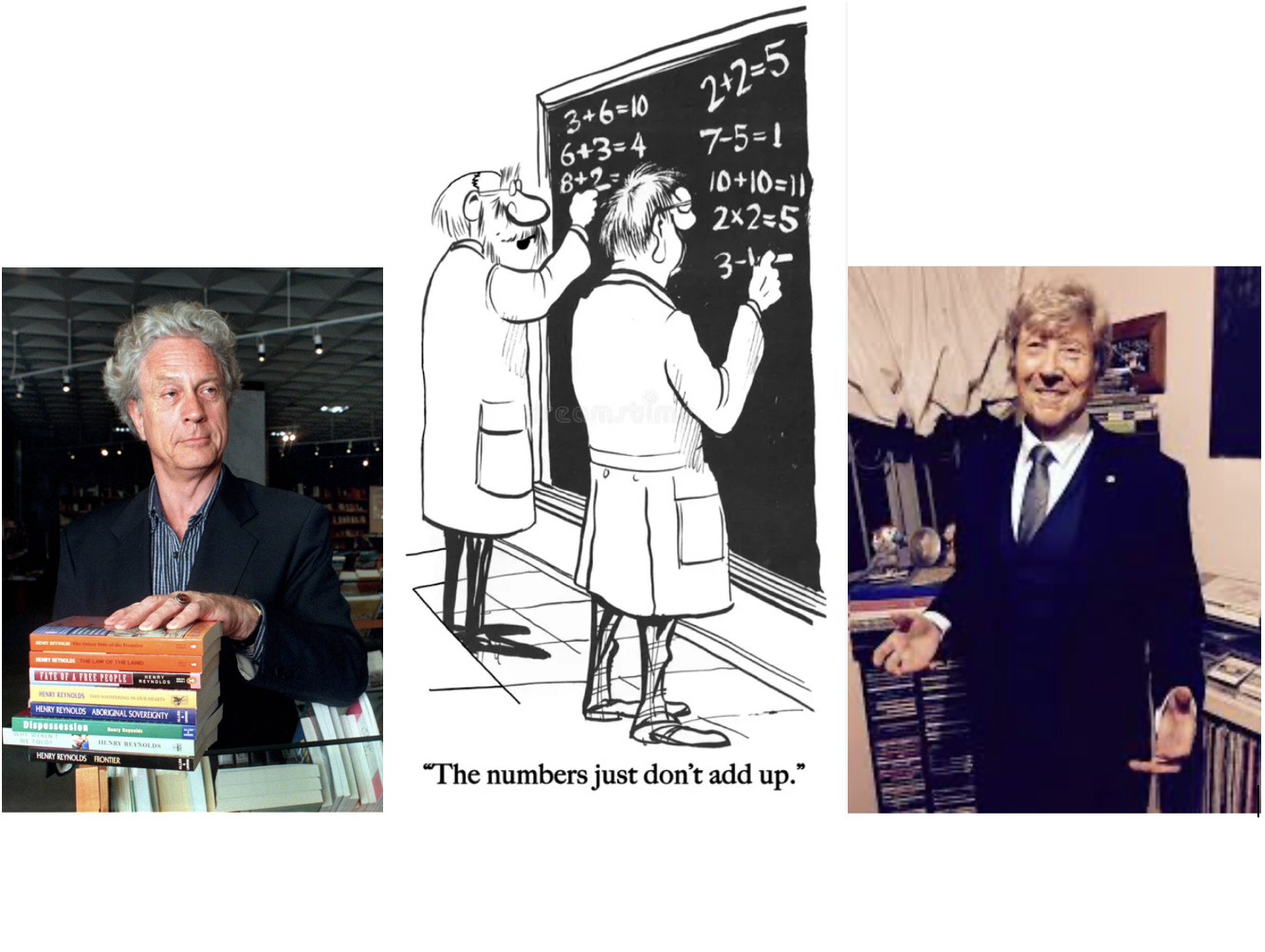
Number-crunching with Henry Reynolds & Raymond Evans
Posted 9 Sept 2026, update 22 Sept
By Roger Karge, Editor
How the So-Called Frontier Violence Death Toll of Historians Henry Reynolds and Raymond Evans Has Inflated over the Years
A new deal for the Aborigines will ultimately depend, not only on socio-economic innovation, but also on a basic readjustment of our world outlook and, as a corollory, a reinterpretation of history.
- Henry Reynolds (Reynolds:1972, pxi)
This post looks at Reynolds’ crucial phrase, “A new deal for the Aborigines will ultimately depend … on a reinterpretation of history”.
Reynolds’ act of reinterpretation relies very heavily upon one of his claimed ‘facts’ - that the number of Aborigines who died in frontier conflict was of the same order as the number of Australians who died defending the modern state of Australia.
This ambit claim is designed to engender a sense of moral equivalence: the settlement of Australia by the British involved a ‘war of conquest’ against the Aborigines that was as big as any war fought by modern Australians. The Aborigines, as so-called ‘sovereign first peoples’, were only defending their ‘Country’ against the British ‘invaders’. Thus, the British should have secured a treaty from the Aborigines for the ceding of the land.
It then logically follows, according to Reynolds and his co-advocate, filmmaker and activist Rachel Perkins, that this was an ‘invasion’ involving ‘warfare’ and these ‘Australian Wars’, as they call them, should be memorialised, along with the Aborigines who died in the the conflict, in the Australian War Memorial in Canberra.
Perkins, who identifies as an Arrente and Kalkadoon Aboriginal person, demands that ‘her family’ should be memorialised alongside the 103,140 Australian servicemen and women currently honoured at the War Memorial for sacrificing their lives defending their ‘Country’. (This is misinformation by Perkins - her non-Aboriginal family members are already memorialised at the War Memorial for fighting for the Crown in defence of Australia in WWs I & II- see here).
Reynolds has built his whole theory on the premise that the frontier violence, with its regularly inflating death toll, was ‘ubiquitous’, as he related in 2022 at the National Press Club:
“… a totally new era of research [began when] old hands like Lyndall Ryan and me, who went back to our notes, and then a whole new generation of students [joined] who redid the history particularly in Tasmania, Queensland and Western Australia. And they made it quite clear, indeed if it needed repeating, that the violence was ubiquitous and the death toll was much higher than we had supposed.
I had suggested in 1981 … that it was reasonable to suppose that 20,000 people had died in Frontier Wars. As it turned out, that was very much less than what the likely total is now.
Extremely important work in Queensland is suggesting that the death toll in Queensland alone may have been 60,000. If that is true, and the research is compelling, then the death toll overall in the Frontier Wars approaches perhaps 100,000; very much the same number of people who died in overseas wars.
Now what I think the post-Windschuttle research, if I may call it that, [has done is] put these questions beyond reasonable doubt. The conflict was everywhere and it had a very, very, high death rate.
As will be explained below, the death toll figures quoted by Reynolds are ‘fake’ - they are merely derived from mathematical formulas, using extrapolation and a flawed methodology. They are not based on real death toll statistics found in police or military reports or other primary records. They have no real basis in fact, or real evidence to support them.
This historiography by Reynolds and his followers is deeply disrespectful to the 103,140 Australians who died in the defence and service of our country - real people with real names and service numbers, who appear on the Roll of Honour at the War Memorial.
In contrast, Reynolds’ numbers of Aboriginal people killed in colonial conflict are just made up. These numbers have no names attached to them, but are merely, and disrespectfully, consitituted by using mathematical formulas to pull a number out of thin air.
This is not only highly disrespectful to the memorialised 103,140 Australian servicemen and women and their families, but it is also deeply disrespectful, and indeed unethical to lead Aboriginal people today to believe that some 100,000 of their ancestors were killed in frontier conflicts, when there is no evidence to support this claim.
Ethically and morally that is pretty low - to tell a people that 100,000 of their ancestors were killed when they weren’t.
1 - Origins of The So-Called Frontier War Theory
Historian Henry Reynolds could be considered the ‘father’ of the so-called ‘Frontier Wars’ theory. It is a theory that has come to dominate the academy over past few decades, with its foundational premise being that:
“the settlement of Australia had a high level of violence and conflict that we chose to ignore.” (Reynolds:2013, back cover blurb)
Reynolds has written many books on the theory and crucial to his scholarship is an estimation of the death toll on the frontier since the British First Fleet arrived in Sydney, Australia, in 1788.
Reynolds, and the increasing number of students and historians who follow and elaborate further his theory, have focused most of their scholarship on the particular colonisation frontiers that developed in:
and around Sydney from 1788 to 1816;
central New South Wales from say, 1813 to 1840;
in the colony of Van Diemen’s Land (Tasmania) from say, 1803 to 1835, and
in Queensland from say, 1859 to 1897.
Reynolds and his followers argue they have sufficient documentary and archeological evidence to support their theory that the belligerants on both sides undertook widespread killings, massacres and depredations, used pre-meditated planning and, with indentifiable ‘political’ goals in mind, the conflicts were supported by recognisable logistics and tactics that ultimately led to very high death tolls. It is now widely touted that some 100,000 Aborigines and ‘above 1000 European, Asian and Melanesian mainland colonists’ died violently on the frontier. [Evans2022: p7]
The opposing small camp of historians, researchers and commentators in the debate over Reynolds’ theory generally follow the late Keith Windschuttle’s interpretation of the colonial frontier conflict.
Windschuttle didn’t dispute that there was violence, conflict, battles and some massacres in colonial Australia as the pastoral and mining frontiers spread across the continent. What he did dispute however, were many of the claims regarding the extent and scale of the violence. In particular, he provided much convincing evidence that a number of the claimed massacres, especially those by historian Lyndall Ryan, just never occurred, or else were blown out of all proportion. [Quadrant2000:]
In particular, Windschuttle strongly disputed the methodologies used by, Reynolds to calculate his death toll of 20,000 Aborigines Australia-wide; and Ryan, in her claims for the number of Aborigines killed in Tasmania.
My own research, and that of others such historians Michael Connor and Marie Fels, using the methodologies developed by Windschuttle, show that the number of the so-called ‘massacres’, and their accompanying death tolls, displayed on the late Lyndall Ryan’s University of Newcastle Colonial Massacre Map do not standup to rigorous scrutiny. Posts on Dark Emu Exposed show that parts of her map are, for want a better term, ‘shoddy’. FOI revelations confirmed she agreed her map contained numerous examples of error and plaigerism, resulting in her map website being temporarily shutdown while she voluntarily corrected the errors identified by critical historians and by the university’s own audit process (see here).
The violence in these well-studied regions was found by a number of contrarian historians to have been uncoordinated, sporadic, relatively small and principally related to thefts and misunderstandings over women and food sources. This implies that any conflict between the British soldiers and settlers, and the Aborigines, would not seem to support Reynolds’ theory of a ‘Frontier War’.
2 - The Methodology of Henry Reynolds
Reynolds has publicly outlined his awakening to the possibility that the common view of historians up until the 1960s, that Australia had been settled relatively peacefully, might be wrong.
Initially, after finding “little enough in the library about Indigenous history in Australia” (in the 1960s), he decided:
the only way forward was to plunge straight into the historical documents … [what I] found almost immediately was abundant evidence of frontier violence. It was not a case of seekng it out - the evidence spilled unbidden from the contemporary record like blood spilled from an open wound. It was unavoidable, incontrovertible. To ignore it was out of the question.
- [Reynolds:2013, p2-3]
As Reynolds worked his way through the historical records he began to publish, from 1972 onwards, ever increasing estimates for the Aboriginal death toll on the frontiers.
A summary of his publicised estimates (and ‘guesstimates’) over the years - from 10,000 in 1972 to the 100,000 today, and which are often based on the work of others - is show in the table in Figure 1.
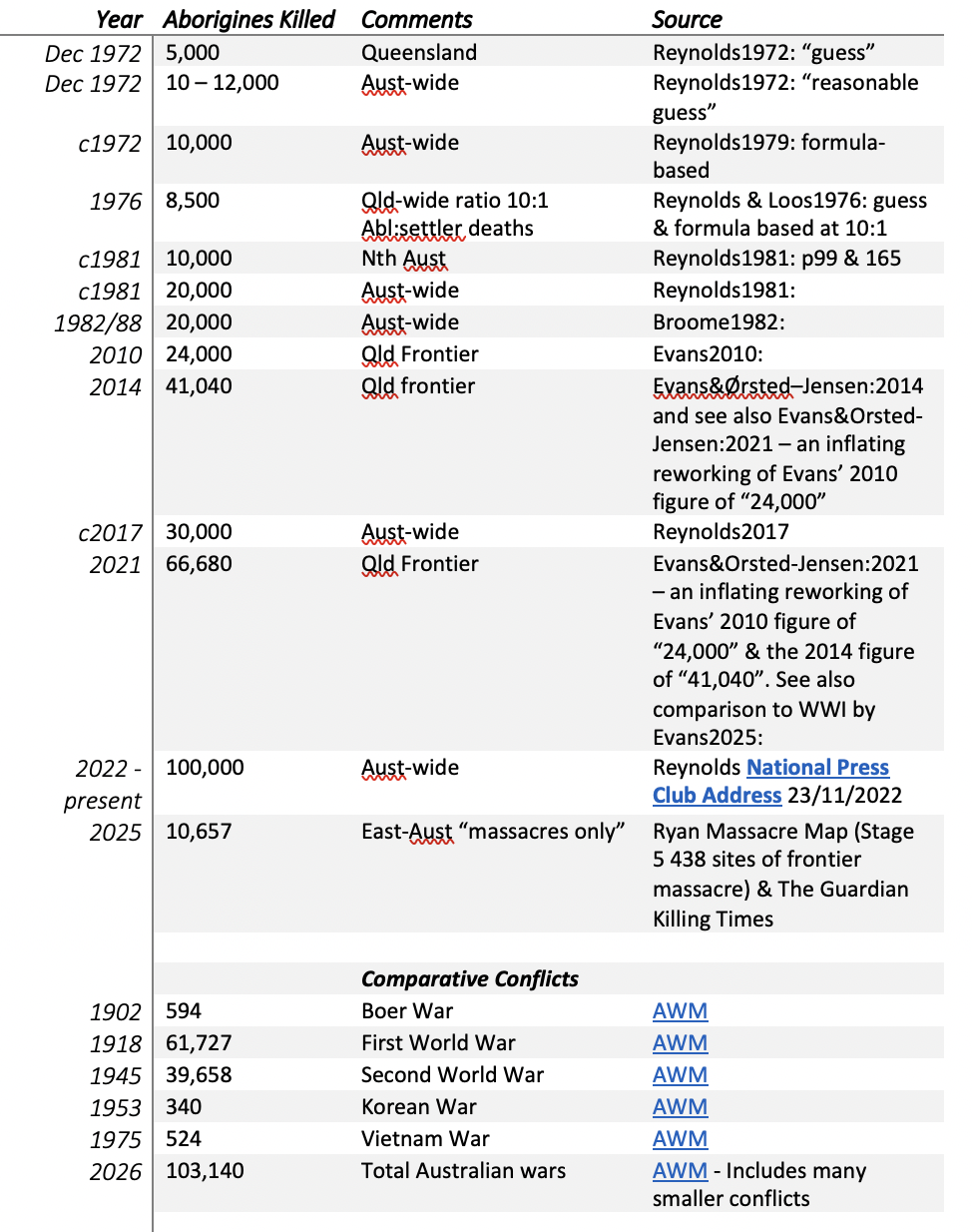
Figure 1 - Estimates for the Aboriginal Death toll on the Australian Frontiers c1788 to 1930, with comparisons of those wars memorilised at the Australian War Memorial.
Surprisingly, Reynolds has never published a detailed list of his archival research, showing how he enumerated the number of Aborigines killed in a particular encounter - the place, the date and where he found the reference.
This is a most unusual, but notable, omission by an historian of Reynolds’ calibre. It thus begs the question, how did he really know then, for example ‘10,000’ Aborigines were killed on the North Australian frontier? Where are his working papers showing the list of incidences that led to this summation?
In his earliest publications Reynolds’ was quite comfortable in admitting his death toll estimates were merely guesses (Figures 1B, & C):
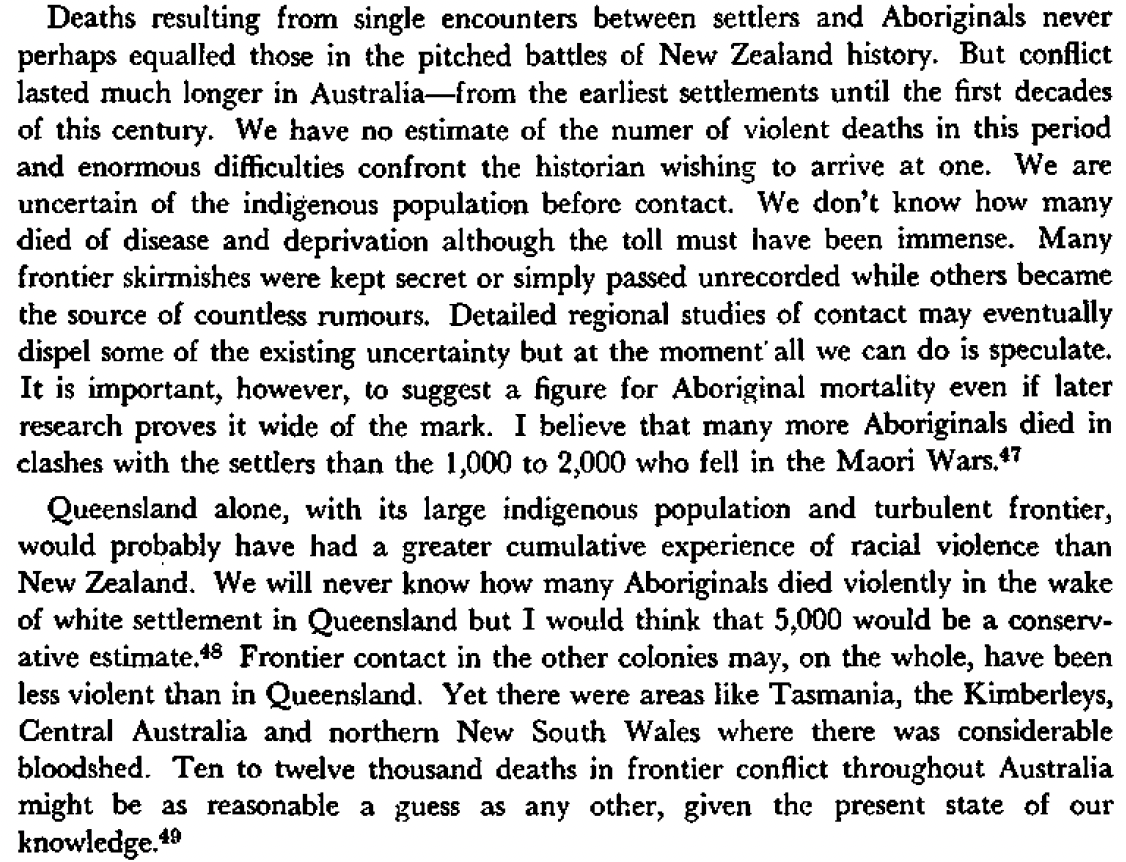
Figure 1B - Henry Reynolds explaining his methodology of “guessing”. Source: Excerpt from Reynolds, H., Violence, the Aboriginals and the Australian Historian, Meanjin Quarterly, December p471-7
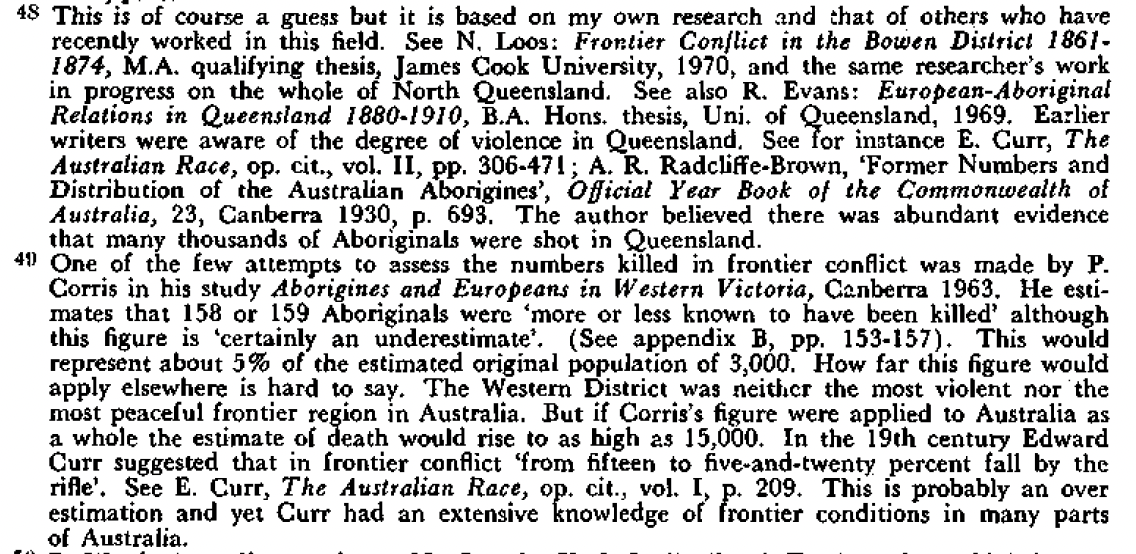
Figure 1C - Citations 48 & 49 for excerpt in Figure 1B, ibid., p477
A very interesting point to note is that the late Professor Lyndall Ryan and her team spent many years and over $1 million of taxpayers money collating incidences from newspapers and other archives that led her to account for some 10,657 Aborigines who were killed in massacres of six or more people during the frontier conflicts.
One can critique her methodology (and I have) but at least she published the lists and details of each of the 438 massacre incidences she discovered. A peer-reviewer can thus easily check her calculations and her cited references.
Not so with the claims of Henry Reynolds - he seems to just pull numbers like 5,000, 10,000, 20,000 and 100,000 out of the air.
3 - Details on Each of the Estimates of Reynolds’ Aboriginal Death Toll - The Great Inflation
3.1 - c1972: “10,000 Aborigines killed Australia-wide”.
(Source: Historian Henry Reynolds’ own research)
Reynolds published his first of what he would call “as reasonable a guess as any other” in an article in Meanjin in December 1972:
Frontier contact in the other colonies may, on the whole, have been less violent than in Queensland. Yet there were areas like Tasmania, the Kimberleys, Central Australia and northern New South Wales where there was considerable bloodshed. Ten to twelve thousand deaths in frontier conflict throughout Australia might be as reasonable a guess as any other, given the present state of our knowledge. Despite the enormous difficulty of quantifying the results of border warfare it is obvious that by Australian standards the number of violent deaths was substantial.
- Source: Reynolds:1979
3.2 - 1976: “8000 - 8500” in Queensland
(Source: Historians Henry Reynolds & Noel Loos’ own research)
According to historians Henry Reynolds and Noel Loos:
“…it proved necessary to comb newspapers, official records and personal reminiscences in order to compile a register of frontier deaths made up predominately of Europeans but including Chinese, Melanesians and so called ‘civilized Aborigines’ who had been incorporated in the advancing wave of settlement.
The uncertainty and unevenness of available records made definitive accounting impossible yet … we can account for between 800 and 850 deaths in the fifty odd years [1841 -c1897] it took to fully occupy Queensland…”
… It is impossible to do anything but to guess at the number of Aborigines killed by Europeans. We think Aboriginal deaths in frontier violence outnumbered those of the settlers by at least ten to one.”
- Source: Reynolds&Loos:1976, p214 & 226
Thus, Reynolds and Loos just use a mathematical formula to produce a guesstimate:
(800 to 850) x 10 = 8,000 to 8,500 Aborigines killed.
They provide no actual records or details of any incidents, of Aborigines known to have been killed, in forming their death toll claim.
Additionally, one is prompted to enquire, “what was the ratio of whites to Chinese, Melanesians and so called ‘civilized Aborigines’ in the 800-850 death toll of colonisers?” Are the authors suggesting that Chinese, Melanesians and so called ‘civilized Aborigines’ were equally deadly in their retaliation? That is, did for example, the death of every Chinaman mean that ten Aborigines were also killed in the Frontier conflicts?
Notably, by its omission, Reynolds and Loos have never published the list of names, incidences and cited references for this supposed summation of “between 800 and 850” deaths of non-Aboriginal Queenslanders. Why not?
3.3 - c1981: “10,000 Aborigines killed in Northern Australia & 20,000 Australia-wide”
(Source: Historian Henry Reynolds own increased research and use of a mathematical formula)
“… as many as 10,000 blacks…killed in skirmishes with the Europeans in Northern Australia” … and ‘“or the continent as a whole it is reasonable to suppose that at least 20,000 Aborigines were killed as a direct result of conflict with the settlers.”
- Source: Reynolds:1981, p165 & p99
Contra Argument to Reynolds
Historian Keith Windschuttle publicly claimed that Reynolds’ figure of 10,000 Aboriginal deaths in Queensland was:
“extraordinary and and even though I [Windschuttle] taught this sort of history for 10 years, I never investigated the material on which the these estimates were based.
I thought that Reynolds had actually done some research. When I actually went into the sort of research papers that underly his claims in his book, The Other Side of the Frontier, I found that it's all based on mathematical formulas - you take an estimate of the number of whites who are killed by Aborigines, you multiply it by 10 and there's no explanation of why you take 10, and then you add another 20% to get 10,000 deaths in Queensland.
Yet Reynolds doesn't have any credible account that there were eyewitnesses; that there were bodies of 10,000 Aborigines in Queensland at all. It's simply the application of a mathematical formula and that's not how you do history.
- (Source: watch here from 02:09 - and for Reynolds’ rebuttal. Readers should note that Reynolds has never published even a cursory list of conflict incidents, dates & death tolls based on his claim of: “having spent a lot lot of time researching Queensland history, let me say that the evidence for extensive violence is massive and everywhere you go, every single frontier newspaper is full of discussion about conflict.” (See also Further Reading at the end of this post)
Windschuttle's view was that:
“… until we have much better evidence, it is impossible to say [how many Aborigines were killed in frontier conflict] and historians should eschew the temptation. To guess at, or make up figures, is irresponsible. To do so is to fail the historian's duty to his profession, to his readers and to the people whose lives he is portraying”
- Source: Windschuttle:2000 cited by historian Richard Broome, Broome:c2002]
3.4 - 2010: “24,000” Aborigines killed on the Queensland Frontier
(Source: Historian Raymond Evans)
In 2010, historian Raymond Evans published his estimate of the Aboriginal deaths during frontier conflict. He readily admitted however, that:
This [estimate of 24,000], of course, is only a mathematical speculation, but, I would suggest, one that deserves some attention and consideration.
It is equally important that such an estimate be understood not only as a bare, debatable statistic but also as a sequential quotient of grief and pain.
Furthermore, the surprisingly large figure does not include a prior decade of Native Police patrols and dispersals from 1849 to 1859, or indeed any of the private white settler or military assaults on Aborigines from 1824 that may have actually rivalled, in composite, Native Police attacks in their intensity.
The maths grow increasingly disquietening. Whatever the overall figure may be – and it will remain forever speculative – it certainly dwarfs Reynolds’ controversial 20,000 Aboriginal mortality estimate from frontier violence for the whole of Australia from 1788 to 1930. Source
Evans developed his “mathematical speculation” as follows, using logic that had no real basis in fact (that is, it was just biased guesswork and not based on any records of actual incident deaths):
“… some 85 Native Police camps operated between 1859 and 1900, for an average space of seven years apiece [From a peak of 42 during the 1870s down to only 20 camps being in operation by the 1890s]…”
Evans then assumed (guessed) that there was one patrol of the Native Police per month from each camp, which gave 7152 patrols. To be conservative, with no real basis in recorded fact, he then dropped this to a rounded figure of 6000 patrols. He then assumed two interactions (dispersals) with the natives were two per patrol to “arrive at an aggregate projection of roughly 12,000 dispersals by Native Police alone between 1859 and 1897. (That is, 6000 patrols x 2 dispersals/patrol)”
To calculate the number of Aborigines killed per patrol he stated:
“Even if we once more play it incredibly safe here and suggest the extremely conservative figure of only two killed on average per dispersal, we find ourselves confronting an aggregate estimate of 24,000 violent Aboriginal deaths at the hands of the Native Police between 1859 and 1897 alone (12,000 dispersals x 2 deaths/dispersal)
Evans is just speculating and guessing at numbers, dispersals and deaths, figures which he just pulls out of thin air, and then multiplies with a mathematical formula to give his methodology an air of scientific credibility. My experience with students of the humanities is that mathematics and scientific rigour are not their strong points. Reading Evans’ methodology has not altered this view.
3.5 - 2014: “41,040” Aborigines killed on the Queensland Frontier
Source: Historian Raymond Evans after collaborating with history academic Robert Ørsted–Jensen, and ‘re-working’ Evans’ original 2010 data. [Evans&Ørsted–Jensen:2014 and see also Evans&Orsted-Jensen:2021]
Griffith University academics, Finnane and Richards, explain how Evans & Ørsted–Jensen’s “mathematical” approach worked in almost doubling the ‘fatalities’:
‘Given that Evans' methodology has not altered between 2010 and 2021, what is it that accounts for the increase from 24,000 to 41,400 deaths at the hands of Native Police? In each case the final result is the product of a simple arithmetical calculation. Evans takes an estimated average of the number of police patrols resulting in ‘collisions', and an estimated average of the number of deaths per ‘collision’, and multiplies these averages by the estimated number of Native Police patrols over the 38 years 1859–1897’ (see Figure 2 - Table 1).
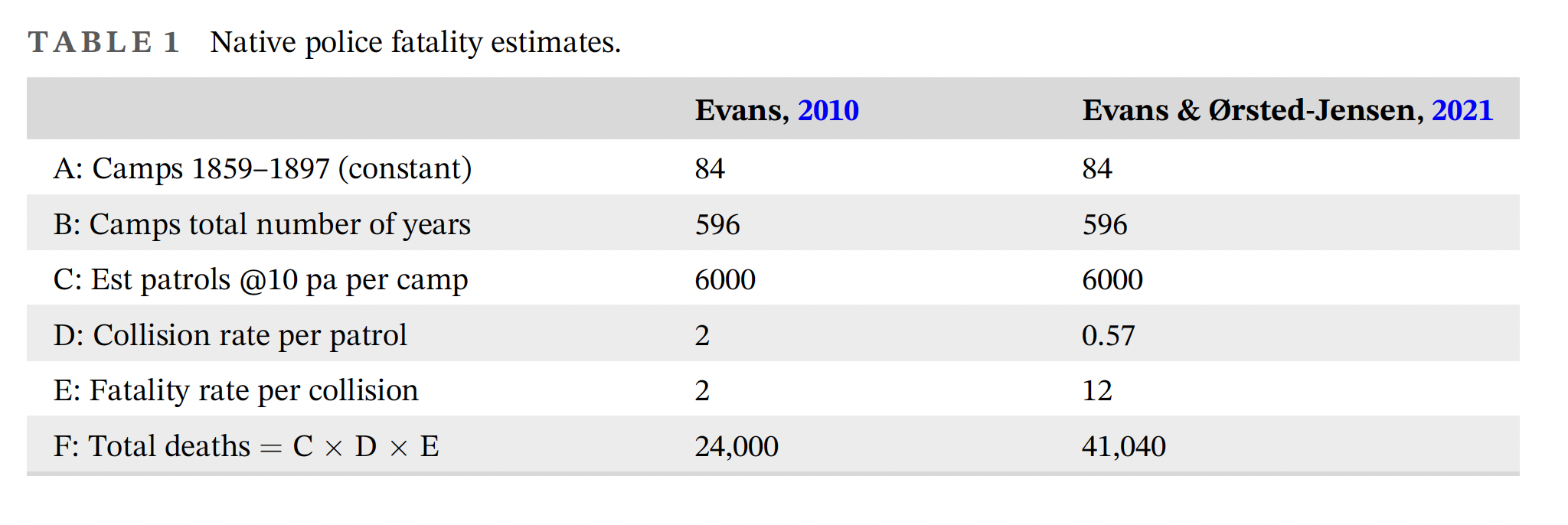
Figure 2 - Table 1 - How the simple “mathematical” approach inflated Evans’ fatalities from 24,000 to 41,040. Source: Finnane & Richards2024
Finnane and Richards thus find the same set of data at the hands of Evans & Ørsted–Jensen can be manipulated to produce either a claimed death toll of 24,000, or one of 41,040. Remarkable.
3.6 - c2017: “30,000 Aborigines killed Australia-wide” - c2017 - (Source, research by other scholars)
‘revious estimates of the death toll in frontier war of about 20,000 appear to be for too conservative. Detailed work on the Queensland frontier strongly suggests we need to lift the figure to at least 30,000 and even that may prove to be short of the mark. These are figures which confront our view of the past.
- Reynolds2017
3.7 - 2021 - “66,680” Aborigines (incl. 1500 settlers) killed on the Queensland Frontier
In 2021, Raymond Evans & Robert Ørsted–Jensen once again reworked their death toll data from 2014 using new, mathematical formula manipulations (originally Evans&Ørsted–Jensen:2014.)
They provided no new data from the archives but simply rehashed their formulas to spit out a new, inflated death toll ‘guess’ of “66,680”. [See Source: Evans&Ørsted–Jensen:2021.]
By reworking “mathematically” their 2014 contrived estimates yet again, and applying some "estimate[d] linear projections” and “extrapolations” Evans & Ørsted–Jensen were lead to:
propose in their latest publication … a figure of 66,680 Aborigines and settlers killed across the extended period of colonial settlement to the end of the nineteenth century. This figure includes an estimated total of 41,040 ‘Aborigines killed during 3420 official frontier dispersals [ie by Native Police] across almost forty years of conflict [1859-1897] plus the estimated deaths for the decade before Queensland separation from New South Wales in 1859. - (Source: Finnane&Richards:2024)
In 2025 Evans elaborated further on how his so-called “careful mathematical calculation” (i.e. an educated guesstimate) was constructed:
“…a cautious total of 41,040 official frontier killings has been suggested between 1860 and 1897 … If a guarded estimate of 3500 killed by this [Native Police] Force while under NSW/imperial supervision from 1849 to 1859 is added, a total of 44,540 mortalities is reached.
This figure does not include First Nations peoples killed by private settler sorties…but exant accounts again suggest a possible 2580 assaults, averaging eight …killed per attack - or a further 20,640 violent deaths. When the number of colonisers killed in frontier warfare by Aboriginal assaults - around 1500 - is added, the grand total reaches a startling 66,680 - or significantly above the 62,300 Australia troops killed in battle during the First World War”. - Evans:2025, p254-5
The camparison Evans makes to the death toll in WWI is telling. Although the pretext of the so-called Frontier War theory put forward by historians such as Evans is to garner sympathy for those Aborigines killed during colonisation, the motive is really to gain an entry for Aboriginal activists and their so-called Australian Wars within in the Australian War Memorial in Canberra.
If the Frontier War theorists can convince the public that the scale of the Aboriginal killing estimate matches that of the carnage of WWI, then their sympathetic entry into memorial will be all that much easier.
The only problem with this strategy is that numbers presented by Evans are ‘fake’ - they are mere mathematical guesses, estimates and extrapolations that are misinformation at best, or disinformation at worst.
Evans has presented no details of the primary evidence, documentary or otherwise, that these fatalities even occured, nor has he provided the name of even one of the so-called victims.
By comparison, essentially all the names of the 61,727 fallen Australian service men and women from WWI are known and documented at the Memorial.
3.8 - 2015-2025: Death Toll Estimates Independent of Reynolds and Evans
The late Professor Lyndall Ryan created the Colonial Frontier Massacre Map where she recorded events where six or more Aborigines were killed in one incident (a ‘massacre’).
Work by Dark Emu Exposed and other historians suggest that the methodology used by Ryan was not fully reliable and scholars and commentators should be circumspect before relying on her results. (see Fraser Island Massacre here, Commentary on the Risdon Cove affray here and FOI investigation into inaccuracies and plagiarism here).
Ryan’s findings were more publicly promoted by the Guardian in 2025:
3.9 - 2025: “More than 10,000 First Nations people killed in Australia’s frontier wars, final massacre map shows”
Source: Guardian online
“The final findings of the “horrendous” eight-year long “massacre map”, tracing the violent history of the Australian colonial frontier have been released. The Colonial Frontier Massacres digital map project, spearheaded by the late emerita professor of history at the University of Newcastle, Dr Lyndall Ryan, officially concluded in 2022.
The project found that:
At least 10,657 people were killed in at least 438 colonial frontier massacres.
10,374 of them were Aboriginal or Torres Strait Islander people killed by colonists.
Only 160 of those killed were non-Indigenous colonists.”
Obviously this does not record those Aboriginal people killed singly, or in groups of five or less. But without any summation of these deaths based on reliable record it is not possible to provide an accurate death toll.
3.10 - 2022-2026: “100,000” - Henry Reynolds
(Source: Henry Reynolds National Press Club 23/11/2022 [at 01:13] )
See also:
Characteristic of the recent scholarly appraisals and support for the ‘great inflations’ in the Aboriginal frontier conflict death tolls is Ann Curthoys in her Review of Reynolds, Truth-telling, [Curthoys:in Australian Historical Studies, 52, 4: 647, in which she observes that:
‘[i]n developing his account of Queensland's killing times, Reynolds makes excellent use of the work of Raymond Evans and Robert Ørsted-Jensen on the magnitude of the killing spree that lasted from the 1850s to the 1890s’.
On the basis of these methods, an archaeological research team has gone even further, suggesting that revised estimates of the number of Native Police camps and their average duration advances the sum of fatalities to more than 100,000.
- [cited in Finnane&Richards:2024b;]
Paul Daley reporter for the Guardian writes that:
Ørsted-Jensen and Evans agree that, based on their Queensland calculations, “nationally the Australian frontier conflict during the 19th and into the early decades of the 20th century inflicted a death toll on Indigenous people probably no less than 100,000”.
Evans says: “Coincidentally, this figure is very close to the total death rate for Australian troops in all foreign military engagements combined.
- Paul Daley, the Guardian2019:
4 - Why the Estimates by Evans & Ørsted–Jensen Are Dangerous to Truth-Telling
According to Griffith University researchers, Mark Finnane and Jonathan Richards:
This figure of 66,680 deaths, including both Aborigines and settlers, represented by them as ‘our findings’ (Evans & Ørsted-Jensen, 2021, p. 161) rather than a very conditional estimate, has quickly become established as authoritative, cited in both academic analysis and media.
- Finnane&Richards2024: p35
The ‘‘guesstimates” by Evans, which started as a wild theoretical musing on his behalf, have now, by a processing of ‘idea laundering’ (and here), moved through the academy and gained an increasing amount of reputability each time an academic has cited Evans’ work. Along with Reynolds’ figures, those of Evans too have now entered the mainstream media as orthodoxy - as accurate historiography, when sadly all these figures are basically ‘fake.’ [not reflecting reality, false, untrue].
5 - Would you buy a “mathematical” Frontier Model from These Two Academic Salesmen?
5.1 - The Mathematical Gymnastics Of Historian Raymond Evans
The Griffith University researchers, who endeavoured to replicate the work of Raymond Evans and Robert Ørsted-Jensen were frustrated.
When they reworked the numbers of these two ‘academic salesmen’, allowing for statistical uncertainties and allowing for the detected biases in which records Evans and Ørsted-Jensen had selected for their database, Finnane and Richards found Evans and Ørsted-Jensen’s mathematical modelling produced a death toll that was just as likely to have been 3,658 as it was to have been 41,040, or even a higher 47,549, such were the margins of error inherent in Evans and Ørsted-Jensen’s methodology (Figure 3 - Table 2).
This huge variation in a possible Aboriginal death toll renders the methodology and mathematical modelling of Evans & Ørsted-Jensen suspect and not professionally worth relying upon.
In light of this peer-review work, Henry Reynolds’ continued support for what he calls the “compelling evidence” of Evans and Ørsted-Jensen is surprising. Unless of course Reynolds is more interested in the political value of a high Aboriginal death toll as a support for his so-called ‘Frontier War’ theory?
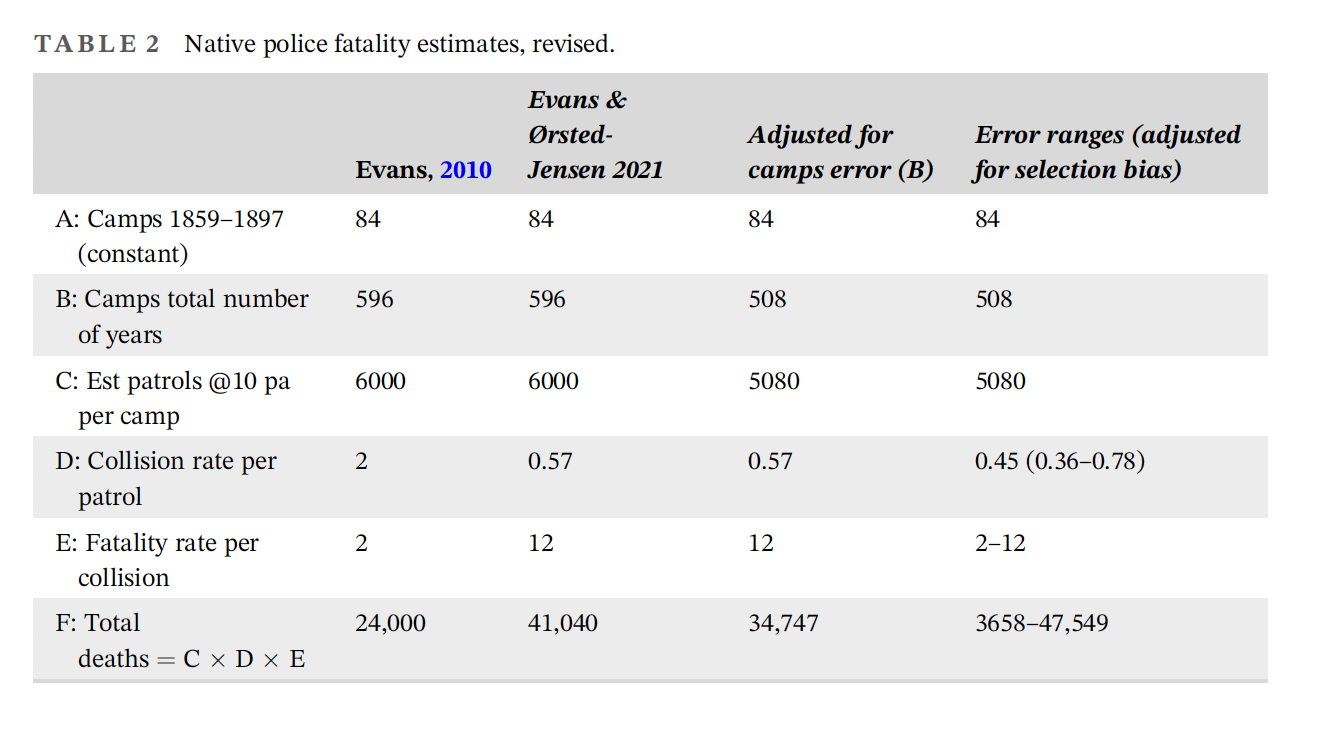
Figure 3 - Table 2 - Extract from a peer review of Evans & Ørsted-Jensen’s work showing is huge variance and ultimate unreliabliity. Source: Finnane&Richards2024: - p46
5.2 - Evans and Ørsted-Jensen Cite a Reference No One Can find.
Both Evans and Ørsted-Jensen cite the unpublished manuscript of ‘historian’[?] Alan Hillier [HillierNodate:], who Evans claimed “has made an exhaustive study of the [Native Police] force”.
Evans relies heavily on Hillier for Native Police operational studies and for calculations of the death toll figures from the so-called ‘Frontier War.’
Yet, neither we, nor a number of other researchers, were able to locate a single copy of Hillier’s manuscript. Libraries were searched but no-one was successful in locating a copy. We attempted to contact Evans and Ørsted-Jensen directly, but to no avail; no reply was received (see Figures 4 - 9.)
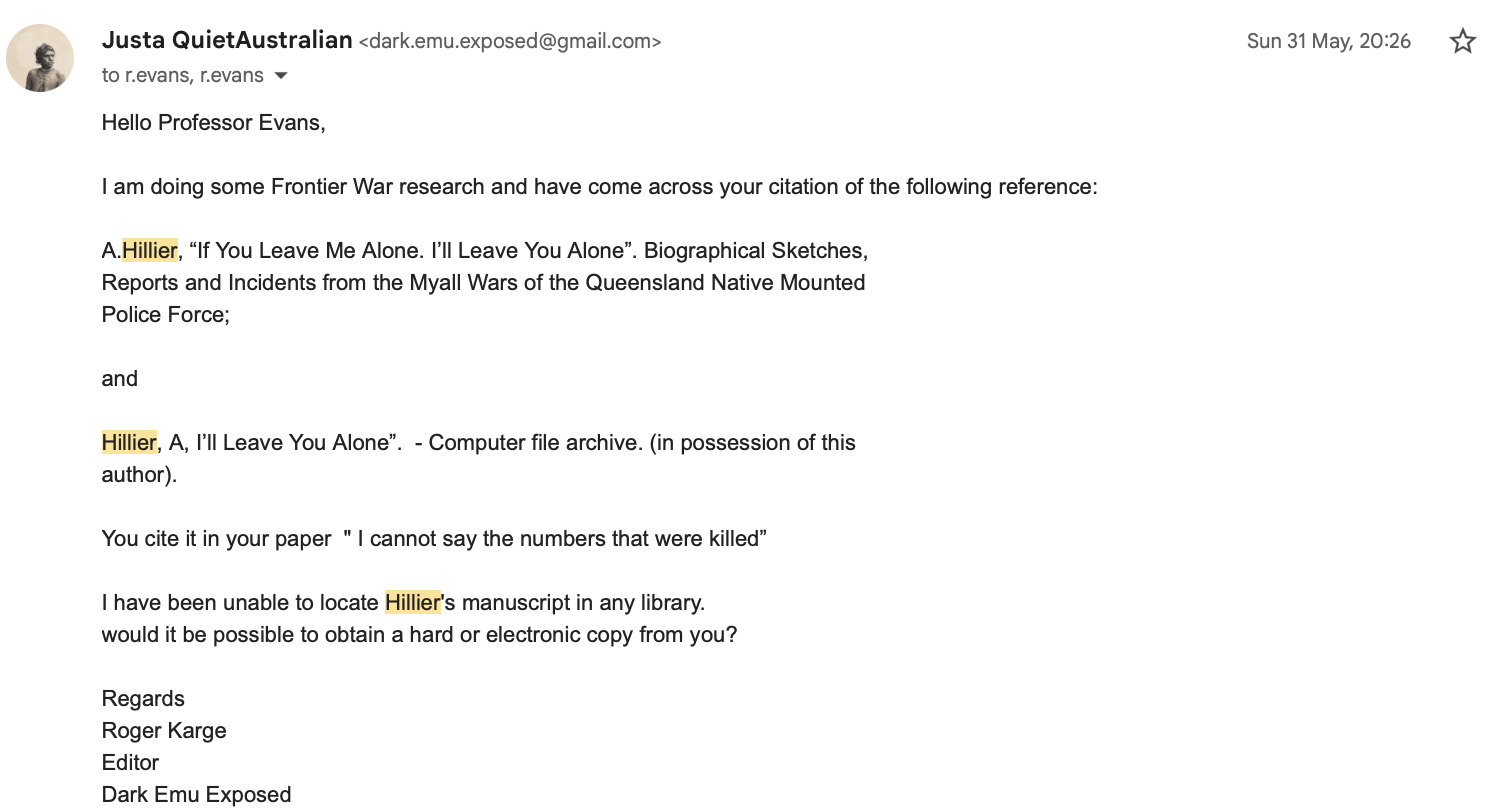
Figure 4 - Attempt to locate a copy of HillierNodate
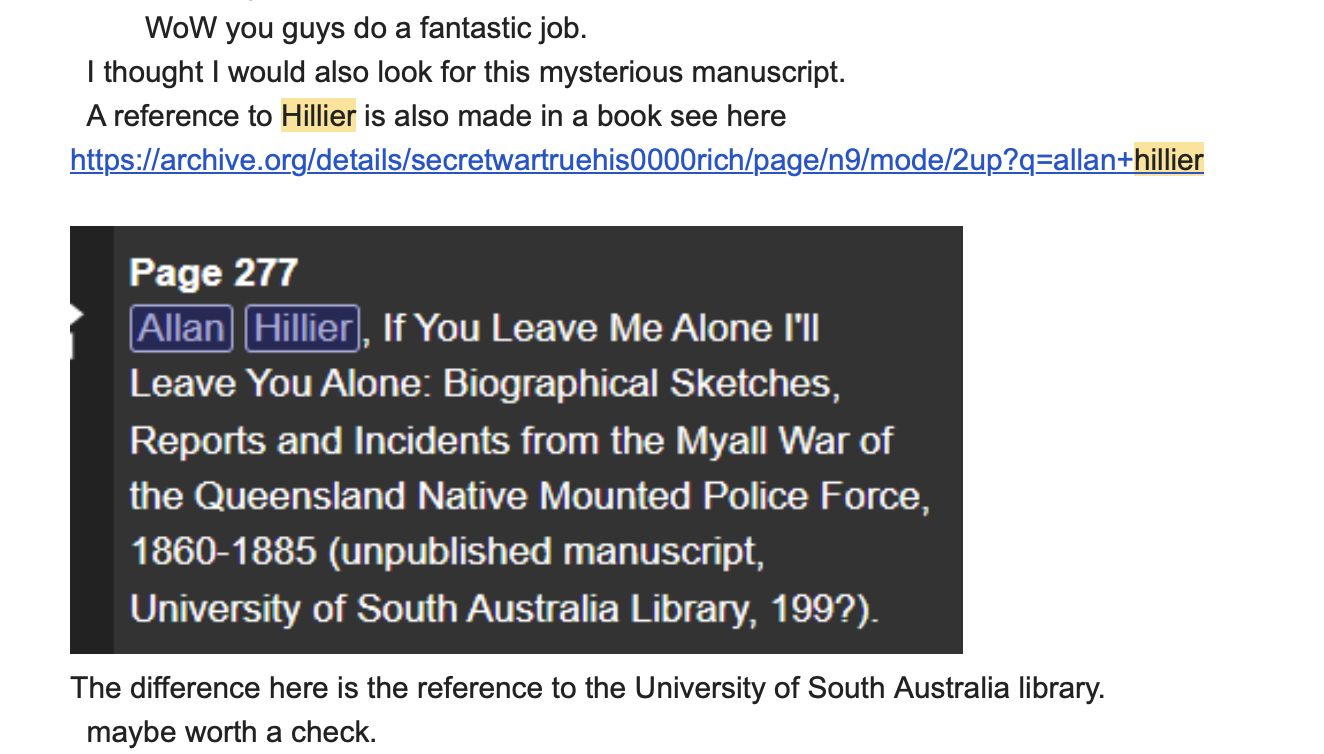
Figure 5 - Attempt to locate a copy of HillierNodate
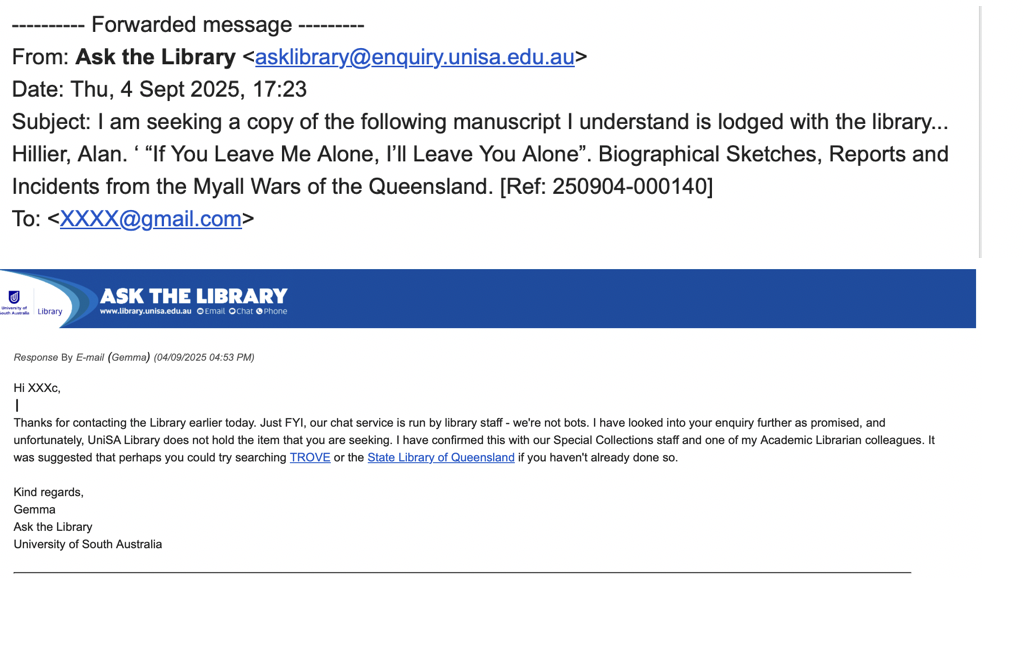
Figure 6 - Library of SA reply that they have no copy on record, despite the citation by Robert Ørsted-Jensen

Figure 7 - Attempt to locate a copy of HillierNodate

Figure 8 - Attempt to locate a copy of HillierNodate
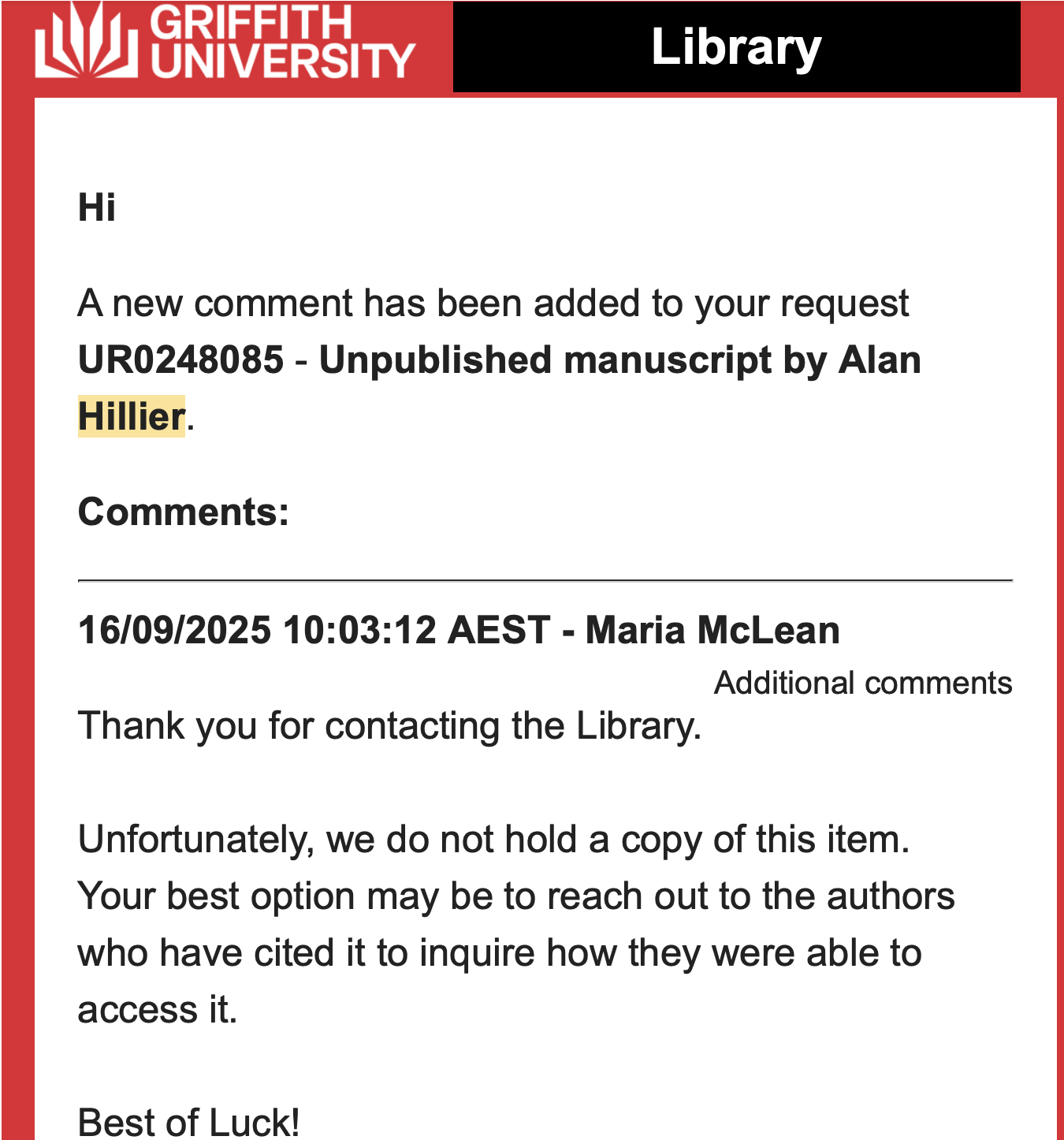
Figure 9 - Library of Griffith University reply that they have no copy on record, despite the citation by Robert Ørsted-Jensen
Griffith University peer-reviewing researchers, Finnane and Richards, also commented on the same unacceptable lack of transparency in Evans and Ørsted-Jensen’s work - the reliance on Hillier’s unpublished work as well as reference to a ‘personal computer file’ (Figure 10):
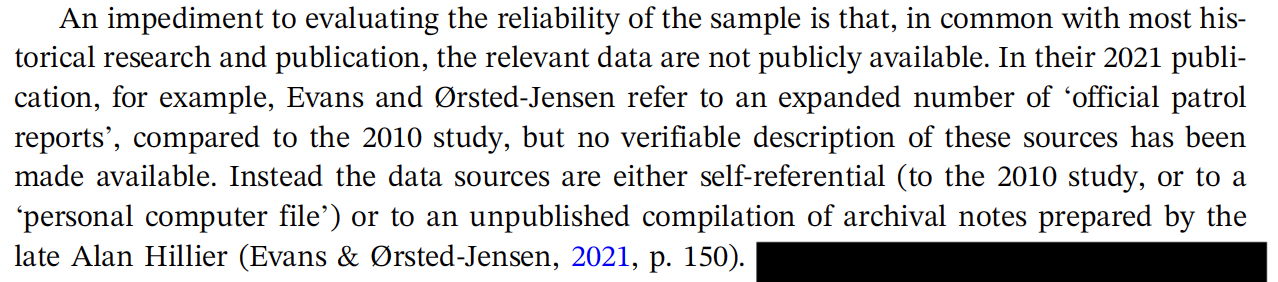
Figure 10 - Poor citations - eg “personal computer file” ! by Evans and Ørsted-Jensen . Source Finnane&Richards2024: p44
References:
Broome:c2002 - Richard Broome, The Statistics of Frontier Conflict, c2002 (Source Kooriweb)
Evans: 2010 - Evans, R. (2010) The country has another past: Queensland and the history wars. In: Peters-Little, F., Curthoys, A. & Docker, J. (Eds.) Passionate histories: myth, memory and indigenous Australia, 1st edition. Canberra: ANU Press, pp. 9–38.
Evans&Ørsted–Jensen:2014 - Evans, R. & Ørsted–Jensen, R. (2014) ‘I Cannot Say the Numbers that Were Killed’: Assessing Violent Mortality on the Queensland Frontier (SSRN Scholarly Paper ID 2467836). Social Science Research Network. http://papers.ssrn.com/abstract=2467836
Evans&Ørsted–Jensen2021: - Evans, R. & Ørsted-Jensen, R. (2021) ‘Pale death … around our Footprints Springs’: assessing violent mortality on the Queensland frontier from state and private exterminatory practices. In: Adhikari, M. (Ed.) Civiliandriven violence and the genocide of indigenous peoples in settler societies, 1st edition. Milton: Routledge, pp. 139–164
Evans2022: - Evans, R., Passionate Histories: Myth, Memory and Indigenous Australia, - The country has another past: Queensland and the History Wars, ANU, 2022?
Evans& Thorpe2001: - Raymond Evans and Bill Thorpe, Indigenocide and the Massacre of Aboriginal History, Overland, 2001, 16:5, p21-39
Evans:2025 - Evans, R., Queensland, The Red Shocking Years', in The Australian Wars, Rachel Perkins, Henry Reynolds, Stephen Gapps, Mina Murray (Eds), Allen & Unwin, 2025, p243-259.
Finnane&Richards2024: - Finnane, M., & Richards,J., Speculating about genocide: The Queensland frontier 1859–1897, Asia. Pac. Econ. Hist. Rev. 2024;64:34–51.
Finnane&Richards:2024b - See above where the following authors are said to have promulgated the “100,000” death toll in recent years: D. Ashenden (2022); T. Bottoms (2013), A. Curthoys & J. Mitchell (2018); D. Kearns (2021), D. Marr (2023), H. Reynolds (2021), T. Rowse (2018 & 2021); J. Schultz (2022) and Wallis et al. (2023).
Gittins:2015 - Ross Gittens, Maybe the colonialists were actually a minority, SMH, 6 December 26, 2015
Guardian2019: Daley, P., As the toll of Australia’s frontier brutality keeps climbing, truth telling is long overdue, 3 Mar 2019
HillierNodate: - AHillier, A., “If You Leave Me Alone, I'll Leave You Alone": Biographical Sketches, Reports and Incidents from the Myall War of the Queensland Native Mounted Police Force 1860-1885, Unpublished mss.,
Hirst:2009 - Hirst, J., Sense and nonsense in Australian history, How Sorry Can we be?, Black Inc, 2009
Quadrant:2000 - Windschuttle, K., Massacre Myths, Quadrant, Oct, Nov & Dec 2000.
Reynolds:1972 - Reynolds, H., Aborigines and Settlers, Cassell, 1972
Reynolds&Loos:1976 - Reynolds, H., & Loos, N., Aboriginal Resistance in Queensland, Journal of Politics and History, vol. 22, no. 2, August 1976
Reynolds:1979 - Reynolds, H., Violence, Aboriginals and the Australian Historian, Meanjin, December 1979, (Reprint 4 March 2019).
Reynolds:1981 - Reynolds, H., The Other Side of the Frontier, James Cook University 1981
Reynolds:2013 - Reynolds, H., Forgotten War, Newsouth, 2013
Reynolds2017: Reynolds, H., INDIGENOUS AFFAIRS - Memories and Massacres- A Repost from July 10 2017 By Henry Reynolds on Jan 18, 2018
Reynolds:2022 - Address to the National Press Club, 23 Nov2022
Windschuttle:2000 - Keith Windshuttle, The Fabrication of the Aboriginal Death Toll', in Quadrant, November 2000, p. 23.
Further Reading:
1 - Henry Reynolds and His Claim of The Original Sin in the Settlement of Australia (Video below)
2. Aboriginal Population Claims
One statistical problem with the so-called Frontier War theory is that if the Aboriginal death toll was indeed 100,000, then that means up to a third of Australia’s Aboriginal population would have been killed during colonisation, assuming a typical estimate of 300,000 for the pre-colonial Aboriginal population.
This is difficult to contenance given that it is known that disease and lack of fertility or desire the to have children or marrying out with white white settlers were significant reasons for the observable decline in Aboriginal populations during frontier times.
One way around this statistical problem for the so-called Frontier War theorists is to champion the idea that the pre-colonial Aboriginal population was much bigger - 750,000 to 1.5million - than previously thought.
A population calculated by demographer, Noel Butlin in 1983 is commonly cited, as economics writer, Ross Gitten did in the SMH in 2015:
Australia's most distinguished economic historians were Noel Butlin, of the Australian National University, and his older brother, Syd, of Sydney University…Noel ‘backcast’ Australia's GDP to 1861, then began researching what the Australian economy must have been like before white settlement…
As part of this research Butlin devoted much effort to estimating the size of the Aboriginal population before 1788. The anthropologist Alfred Radcliffe-Brown [believed] that it would have been more than 250,000, maybe even more than 300,000.
But Butlin's piecing together of the evidence told him this was way too low. He wrote in 1983 that it would have been 1 million or 1.5 million. [midpoint 1.25m cited by Evans above].
Then in 1988 some of Australia's leading archaeologists, led by John Mulvaney, argued that a more accurate estimate would be between 750,000 and 800,000. This has become accepted as "the Mulvaney consensus".
Now enter Dr Boyd Hunter, of the Centre for Aboriginal Economic Policy Research at ANU. With Professor John Carmody, a physiologist at Sydney University, he published this year in the Australian Economic History Review a long paper reviewing Butlin's population estimates.
[They claim] the big factor [in Aboriginal population decline] is the spread of introduced diseases, especially chickenpox. When the authors use chickenpox to do their backcast, assuming a low mortality rate of 30 per cent and also taking account of resource loss, they get a pre-contact Indigenous population (including up to 10,000 Torres Strait Islanders and up to 10,000 original Tasmanians) of about 800,000 – which by chance fits with the Mulvaney consensus.
"Like any war, declared or otherwise, the conflict led to many deaths on both sides," the authors say. But even the controversial historian, Henry Reynolds, estimated the number of violent Aboriginal deaths at as many as 20,000, making this only a small part of the explanation.
- Gittins:2015
3- Hedging Their Bets or Red-Flags that the Numbers are Unsupportable by Real Evidence
Commentators such as Henry Reynolds’ and Raymond Evans frequently use qualifiers when quoting Aboriginal death tolls during frontier conflict. Some more cynical observers might consider this technique for publishing an extravagant number, that is so well qualified, that if it is later exposed as being ‘fake’, then its claimant has room to backtrack quickly to preserve one’s reputation.
Use of Qualifiers
“Ten to twelve thousand deaths in frontier conflict throughout Australia might be as reasonable a guess as any other” - Reynolds1979
“I had suggested in 1981 … that it was reasonable to suppose that 20,000 people had died in Frontier Wars”. - Reynolds:1981, p165 & p99
“It is impossible to do anything but to guess at the number of Aborigines killed by Europeans. We think Aboriginal deaths in frontier violence outnumbered those of the settlers by at least ten to one.” - Reynolds&Loos:1976, p214 & 226
”The first attempt to place an actual figure on the carnage, however, did not occur until 1972, when Henry Reynolds, writing in Meanjin, provided a “conservative” guesstimate of 5,000 Queensland Aborigines dying violently. Such was the infancy of the debate at this point that Raymond Evans in 1975 described this figure as “sufficiently startling”. Yet he went on to suggest that, based upon his own empirical research, his “calculated guess” would be a death rate of “almost double“ this.” - Evans&Ørsted–Jensen:2014
“… Reynolds was at pains to emphasize that this estimate was both “little better than an informed guess …” - Evans&Ørsted–Jensen:2014
“This mortality figure of roughly 41,040 is a mathematical and statistical projection, produced by cautiously sampling the fragmentary evidence left to us about the severe degree of destruction accompanying the long project of land dispossession in colonial Queensland. It is not and can never be a precisely accurate figure, nor is it a confidently absolute or maximal one. That number will never be known.” - Evans&Ørsted–Jensen:2014
“Historians Raymond Evans and Robert Ørsted-Jensen have estimated some 41,000 Aboriginal people could have been killed at the hands of the Native Mounted Police between 1859 and 1897.” - The Conversation
4 - The ABC’s So-Called Frontier War Theorist David Marr Thinks Gallipoli is Fake History
“There's been an argument for 40 or 50 years now that the problem was that we forgot the true history of Australia. I think that's too easy. What happened in Australia was the creation, an amazing creation of a fake history for the country. A fake history that we could be proud of.
And that fake history goes something like - Cook; convicts; sheep; gold; Eureka Stockade; Gallipoli - And it's fake.
And I think the thing that we most need to do in Australia at the moment is to understand that we've been fooled by the history, by the official history, of this country and it's happening everywhere. We are just [now] dismantling this fake, warm, official history of the country. And that's going on very, very fully…” - ABC Late Night Live host David Marr
5 - Excerpts from historian Keith Windschuttle’s Research on Henry Reynolds’ Claims
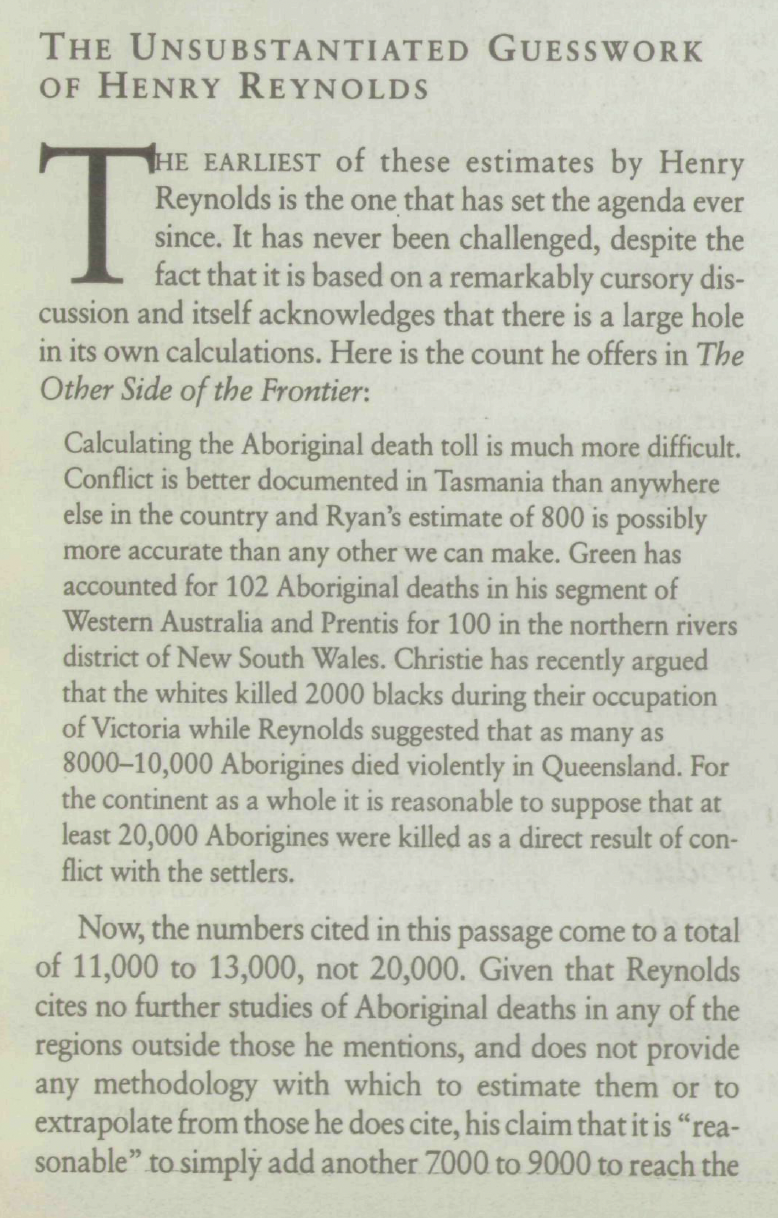
Figures 11A - Extract from Keith Windschuttle’s article, Massacre Myths, Part II, Quadrant, Nov 2000, p18
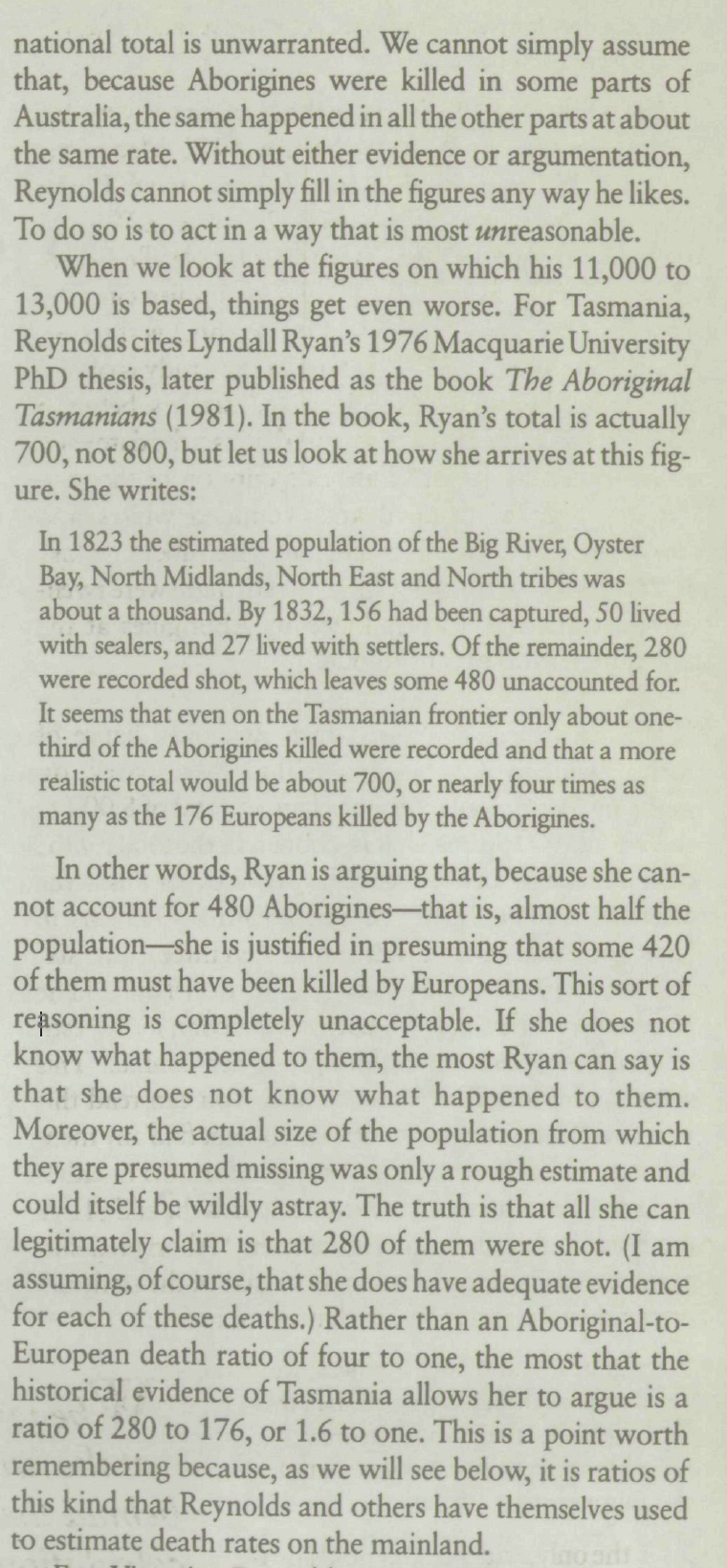
Figures 11B - Extract from Keith Windschuttle’s article, Massacre Myths, Part II, Quadrant, Nov 2000, p18
6 - C.D. Rowley: Another Explanation for Frontier Violence that Doesn’t Involve “war”.
C.D. Rowley produced the seminal work, The Destruction of Aboriginal Society, Aboriginal policy and practice - Volume 1. It was researched by Rowley and his collaborators from 1964 to 1970 and published in 1970.
Writing of the frontier of the northern territory of the colony of South Australia 1863-1911, after which the administration of the Northern Territory passed to the Commonwealth government, Rowley’s commentary on black-white relations is instructive. It emphasises the complex interplay between the Aborigines and the settlers that is not easily characterised as the all-out warfare that the so-called Frontier War theorists would like to have the Australian public believe (Figures 12).
The last paragraph of Figure 12E suggests a contrarian conclusion:
“… it is very difficult even to guess at the scale of [frontier] violence. To go through the literature carefully looking for incidents is to assemble a horrifying picture of murders by irresponsible whites. It may well be that the whole loss of life involved in the settlement of Australia, judged alongside what happened in the Americas or elsewhere, amounts to comparatively small-scale homicide; even a minor war involving civilian bombing might involve physical suffering on a greater scale.”
The contrarians do not deny that there was frontier violence, but rather it was not as the war theorists imply: a premeditated war, with military and even genocidal intent on both sides. Instead, the violence that did occur was due to a break-down in civil law and order in certain instances, during one of the most peaceful, most constructive colonisations in human history.
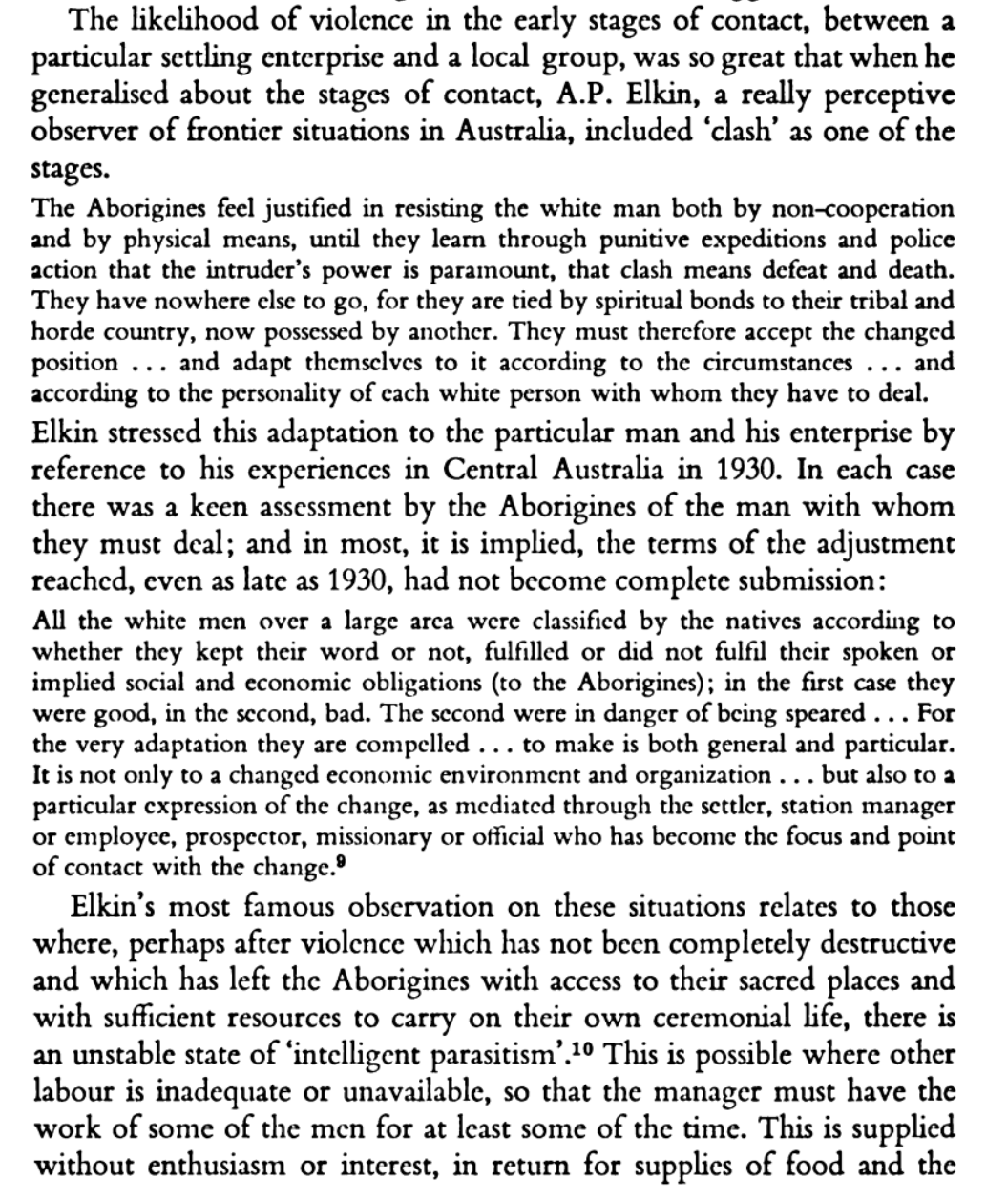
Figure 12A - Extract from Rowley:1970, p208
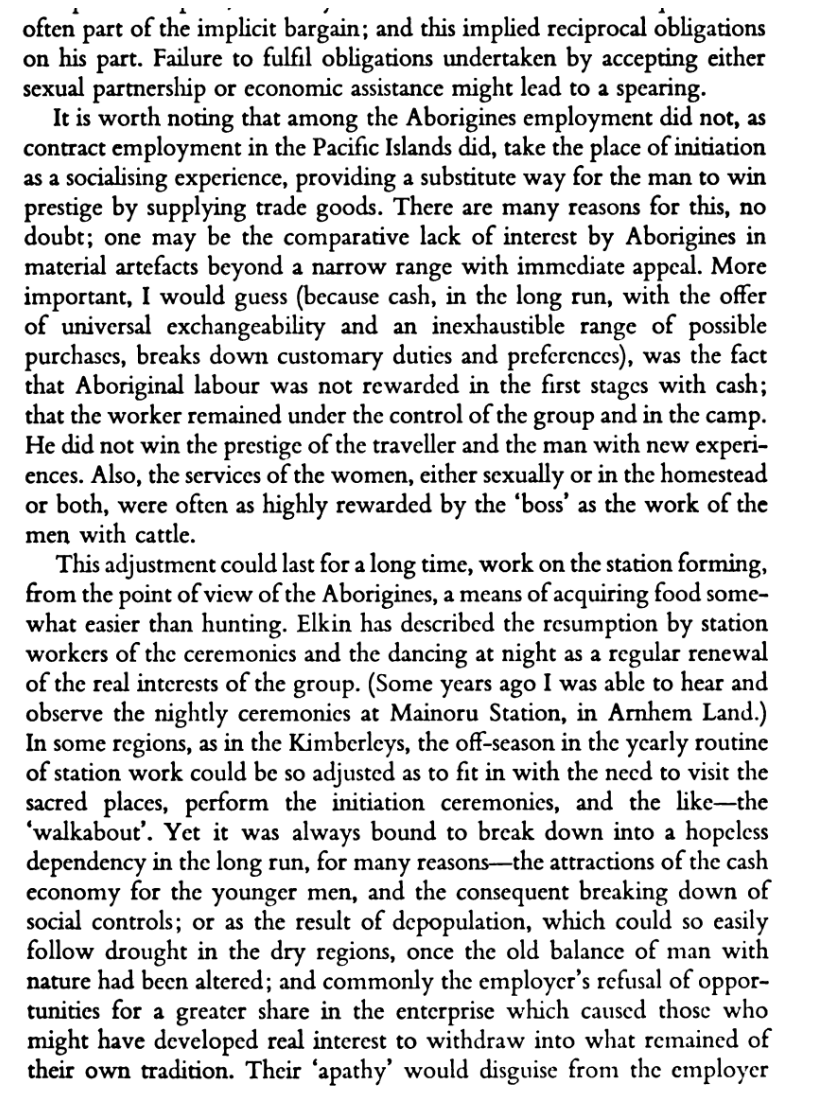
Figure 12B - Extract from Rowley:1970, p209
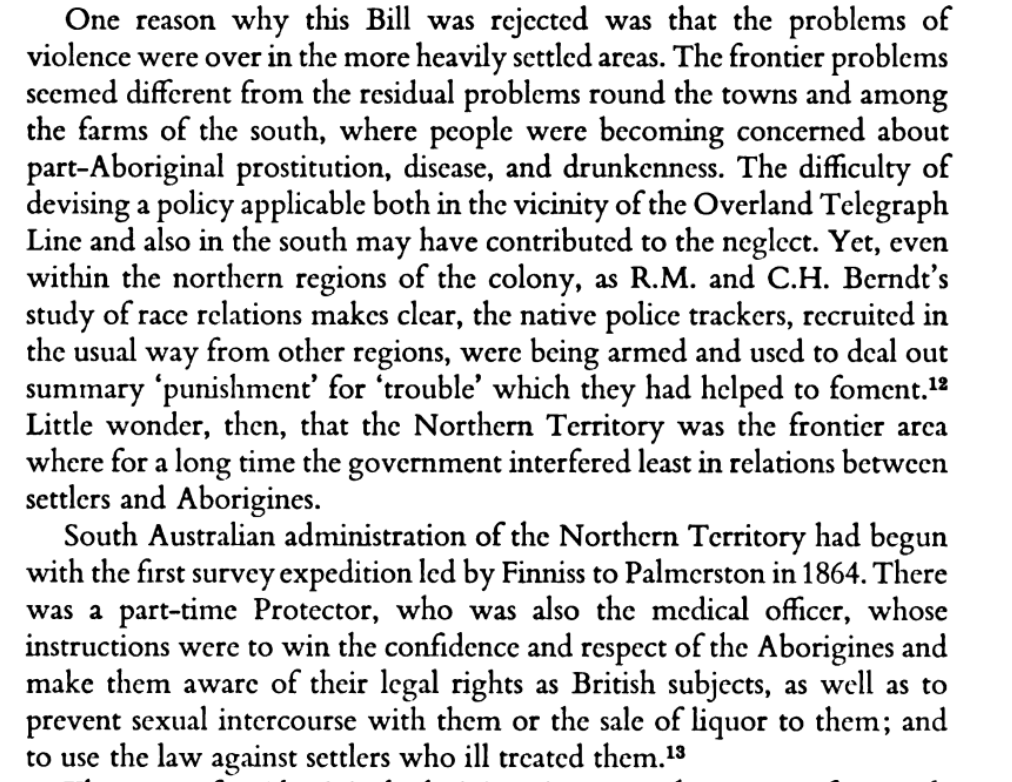
Figure 12C - Extract from Rowley:1970, p211
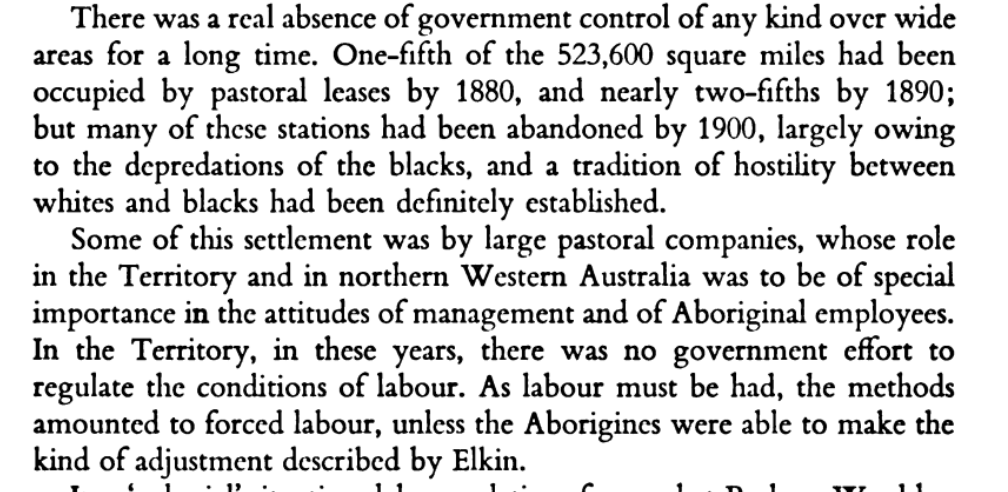
Figure12 D - Extract from Rowley:1970, p212
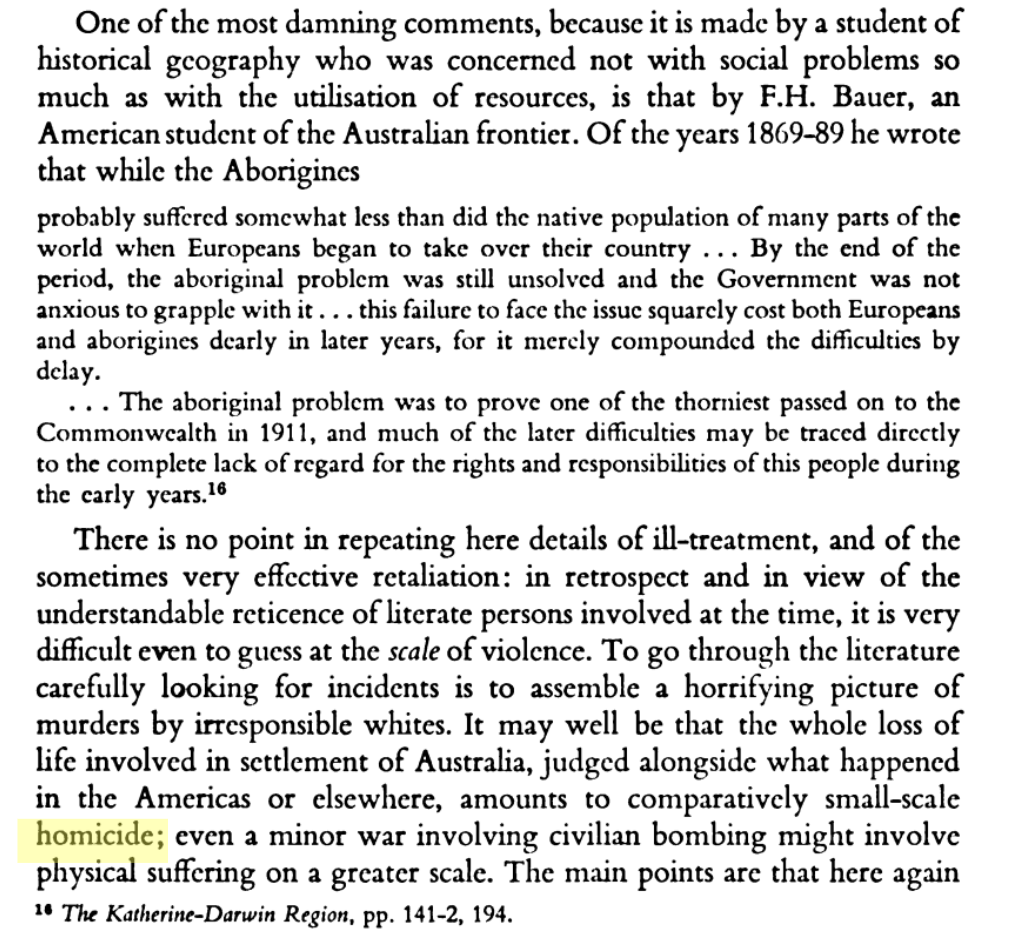
Figure 12E - Extract from Rowley:1970, p213
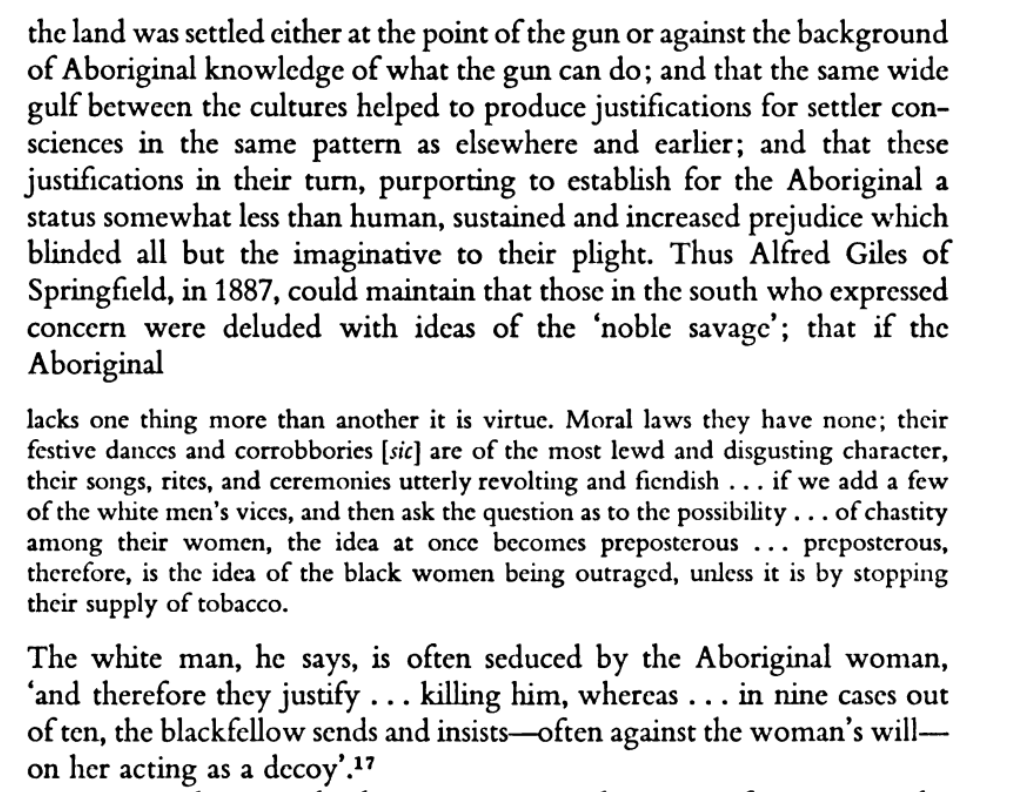
Figure 12F - Extract from Rowley:1970, p214
7 - Historian John Hirst and the Liberal Fantasy of the Settlement of Australia

Figure 13A - Hirst:2009, p81
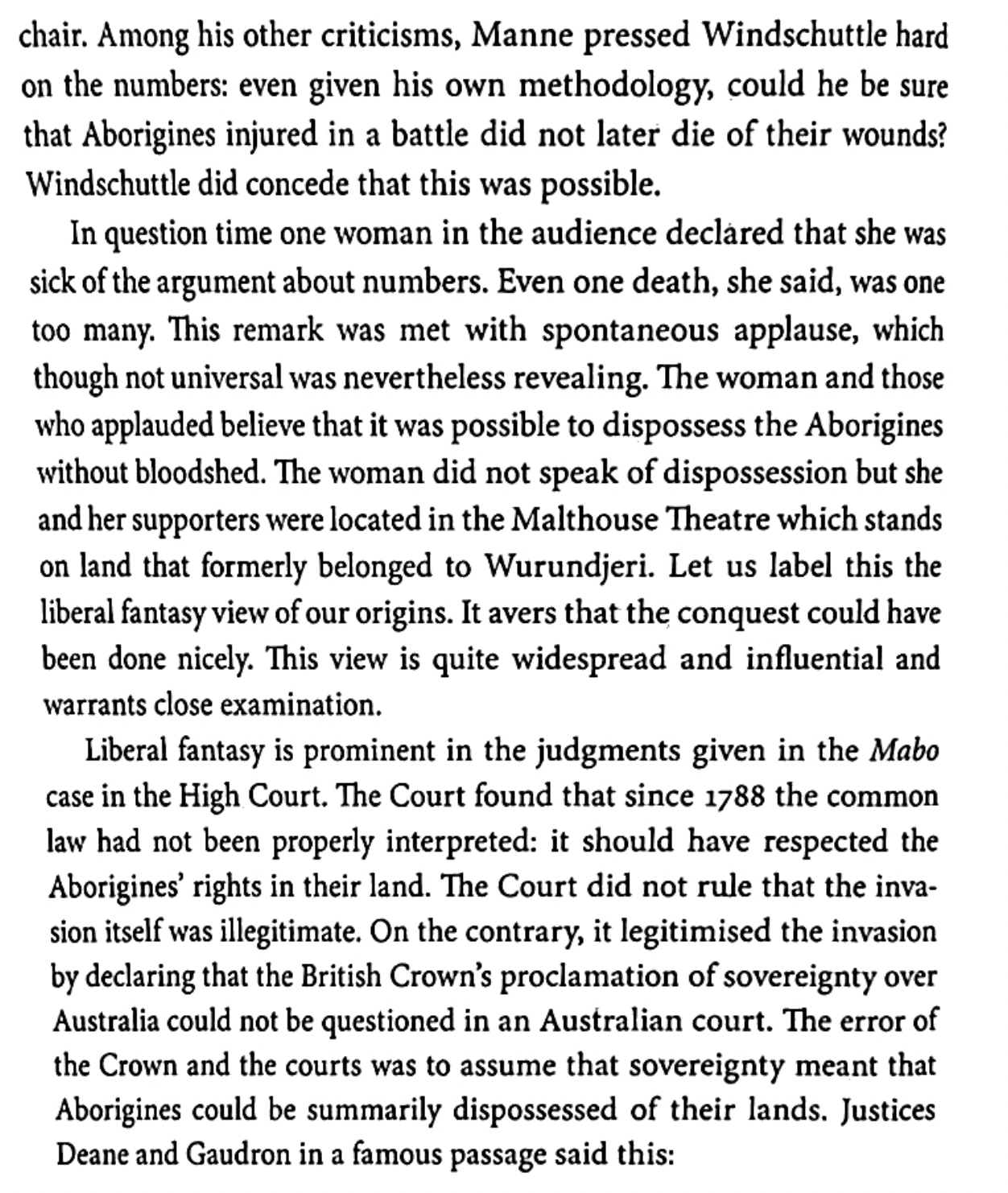
Figure 13B - Hirst:2009, p82
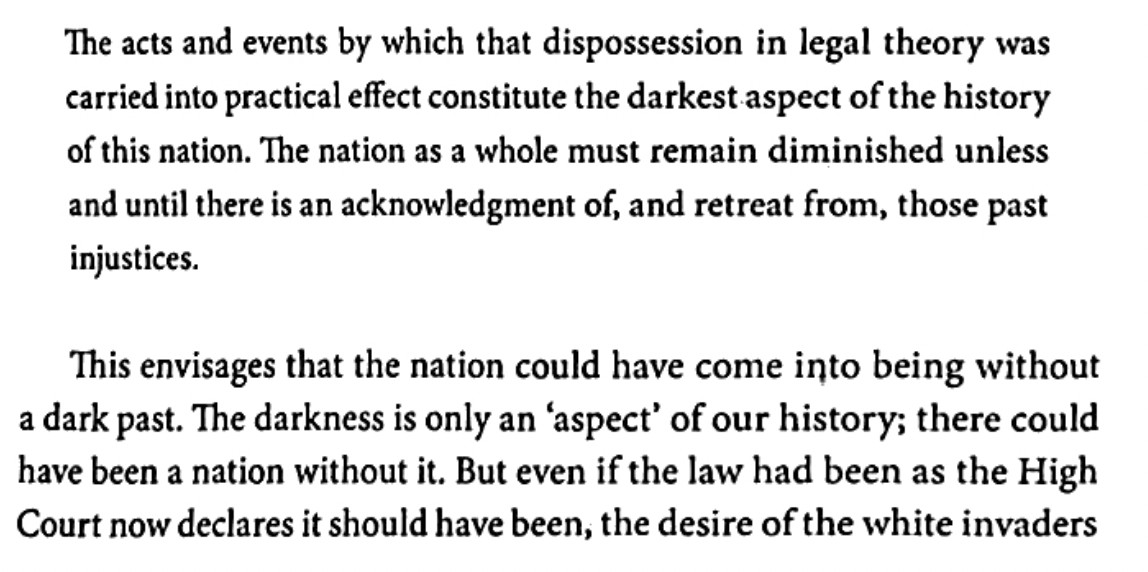
Figure 13C - Hirst:2009, p82
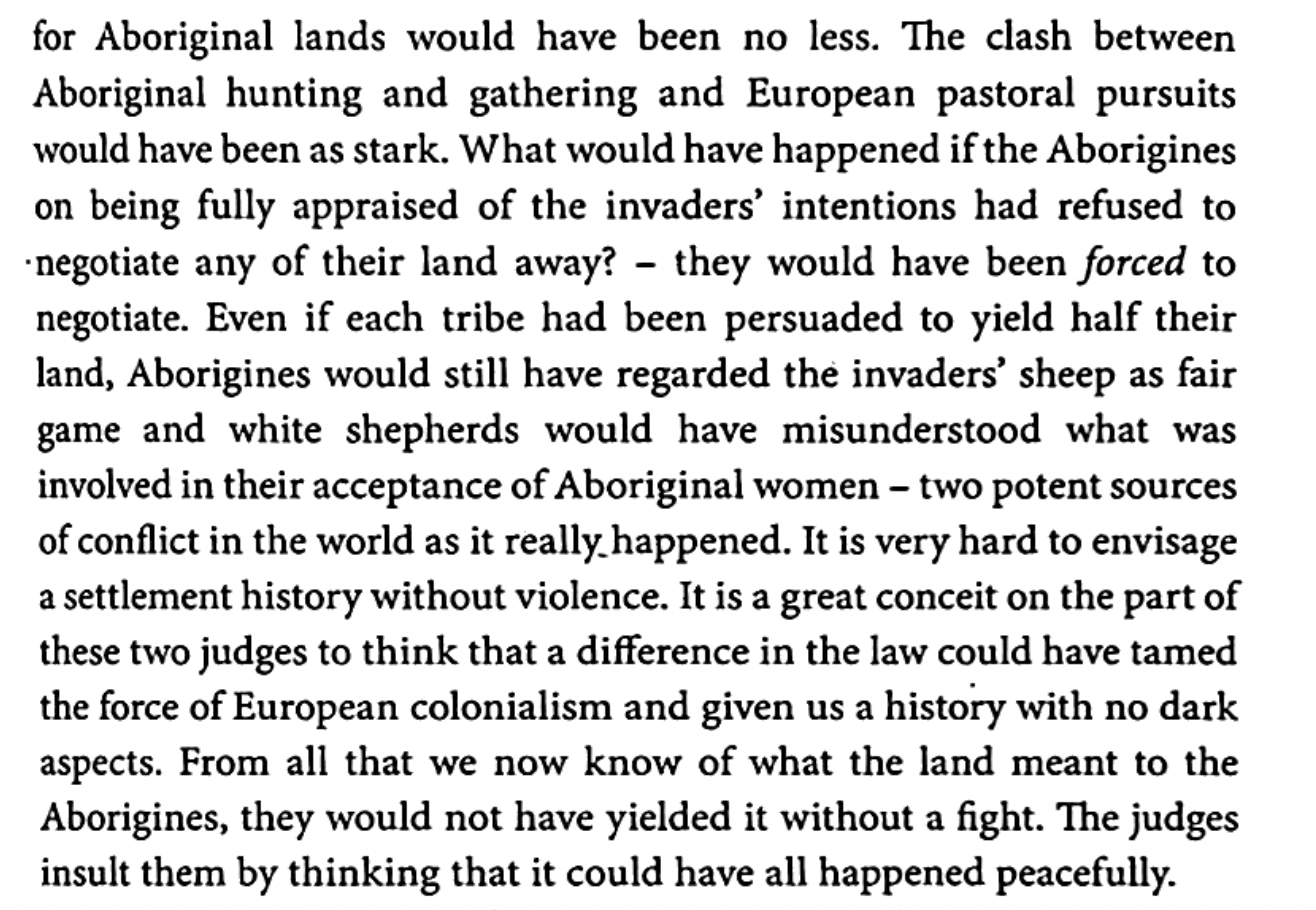
Figure 13D - Hirst:2009, p83
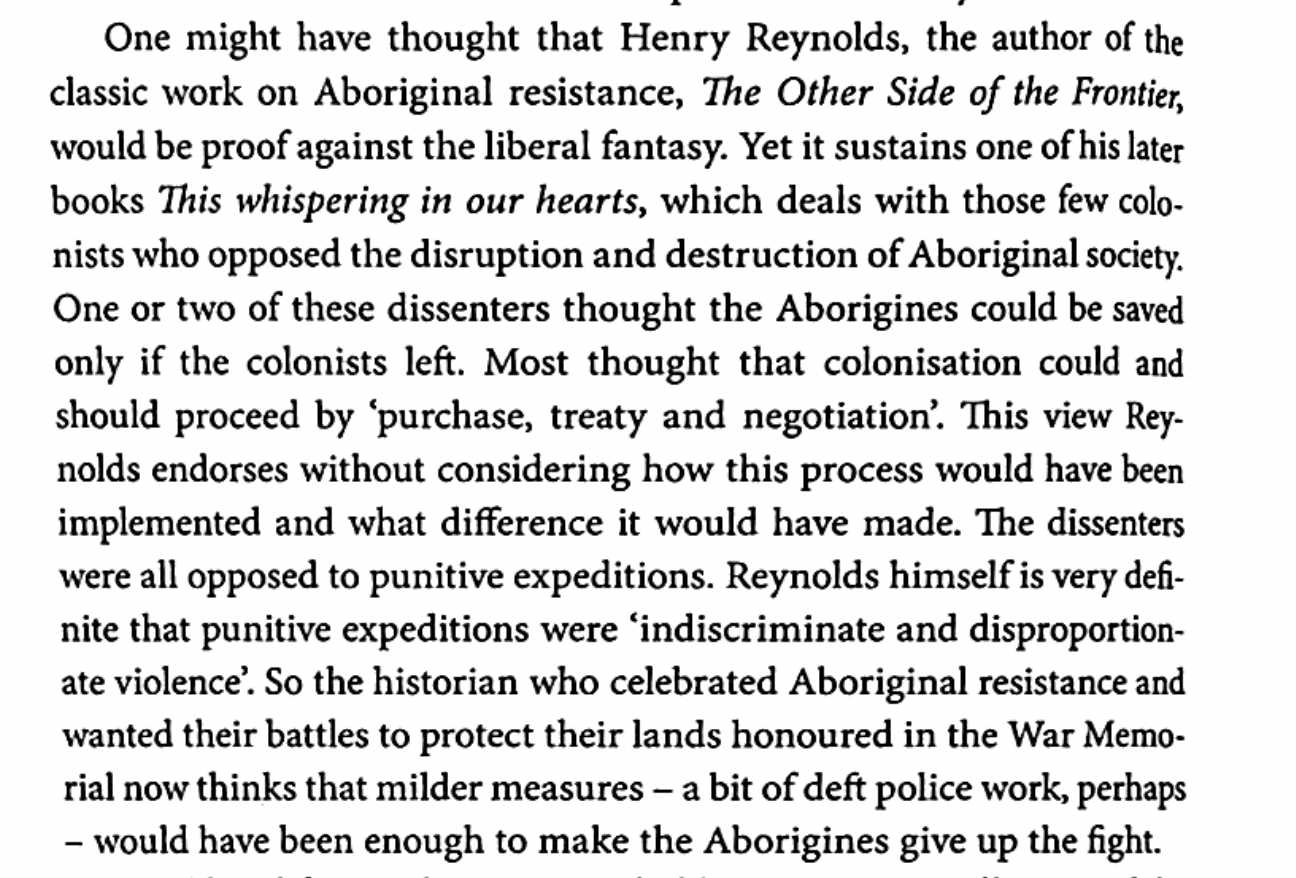
Figure 13D - Hirst:2009, p84