Historian Nicholas Clements & The Birdcage Murder
Posted 29 July 2026
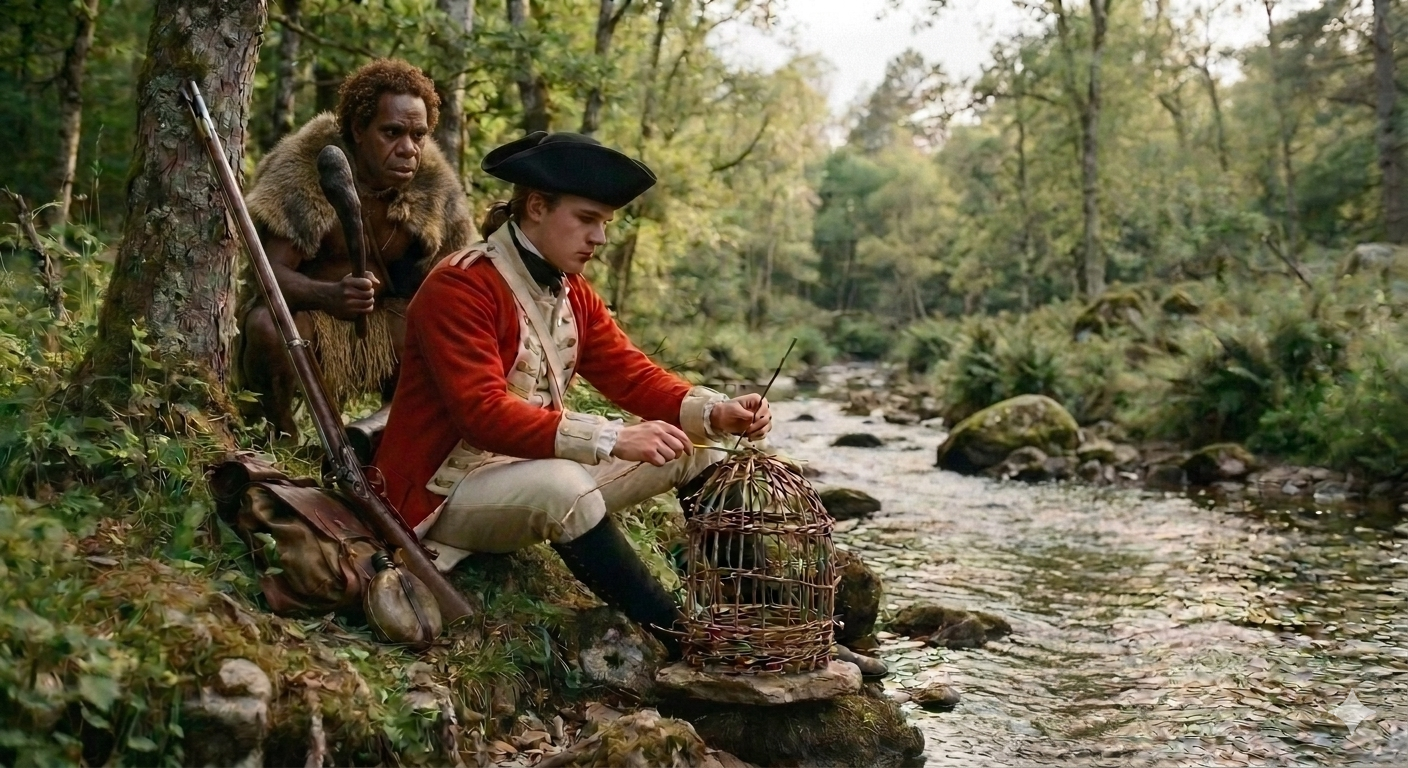
It is a cool September day in 1830 in the forests of Van Diemen’s Land. A red-coat soldier is sitting by a creek, weaving a birdcage from twigs. He is just a simple British soldier, of no remarkable importance. Perhaps he is day-dreaming of domesticity, imagining his wife and child back in Suffolk looking on, as he weaves, anticipating the goldfinch he will catch for them. Or maybe he is all alone in the world and will just buy a Rose Hiller parrot from a hawker in Hobart Town - a colourful companion to break the ennui of a life in a guards’ hut on the frontier in Tasmania.
Either way he is deep in thought, unaware as he sits by the stream, his fingers working stiffly, interlocking the green twigs into shape, that his life is about to end.
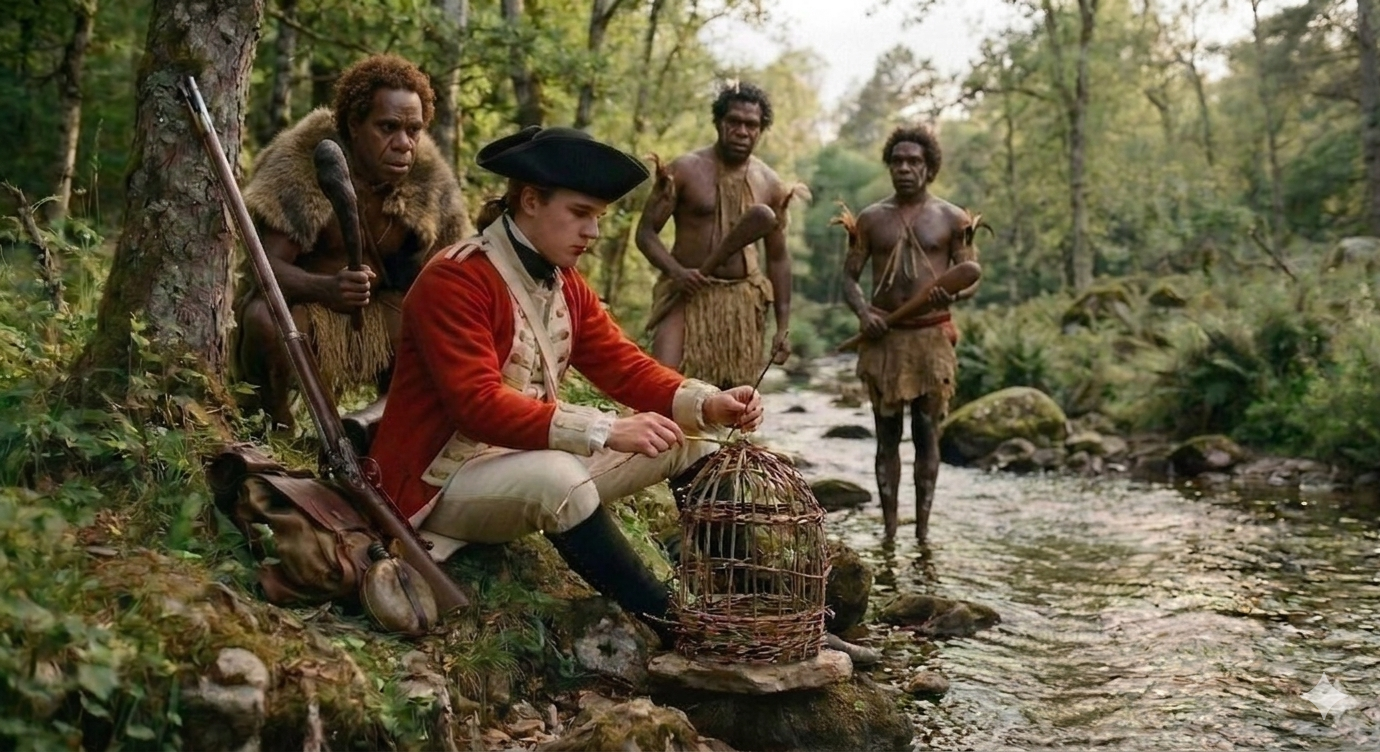
Figure 1 - Source: AI Image
The first massive blow by the club hits the base of his skull and snaps his spinal cord. He falls sideways, vibrating violently, unable to control his limbs.
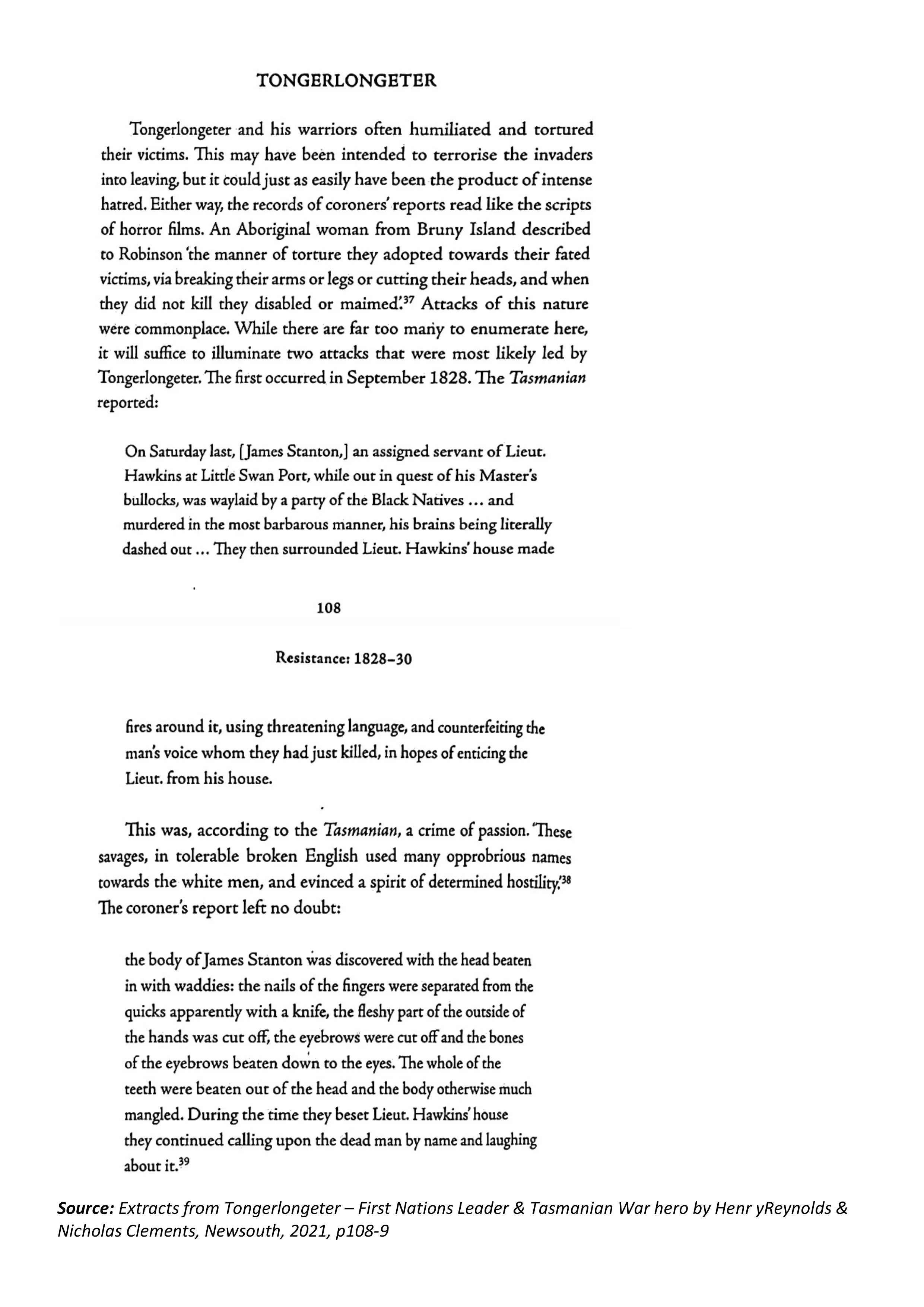
The second, third and fourth blows by the Aboriginal assassin start to pulverise his skull; one eye pops from its socket, dangling over his cheek by its optic nerve. The Aborigines begin to laugh as each blow spits teeth from the mouth of the soldier’s mangled head. (See Reference 1)
A simple description in the colonial newspapers is all that is recorded of this savage murder. The soldier is unnamed, but he will ultimately become a ‘man of history’. For his death will be the only one ever recorded by future historians as they tally up Britain’s military casualties in the so-called ‘Frontier War' in Tasmania.
It would turn out to be a “war” with a poignant British military death toll of one - an unnamed soldier, murdered and found slumped in a creek clutching a birdcage (Figures 2A&B).
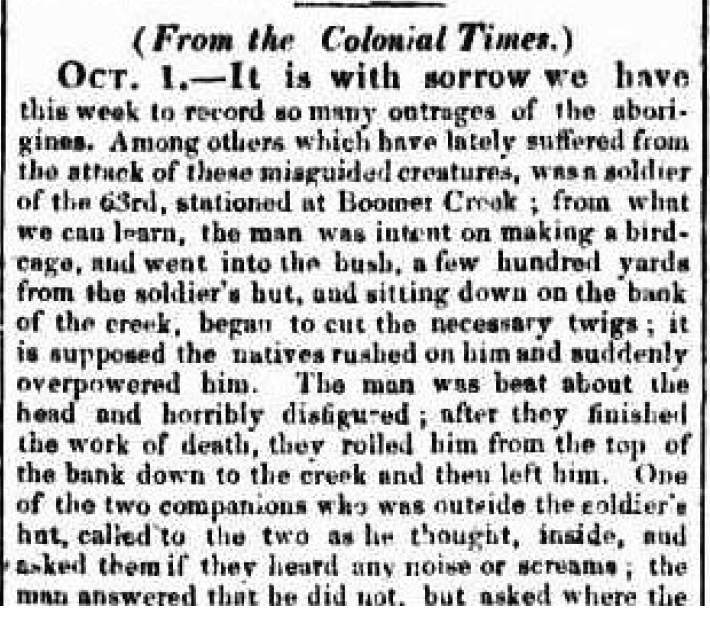
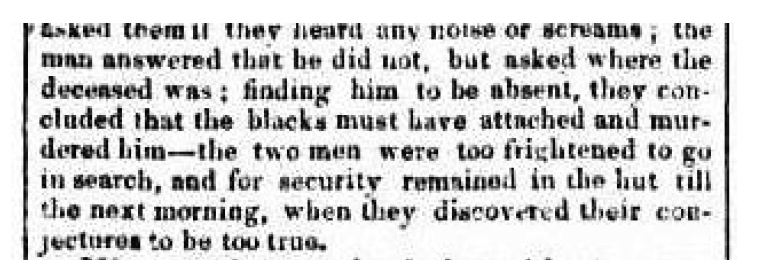
Figures 2A&B. - Source: Sydney Gazette and New South Wales Advertiser, Saturday 30 October 1830, page 4 (2) - Originally Colonial Times Fri 1 Oct 1830, p3 (Poorer copy here)
This unprovoked murder occurred at Boomer Creek which flows into Oyster Bay, on the east coast of modern day Tasmania.
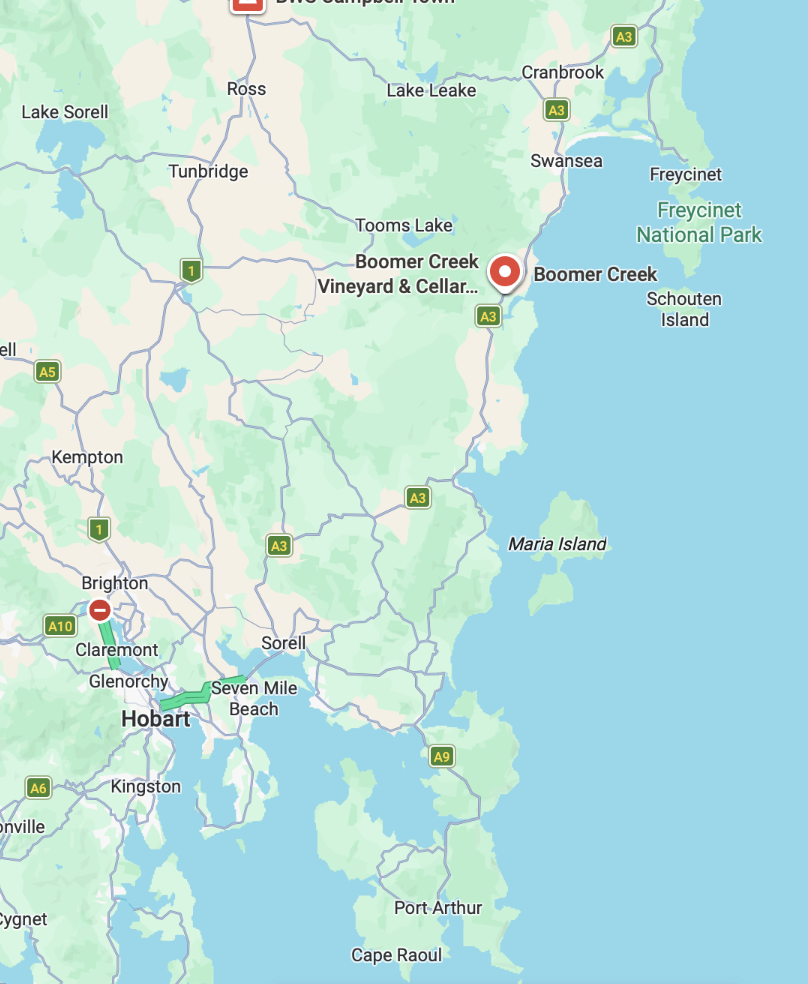
Figure 3 - Boomer Creek, Oyster Bay area. Source: GoogleMaps
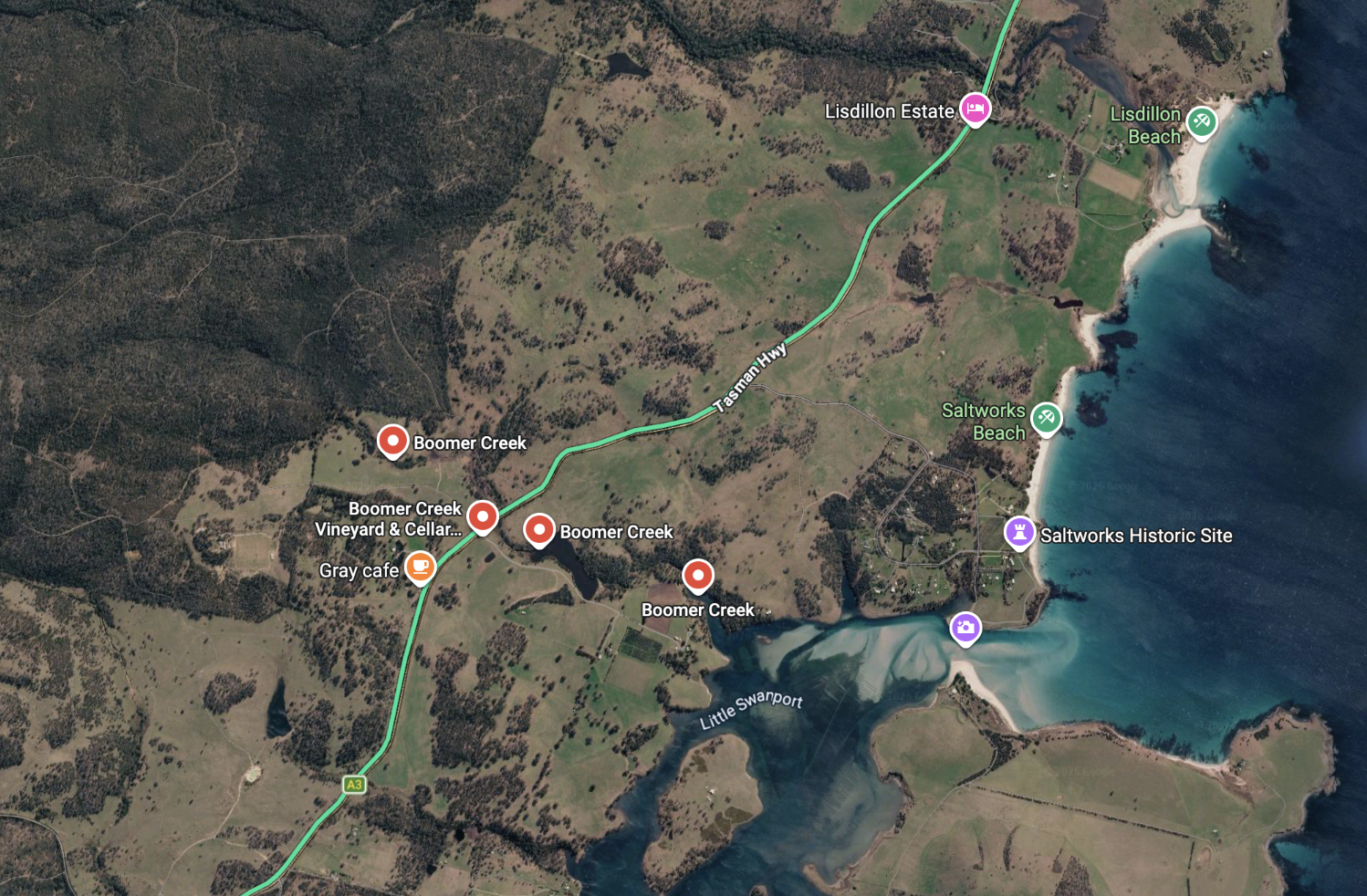
Figure 4 - Topography of Boomer Creek region today. In 1830 it would most likely have consisted of a wide creek, freshwater in the upper reaches and brackish or salt as it entered Oyster Bay. The creek would have been most likely flowed through forest in its upper reaches and thick ti-tree and sea-shore heaths in the estuarine region. Source: GoogleMaps
Two hundred year later, how is this murder of an unknown soldier of the 63rd Regiment portrayed by two of Tasmania’s leading historians on the so-called ‘Frontier War’ theory, Henry Reynolds and Nicholas Clements?
Reynolds & Clements cite this killing from the database, created by Clements, of all the violent incidences between soldiers and settlers and the Tasmanian Aborigines of the Oyster Bay and Big River tribes in the years 1823 to 1831. It is the only killing of a soldier recorded.
Surprisingly, Clements could only find five incidences in the records, for this period, where these Aboriginal tribes had clashed with actual soldiers - a very surprisingly low, five incidences in eight years - less than one per year (Figure 5).
This very low rate hardly supports the theory that there was a “military war” between the British soldiers and the Tasmanian Aborigines, as many are led to believe today. Clearly, essentially all the deaths that did occur during conflicts in the settlement of Tasmania were between non-military British subjects - settlers (men, women and children), convicts, police, government workers and Aborigines (men, women and children), all civilians alike.
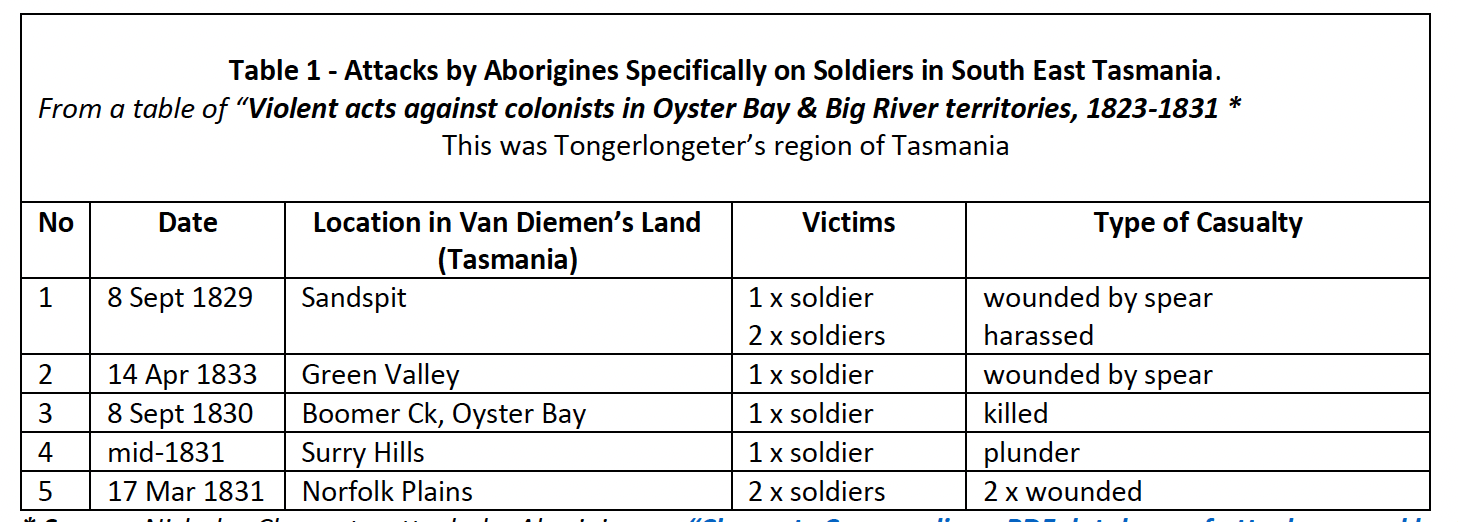
Figure 5 - Extract from Nicholas Clements database for clashes between the British soldiers and settlers and the Oyster Bay and Big river Tasmanian Aborigines. Source: Nicholas Clements, attacks by Aborigines – “Clements Compendium: PDF database of attacks on and by Aborigines in southeast Tasmania”
The actual extract from Clements database and the references he cites is in Figure 6

Figure 6 - Extract from Nicholas Clements database for only incidence in which a British soldier was killed by Aborigine(s) of the Oyster Bay and Big River Tasmanian tribes. Source: Nicholas Clements, attacks by Aborigines – “Clements Compendium: PDF database of attacks on and by Aborigines in southeast Tasmania”
The references cited by Clements for this killing, the Birdcage Murder, above in Figure 6 are:
CSO1/316, pp. 629, 840 [sic 841, see Figure 7 below];
HTC2/10/30; (Hobart Town Courier), and
CT24/9/30 (Colonial Times)
The following figures reproduce copies of these original records as cited, plus some reproductions in other colonial papers of the same incident where more legible copies were found.
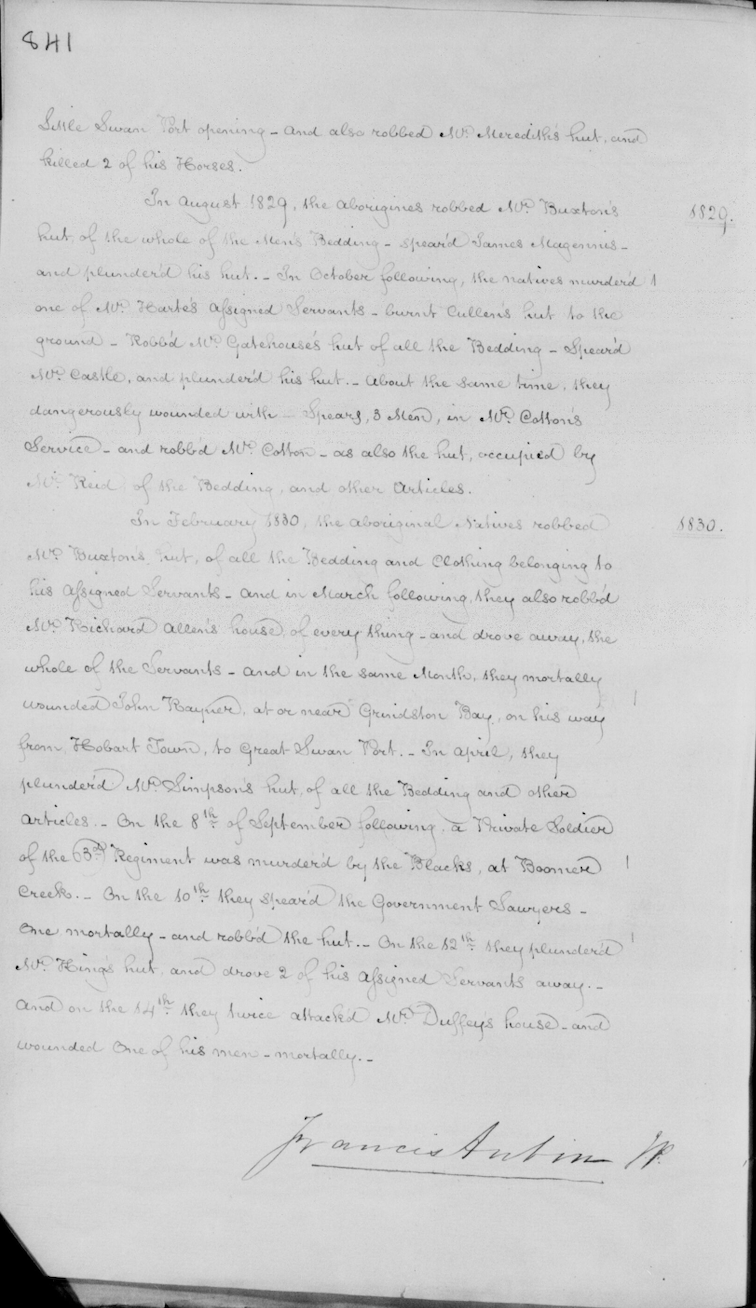
Figure 7A - The record of the “murdered” soldier appears in the records at CSO1-1-316 p841 with the detailed extract below in Figure 7B. The Whole page 629 cited by Clements doesn’t actually specify the murder of the soldier. Source: Archives of Tasmania, CSO1-1-316 p841

Figure 7B - Extract of lines from page 841 concerning the “murdered” soldier. Source: CSO1-1-316 p841
In a ‘letter to the Editor’ by John Batman (of Melbourne founding fame, who was employed as an Aboriginal ‘catcher’ in Van Diemen’s Land at this time), he noted the same murder in September 1830: “On Sunday after [almost beating a sawyer to death] they [the Aborigines] murdered a soldier (Figure 8).
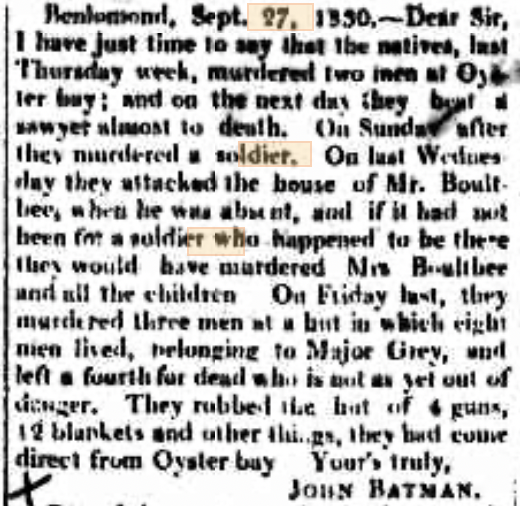
Figure 8 - Source: The Hobart Town Courier, Sat 2 Oct 1830 , p2
Conclusion
If there really was a full-scale “war” between the British military and the Tasmanian Aboriginal warriors, why were there only 5 violent incidences between two of the biggest tribes and the British soldiers in the 8 years of the so-called “war” ?
And if it was a real “war”, why did only one British soldier get killed, and even then he was just “murdered” while ‘off-duty’, peacefully weaving a birdcage from twigs, as he sat by a creek?
Is the so-called “Frontier War” in Tasmania just that, “so-called’?
Maybe the public are being misled by misinformation and disinformation as to real nature of this “war”?
Further Reading
Two of Australia’s institutions, the National Museum Australia and the State Library of NSW sadly do not present impartially the Proclamation of martial law by Governor Arthur in 1828.
They don’t even publish on their websites the text of the Proclamation. Instead they frame it in ideological terms - “a curious, colonial object [that] reminds us of the impact of colonisation on Australia’s Indigenous peoples” (SLNSW, Figure 9); and the National Museum also fails to educate in an impartial way, but rather frames the history of British/Tasmanian Aboriginal conflict in Van Diemen’s Land in ‘racist’ terminology - it’s the fault of “white people” (see below).
Neither institution notes the actual scope and intent of the Proclamation, which is clearly decribed in the opening paragraph:
“… since the primary Settlement of this Colony, various acts of aggression, violence, and cruelty have been, from different causes, committed on the Aboriginal Inhabitants of the island, by subjects of his Majesty…”
That is, the Proclamation identified the injustices against the Tasmanian Aborigines and sought to protect them from the destructive forces of the settlers! And similarly, the Proclamation goes on to further recognise that the Aborigines were to be treated equally with the “white people” and made to understand that their acts of aggression against the settlers were not to be condoned - they were to be punished in the same way, as for the settlers, by the law.
This Proclamation is a serious and important document in the progress of Australia towards the law-abiding, racially tolerant and just society that we have today. It is shameful that these two Instututions, the SLNSW and the NMA do not emphasise this.
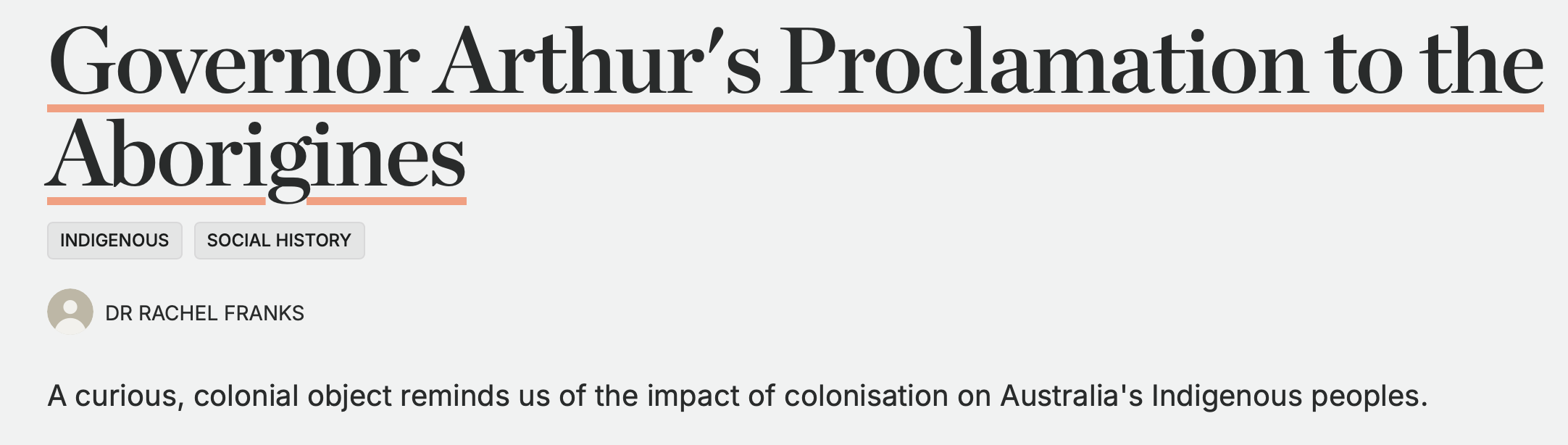
Figure 9 - Source: State Library of NSW

Figure 10 - Dr Rachel Franks, a ‘crime fiction ’ academic, not an historian, and author of the State Library of NSW internet post on Governor George Arthur’s 1828 proclamation . Source
The State Library of NSW focuses the public’s attention on the innovative boards of the Proclamation devised by Governor Arthur (Figure 13) rather than the detailed text of the Proclamation (Figure 14 & below).
The National Museum Australia however takes another disappointing approach by playing the ‘race-card’: “this equality was, however non-existent, with white people seldom properly punished for the same crimes for which Tasmanian Aborigines were hanged.” (Figure 12).
This claim is clearly false - some 500 Tasmanians (mostly “white people”) have been hung for various crimes, the same crimes committed by the Tasmanian Aborigines - theft, murder, rape, burglary and assault (Wikipedia), whereas an AI search only suggest two Tasmanian Aborigines were hung in Tasmania [with two more hung in Victoria for murder.
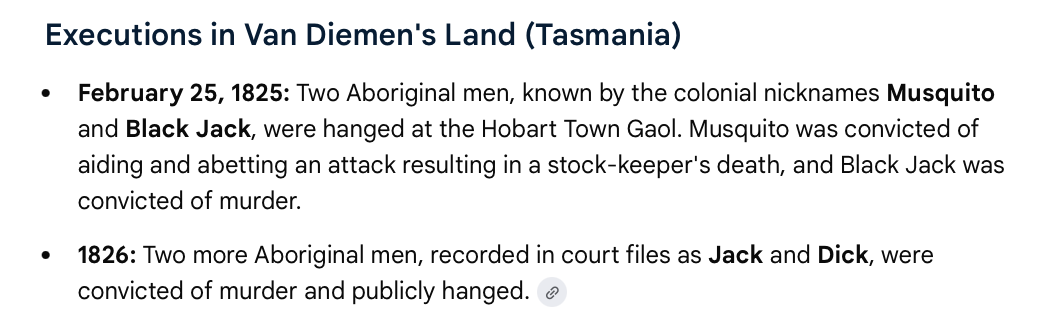
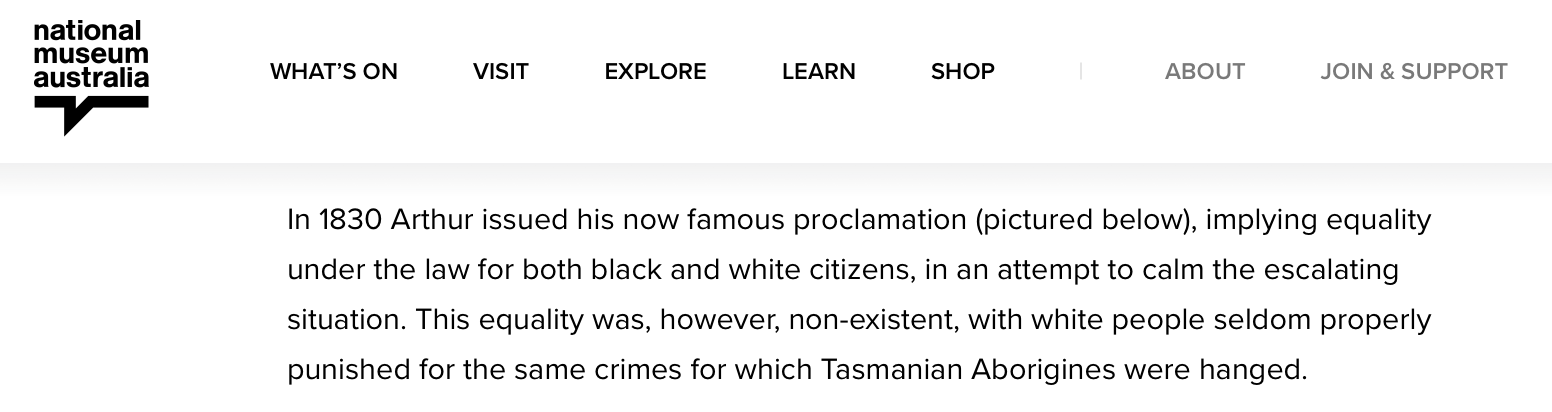
Figure 12 - Source: National Museum Australia
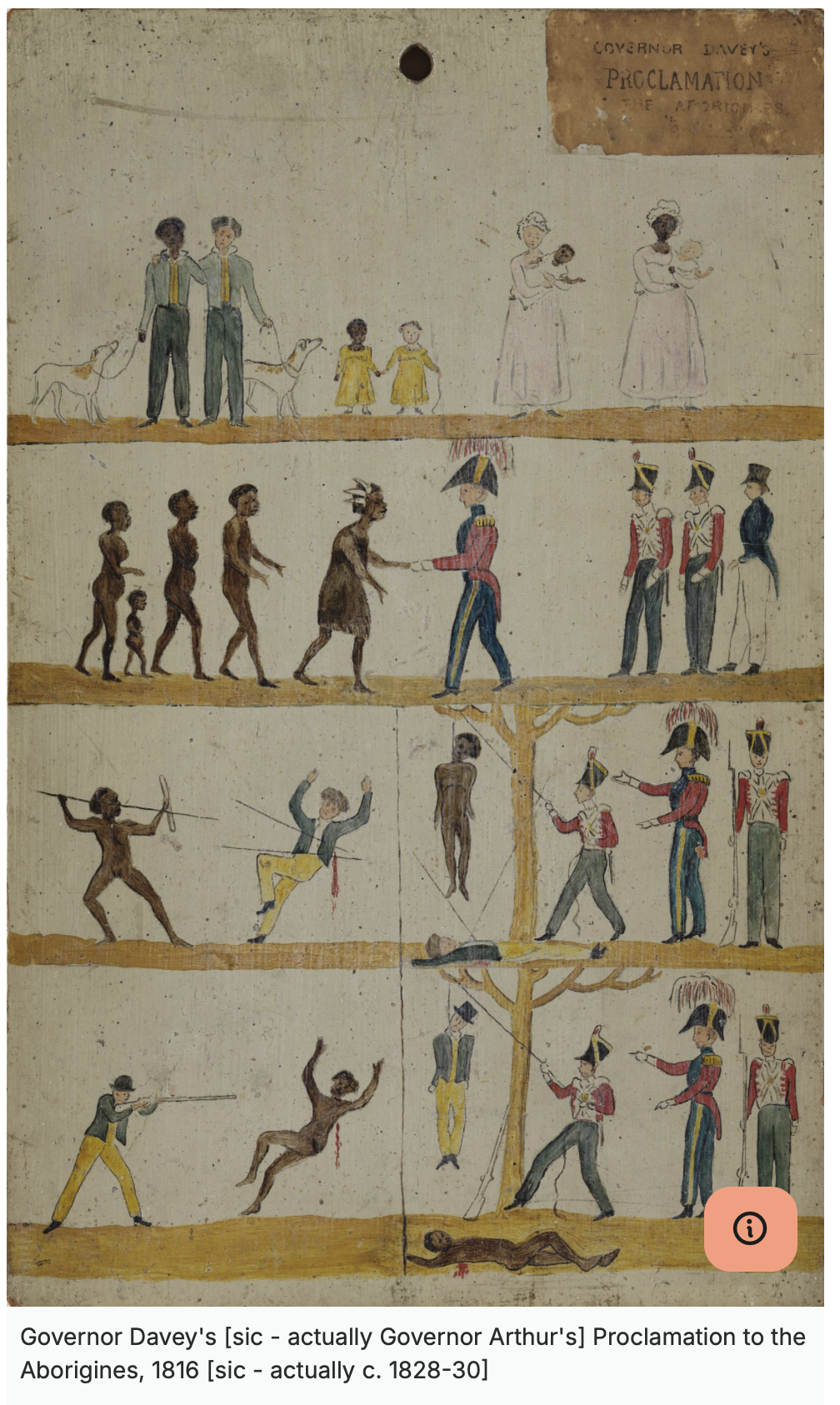
Figure 13 - The Proclamation Board of Governor Arthur in Van Diemen’s Land 1828. Source: State Library of NSW
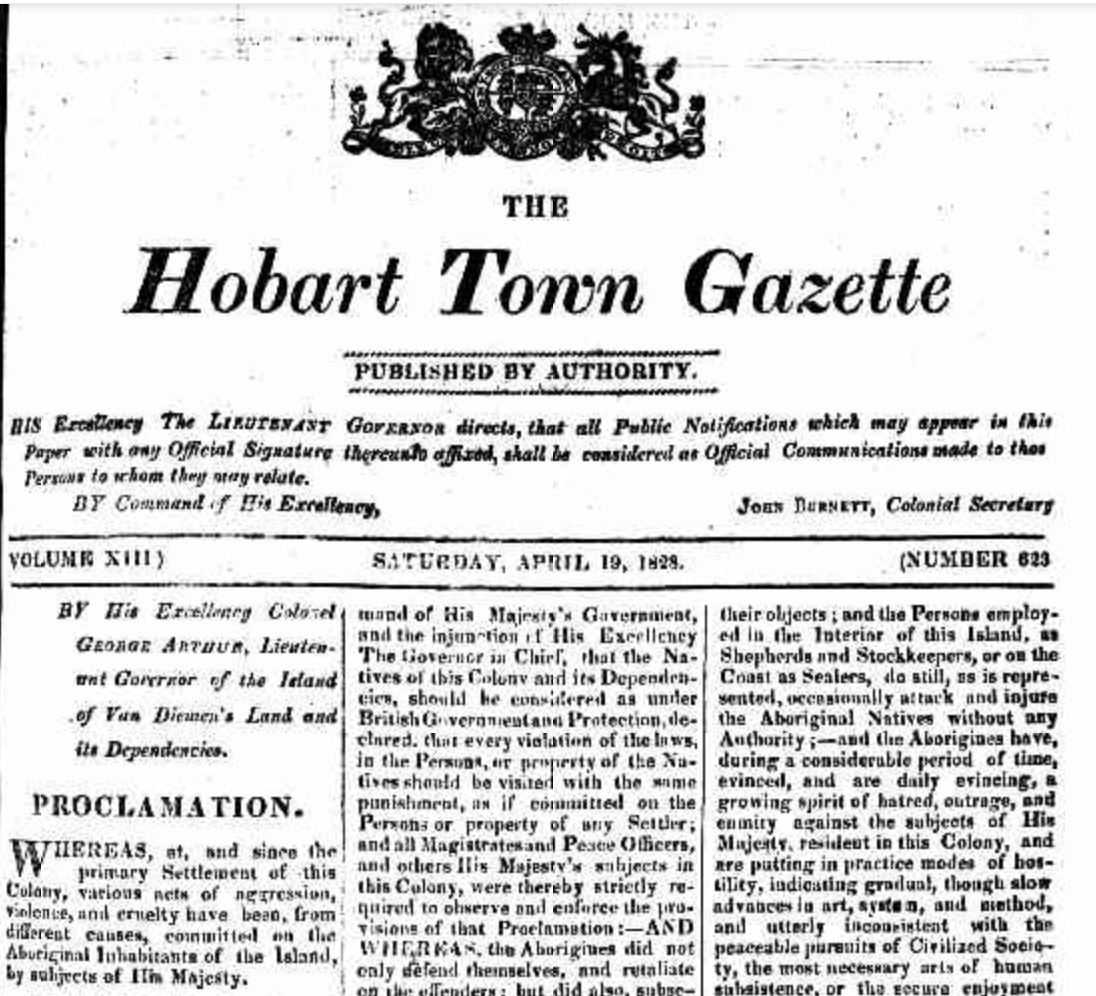
Figure 14 - Source
Governor Arthur’s proclamation dated 15 April 1828
Hobart Town Gazette Saturday 19 April 1828, page 1 (Source)
BY His Excellency Colonel GEORGE ARTHUR, Lieutenant Governor of the Island of Van Diemen's Land and its Dependencies. PROCLAMATION. WHEREAS, at, and since the primary Settlement of this Colony, various acts of aggression, violence, and cruelty have been, from different causes, committed on the Aboriginal Inhabitants of the island, by subjects of his Majesty.
AND WHEREAS, for the preventing and punishing such sanguinary, and wicked practices, it was by a certain General Order made by Colonel DAVID COLLINS, (then) Lieutenant Governor of this Island and its Dependencies, at Government-House, Hobart Town, on the 29th day of January, 1810, declared, "that any " Person whosoever, who should offer " violence to a Native, or should, in " cool blood, Murder, or cause any of " them to he Murdered, should, on " proof being made of the same, be " dealt with, and proceeded against, as " if such violence had been offered or "Murder committed on a civilized " Person;"
— AND, it was also, by a certain Proclamation, made and issued by me, as such LIEUTENANT GOVERNOR as aforesaid, at Government House, Hobart Town, on the 29th day of June, 1824, after reciting the command of His Majesty's Government, and the injunction of His Excellency The Governor in Chief, that the Natives of this Colony and its Dependencies, should he considered as under British Government and Protection, declared, that every violation of the laws, in the Persons, or property of the Natives should be visited with the same punishment, as if committed on the Persons or property of any Settler; and all Magistrates and Peace Officers, and others His Majesty's subjects in this Colony, were thereby strictly required to observe and enforce the provisions of that Proclamation:
— AND WHEREAS, the Aborigines did not only defend themselves, and retaliate on the offenders; but did also, subsequently to the Order, and Proclamation aforesaid, and notwithstanding the recital, declarations and requisition mentioned, perpetrate frequent unprovoked outrages on the Persons and property of the Settlers in this Island, and their Servants, being British subjects; and did indulge in the repeated commission of wanton, and barbarous Murders, and other Crimes;
— for the repression of which, as also for the prevention of further offences by either of the said parties, instructions, directions, and injunctions were promulgated for general information, and for the especial guidance of the Civil Authorities, and the Military Forces, by the Government Notices of the 29th November, 1826, and the 29th November, 1827, respectively.
AND WHEREAS, those several measures have proved ineffectual to their objects; and the Persons employed in the Interior of this Island, as Shepherds and Stockkeepers, or on the Coast as Sealers, do still, as is represented, occasionally attack and injure the Aboriginal Natives without any Authority;
— and the Aborigines have, during a considerable period of time, evinced, and are daily evincing, a growing spirit of hatred, outrage, and enmity against the subjects of His Majesty, resident in this Colony, and are putting in practice modes of hostility, indicating gradual, though slow advances in art, system, and method, and utterly inconsistent with the peaceable pursuits of Civilized Society, the most necessary arts of human subsistence, or the secure enjoyment of human life.
AND WHEREAS, on the one hand, the security and safety of all who have intrusted themselves to this Country on the faith of British protection, are imperatively required by the plainest principles of justice:
— And, on the other hand, humanity and natural equity, equally enforce the duty of protecting and civilizing the Aboriginal Inhabitants, AND WHEREAS, the Aborigines wander over extensive tracts of Country, without cultivating, or permanently occupying any portion of it, making continual predatory incursions on its settled Districts, a state of living alike hostile to the safely of the Settlers, and to the amelioration of their own habits, character and condition.
AND WHEREAS, for the purpose-poses of protecting all classes, and orders of Persons in this Island and its Dependencies;
—of bringing to an end, and preventing the criminal and iniquitous practices hereinbefore described, by whomsoever committed, of preserving, instructing, and civilizing the Aborigines;- and of leading them to habits of labour, industry, and settled life it is expedient, by a Legislative enactment of a permanent nature to regulate, and restrict the intercourse between the White and the Coloured Inhabitants of this Colony;
-and to allot, and assign certain specified tracts of land to the latter, for their exclusive benefit, and continued occupation.
AND WHEREAS, with a view to the attainment of those ends, a negotation with certain Chiefs of Aboriginal Tribes, has been planned; but some prompt, and temporary measure, is instantly called for, not merely to arrest the march, but entirely to cut off the causes, and occasions of plunder, and crime, and to save the further waste of property and blood;
- and it is therefore become indispensably necessary to bring about a temporary separation of the Coloured from the British population of this Territory, and that therefore the Coloured inhabitants should be induced by peaceful means to depart, or should otherwise be expelled by force from all the settled Districts therein.
NOW THEREFORE, I The Lieutenant Governor aforesaid, in pursuance, and in exercise of the powers and authorities in me vested in this behalf, do hereby NOTIFY, that, for the purpose of effecting the separation required, a line of Military Posts will be forthwith stationed, and established along the confines of the settled districts, within which, the Aborigines shall and may not, until further order made, penetrate, or in any manner, or for any purpose, save as hereinafter specially permitted;
- And I do hereby strictly command, and order all Aborigines immediately to retire, and depart from, and for no reason, or on no pretence, save as hereinafter provided, to re-enter such settled Districts, or any portions of land cultivated, and occupied by any Person whomsoever, under the authority of His Majesty's Government, on pain of forcible expulsion therefrom, and such consequences as may be necessarily attendant on it.
AND I do hereby direct and require all Magistrates, and other Persons by them authorized and deputed to conform themselves to the directions and instructions of this my Proclamation, in effecting the retirement, or expulsion of the Aborigines from the settled Districts of this Territory:
- And I do further authorize, and command all other Persons whomsoever, His Majesty's Civil Subjects in this Colony to obey the directions of the Civil, and to aid, and assist the Military Power, (to whom special orders adapted to situations and circumstances will be given) in furtherance of the pro-visions hereof, and to resort to whatever means, a severe, and inevitable necessity may dictate, and require for carrying the same into execution; subject, however, to the following rules, instructions, restrictions and conditions:
1. Lands, the property of the Crown, and unlocated, or adjoining remote and scattered Stock Huts, are not to be deemed settled Districts, or portions of Land cultivated, or occupied, within the meaning of this Proclamation.
2. All practicable methods are to be employed for communicating, and making known the provisions of this Proclamation to the Aborigines, and they are to be persuaded to retire beyond the prescribed limits, if that be possible.
3. On failure of the expedient last mentioned, capture of their persons without force is to be attempted, and if effected, the Prisoners are to be treated with the utmost humanity and compassion.
4. Whenever force cannot be avoided, it is to be resorted to, and employed with the greatest caution, and forbearance.
5. Nothing herein contained shall authorize, or be taken to authorize, any Settler, or Settlers, Stockkeeper, or Stockkeepers, Sealer, or Sealers to make use of force, (except for necessary self-defence) against any Aboriginal without the presence, and direction of a Magistrate, Military Officer, or other Person of respectability, named and deputed to this service by a Magistrate; of which Class a numerous body will be appointed in each District: - And any unauthorized act of aggression, or violence committed on the Person or property of an Aboriginal shall be punished as hereinbefore declared; and all Aborigines are hereby invited, and exhorted to inform, and complain to some constituted authority of such misconduct, or ill treatment, in order to its coercion and punishment.
6. Nothing herein contained, shall prevent the Aborigines from travelling annually (according to their custom) until their habits shall have been rendered more regular and settled through the cultivated, or occupied parts of the Island to the Sea Coast in quest of Shell-fish for sustenance on condition of their respective leaders being provided with a general passport under my Hand and Seal, - arrangements for which form a part of the intended negotiation. GIVEN under my Hand and Seal, at Government House, Hobart Town; this Fifteenth Day of April, in the Year of Our Lord One Thousand Eight Hundred and Twenty-eight.
[L. S.} GEORGE ARTHUR.
By His Excellency's Command, J. BURNETT. GOD SAVE THE KING!
References.
1. This fictional description is based on real events, as recorded by historian Henry Reynolds & Nicholas Clements in their book Tongerlongeter, First Nations Leader & Tasmanian War Hero, p108-9