Where's the Uluru Statement Canvas? - Has it been ‘Lost’?
Posted 7 Dec 2025
This post provides some of the files and background referred to in Robert Hill’s Quadrant Online article, History’s Gone Walkabout, 8 Dec 2025.
What is the Uluru Statement Canvas, Who signed it and Where is it now?
How the 2017 canvas came into being:
According to journalist Stephen Fitzpatrick, who was present at the creation of the Uluru Statement Canvas:
Rachel Perkins [filmmaker, signatory to `the Canvas’ (Figure 1) and a core member of the 2016 ‘secret meeting’ of activists (No. 2 in Figure 9 below)] … had to find a painting.
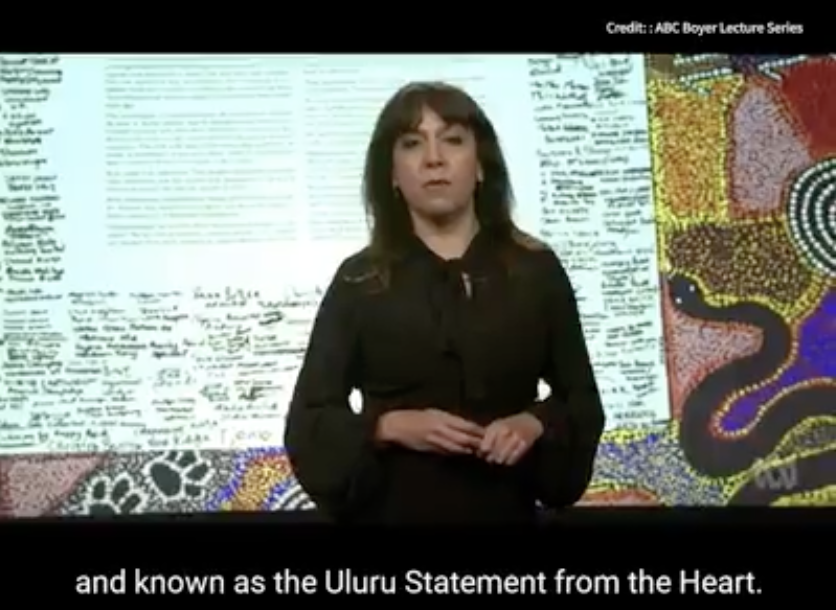
Figure 1 - Rachel Perkins and Uluru Statement Canvas. Source
She would conjure one up on a blank canvas if necessary, but she needed an artwork and she needed it quickly. [The] marathon period of legal and civics work was about to reach its climax in a proposal that could change Australia at its core.
The one thing that had been left out was art – something was needed to underline a written statement that, if crafted soundly and supported the next morning by 250 delegates at the historic Indigenous convention, could be a turning point in the quest for constitutional recognition of First Nations peoples… On that final evening, a small core of lawyers settled in for what would become an all nighter drafting the statement. Outside their room, a floating roster of delegates sang songs of country that buoyed the spirits of those within. Singing it into existence.
And as they did, Perkins considered her options for its artistic expression. She would achieve what was needed … Cape York lawyer and Referendum Council member Noel Pearson [a signatory and ‘secret meeting’ attendee No. 24 in Figure 9 below] gently prompted Perkins, on the second day of the convention, to think about how to present what might turn out to be a significant declaration. It needed to be touchable if it was to touch the nation’s heart and soul. It needed to be art as well as law.
Like the Yirrkala and Barunga documents, it also needed to bear the identities of all those involved, to carry the weight of the various First Nations in agreement, in a form that could then be taken to the broader world … Over several hours there was much deliberation … A fresh canvas needed to be found, and then an artwork created that was specific to this endeavour. Perkins [said], “what we’ll do is, we’ll get the canvas and everybody can sign it, and we’ll paint on it later, and then it will have the intention, which it should, that these are all the Dreamings of Uluru [and] it’s painted for this purpose, the right way.”…
The draft manifesto was read to delegates in the morning, in a final session closed to the small press corps attending the convention … In those breathless moments, as the scale of what was being contemplated became clear, after the all-night session with the lawyers synthesising the delegates’ messages over the previous two days, a motion was quickly put to the floor. It was accepted with universal acclaim.
That afternoon there was a solemn ceremony at Mutitjulu in the shadow of Uluru, with the text having its first public reading by professor of constitutional law Megan Davis [a signatory and ‘secret meeting’ attendee No. 27 in Figure 9 below] … Anangu people danced, having gifted the name Uluru to the document. Just a handful of invited journalists witnessed the declaration. … and document. It was spine-tingling. There, rolled out on the red dirt, was Rachel Perkins’ canvas, still blank but for the delegates’ signatures in the allotted space.
Later, the words of the resolution would be framed by those names and the whole surrounded by a magnificent painting. The artwork, depicting key Anangu stories, would be created under the direction of renowned desert painter Rene Kulitja, with artists from the Maruku Arts centre at Mutitjulu.
The date was May 26, 2017 ... The Uluru Statement from the Heart had been formally declared as a principle for recasting national relations…
And the canvas document is on its way to becoming a national treasure.
Historian Mark McKenna describes the Uluru statement as “the most visionary political document to emerge in the last decade”.
Painter Ben Quilty says it is “one of the most important artworks of our time”. Quilty, who has worked with artists in the region, found himself the custodian of the piece on its first journey out of Mutitjulu a few weeks after its presentation at the convention.
“I was visiting Mutitjulu and they laid it out on the ground and asked could I take it back with me [to Sydney]. They rolled it out and showed it to me in the dirt, with its signatures. It was one of the most important things I’ve ever had to do. I knew what it meant,” he says.
“It ended up having a place in the empty seat next to me on the flight and I buckled it in and I thought, If we go down, that’s me and it both done for.”
Quilty is certain of both its artistic and cultural significance. “The artists in that area include some of the most important painters in the world at the moment,” he says, citing last year’s Wynne Prize winner Yukultji Napangati as an example, alongside Rene Kulitja’s own significant standing.
Rachel Perkins explains the significance of it as an artefact, referring to the Anangu concept of Tjukurpa, linking the people to their environment and ancestors. “The Uluru Statement from the Heart follows that tradition of art expressing people’s connection to the land through their Dreaming,” she says. “This Tjukurpa which is expressed here [in the statement] is part of Australian history and law.”
- Excerpts from, Stephen Fitzpatrick, `A fresh canvas for Indigenous politics’, The Monthly, May 2019

Figure 2 - Noel Pearson signing the Uluru Statement Canvas. Source: Uluru Statement Study Guide
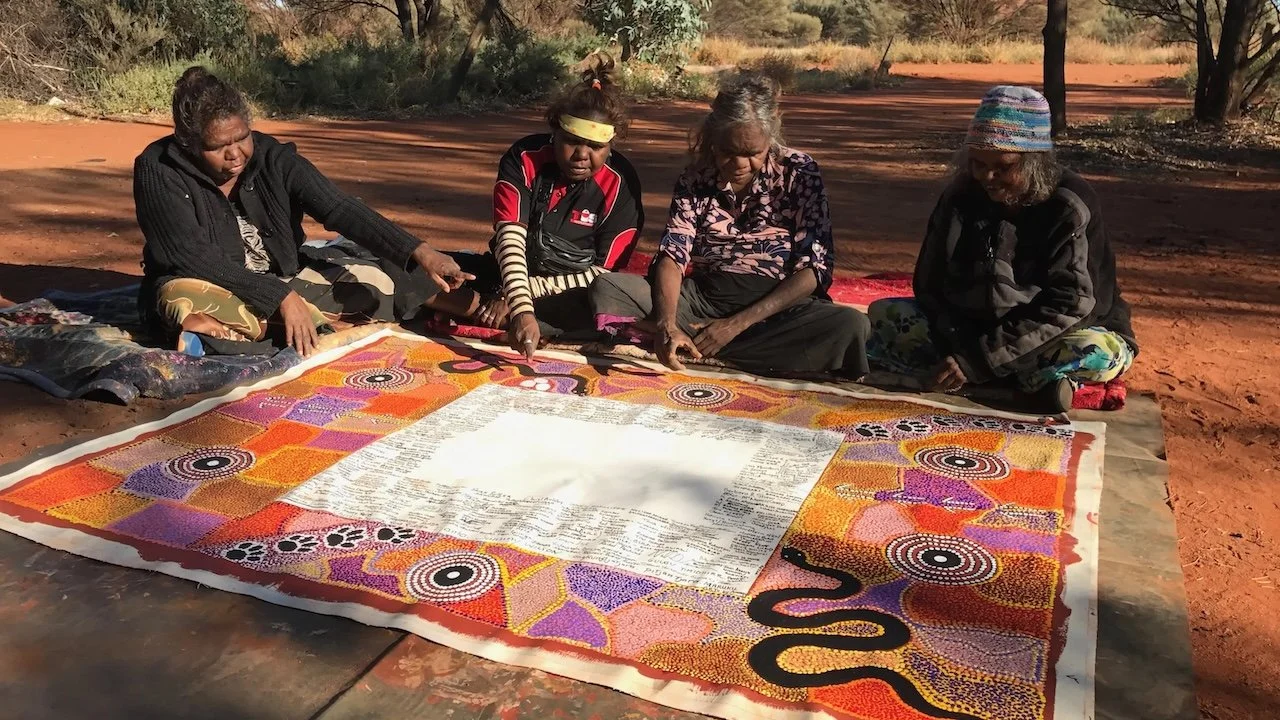
Figure 3 - Anangu artists Christine Brumby, Charmaine Kulitja, Rene Kulitja and Happy Reid painting the canvas after signing. Photo Credit Clive Scollay
The creation of The Canvas was therefore a big deal, created by the people intimately involved in the Commonwealth funded dialogues and conference at Uluru in 2017.
2. Who are the Signatories to the Uluru Statement Canvas?
2.1 Asking the Minister
In May 2017, over 250 Aboriginal and Torres Strait Islander delegates gathered in Mutitjulu at Uluru for the National First Nations Constitutional Convention after a series of regional dialogues held across the country. They wrote and endorsed the Uluru Statement from the Heart.
- Parliamentary Education Office
The names of these ‘over 250’ signatories have not been published as a list by any of the official organisations associated with the creation Uluru Statement from the Heart (1, 2, 3).
A contributor to the Dark Emu Exposed project was curious: Robert Hill, sent an email on 3 May 2022 to the Hon. Linda Burney, Minister for Indigenous Australians at the time, seeking information as to, '‘who wrote the Uluru Statement from the Heart and who signed it.”
Robert’s thinking was that if this ‘generous offer’ of the Uluru Statement was being given to us, the Australian people, in effect as a binding contract for us to alter our Constitution, it was only proper to know who these people were.
Robert quite sensibly raised as an analogy that one wouldn’t sign any contract unless one knew who the counter-party was, and who was behind the creation of the contract.
A response from the Minister was finally received some 13 months later, on 13 June 2023 (see Figure 4).
Unfortunately, Robert was none the wiser by the Minister’s response - she seemed to be invoking privacy laws by advising that the ‘majority of the signatories were private citizens’, although someone in her office (or the Minister herself?) did attempt to reinforce the powerfulness of the Statement by handwriting on the typed letter, “Many hundreds of people signed the Statement”.
The Minister is confirming the important belief - that the Canvas is part of the Uluru Statement - it is the only thing that ‘many hundreds of people signed’. Copies of the Uluru Statement text on paper are just that, copies. They were not signed by the delegates.
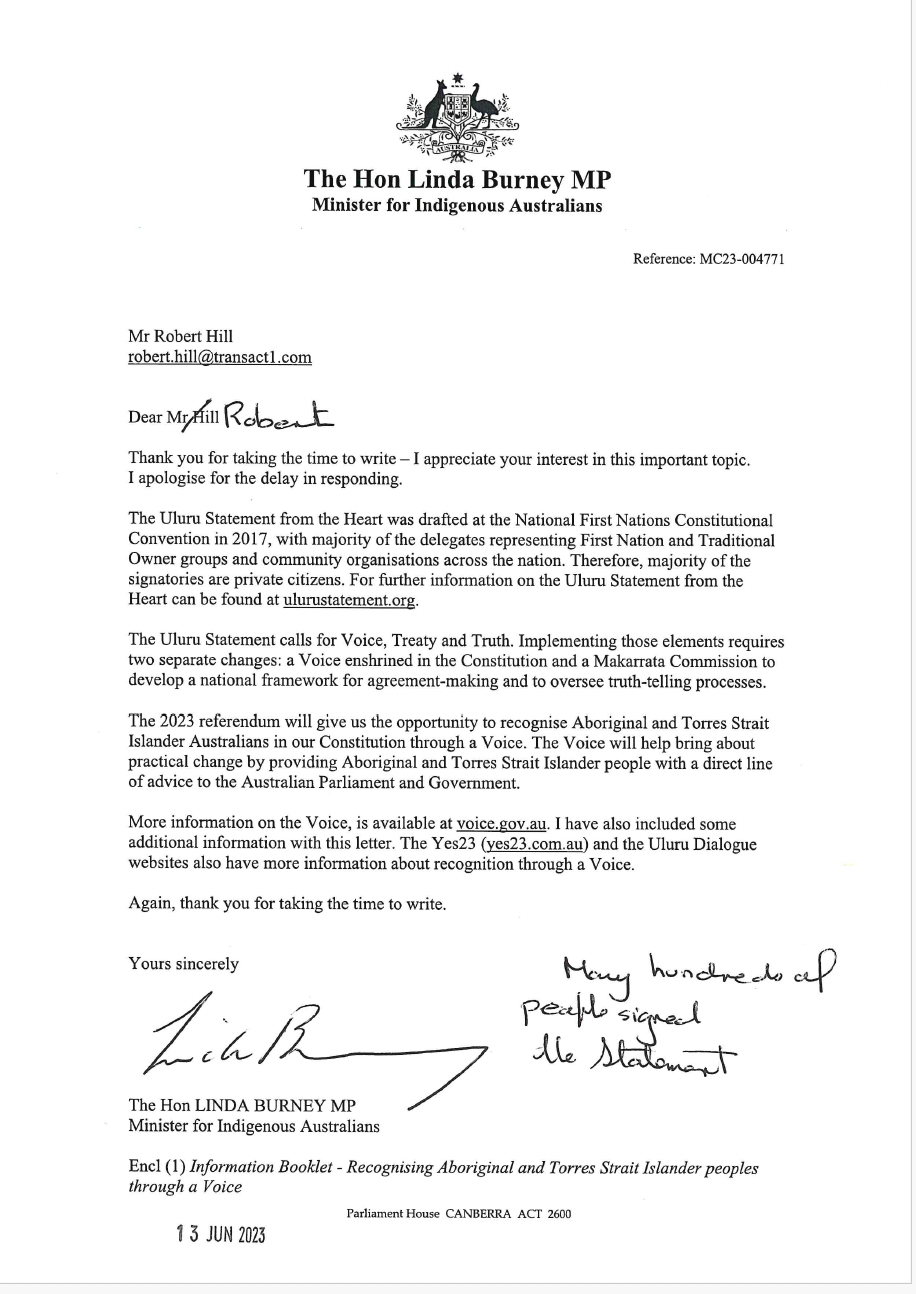
Figure 4 - Response of 13 June 2023 by the Minister to a letter written to her office by Robert on 3 May 2022. Source: ‘Robert’ - download Minister’s response pdf
2.2 Researching the Signatory Names
An attempt was then made by researchers at Dark Emu Exposed to create a list of the signatories and their tribes appearing on The Canvas. A high resolution image of the actual Uluru Statement Canvas was found (Figure 5). A manual checking of each signature and tribal/language name was undertaken by several researchers who had some understanding of who was there and what their Aboriginal clan and language groups might be.
The first draft of the researchers work is presented as a list of 226 identifiable names (some with clan and language names as well). There may be more than 226 signatories, but so far that is all that could be confidently identified (see Figures 8A to I).
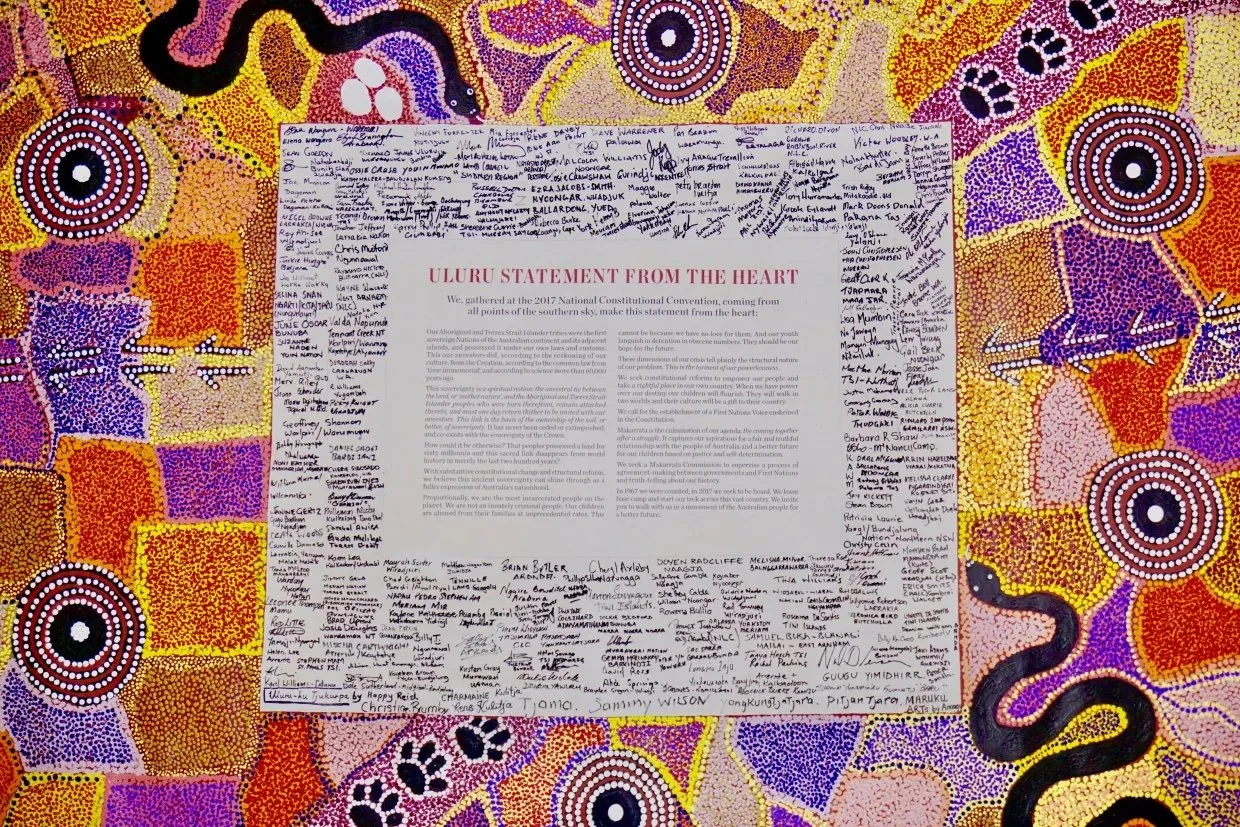
Figure 5 - Photograph of the Uluru Statement Canvas. Source:High Resolution Image for download
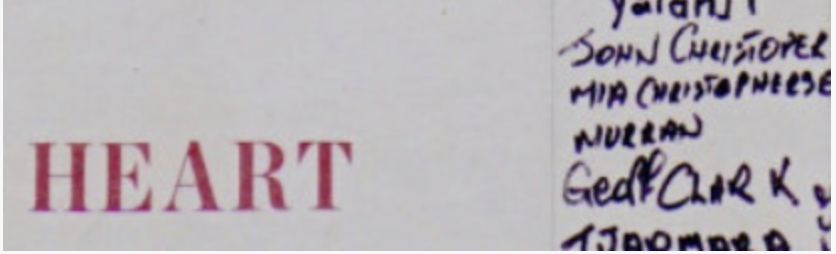
Figure 7 - One sharp-eyed reader located convicted criminal, now languishing in gaol, Geoff Clark’s signature to right of word ``HEART”.Full easy to search image of the Uluru canvas here
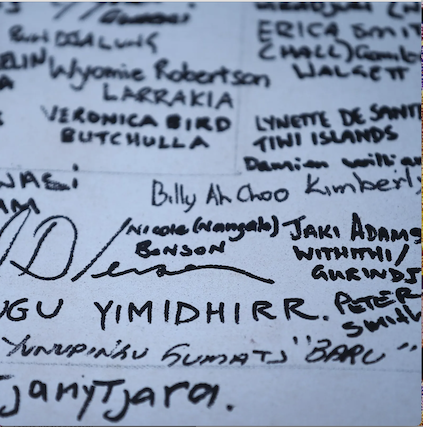
Figure 6 - Snapshot of an enlarged section of the Canvas indicating some signatories and their associated clan/language groups. Many signatories and clan names are difficult to decipher unless one has a pre-existing knowledge.
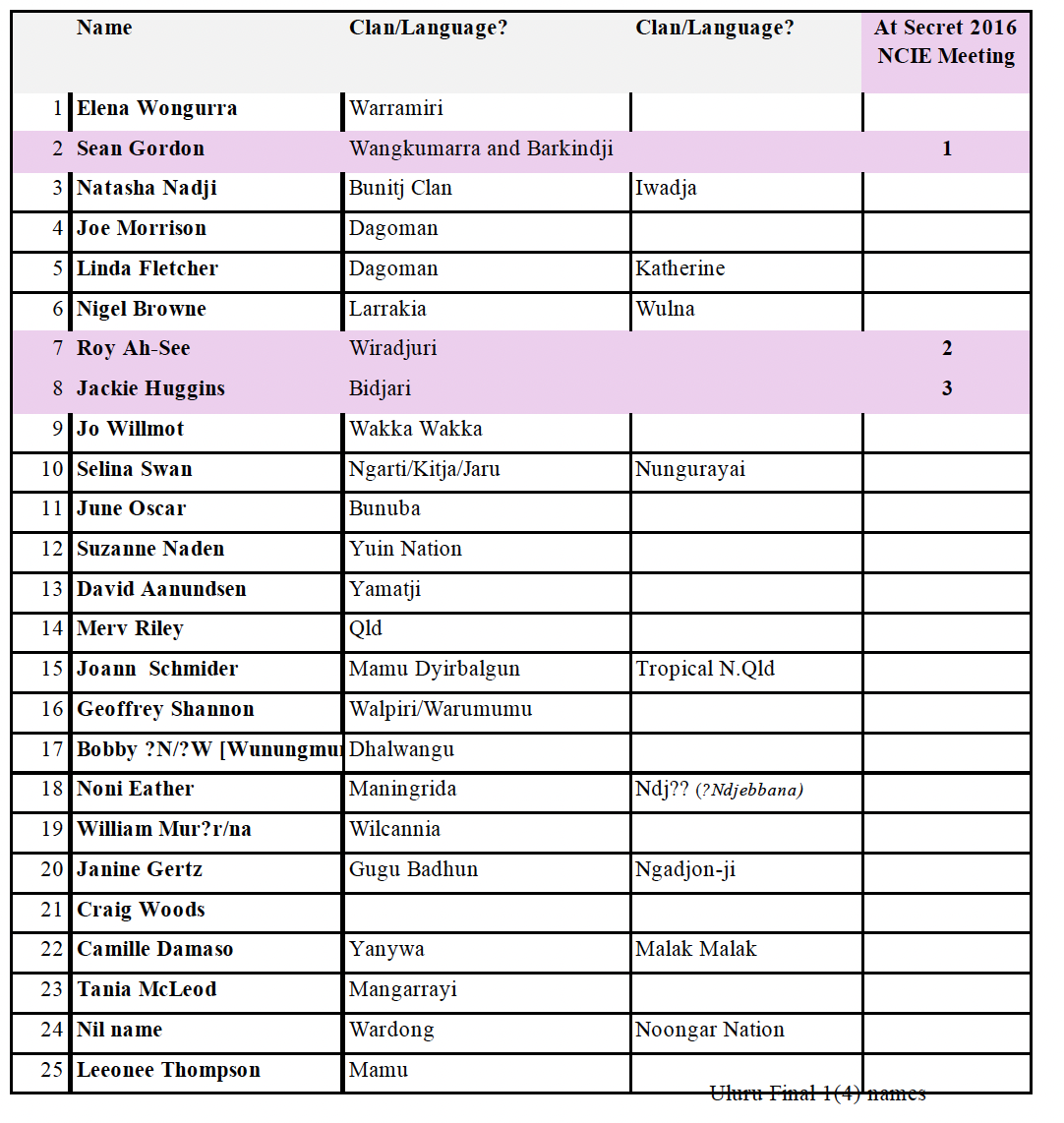
Figure 8A - Deciphered signatories to the Uluru Statement from Heart Canvas (1-25 of 226). A total of fourteen names, highlighted in mauve, were of signatories who were also at the ‘secret’ 2016 meeting of the activists (see Figure 9 below).
Disclaimer: Great care was taken in deciphering the signatures of the attendees who signed the Canvas at Uluru in May 2017, and any errors, omissions, additions or other inaccuracies presented here are unintended and thus apologised for.
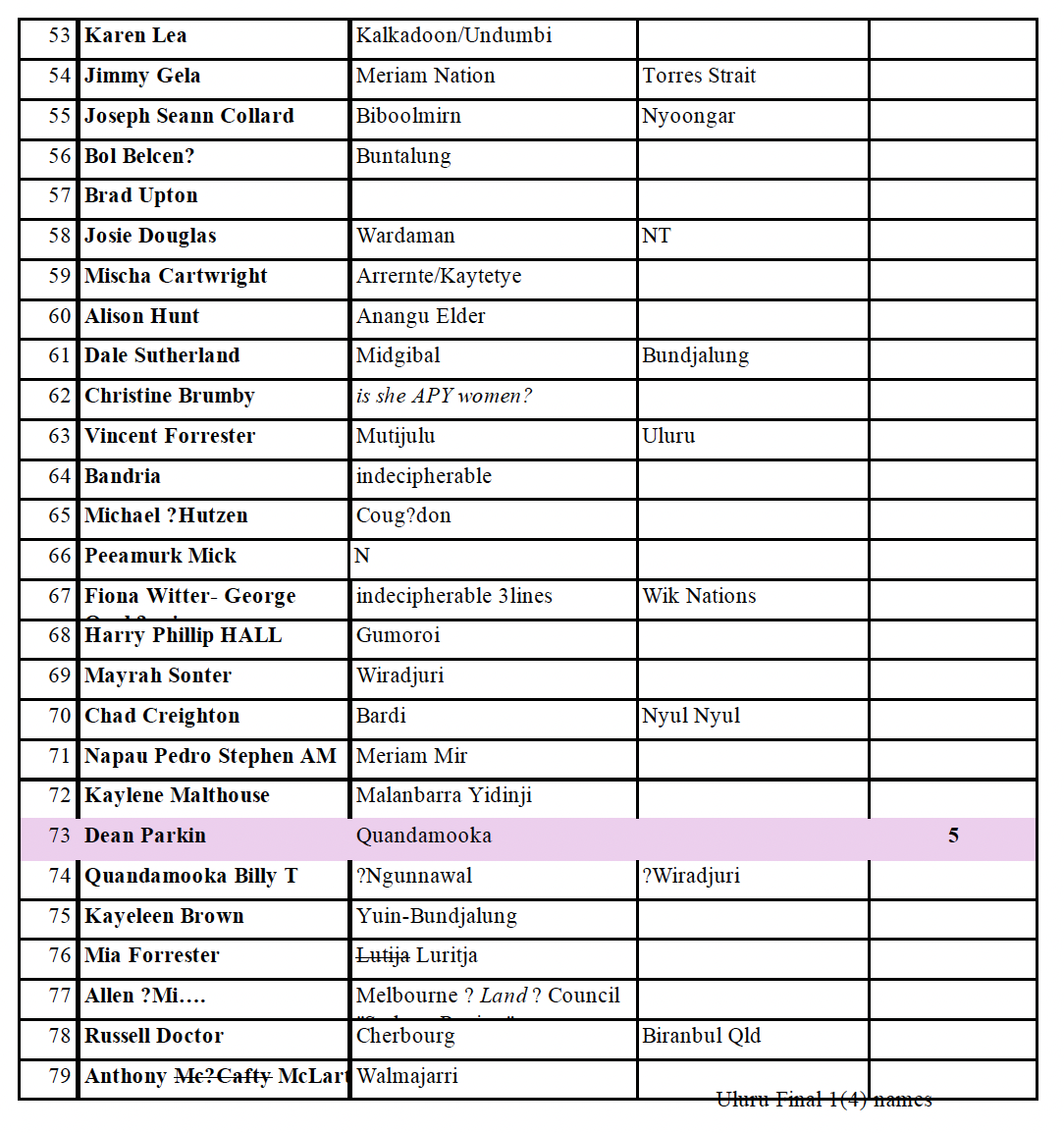
Figure 8C - Deciphered signatories to the Uluru Statement from Heart Canvas (53 - 79 of 226). A total of fourteen names, highlighted in mauve, were of signatories who were also at the ‘secret’ 2016 meeting of the activists (see Figure 9 below).
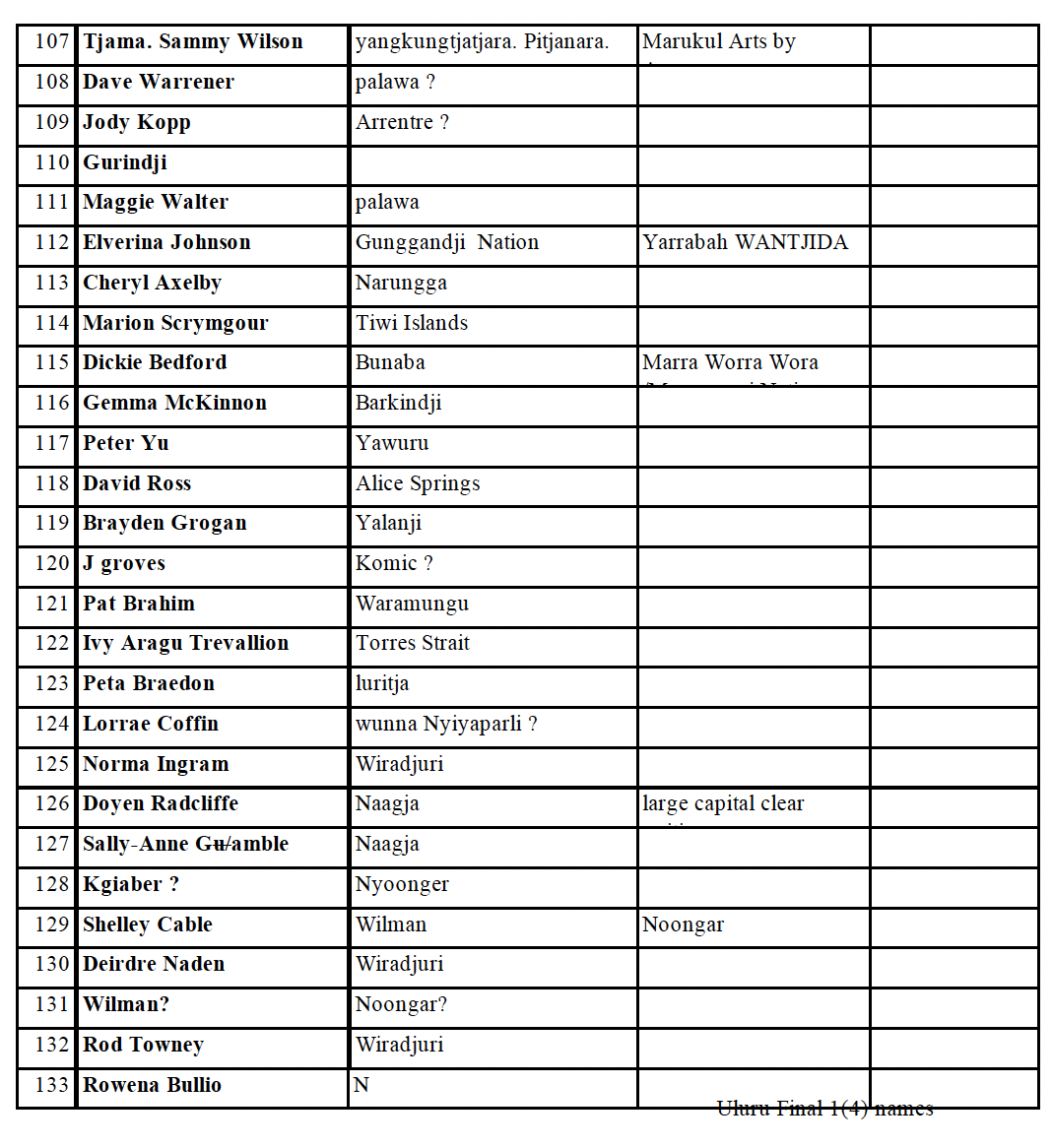
Figure 8E - Deciphered signatories to the Uluru Statement from Heart Canvas (107 - 133 of 226)
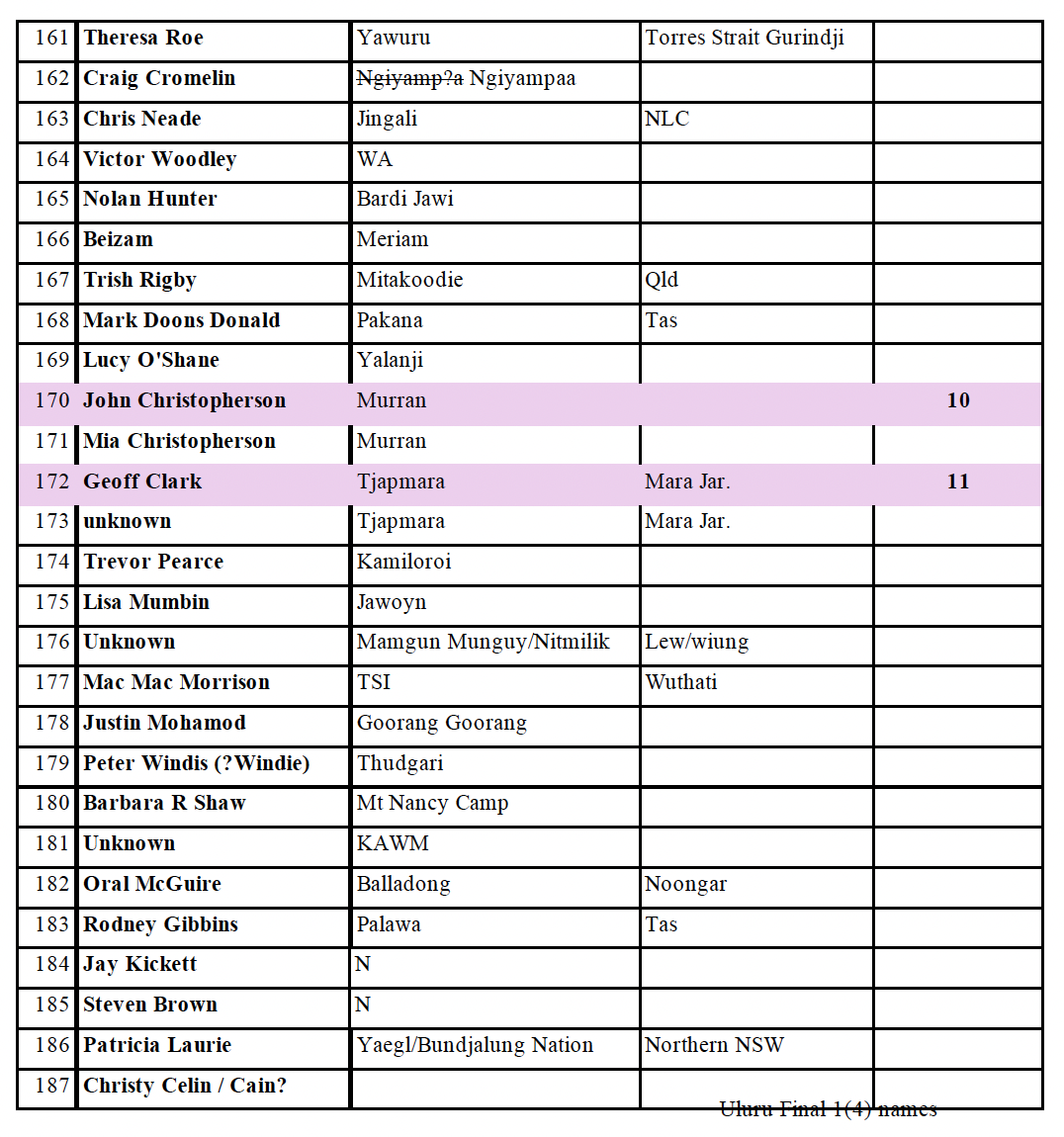
Figure 8G - Deciphered signatories to the Uluru Statement from Heart Canvas (161 - 187 of 226). A total of fourteen names, highlighted in mauve, were of signatories who were also at the ‘secret’ 2016 meeting of the activists (see Figure 9 below).
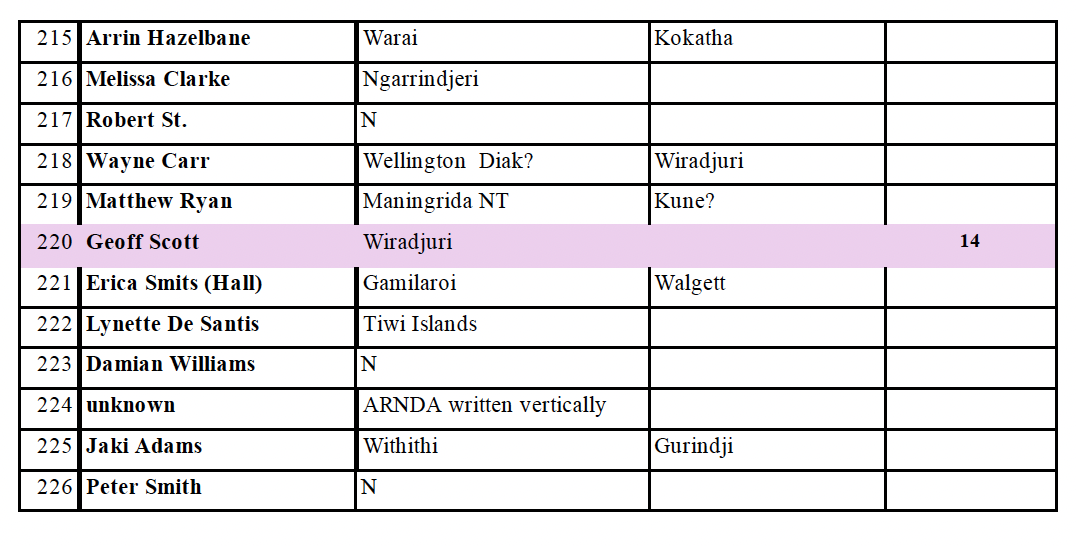
Figure 8I - Deciphered signatories to the Uluru Statement from Heart Canvas (215 - 216 of 226). A total of fourteen names, highlighted in mauve, were of signatories who were also at the ‘secret’ 2016 meeting of the activists (see Figure 9 below).
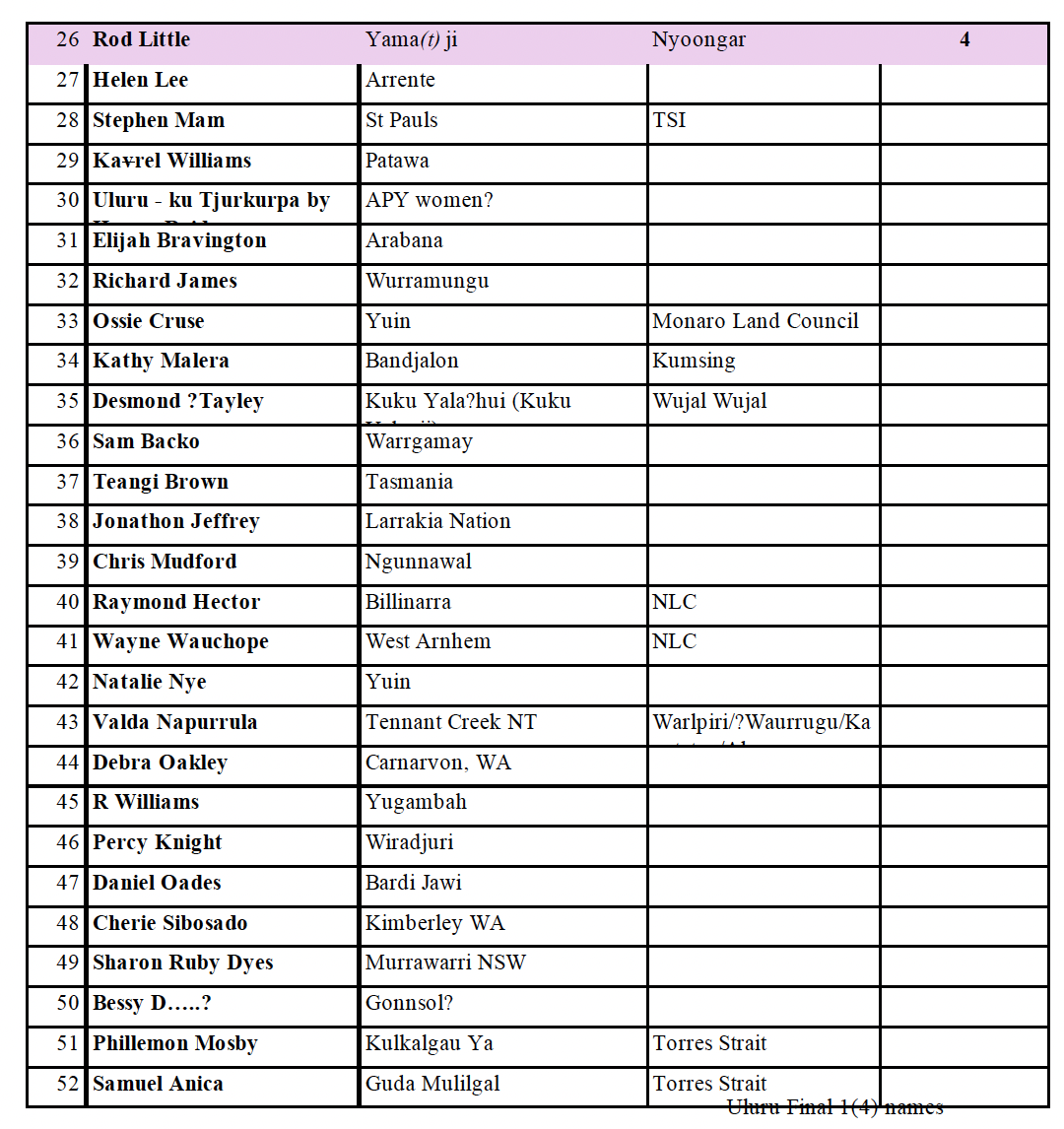
Figure 8B - Deciphered signatories to the Uluru Statement from Heart Canvas (26-52 of 226). A total of fourteen names, highlighted in mauve, were of signatories who were also at the ‘secret’ 2016 meeting of the activists (see Figure 9 below).

Figure 8D - Deciphered signatories to the Uluru Statement from Heart Canvas (80 - 106 of 226).
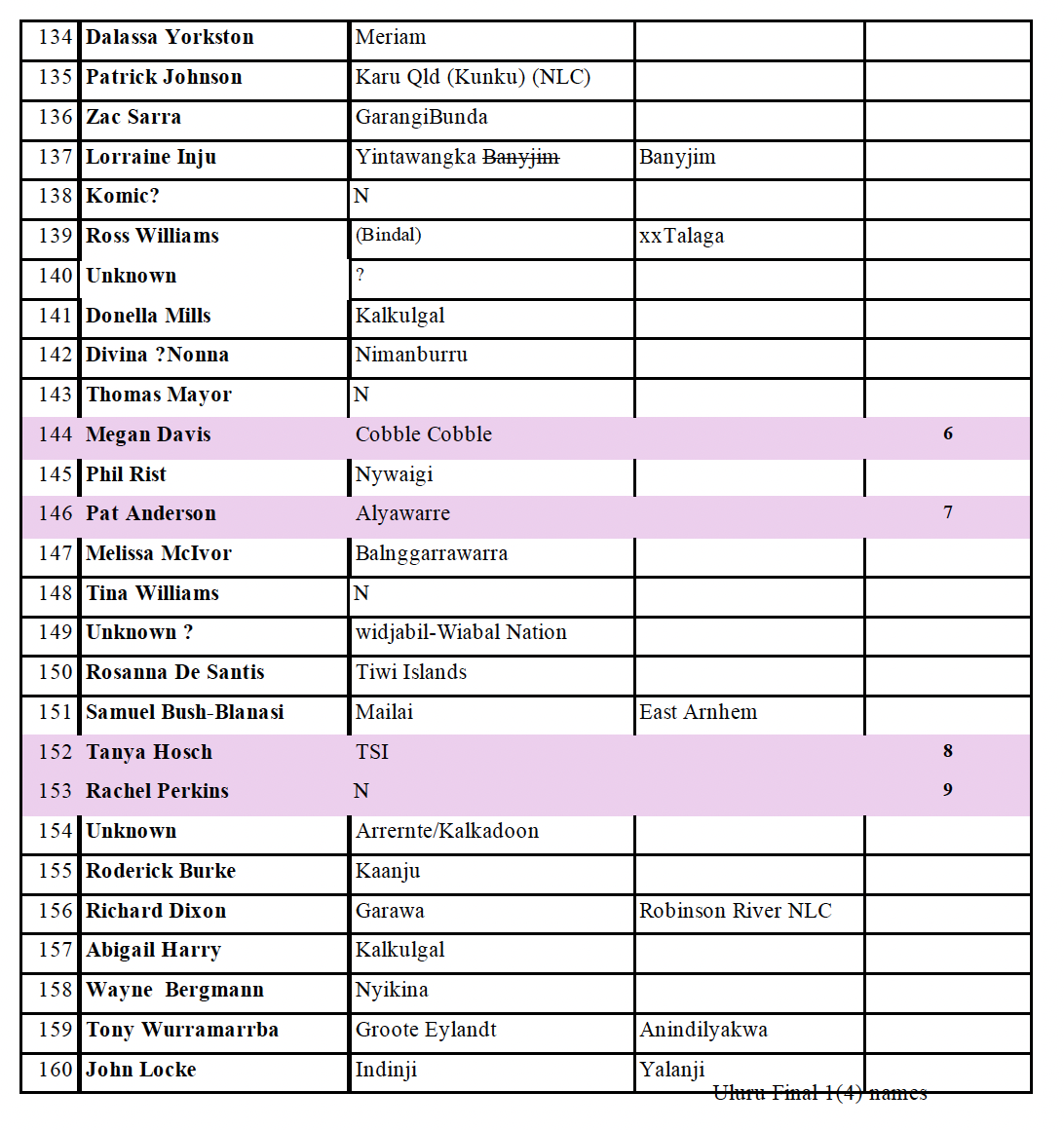
Figure 8F - Deciphered signatories to the Uluru Statement from Heart Canvas (134 -160 of 226). A total of fourteen names, highlighted in mauve, were of signatories who were also at the ‘secret’ 2016 meeting of the activists (see Figure 9 below).
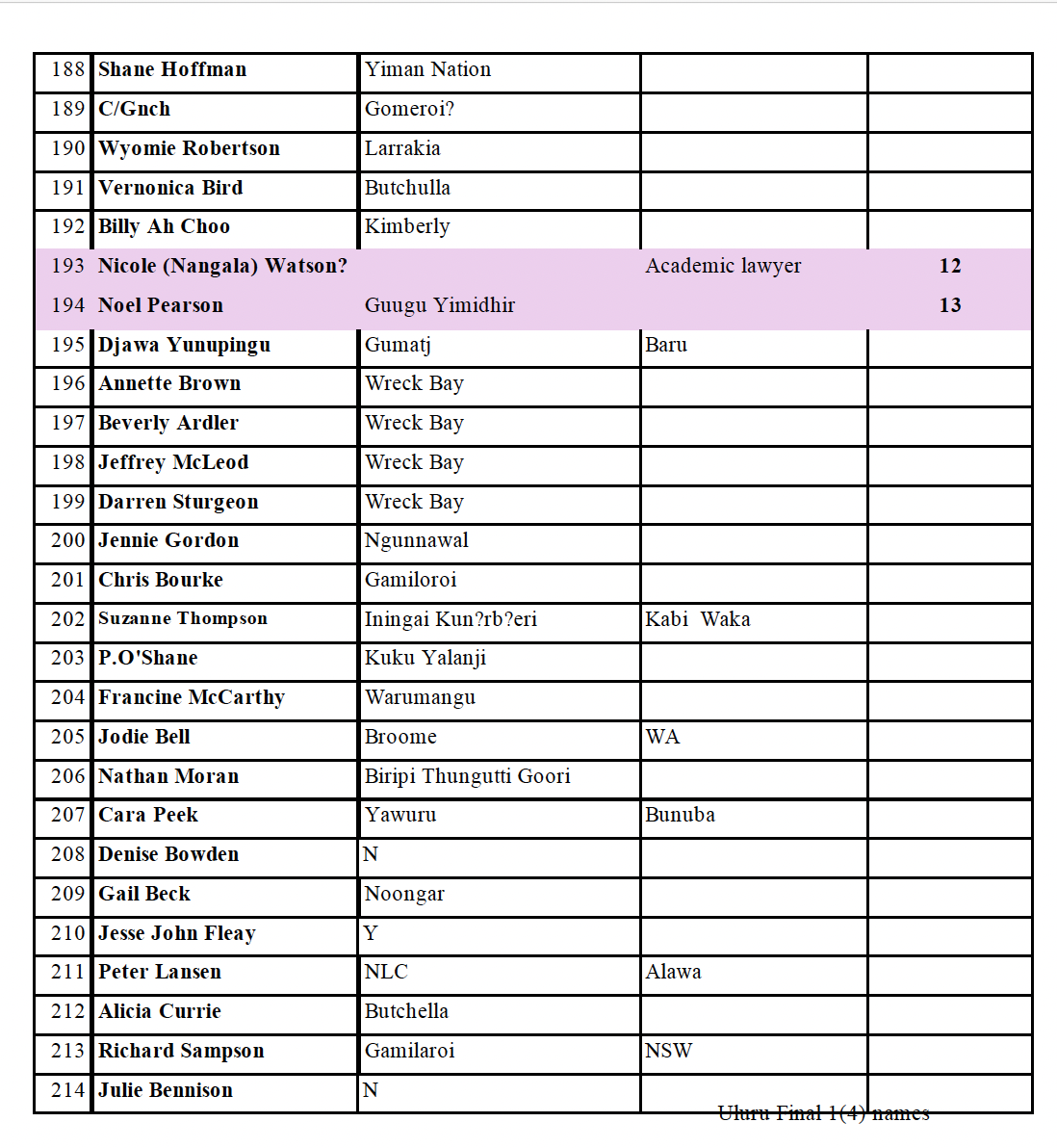
Figure 8H - Deciphered signatories to the Uluru Statement from Heart Canvas (188 - 214 of 226). A total of fourteen names, highlighted in mauve, were of signatories who were also at the ‘secret’ 2016 meeting of the activists (see Figure 9 below).
2.2.1 - Is This the `Gang’?- the Activist Behind the Uluru Statement from the Heart.
The names highlighted in mauve in the tables in Figures 8 are the names of delegates who also attended the infamous `secret meeting’ in 2016. The photograph below (Figure 9) was supplied to Dark Emu Exposed by a party to this ‘secret meeting’, on the condition of anonymity. It is said to have been taken in 2016 at an exclusive and ‘secret’ meeting of Aboriginal political and activist leaders, held in a private room at the National Centre of Indigenous Excellence (NCIE), the multi-million dollar facility built on the former site of Redfern Public School.
The meeting was unpublicised and was said to be by invitation-only and organised by the Referendum Council that was created in 2015 under an agreement between Prime Minister Turnbull and Opposition Leader Shorten.
It is understood that the primary agenda of the meeting may have been to map out an activist strategy, and the tactics required, to achieve the insertion of an Aboriginal polity within the Australian Constitution. This strategy for a power grab would materialise a year later and become to be known as the Uluru Statement from The Heart.
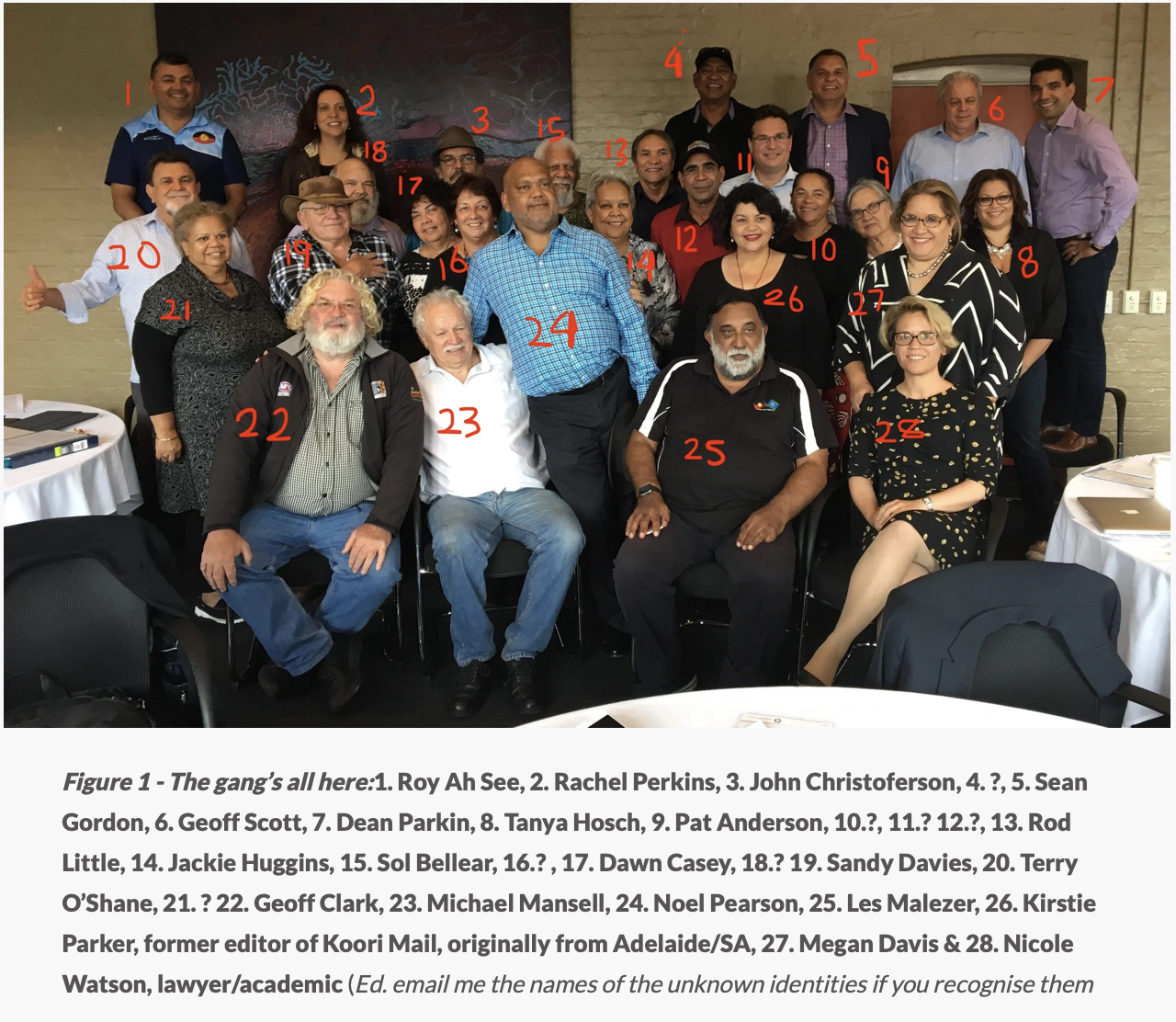
Figure 9 - Source: See Dark Emu Exposed post of 16 January 2025
2.3 - How Valuable is the Canvas and Who Owns It?
The cost of the creation of the whole Uluru Statement from the Heart process was at least some $80 million (from FOI details). In addition, the cost of the subsequent 2023 Voice referendum was said to be $450 million (Wikipedia).
There is much commentary to suggest that the Uluru Statement from the Heart Canvas is a priceless political and historical artefact in Australian history. Comparisons with the Yirrkala bark petitions of 1963 or the Barunga Statement painting of 1988 are frequently made.
Cape York lawyer and Referendum Council member Noel Pearson gently prompted Perkins, on the second day of the convention, to think about how to present what might turn out to be a significant declaration. It needed to be touchable if it was to touch the nation’s heart and soul. It needed to be art as well as law. Like the Yirrkala and Barunga documents, it also needed to bear the identities of all those involved, to carry the weight of the various First Nations in agreement, in a form that could then be taken to the broader world.
- Stephen Fitzpatrick, `A fresh canvas for Indigenous politics’, The Monthly, May 2019
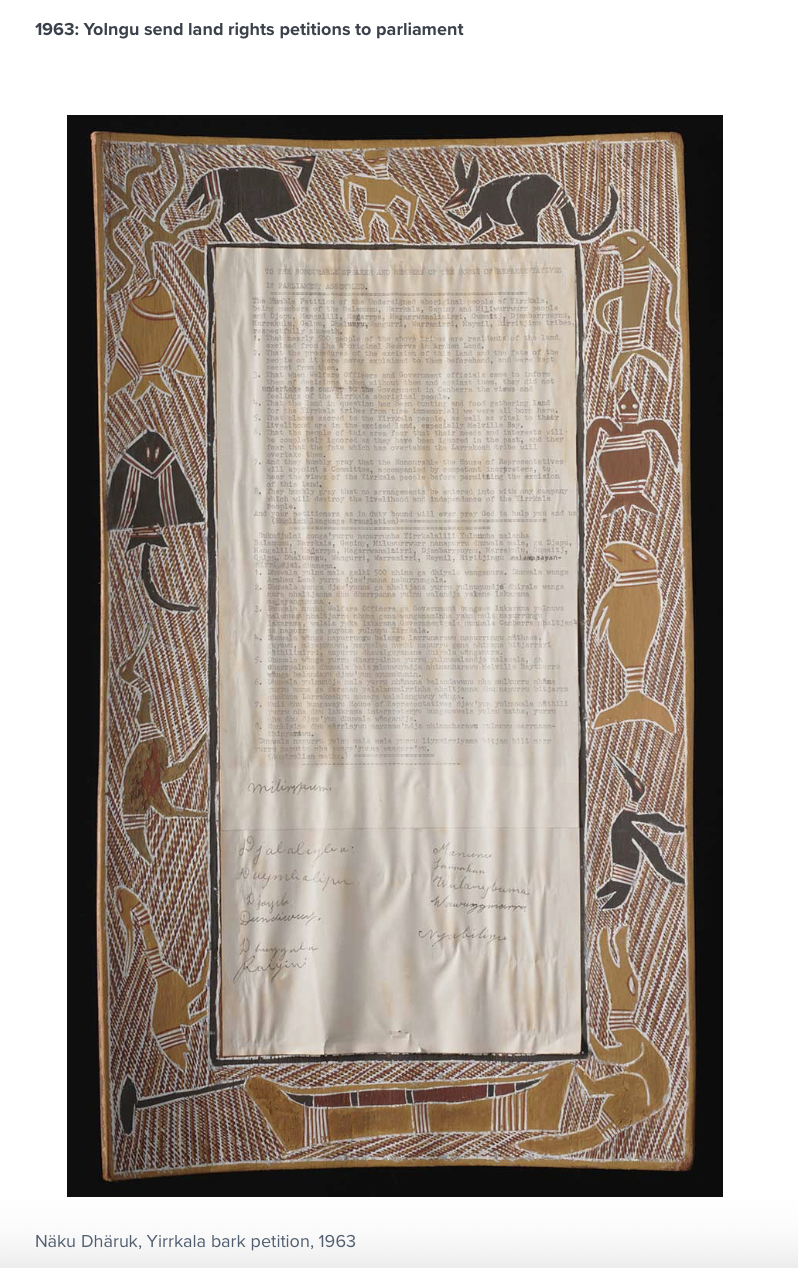
Figure 10 - Yirrkala Bark Petition, 1963. Of the four bark petitions that were made, two are held by Parliament House in Canberra and one is in National Museum.Source
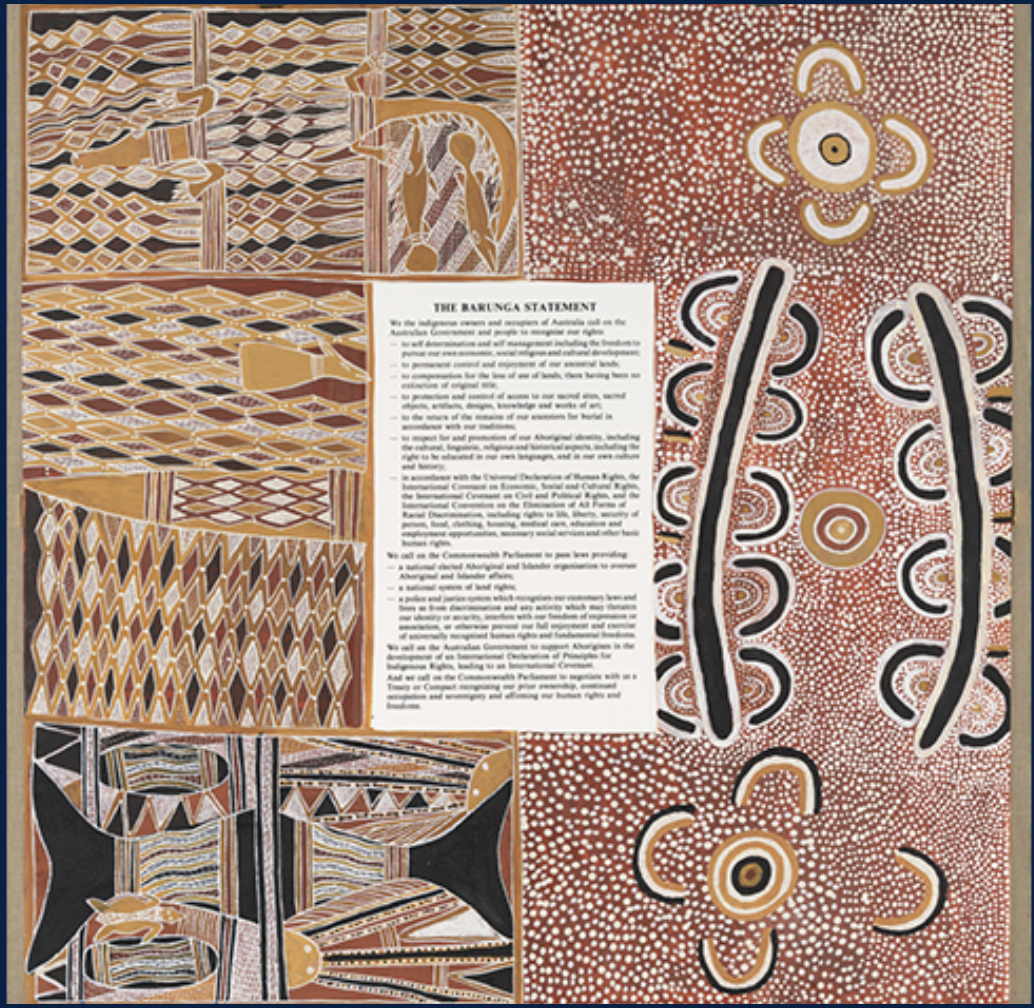
Figure 11 - The Barunga Statement, 1988, Official Gifts Collection, Parliament House Art Collections. Source
When the Canvas was put on display at the Art Gallery of South Australia, it was described as a `socio-political document of crucial importance to Australia’ (Figure 12A).
It was also said to have been ‘purposely gifted to the Australian people’ by one of its Convention delegates and signatories, APY artist Sally Scales (Figure 12B), yet it was ‘on loan courtesy of’ one of the other convention delegates and signatories Professor Megan Davis (Figure 12C).
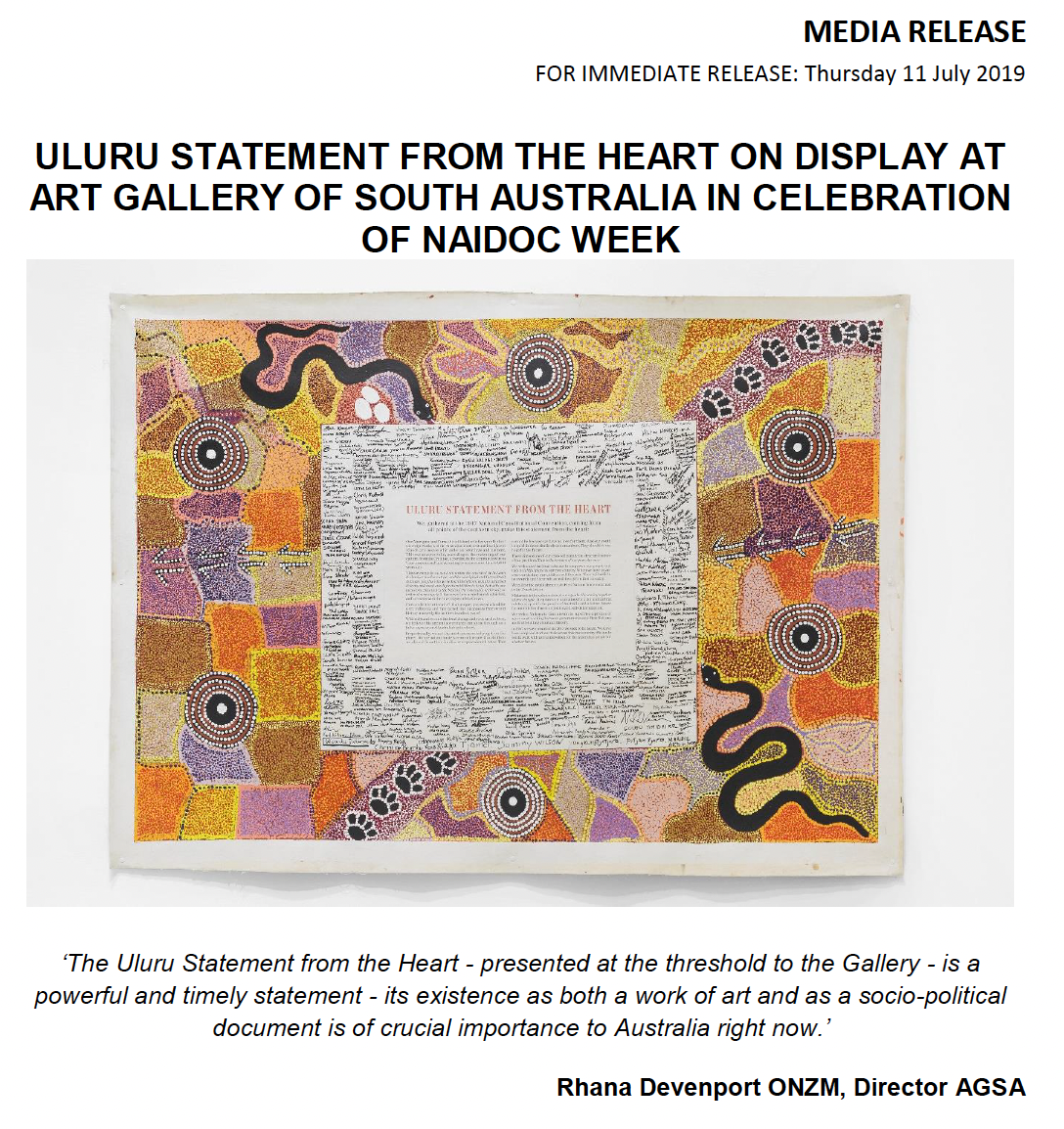
Figure 12A - Source: Full media release here

Figure 12B - From media release above

Figure 12C - From media release above
The Uluru Statement from The Heart is a culmination of a series of discussions held across the country. It was created at the 2017 National Constitutional Convention at Uluru, 50 years after the 1967 referendum. Aboriginal and Torres Strait Islander representatives from all parts of the continent and adjacent islands gathered together to create a message for the Australian people, call for the establishment of a constitutionally enshrined First Nations Voice to Parliament and a Makarrata Commission to supervise the process of agreement making, (or treaty) and truth-telling to the nation. The Statement features the signatures of hundreds of attendees at the National Convention. It is bordered by paintings of important Tjukurpa (Dreaming stories) by Maruku artist and Uluru traditional owner Rene Kulitja, and Mutitjulu artists Christine Brumby, Charmaine Kulitja and Happy Reid.
- From the display of the Uluru Statement from The Heart Canvas at the Northern Territory Library in Parliament House.
Yet surprisingly, for an priceless artwork paid for by the people of Australia and supposedly gifted to them, the creators and current custodians of the Canvas decided that, unlike the Yirrkala and Barunga documents, the Canvas:
would not be addressed to the government or to politicians. They were not even invited to the convention’s closing ceremony, and there was no plan for the Uluru statement to be displayed at Parliament House, as are the Yirrkala and Barunga works.
Stephen Fitzpatrick (ibid.)
3. Where is `Our Gift’ - The Canvas - Now?
Researcher Robert Hill decided to try and locate the whereabouts of The Canvas, the valuable artwork gifted to the Australian people. On the face of it, the creation of The Canvas was done by people employed or contracted by the Commonwealth using Commonwealth funding. The image below shows two of the leaders at the 2017 Uluru Convention, Megan Davis and Pat Anderson, signing The Canvas with Anderson wearing her Convention ID tag. This suggests The Canvas was prepared in a Commonwealth sponsored event, and so must be Commonwealth property.
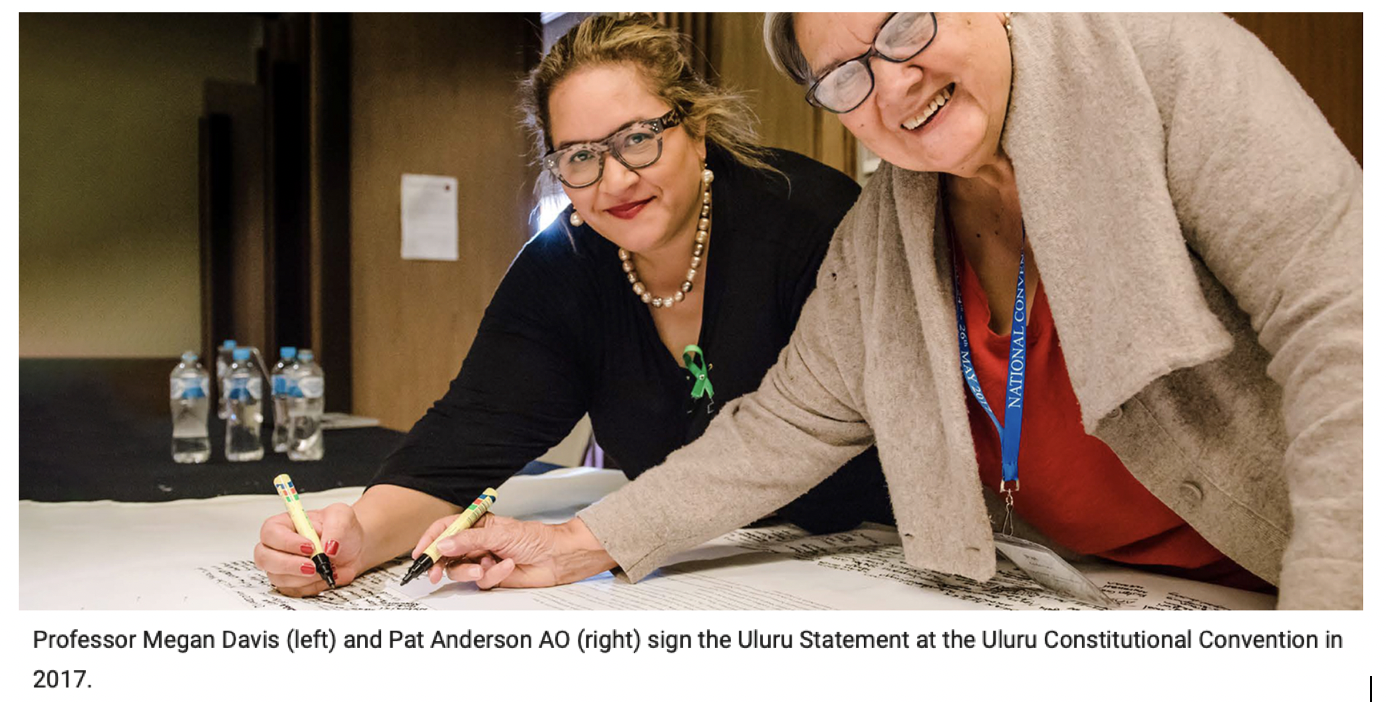
Figure 12D - Evidence that The Canvas was prepared inside and as part of the 2017 Uluru Convention. Source: UNSW
If The Canvas is the property of the Commonwealth it should be archived accordingly. Robert was to find that the Commonwelath is not of this opinion.
The following letters and emails detail the sequence of fruitless enquires that Robert made.
To date (7 Dec 2025), The Canvas is `lost’ - no one has publicly advised as to where it is.
3.1 - Correspondence with the Prime Minister’s Department
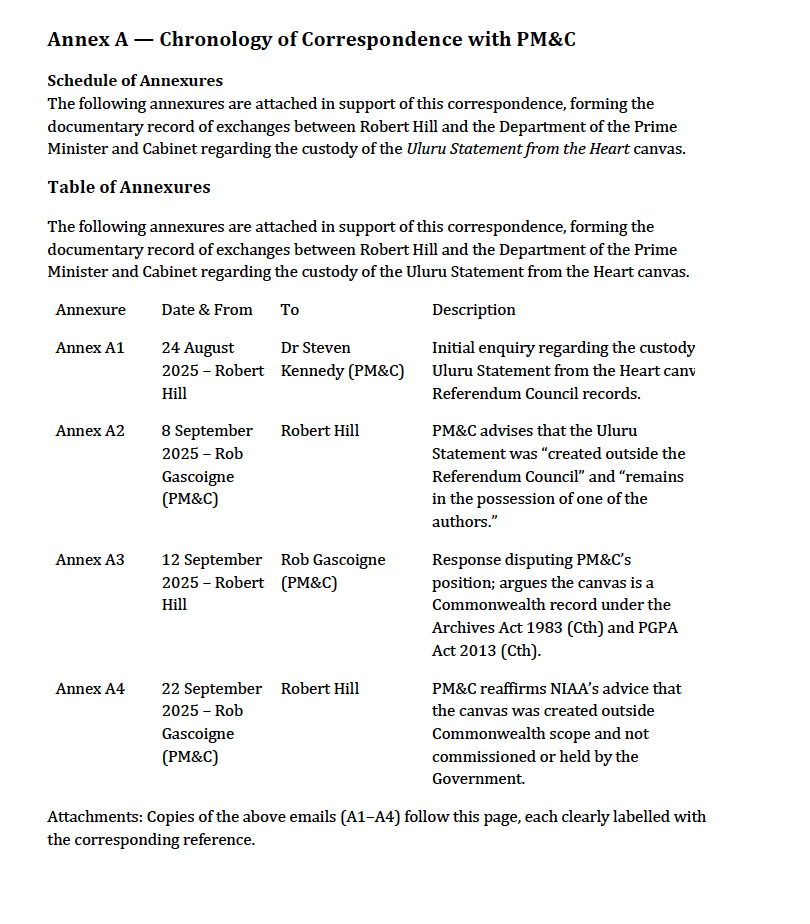
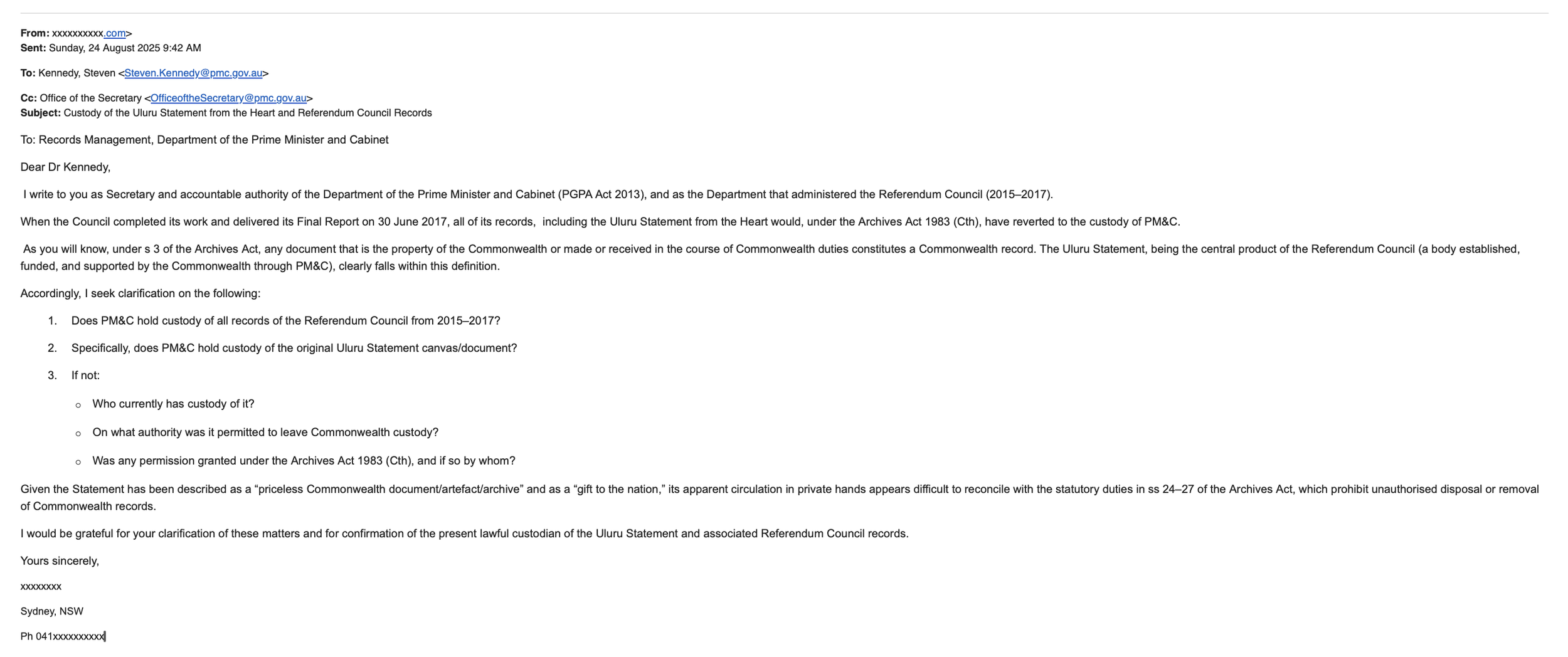
Figure 13 - Searching for the Canvas: Email to Prime Minister & Cabinet (PMC) on 24 August 2025. Source: download email here
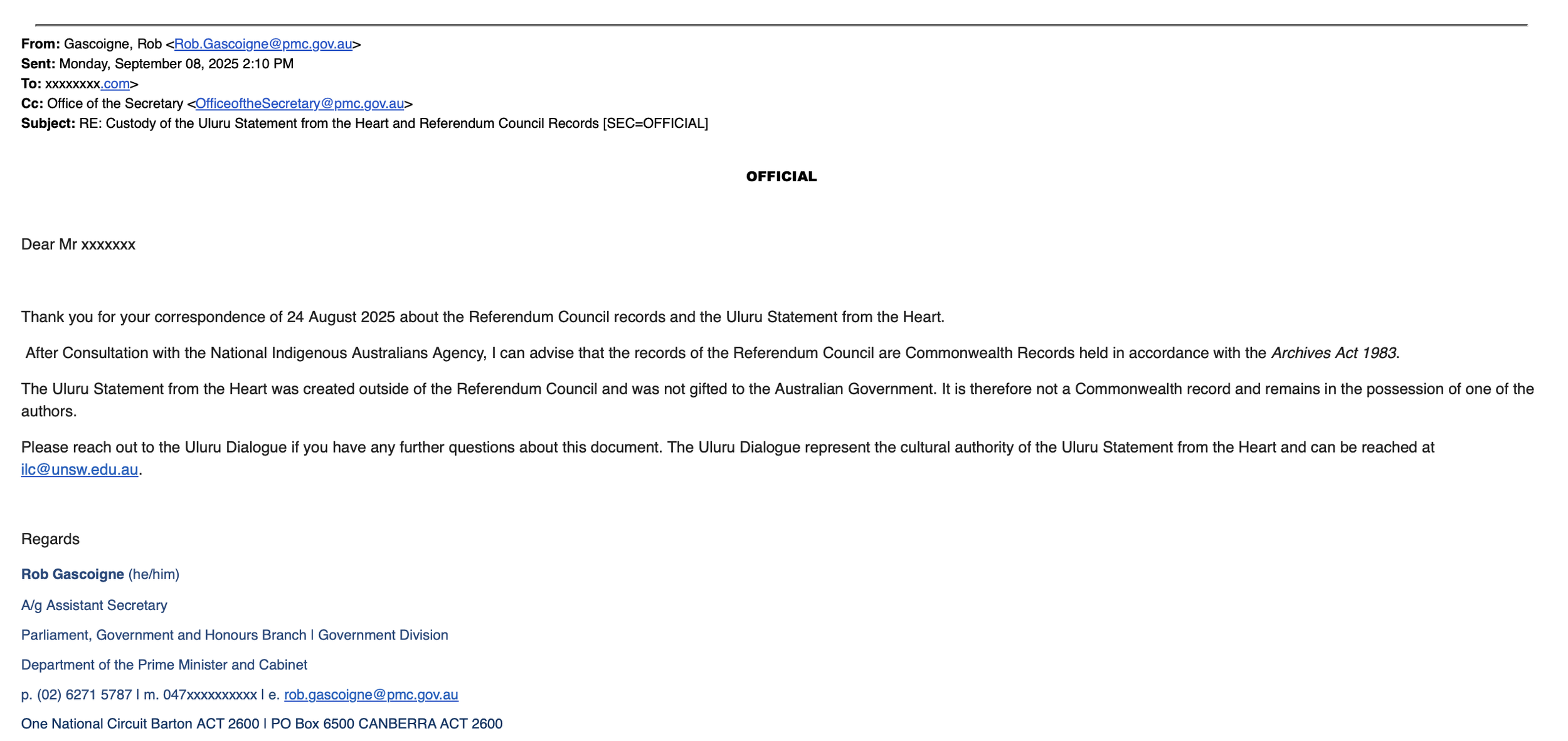
Figure 14 - Searching for the Canvas: Email Response from to Prime Minister & Cabinet (PMC) on 8 Sept 2025. Source: download email here
The Commonwealth, via the Prime Ministers Department, believes the Uluru Statement from the Heart (The Canvas) was created outside the government funded Referendum Council, hence is not Commonwealth property.
This the heart of the argument.
Robert Hill believes the evidence supports his claim that The Canvas is Commonwealth property as he explains in the following correspondence:
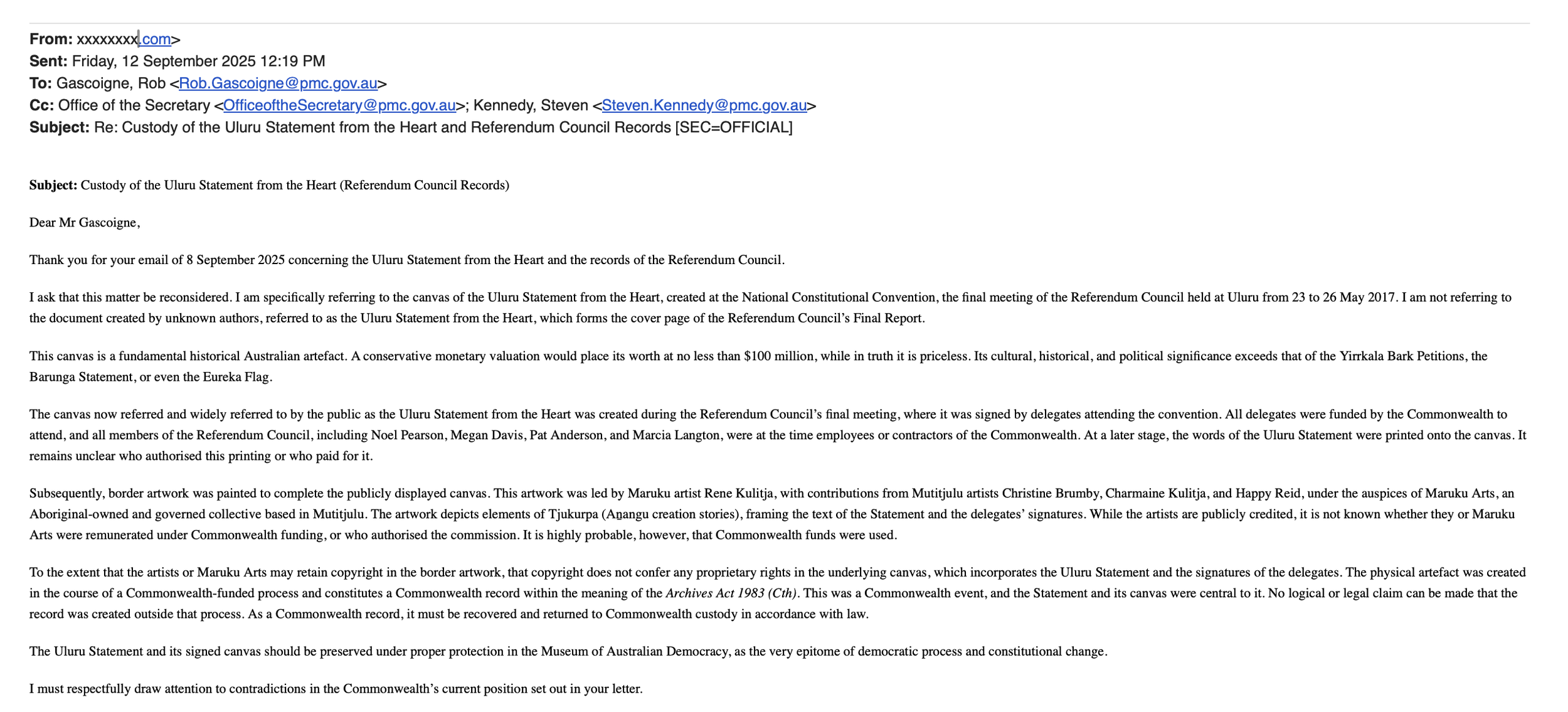
Figure 15A - Searching for the Canvas: Email to Prime Minister & Cabinet (PMC) on 12 Sept 2025. Source: download email here
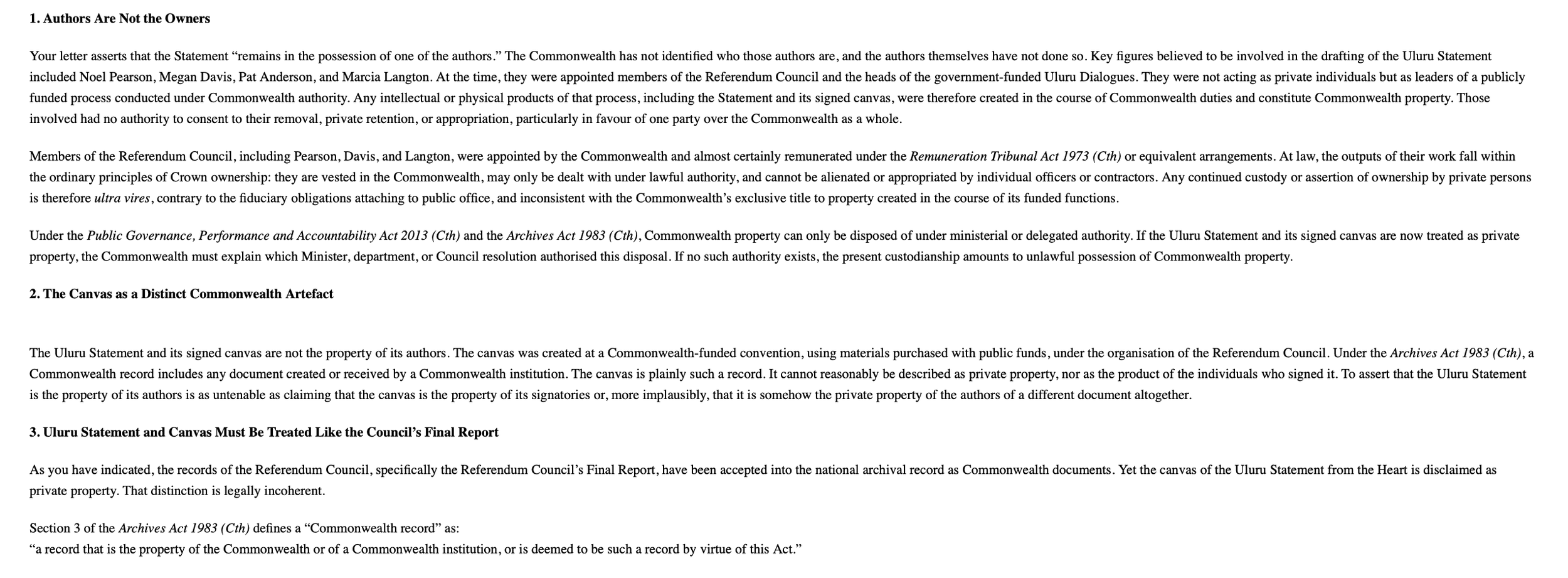
Figure 15B - Searching for the Canvas: Email to Prime Minister & Cabinet (PMC) on 12 Sept 2025 (cont).Source: download email here
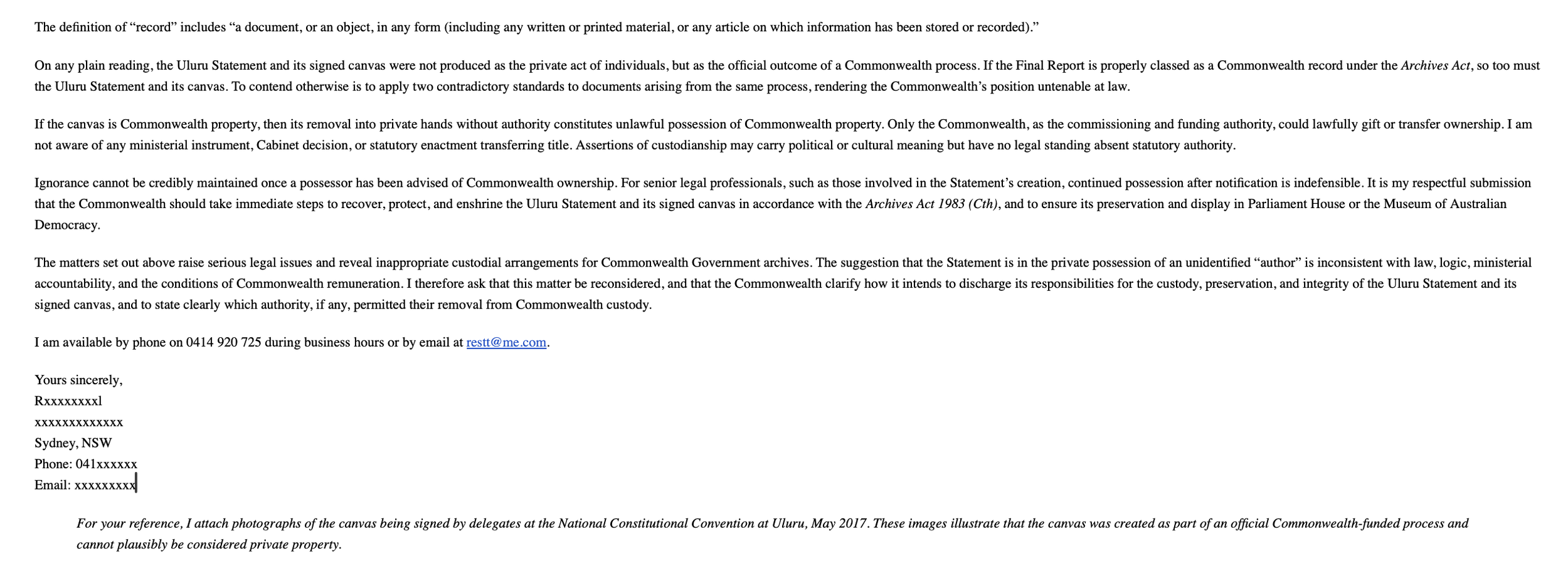
Figure 15C - Searching for the Canvas: Email to Prime Minister & Cabinet (PMC) on 12 Sept 2025 (cont). Source: download email here
The Government, via the National Indigenous Australians Agency (NIAA) is adamant that The Canvas falls outside its ownership and responsibility.
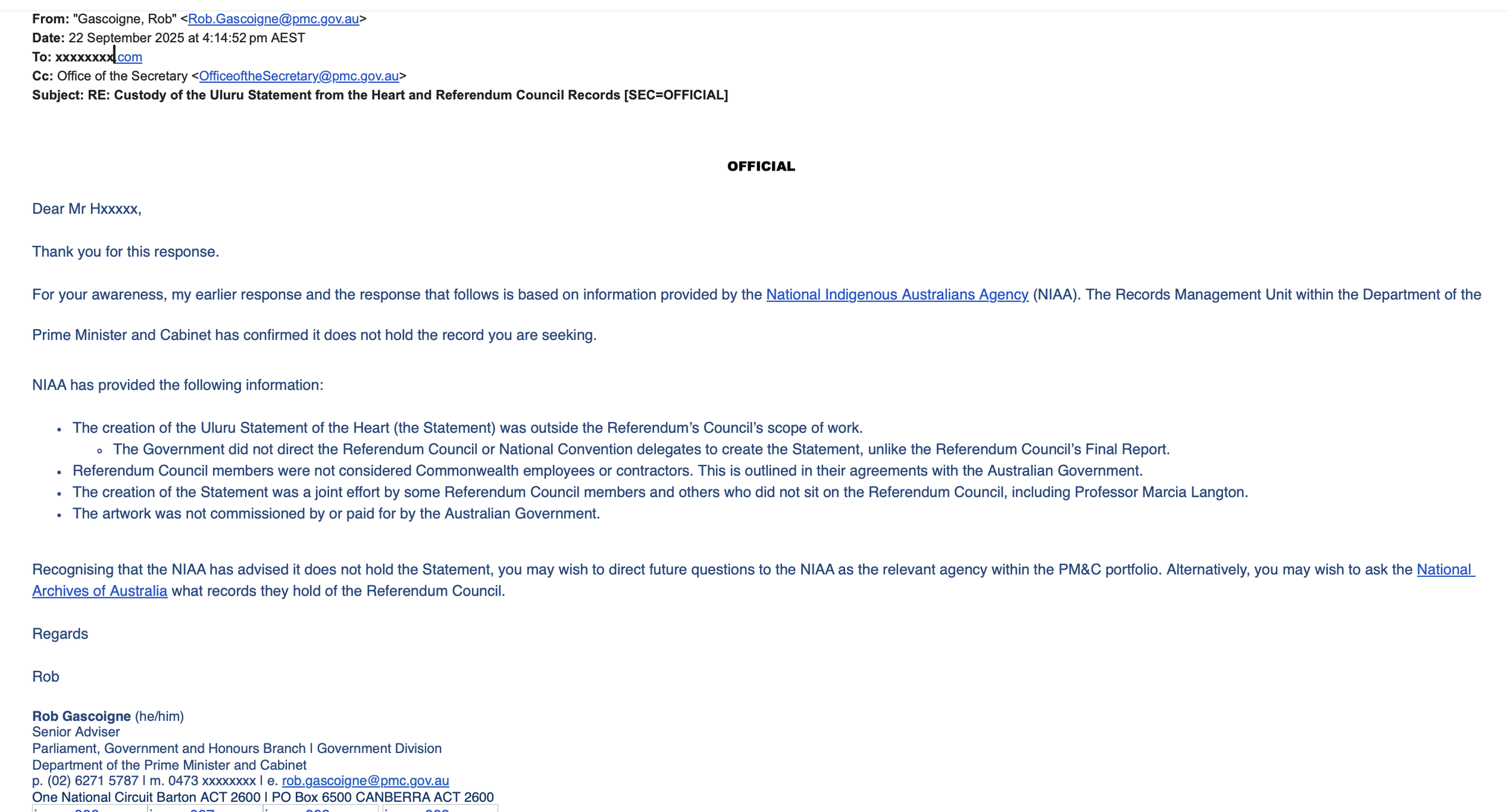
Figure 16 - Searching for the Canvas: Email from Prime Minister & Cabinet (PMC) on 22 Sept 2025 Source: download email here
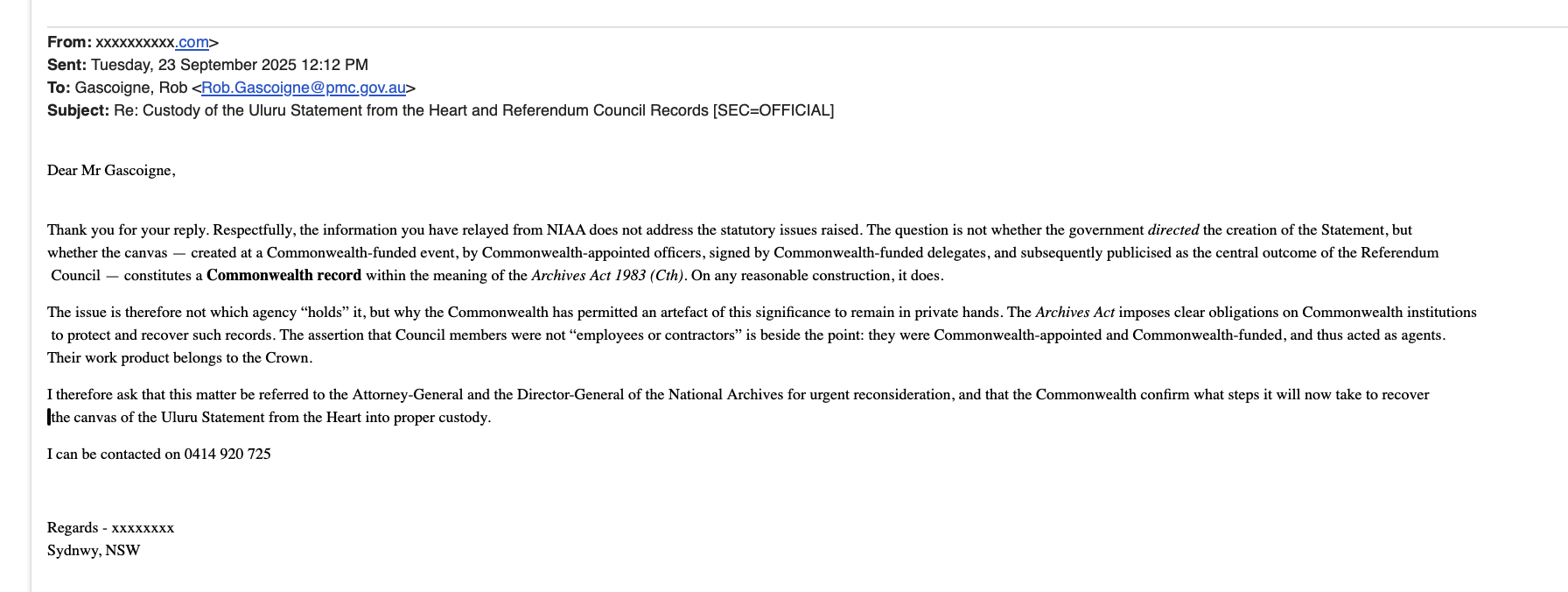
Figure 17 - Searching for the Canvas: Email to Prime Minister & Cabinet (PMC) on 23 Sept 2025. Source: download email here
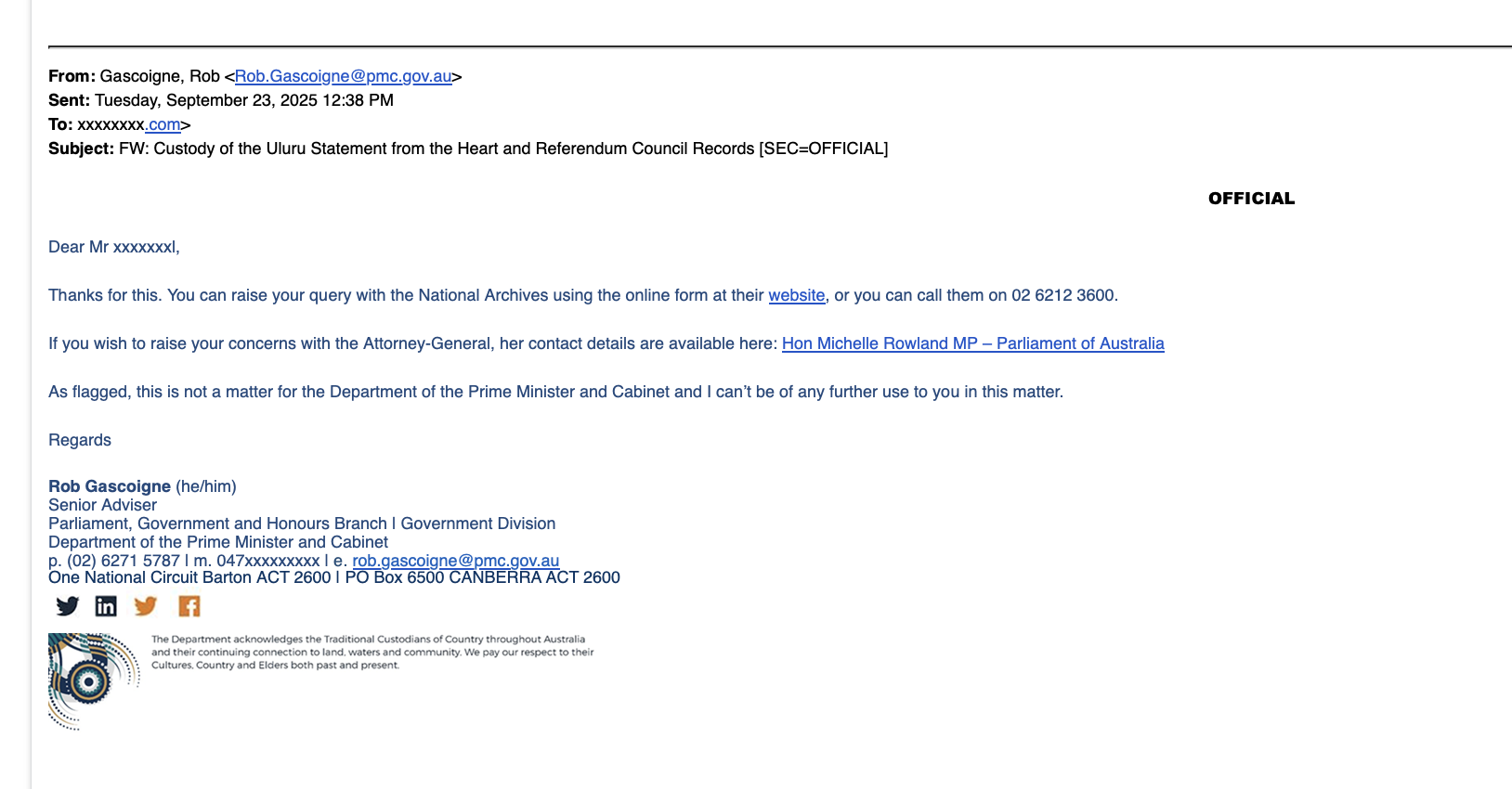
Figure 18 - Searching for the Canvas: Email Response from Prime Minister & Cabinet (PMC) on 23 Sept 2025. Source: download email here
After the Prime Minister’s Office and the NIAA both failed to accept ownership and responsibility for The Canvas, Robert wrote to the Commonwealth Attorney General:
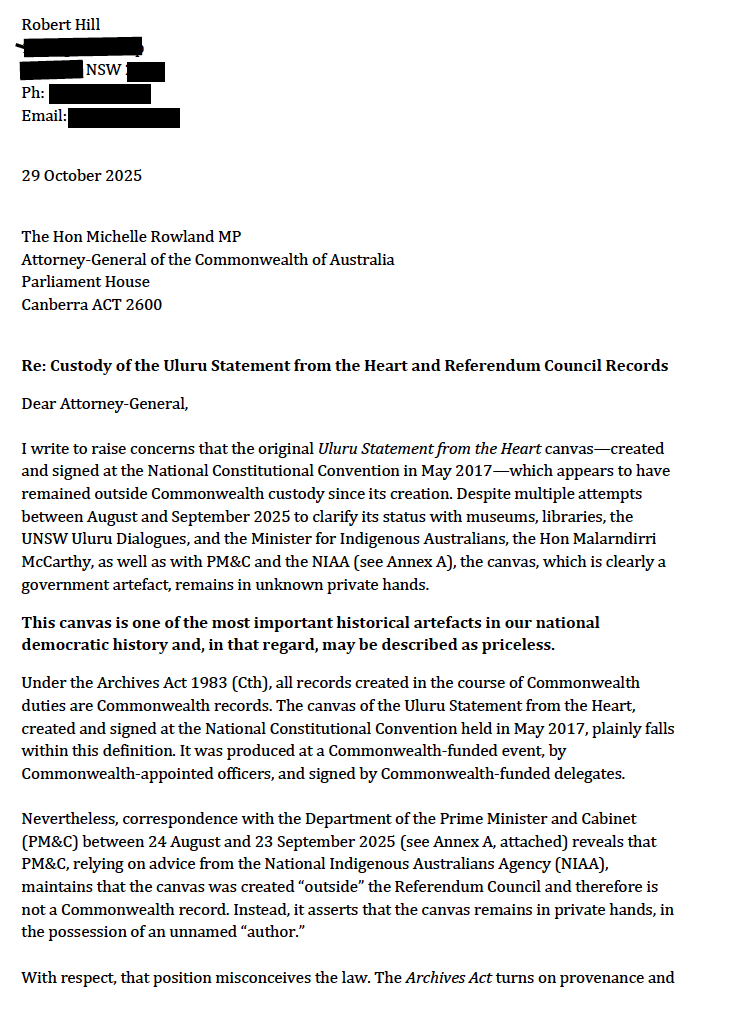
Figure 19A - Searching for the Canvas: Email to Commonwealth Attorney General on 29 Oct 2025. Source: download full letter and Appendices here
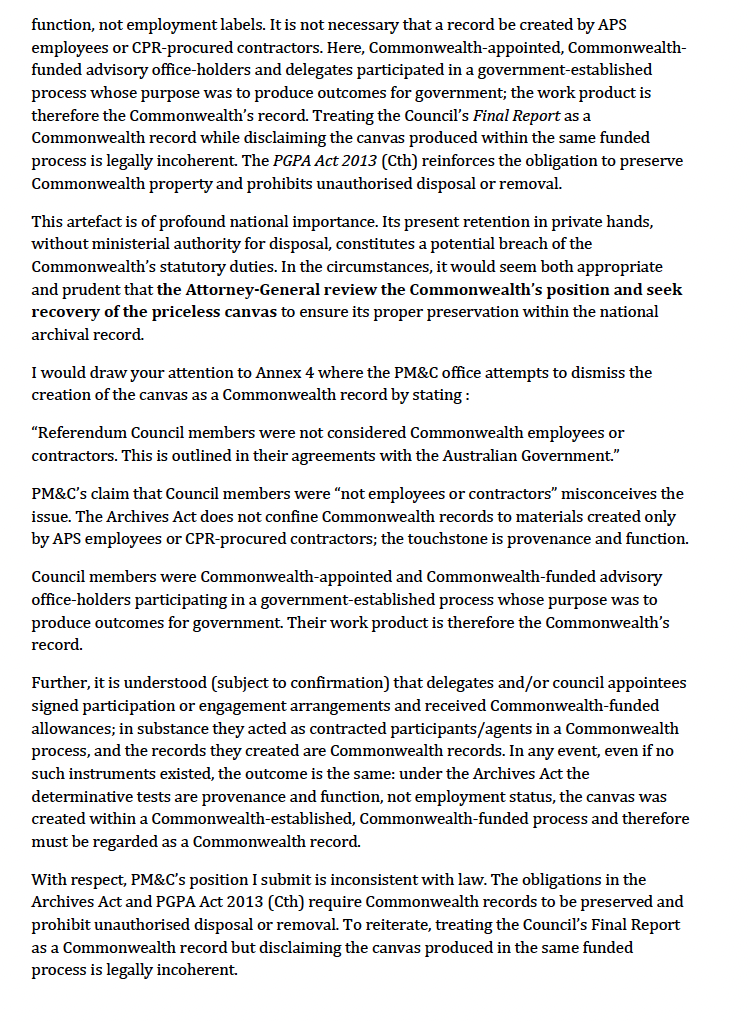
Figure 19B - ibid., p2
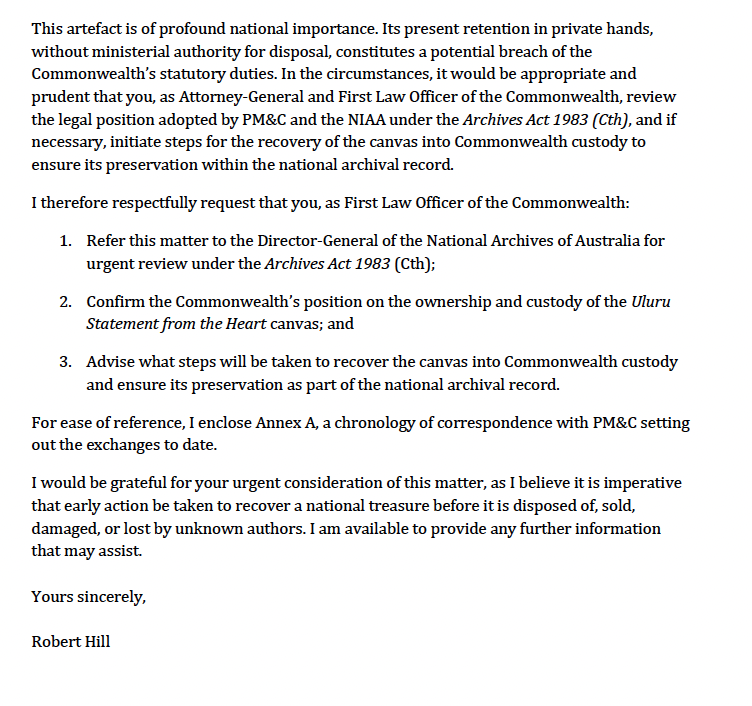
Figure 19B - ibid., p3
The Attorney General’s response is self-explanatory, and we are no further to understanding who owns The Canvas, who is responsible for curating it and most importantly, where is it?
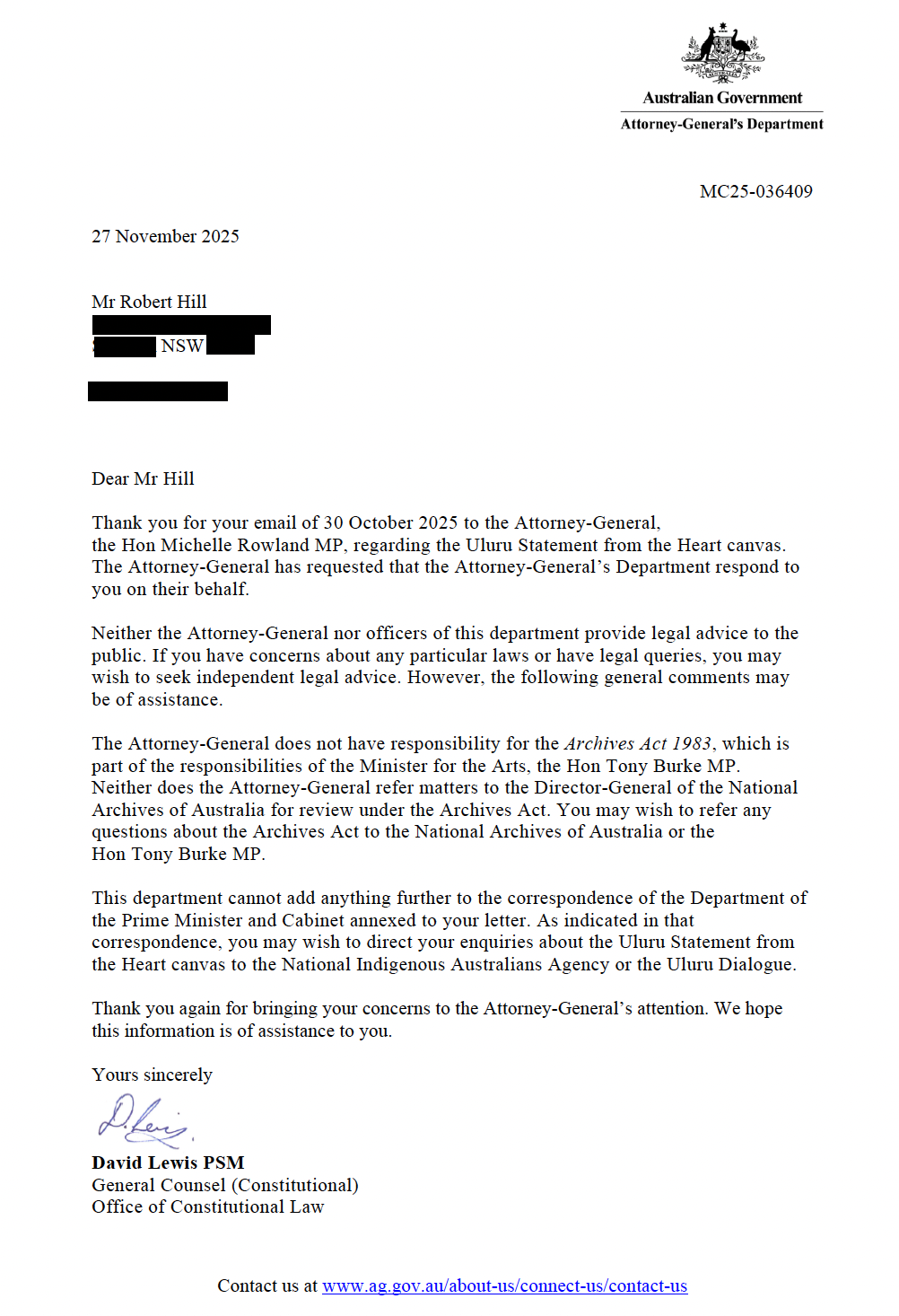
Figure 20 - Searching for the Canvas: Response from Commonwealth Attorney General on 27 Nov 2025. Source: download full letter here