Is Professor Liz Cameron an Aboriginal Darug as She Claims?
Posted 29 January 2026
Finding Darug Heritage with Professor Liz Cameron of the University of Newcastle
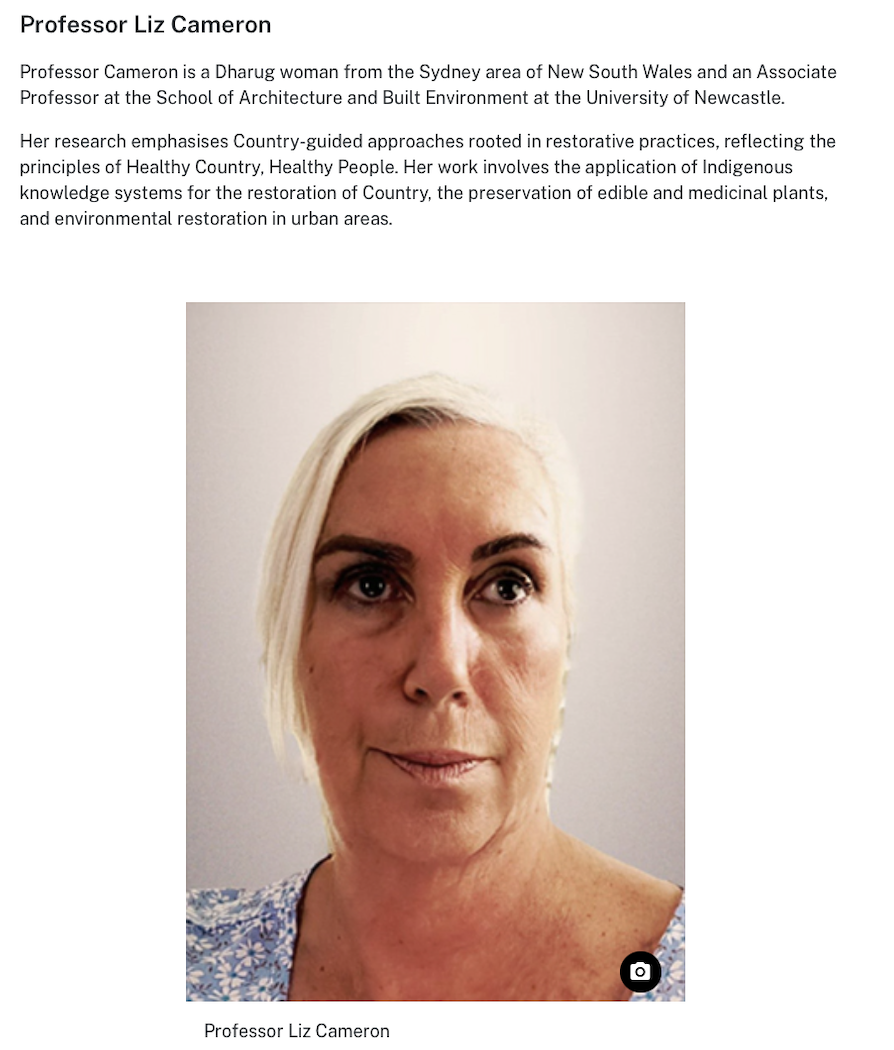
In c2011, Liz Cameron, who is now an Associate Professor at the University of Newcastle, claimed in an interview:
I'm of Darug descent which means that my grandmother's country is around the Marramarra area which is around the Hawkesbury River…
My grandmother's name was Omeara and she was part of the stolen generation. So the family has lost a lot of their cultural understandings and I guess I've gained that from other sources, other communities that I've met along the way.
She also told her interviewer (see video below) that:
she [grandmother] was in Glebe, around Glebe area, and she was later adopted and taken to Goulburn [c1930s] where she worked as a servant, although she was only 7 years old. So she she never saw her parents again.
[Interviewer] - Where did the Marramarra Creek connection [the region of the claimed Darug Aborigines] information come from then, I wonder?
From my grandmother. I just remember the name. I couldn't recall it for many, many years and and then it came to me and I started to question why I knew the the Darug, you know, nation but I was not sure exactly where it was.
And then suddenly through a dream I remembered the name and I was talking to an aunt of mine and she said, “try and remember that name”. And I said I can't and then it just it came to me the very next day, after a dream.
Some people think it's really illogical but it sunk with me and it sunk within my heart. Yeah.
[Interviewer] One last question. I believe you’ve got some Cherokee ancestry, Native American ancestry. Tell us about that:
Well, I always thought it was a bit of a joke in the family and I was always pretty keen as a kid to play the Indian and my brothers were always the cowboys and they thought they'd win in the battles.
But my grandmother talked about it a fair bit to my mother and I guess no one quite believed her and I spoke to my mother's cousin and he had heard the same story and I really wanted to find that out because sometimes in my artwork there's a just a different spiritual dimension that comes out and and I just wasn't quite understanding where that was coming from.
In the end I finally had some DNA tests … and yeah so I really wanted to know and it's helped who I am and it's helped with my identity and I still don't know a great deal about it so I want to find out who or he [the Cherokee] was.
- Liz Cameron, excerpts from Figure 2 video below
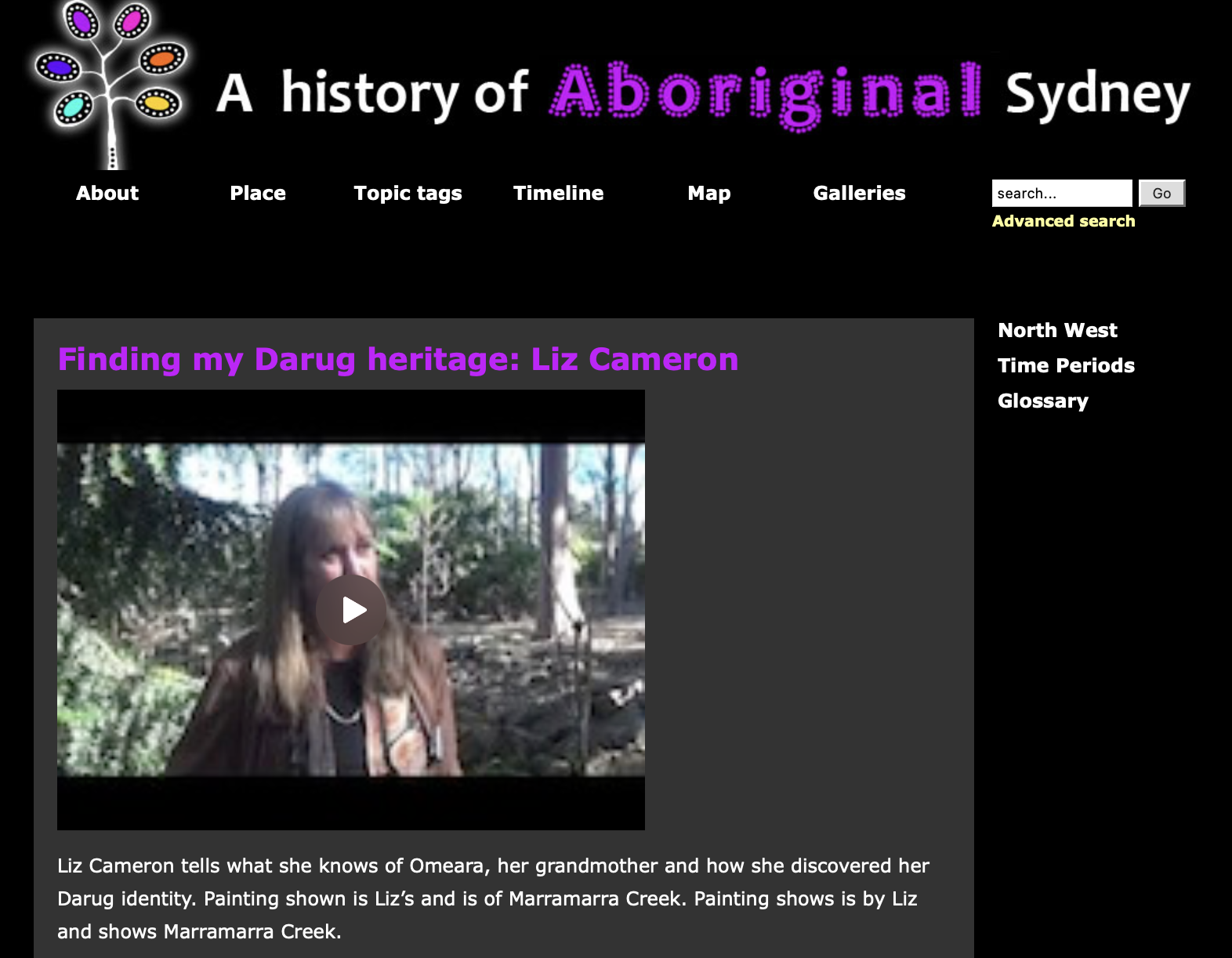
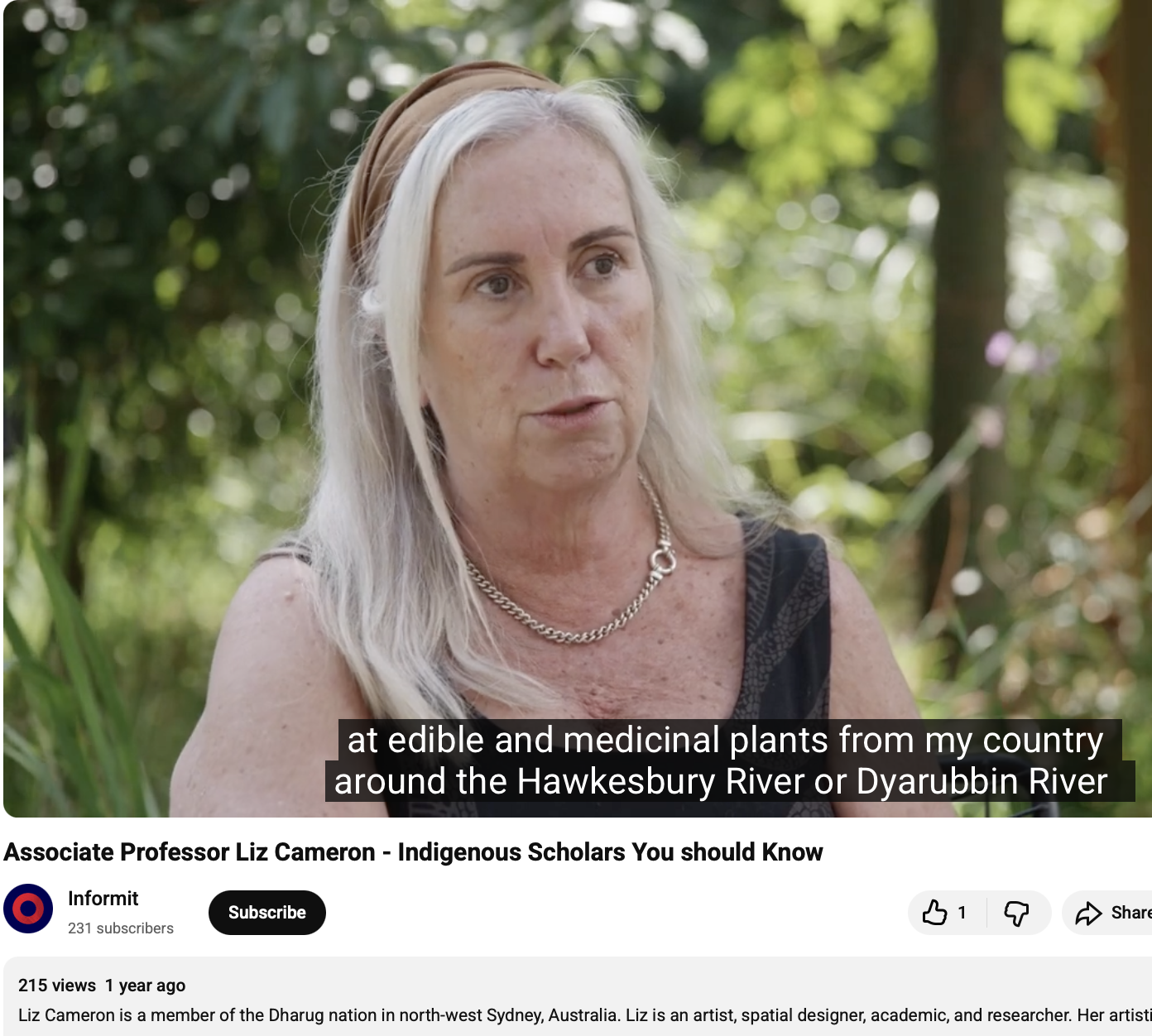
Figure 2 - Video interview of Liz Cameron speaking of the discovery of her Indigenous ancestries . CLICK HERE TO SEE VIDEO SOURCE c2011
Today Associate Professor Liz Cameron is formally recognised as one of RMIT’s Informit Indigenous Scholars You Should Know (see 2023 Video below)
But is this all true?
Is Assoc. Professor Liz Cameron really Darug Aboriginal and American Cherokee as she claims?
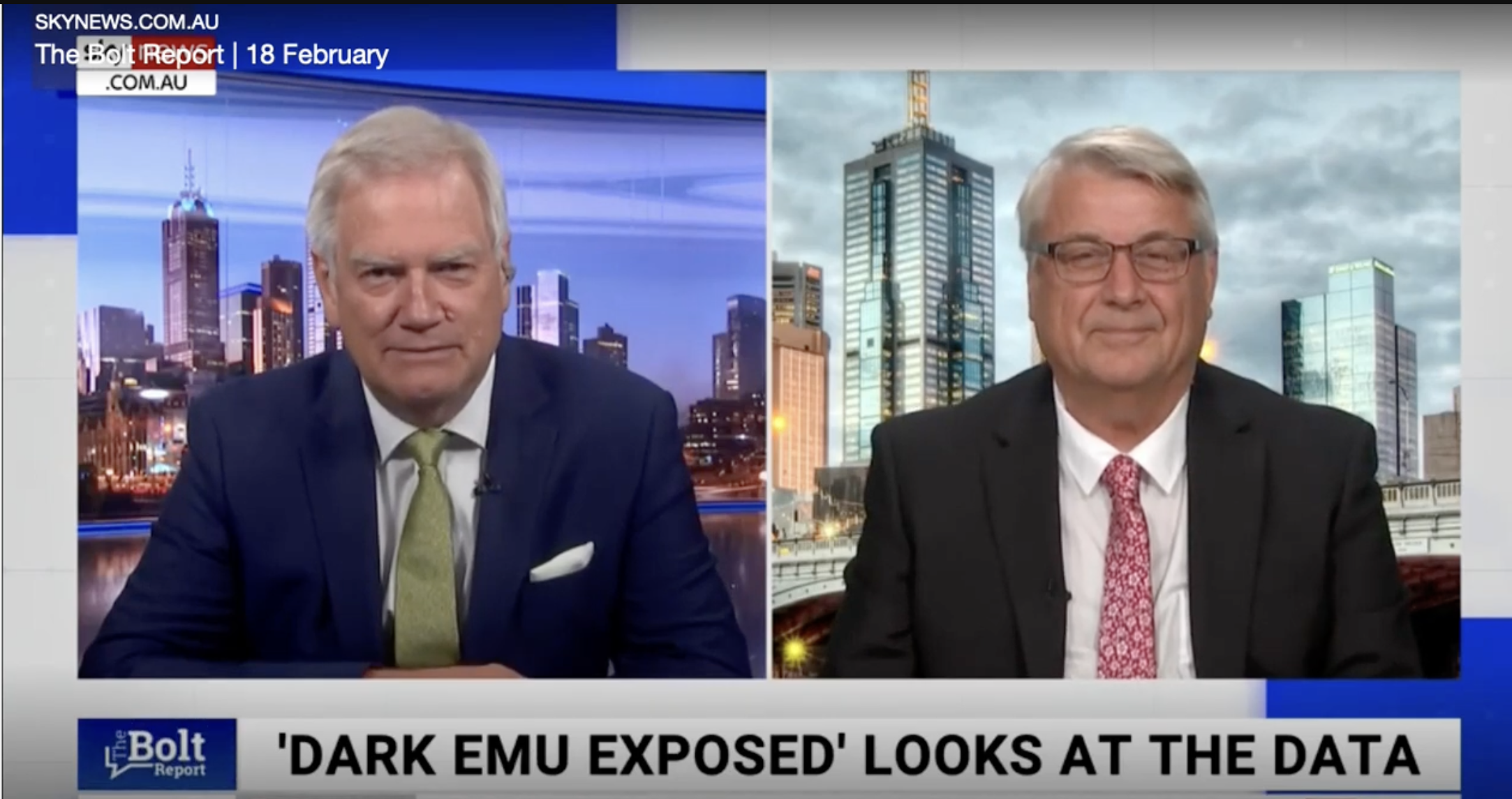
The Dark Emu Exposed website is gaining some small notoriety for exposing public figures who claim to be of Aboriginal descent but whose genealogical records indicate they may be mistaken - they in fact appear to have no Aboriginal ancestry at all.
Over the past year we have received enquiries from several Aboriginal people who each independently have asked us to look into the claims of University of Newcastle Associate Professor Liz Cameron.
This post details our genealogical and research findings (subject to the Disclaimer below at the end of the post).
The Apparent Family Tree of Liz Cameron
Our genealogical researchers constructed an apparent Family Tree for Liz Cameron based on publicly available records (Figures 3 and 4).
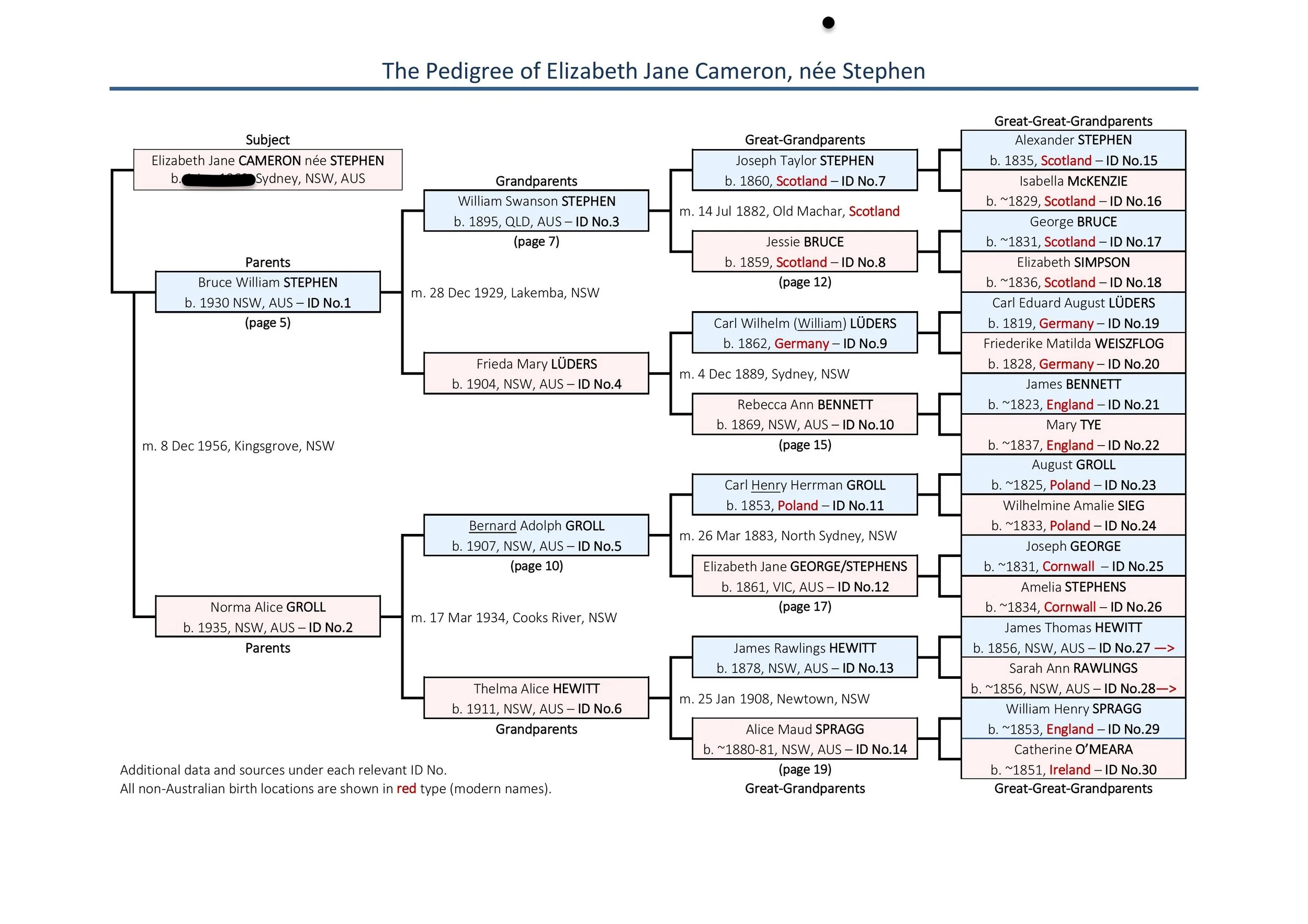
Figure 3 - Apparent Family Tree of Liz Cameron nee Stephen (Part 1). Source: Download file here (subject to Disclaimer. Research Notes available subject to agreement).
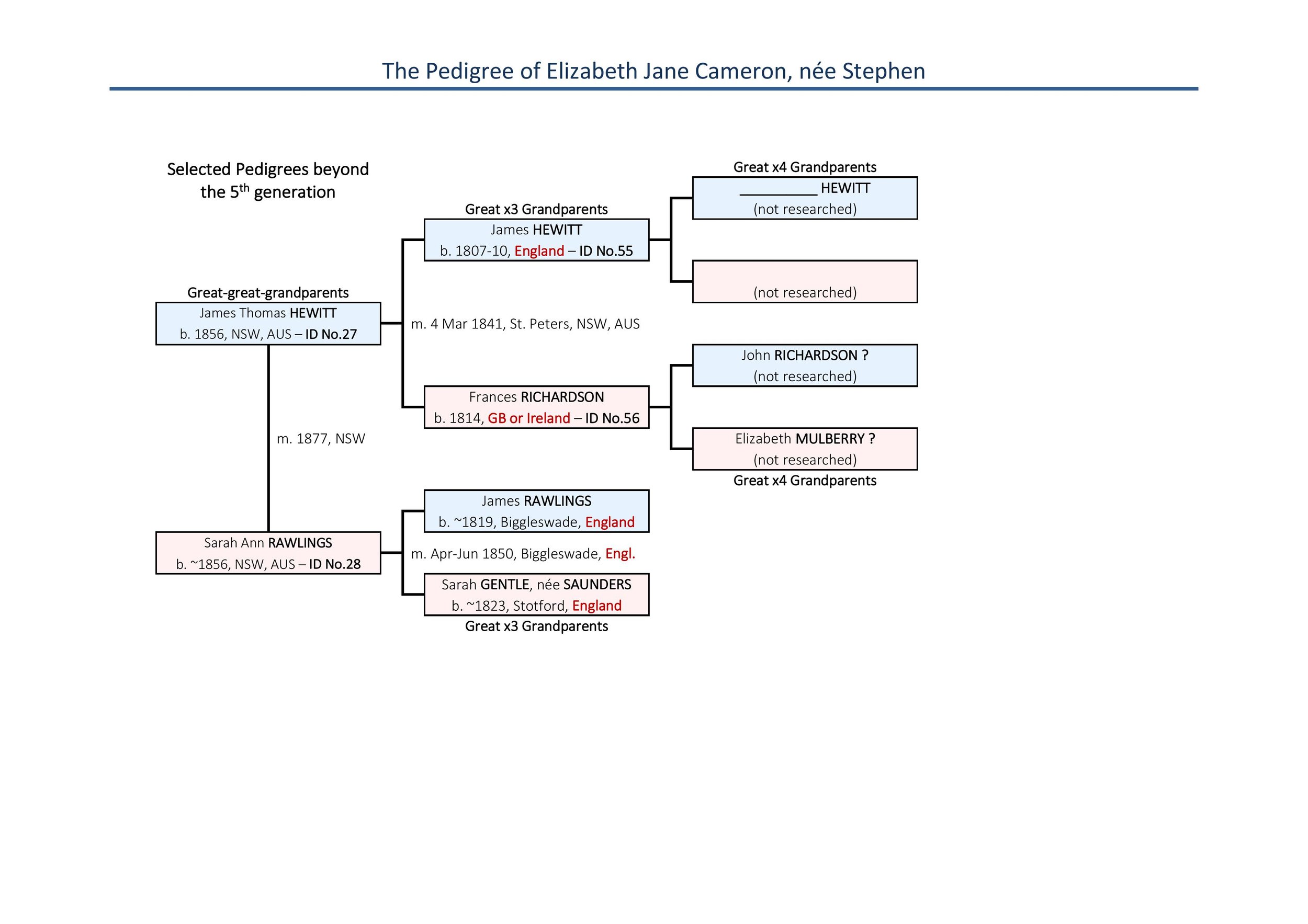
Figure 4 - Continuation of Apparent Family Tree of Liz Cameron nee Stephen (Part 2 - 5th generation Hewitt & Rawlings) (subject to Disclaimer).Source: Download file here
All the branches in Liz Cameron’s Family Tree appear to go back to ancestors born overseas. (See Part 1 & Part 2 in Figures 3 & 4 respectively).
These identified ancestors were born in England, Scotland, Cornwall, Germany, Poland and Ireland.
No ancestors could be identified who were of Aboriginal or Cherokee descent.
Liz Cameron’s Irish ancestor was her great-great-grandmother Catherine (Kate) O’Meara. Her name appears to have been the influence for Cameron’s story of her ‘grandmother’ (sic) ‘Omeara’:
My grandmother's (sic) name was Omeara and she was part of the stolen generation … she was later adopted and taken to Goulburn [c1930s] where she worked as a servant, although she was only 7 years old. So she she never saw her parents again.
The records indicate that Liz Cameron is mistaken to believe these family stories.
Liz Cameron’s grandmother in this maternal line was actually a woman named Thelma Alice Hewitt [1911-2006], but she doesn’t appear to be part of any `stolen generation’ that resulted in her removal from her parents.
Instead, Liz Cameron’s great-grandmother Alice SPRAGG [c1880-1964] was the one that had a desperate childhood. Her mother was a habitual drunk and Alice was admitted twice to the Sydney Benevolent Asylum (Figure 5) - firstly in January 1883 when she was about 2 years old, and then again when she was about 9 years old after she had been abandoned by both of her parents She was later fostered out.
Her admission card of Saturday February 17th 1883 reads:
Admitted Alice Spragg 2yrs (RC [Roman Catholic]) Sister is Beatrice Bragg or Spragg. Deserted by the mother and left with a Mrs McRiling[?] of Harrison St Pyrmont. A warrant has been issued for the mother’s arrest.
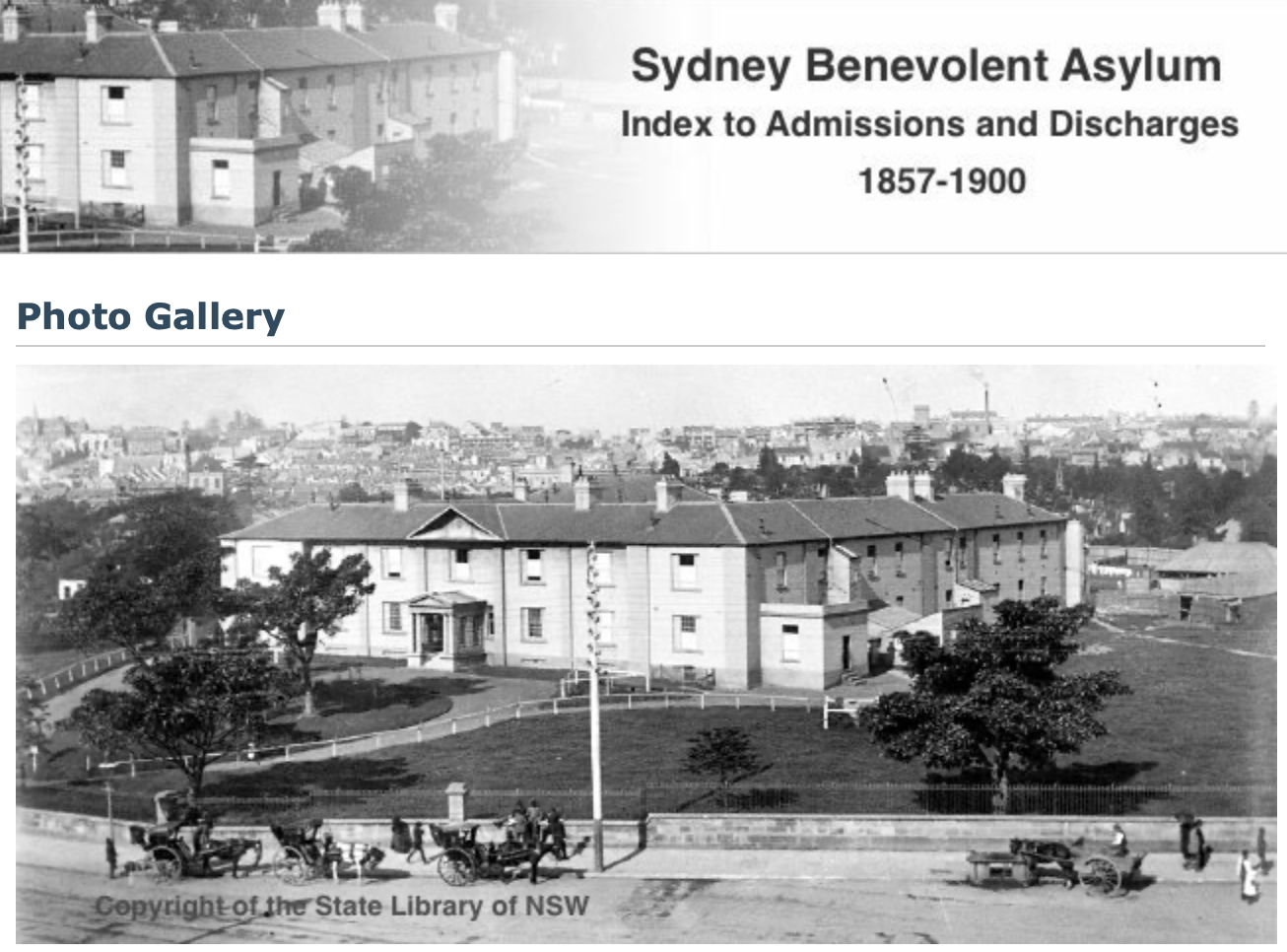
Figure 5 - Sydney Benevolent Asylum. Source
Alice’s second admission card of Wednesday January 2, 1889 reads
Spragg[s], Alice, 9 year, RC [Roman Catholic], native [native-born, i.e. born in the colony. It does not mean `an Aboriginal native’.] Father William Spragg[s] blacksmith, supposed go to america [sic]. Mother - Catherine Spraggs is in gaol (Darlinghurst)
Alice Spragg’s father, William Henry SPRAGG, appears to be the only connection Liz Cameron’s ancestry has with the United States and the story of his life he might have been the inspiration for Cameron’s claim to Cherokee heritage. No evidence could be found to suggest Alice was not the daughter of William Henry Spragg.
Around 1888 William left his daughter Alice and wife Catherine (nee Omeara and Liz Cameron’s claimed Aboriginal stolen generation) in Australia and took his other two daughters (Emma Louisa & Beatrice) with him back to England. All three later emigrated to Pennsylvania, USA. Sometime later, in 1897, his wife Catherine (nee Omeara) followed her husband to the United States where she found that he had re-married. Catherine died in Philadelphia, USA on 21 Oct 1918.
William Spragg was born in Kidderminster, England, so he could not have been either Aboriginal nor Cherokee.
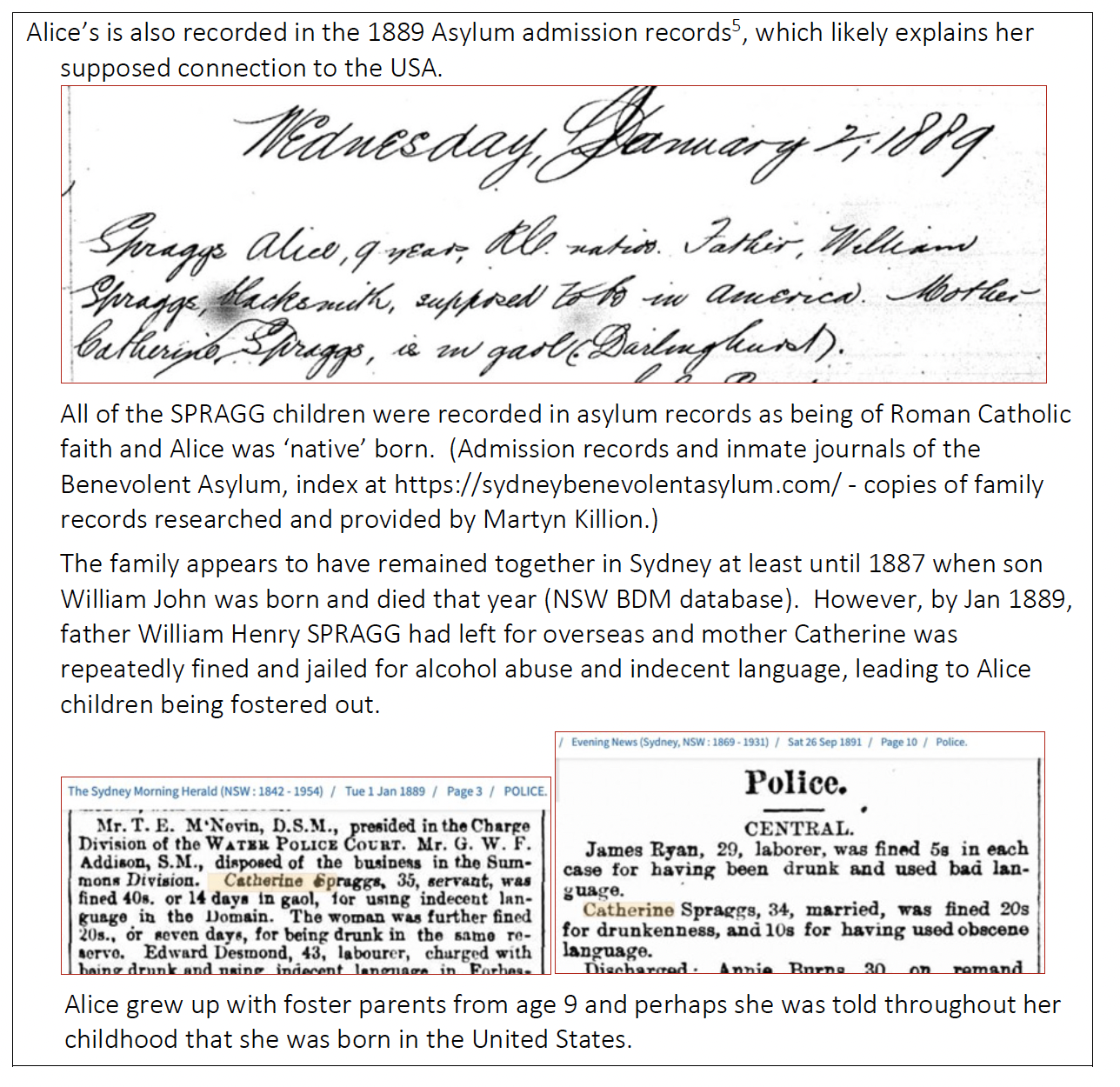
Figure 6 - Research notes on Liz Cameron’s great-grandmother Alice Spragg.
Perhaps Alice’s foster parents told her that she was American or perhaps she misunderstood when she was told her father went to America. This might explain why Alice declared her place of birth as “United States of America” when she married, even though she was actually born in Sydney. (See her Marriage Certificate Figure 7).
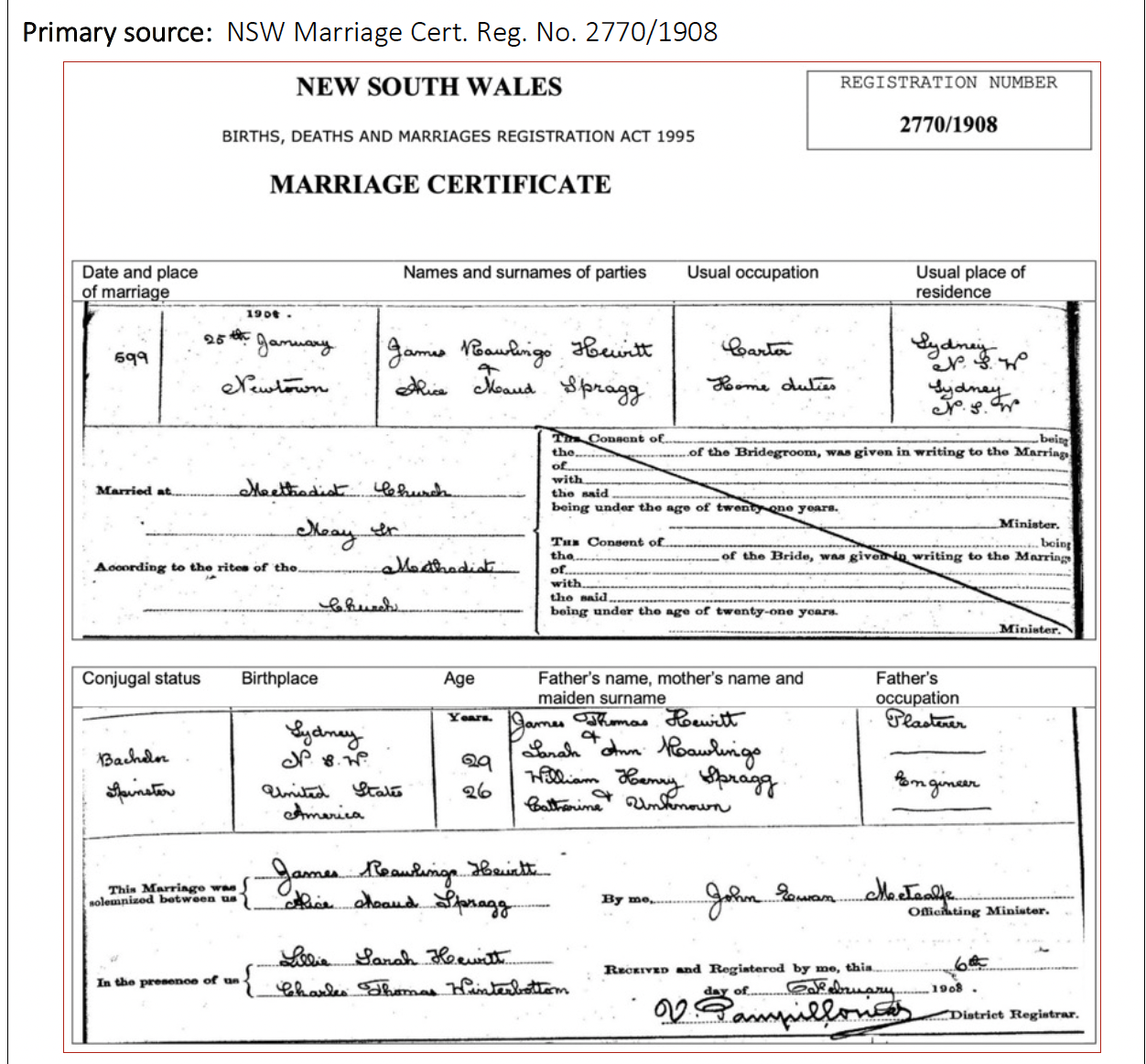
Figure 7 - Alice Spragg’s Marriage Certificate erroneously recording her belief that her ‘Birthplace’ was ‘United States of America’.
In summary, based on this in-depth research of the genealogical records, Assoc. Professor Liz Cameron appears to be mistaken to believe that she is of Aboriginal or Cherokee ancestry.
All her ancestors appear to have come from England, Scotland, Cornwall, Germany, Poland or Ireland.
Assoc. Professor Liz Cameron Responds
On 4 December 2025 an email was simultaneously sent to a dozen Aboriginal academics [Twelve of the RMIT Informit Indigenous Scholars You Should Know] enquiring as to whether they would contribute to the creation of an "independently verifiable Registry of Aboriginal and Torres Strait Academics.” (see here).
Four of the twelve responded, including Assoc. Professor Liz Cameron. Her response, cc’d to all the other eleven Aboriginal academics, is illuminating (Figure 8):
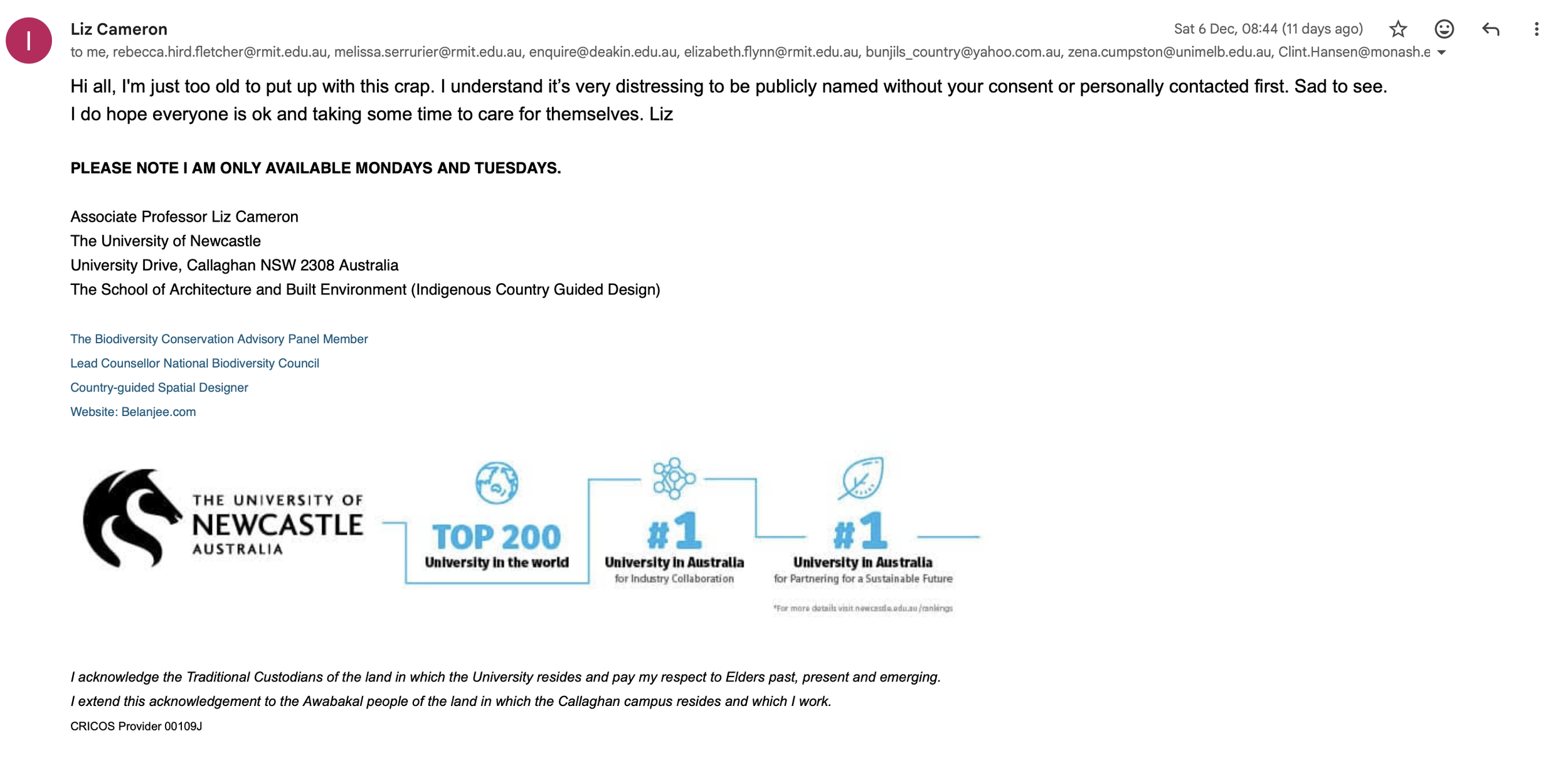
Figure 8 - Initial response from Prof Liz Cameron on 6 December 2025, only two days after our initial inquiry.
Professor Cameron took our enquiry as an affront and surprisingly describes our enquiry as “very distressing” for “publicly [being] named without [her] consent”.
This is surprising because all these academics, including Cameron, quite willing and publicly had previously named themselves as part of the RMIT Informit website of “Indigenous Scholars You Should Know.”
A follow-up letter by email was sent to Assoc. Professor Liz Cameron on 6 December 2026 which included her apparent Family Tree detailing that she appeared to be mistaken to think that she was Aboriginal and Cherokee ancestry. All her ancestors appeared to originally have come from Ireland, England, Scotland, Cornwall, Germany or Poland she was informed (Figure 9).
No response to date has been received from Professor Cameron.
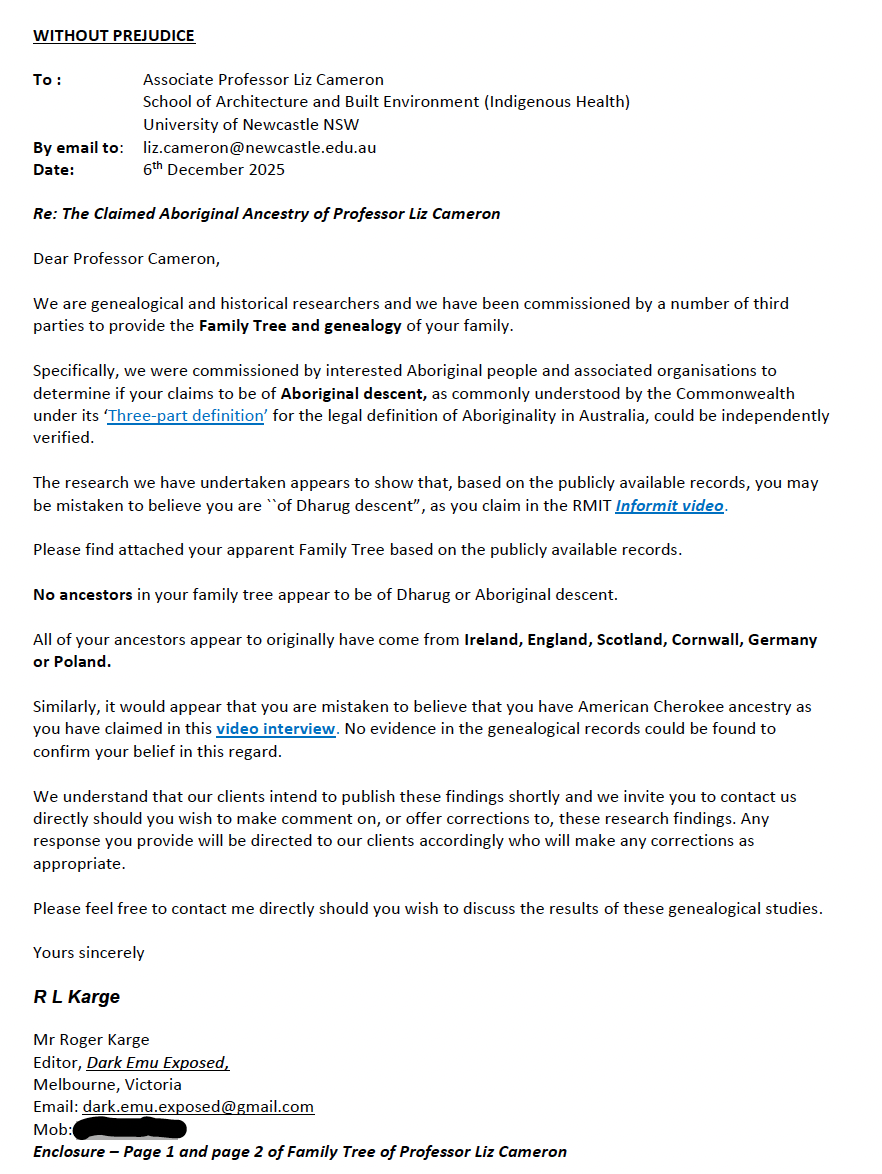
Figure 9 - Letter by email, along with the apparent Family Tree (Figures 3 & 4), sent to Professor Cameron giving her an opportunity to respond to the genealogical research presented here.
Why Does Assoc. Professor Cameron’s Ancestry Matter?
It matters because Assoc. Professor Cameron has projected herself as an authentic Aboriginal voice in academia in general, and in the fields of architecture, design and art in particular. She is recognised as having:
played a pivotal role as one of four Indigenous academics shaping architectural education and practice in New South Wales. With a background in occupational therapy, spatial design, and art, Liz brings a unique, cross-disciplinary perspective to her work, enriched by her commitment to cultural integrity and authentic engagement with Country. (Source)
But if the professor has no apparent Aboriginal ancestry, isn’t she misleading those who are relying on her authentic voice as an Aboriginal academic?
In particular, New Australians such as the young architect graduate in the video clip below are potentially being fed un-authentic Aboriginal knowledge - they are being misled by academics, such as Professor Liz Cameron, if those academics are not genuinely of Aboriginal ancestry as they claim. These New Australian students are thus potentially being short-changed in their education by universities who apparently employ ‘fake’ Aborigines, such as the University of Newcastle appears to be doing in the case of its Professor Cameron.
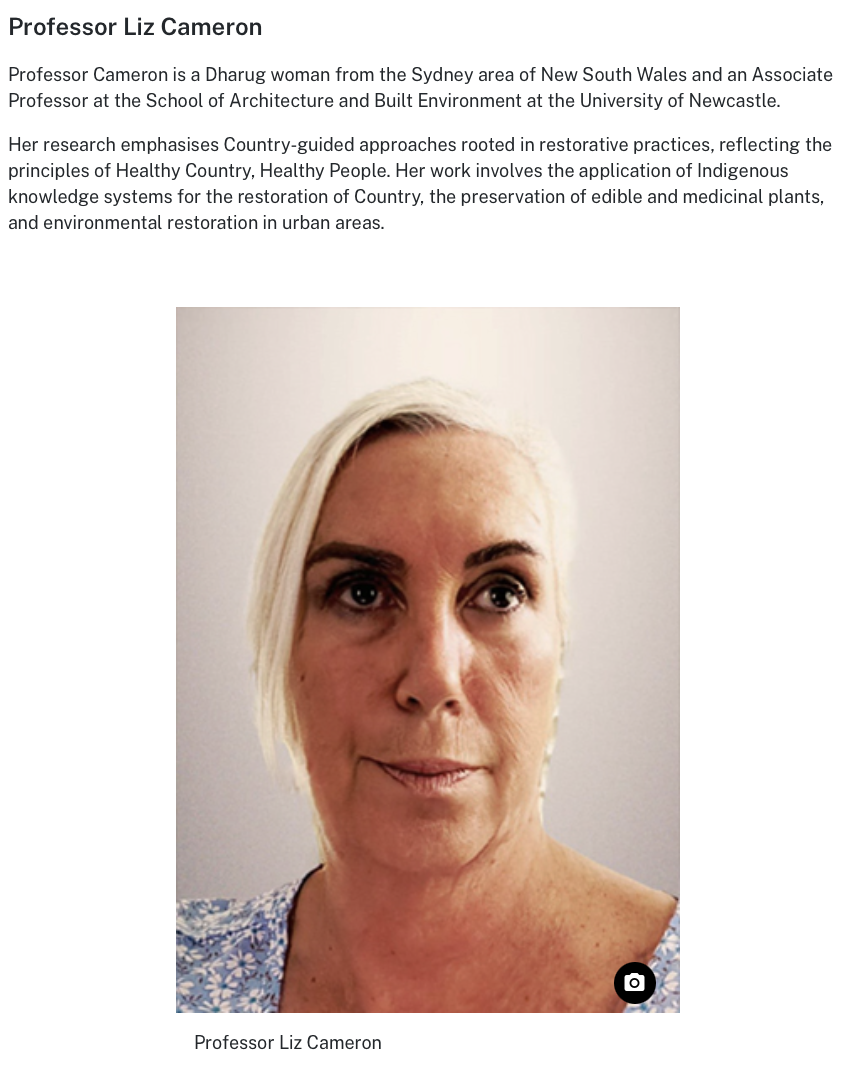
Furthermore, Assoc. Professor Cameron would appear to be misleading the NSW government if she has presented herself as of Darug Aboriginal ancestry so as to obtain a position on the Biodiversity Conservation Advisory Panel
Another similar body, the Bio-diversity Council of Australia, “setup by 11 Australian universities to promote evidence-based solutions to Australia’s biodiversity crisis” perhaps needs to review its appointment process given that it appears to contain two ‘fake’ Aborigines out of its eleven members - Professor Liz Cameron and Dr Jack Pascoe:
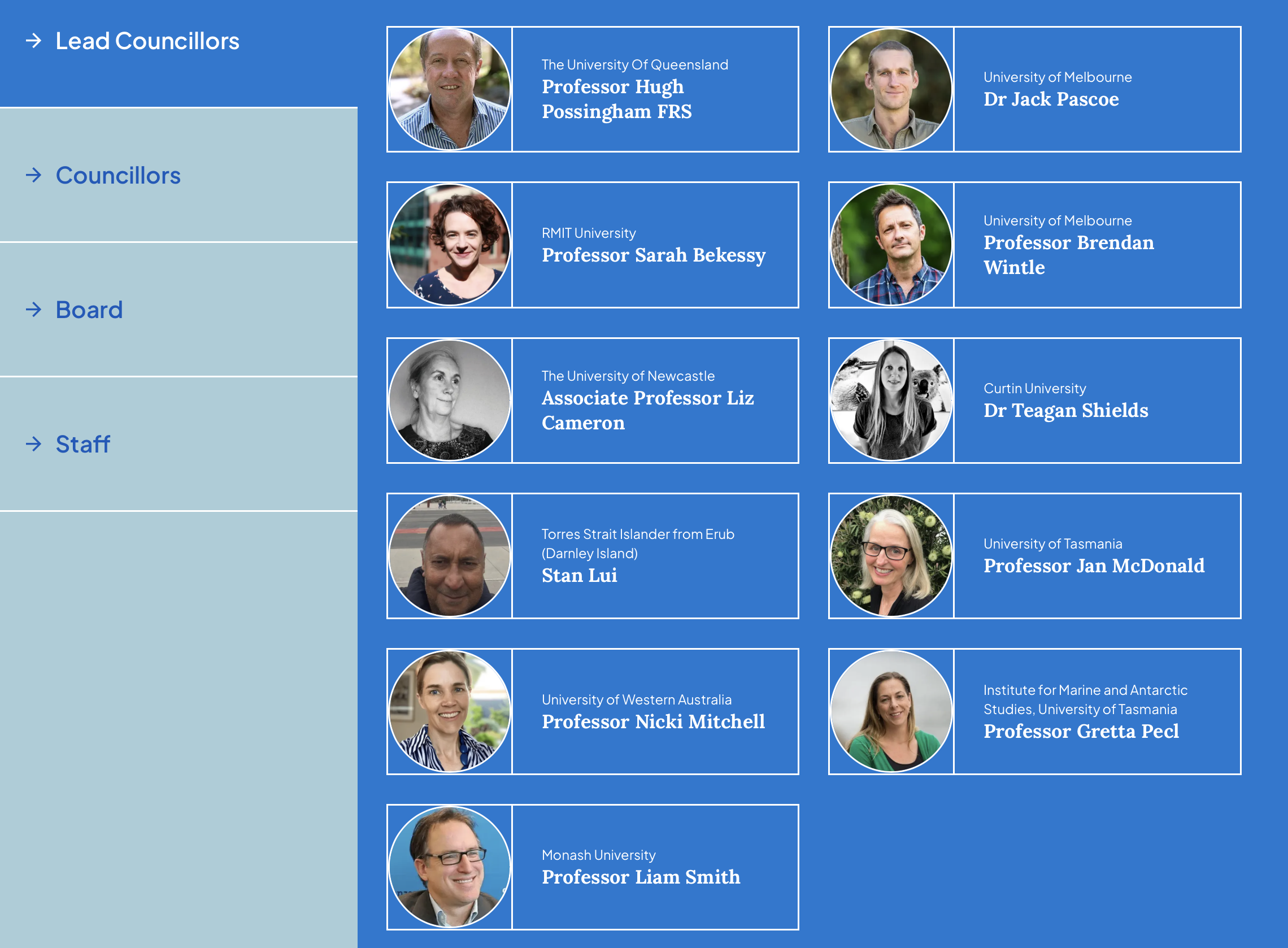
Figure 12 - Lead Councillors of the Biodiversity Council including two who claim to be Aboriginal - Liz Cameron and Jack Pascoe . Source
Liz Cameron, the artist, certainly produces good and popular art for her customers. For example, EJE Architecture were:
thrilled to announce EJE has purchased an artwork by well-known artist Liz Cameron for our foyer. Liz Cameron is a Dharug artist, spatial designer, academic, and researcher. Her artistic endeavours involve a diverse range of mediums that actively incorporate Aboriginal practices, relationships, and knowledges. Wednesday was the official hanging, and we were lucky enough to have the artist herself in attendance.
Yabin naa - Weaving Country. [Figure 13]
This is all fine per se if one believes any artist can produce in any style and genre that they want, no matter what their background, class or ancestry. However, many might consider it misleading if the artist professed to be of a certain Aboriginal ancestry, and claimed this imparts something special to his or her artworks, but then they weren’t able to substantiate their own ancestral claims to that Aboriginality.
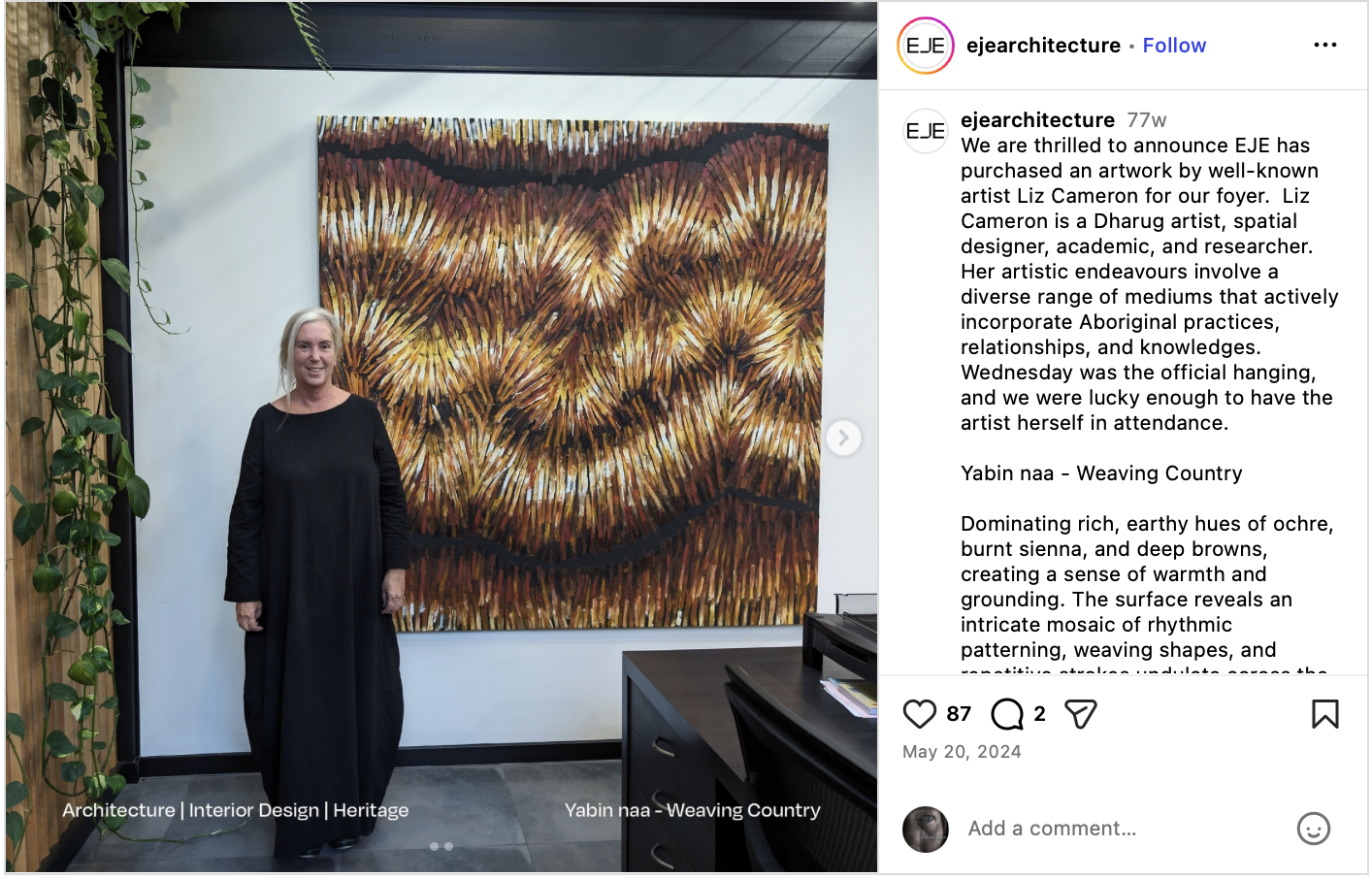
Figure 13 - Darug Aboriginal artist Liz Cameron with one of her impressive works of art she has sold. -Source
Does the University of Newcastle Really Care About the Claims of its Staff?
“You wouldn’t read about it” was a favourite phrase of my journalist father, having encountered some bizarre story or ludicrous statement in the press. And here am I, exclaiming it, having read some sentences in the Letters segment of the December [2021] issue of Quadrant: from Alex Zelinsky, Vice-Chancellor and President of Newcastle University (when did Australian vice-chancellors turn themselves into presidents?), making this breathtaking observation: “Universities must be places of open inquiry and robust challenge. This is how ideas in society are contested and knowledge is advanced.”
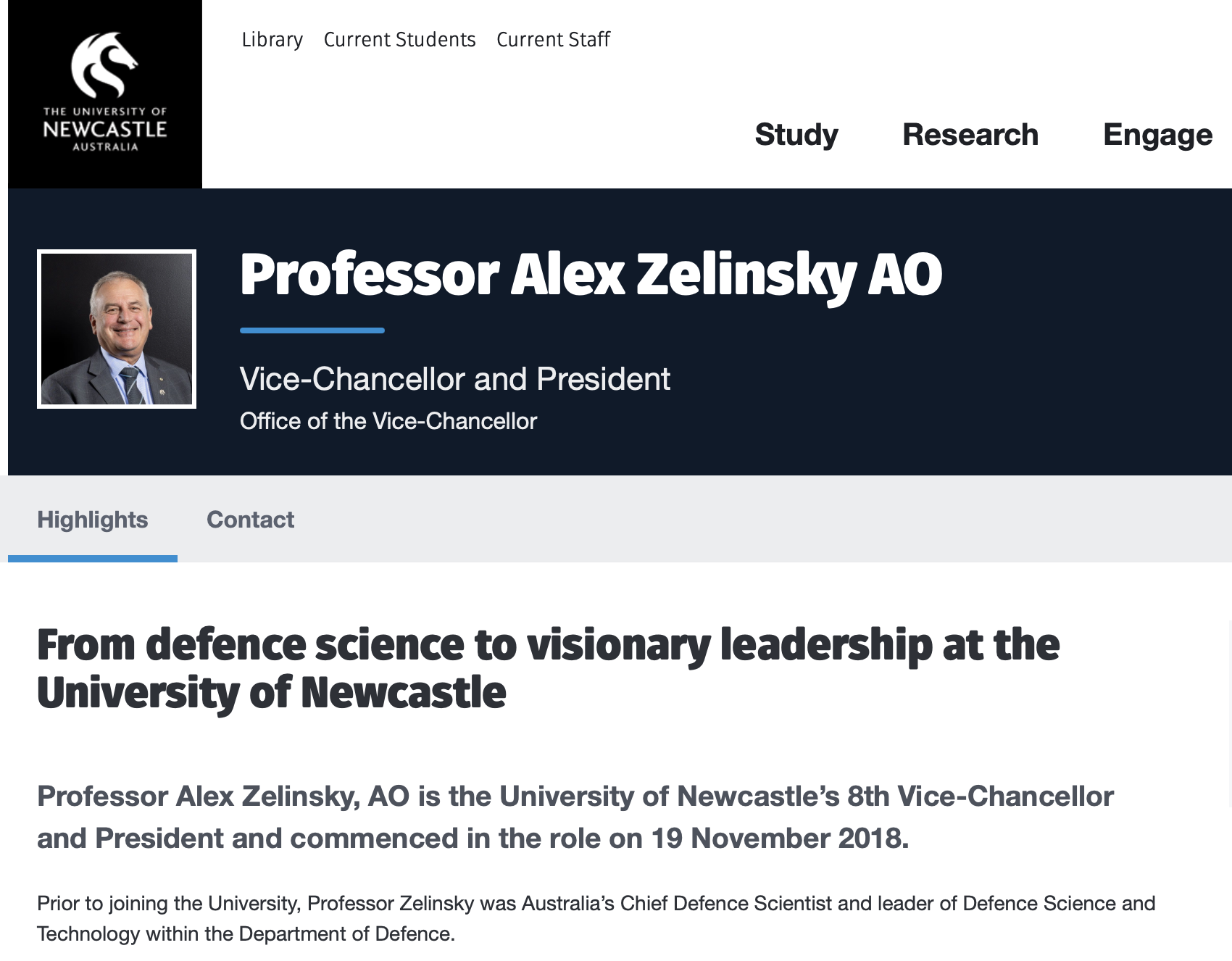
Figure 14 - Vice Chancellor Alex Zelensky,, University of Newcastle. Source
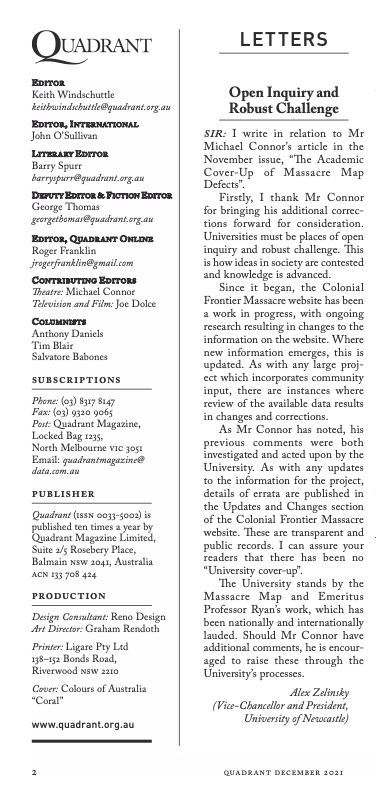
Figure 15 - VC Alex Zelensky’s 'Letter to the Editor in Quadrant in December 2021 issue
The research results presented here would seem to suggest that some civil “open inquiry and robust challenge” might be needed within the University of Newcastle’s HR department regarding the ancestral claims its Associate Professor, Liz Cameron.
Genealogical Research and a Disclaimer: All genealogical work presented here has been undertaken in good faith by professional genealogists and archival researchers and is based on publicly available records at the time of the research. It should be noted that genealogical research is not an exact science. Existing records can contain errors and family trees can change if new evidence comes to light. Similarly, this research cannot account for events which may have resulted in Aboriginal ancestry entering into the family line such as via a private or unrecorded adoption of an Aboriginal child into the family, or a relationship out of wedlock between a family member and an Aboriginal person that produced a child of Aboriginal descent who was then incorporated into the family without record, or with a record that did not disclose the Aboriginality of that child.
Genealogist for this research: J Hunter, 3 Nov 2025