Posted 7 June 2026
The Son: Hugh De Kretser
Recently, the President of the Australian Human Rights Commission (AHRC) , Hugh de Kretser was asked at a Senate Estimates hearing in May 2026 what a woman is “𝘧𝘳𝘰𝘮 𝘵𝘩𝘦 𝘊𝘰𝘮𝘮𝘪𝘴𝘴𝘪𝘰𝘯’𝘴 𝘱𝘦𝘳𝘴𝘱𝘦𝘤𝘵𝘪𝘷𝘦”.
His answer, on the record:
“𝘈𝘯 𝘢𝘥𝘶𝘭𝘵 𝘧𝘦𝘮𝘢𝘭𝘦 𝘩𝘶𝘮𝘢𝘯… 𝘢𝘯𝘥 𝘪𝘯𝘤𝘭𝘶𝘥𝘦𝘴 𝘢 𝘵𝘳𝘢𝘯𝘴𝘨𝘦𝘯𝘥𝘦𝘳 𝘸𝘰𝘮𝘢𝘯.”
(Source: reported on X 26 May 2026 )
Watch in video below:
So who is this President of the AHRC?
According to the AHRC website:
Hugh de Kretser has played a critical role in advancing human rights in Australia for more than 2 decades.
Before joining the Commission, he was the CEO of the Yoorrook Justice Commission, the first formal truth-telling process into historical and ongoing injustices experienced by First Peoples in Victoria.
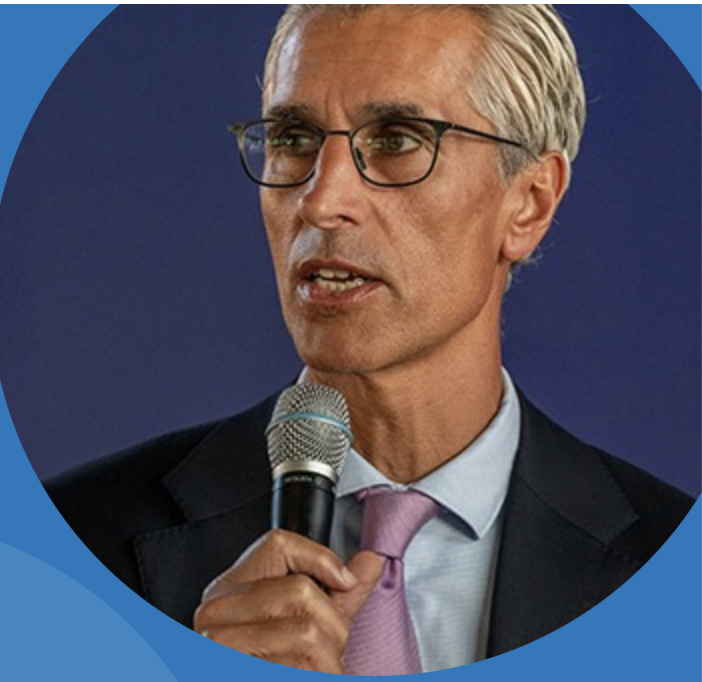
Figure 1 - Hugh de Kretser, President of the Human Rights Commission
He previously worked as the Executive Director of the Human Rights Law Centre and the Executive Officer of the Victorian Federation of Community Legal Centres.
Hugh has also served as a Commissioner of the Victorian Law Reform Commission and a Director of the Sentencing Advisory Council. He has held a range of not-for-profit board, governance and advisory positions including for Flourish Australia, the International Network of Civil Liberties Organizations, knowmore and the National Association of Community Legal Centres.
He has worked as a community lawyer, managing the Brimbank Melton Community Legal Centre and started his legal career advising companies on employment and anti-discrimination law.
In his early career he was lauded by the University of Melbourne (Figure 2)
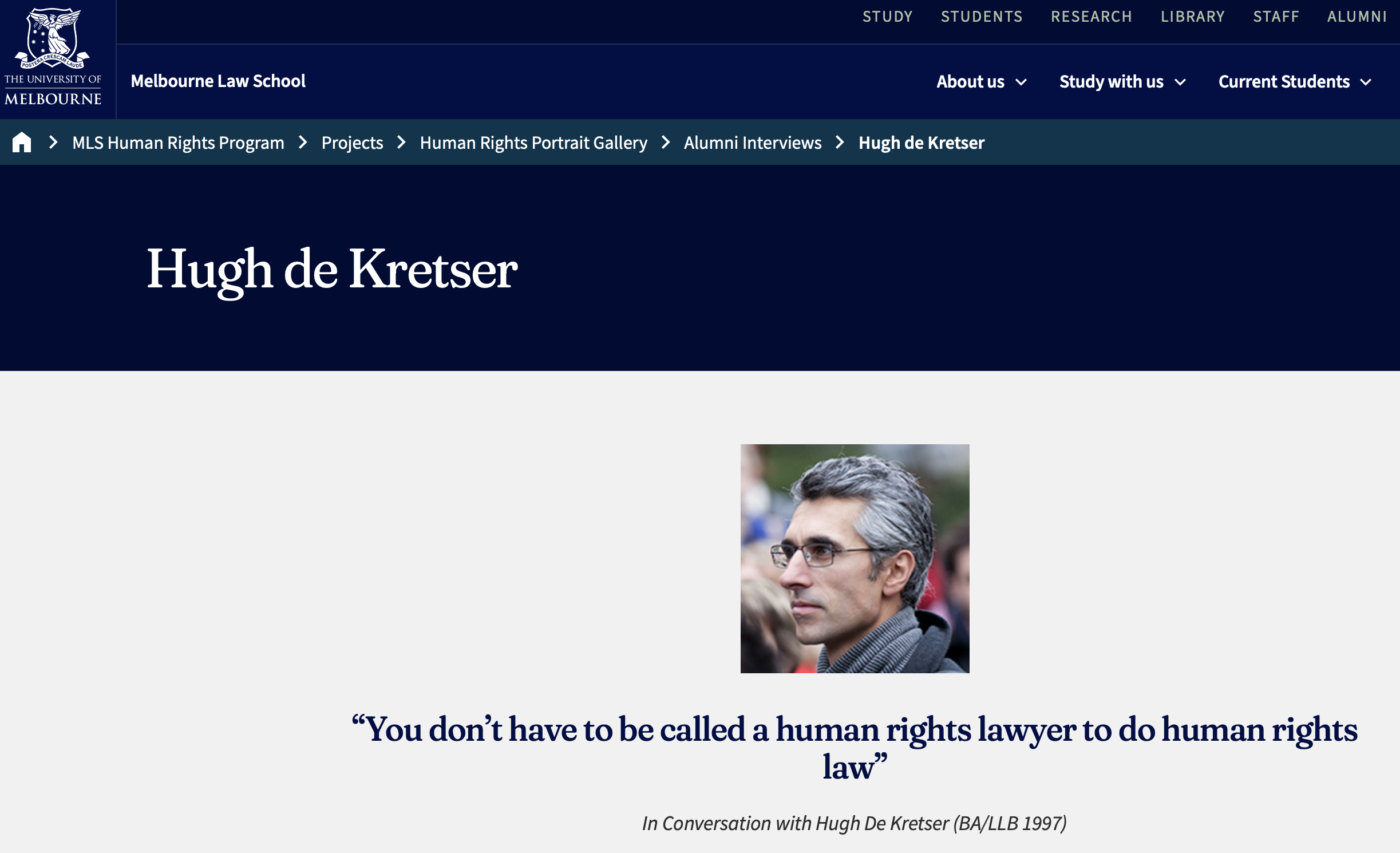
Figure 2 - Source: University of Melbourne
On his appointment, the new President of the Australian Human Rights Commission, Hugh De Kretser [Note 1] was quoted as saying that,
“maintaining the push to see a national Human Rights Act introduced will be among his key priorities … As a wealthy, stable democracy, Australia can and should be leading the world on human rights.”
One wonders whether in fact the ideology of the AHRC with regard to women, racism and discriminiation will in fact decrease the stability of Australia’s democracy, and ultimately our wealth.
But today even the AHRC are disappointed with their perceived impact on Australian society and government policy. James Button from the Sydney Morning Herald in July 20205 noted:
But in recent years, the AHRC has faded from view. Its reports rarely land with the same impact. Some human rights advocates blame inadequate funding (though the Albanese government gave it $50 million in 2022) and the fierce hostility of prior Coalition governments; others say it has become bureaucratic, demoralised and timid. Its problems are bigger than that, though… The AHRC has a more fundamental challenge: as an issue, human rights now appears to be the preoccupation of the left and progressive left, with the centre right and ultra-conservatives largely abandoning it as a major concern. So how can the organisation speak to all Australians, minorities or not?

Figure 3 - President of the Australian Human Rights Commission, Hugh De Kretser. Source:SMH 19 July 2025

Figure 4 - President de Kretser's appointment to a five-year term was announced by the Federal Attorney-General, the Hon Mark Dreyfus KC, in May 2024. Source: Instagram
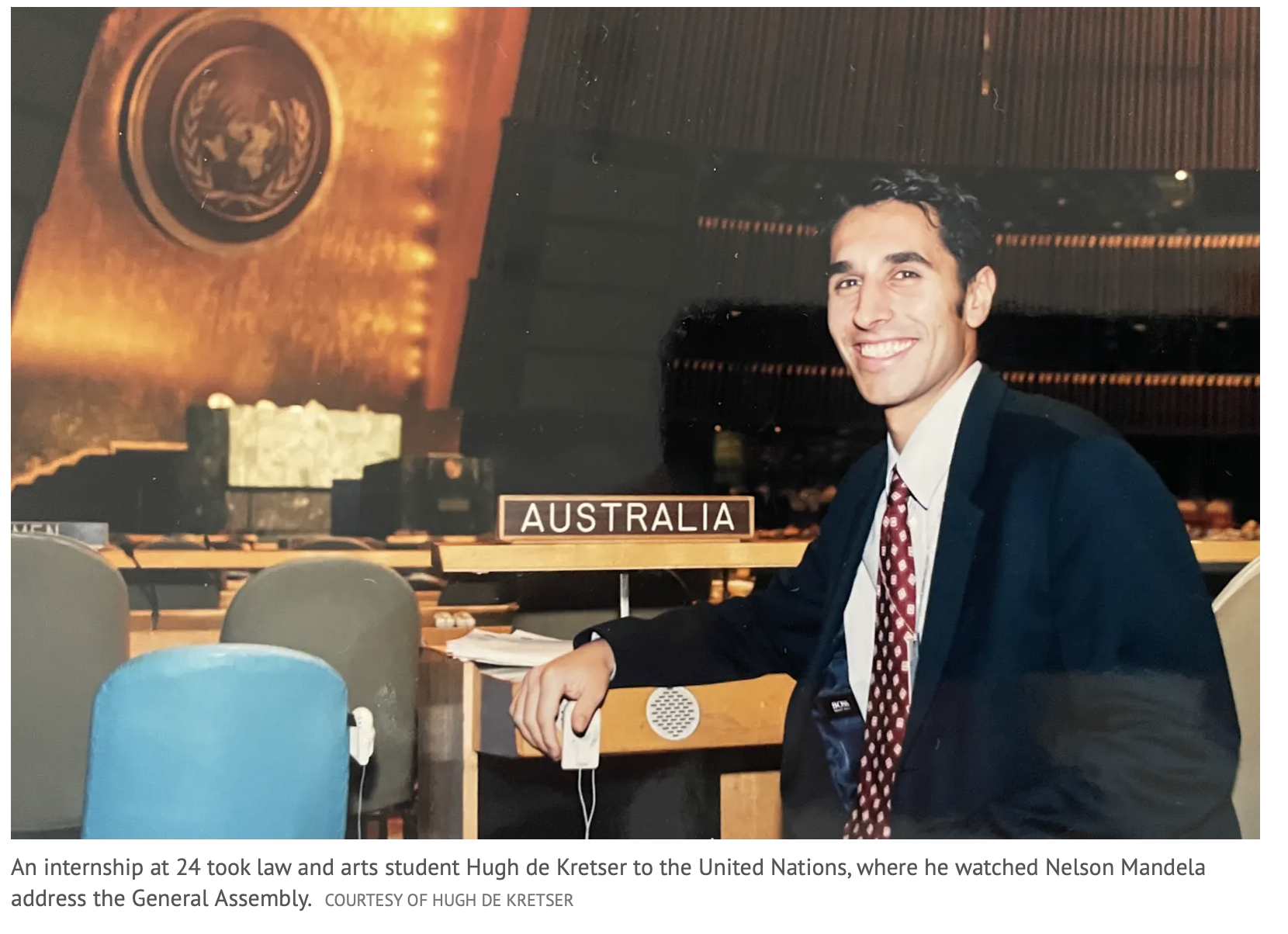
Figure - Source SMH
The Father - David de Kretser
David de Kretser was born in British Ceylon (now known as Sri Lanka). He migrated to Australia with his family in 1948 when he was aged nine. He studied at Camberwell Grammar School, Melbourne, received his Bachelors of Medicine and Surgery degrees from the University of Melbourne in 1962, and his Doctor of Medicine degree from Monash University in 1969.
De Kretser is an infertility and andrology expert, and a long-serving academic. He was foundation director of the Monash Institute of Reproduction and Development and was Associate Dean of the Faculty of Medicine, Nursing and Health Sciences. He was a senior Fellow of endocrinology at the University of Washington in Seattle from 1969 to 1971.
He served as Governor of Victoria from 2006 -2011 after being nominated by the then Premier of Victoria, Steve Bracks and appointed by Queen Elizabeth II. In 2001, De Kretser was named as Victoria's Father of the Year. On 12 June 2006, in the Queen's Birthday Honours, he was awarded Australia's highest civilian honour, Companion of the Order of Australia (AC). De Kretser is also a knight of the British Venerable Order of Saint John.
Nature or Nurture? The
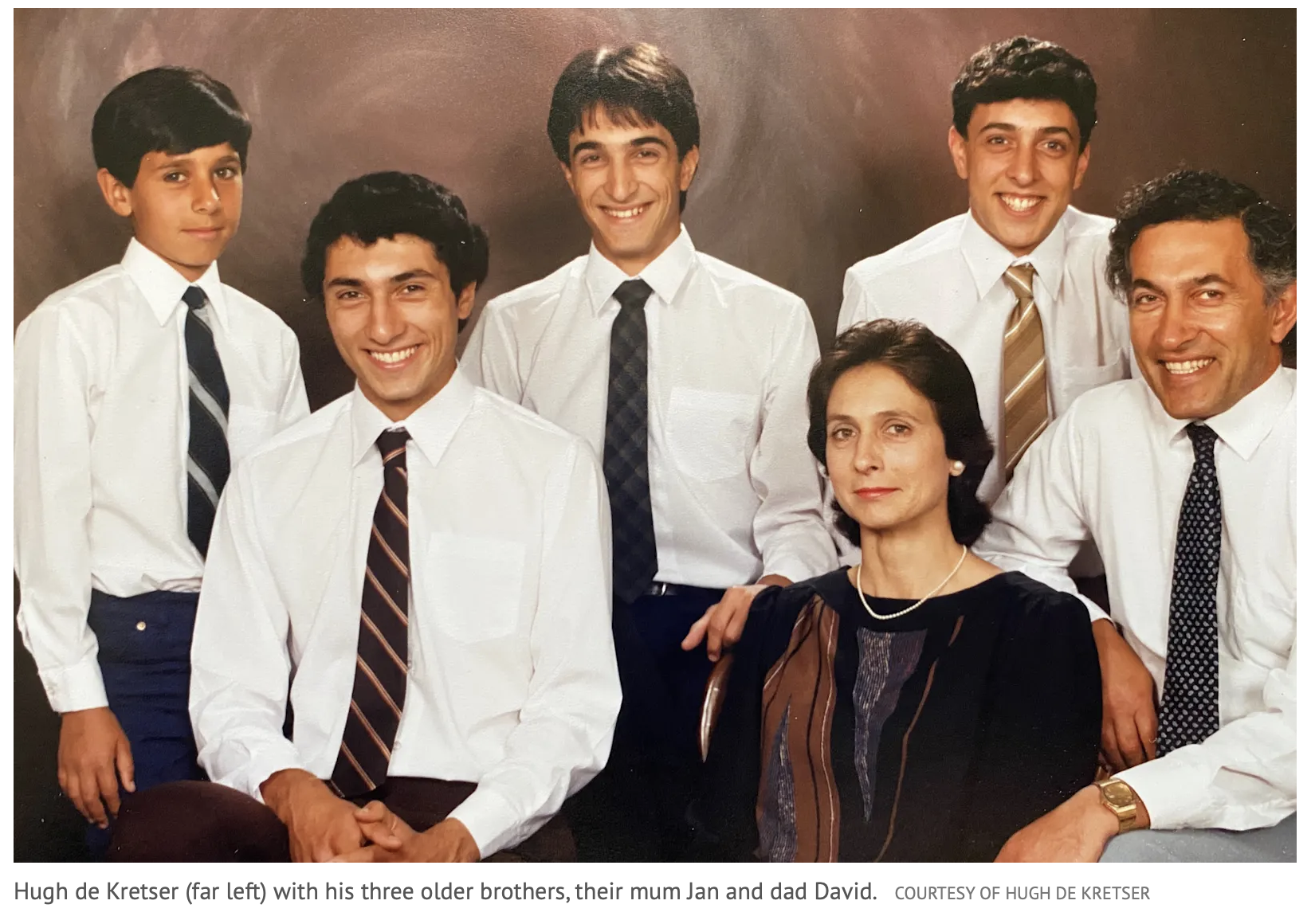
Figure - “De Kretser came from a strong, happy family in Melbourne’s “lovely, leafy and boring” Surrey Hills; his father, David, a globally renowned endocrinologist, would become governor of Victoria in 2006.” Source: SMH 19 July 2025
Commentary by Hugh de Kretser:
Commission President Hugh de Kretser: “Since colonisation, Australian law has too often delivered injustice for First Nations people.” (Source: AHRC 13 June 2025)
The decades of imported British democracy after colonisation forced first peoples off their land, destroyed their economy and way of life, - it is probably my Irish ancestors on my mother’s side who worked on the land we took from the Gunditjmara peoples of the Western district. So, as Paul Keating said: “We destroyed their way of life”. (Source: AHRC 29 July 2024)
First Nations people have endured terrible rights abuses from colonisation to now. The theft of land, the violence, the massacres, the denial of culture and the stolen generations. The ongoing injustice of child removal, mass imprisonment, deaths in custody, inadequate housing, education, healthcare and more. (Source: AHRC 20 Aug 2024)
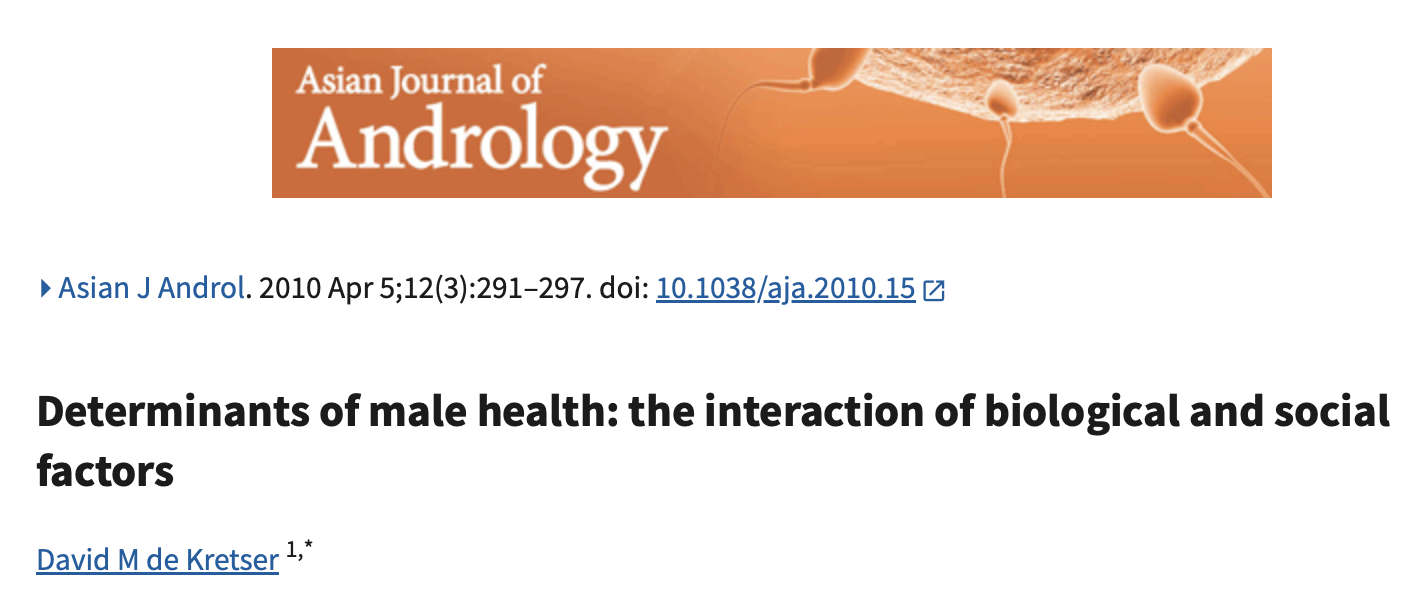
Figure - A Scientific paper, Determinants of male health: the interaction of biological and social factors, by David M de Kretser, an Australian infertility and andrology expert, and a long-serving academic. He was a former Governor of Victoria [2006-2011]. Source of paper
Abstract
“This review discusses the social and biological factors that may influence male development from conception to adulthood and also underlie the development of health disorders…It aims to emphasize that social determinants function on a biological background that is profoundly influenced by a male's genome, inherited from his parents. “
“Perhaps the most fundamental factor [driving the health of men] is the genetic constitution of a male; namely, that man's genome. This is critical because it establishes the genetic template that determines a person's sex and also the genetic propensity for disease…”
" The male genome - The fusion of genetic material derived from the sperm with genetic materials derived from the nucleus of the ovum and its mitochondria … together form a male's genome … .”
“The determination of male sex - The Y chromosome determines the development of the testis and, through the fetal secretion of the androgenic hormones testosterone and dihydrotestosterone, causes differentiation of the external genitalia to form the penis and scrotum. New data indicate that the sex-determining genes on the Y chromosome are expressed in the brain before the testis is formed and therefore before testosterone is secreted by the fetal testis….”
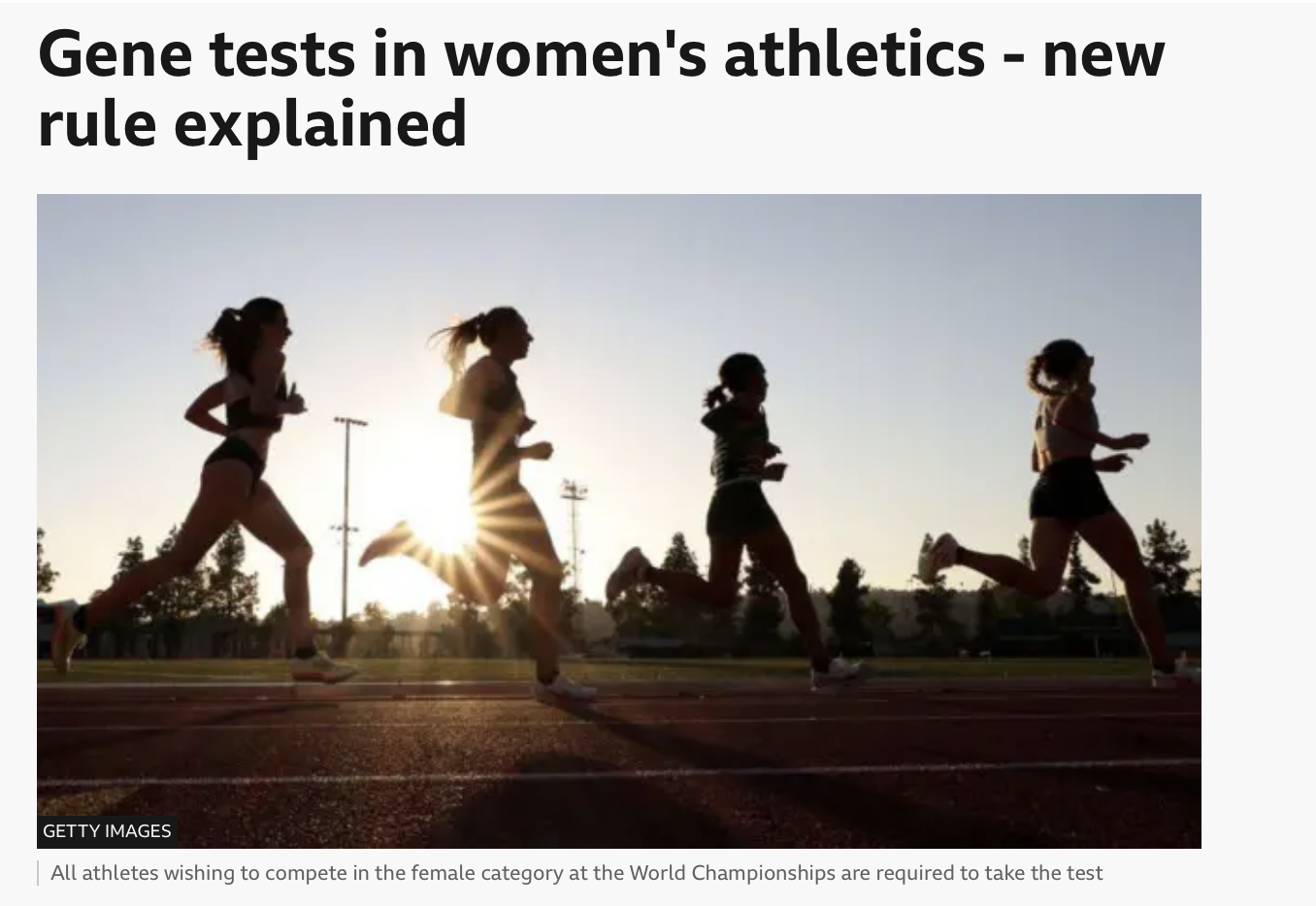
Source: BBC Sport Online 25 Aug 2025
World Athletics is within "touching distance" of carrying out gene testing on all female athletes before the start of the World Athletics Championships in Tokyo.
Rules requiring all athletes in the female category of world ranking events to take a one-time gene test came into force at the beginning of September.
World Athletics says the sex screening - which detects the presence of a Y chromosome - is to protect the integrity of women's competition.
Speaking on the eve of the championships on Friday, World Athletics president Sebastian Coe said at a media conference: "We were on 95% the other day, we're inching our way there [to 100%] and we will be within touching distance.
"It's had its challenges, but we are pretty much there and I'm really pleased that we agreed to do that."
The sport's governing body is aiming to test all athletes competing as women before the start of the World Championships, but they will not necessarily all be validated in time.
Lord Coe has admitted the time frame has been "tight", and that there has been "added complexity" because genetic testing for non-medical reasons is outlawed in some countries, such as France and Norway, so some athletes have had to give samples overseas.
A group of Canadian athletes also had to be retested after a reported 'test-tube error' meant their cheek swabs failed to comply with requirements.
Coe told BBC Sport on Thursday: "The overarching principle is a very simple one: Do we want to protect the female category? Do we believe the promotion and preservation of that category is sacrosanct in sport? Yes, we do, and we're doing what we believe."
He added: "They are being conducted to absolutely accepted international medical standards. The data is secure. The discussion, if it needs to take place, will only take place between a medical delegate and the athlete."
But how does the latest attempt to tackle one of sport's most contentious issues work? How did we get here, are there concerns, and what are the implications for the debate around gender eligibility? BBC Sport answers the key questions.
What is the test looking for?
The test detects the SRY gene - or 'sex-determining region Y gene' - which is part of the Y chromosome and causes male characteristics to develop.
If a human embryo has XY chromosomes the SRY gene leads to the formation of testes, which then produce hormones including testosterone that lead to male development - increasing muscle mass and strength.
Research has shown athletes who were born male and passed through male puberty have physiological advantages over those born female (with XX chromosomes and no SRY gene).
The test is designed to determine biological sex in cases of athletes who are DSD - those born with 'differences in sex development'. This is a term for a group of rare conditions, whereby a person's hormones, genes and/or reproductive organs may be a mix of male and female characteristics. Some can be born with external female genitalia but functioning testes, and are often certified as female at birth and raised as such.
Hugh De Kretsner Family
Notes
As president, Hugh de Kretser represents seven commissioners: for race, sex, age, disability, children, Indigenous Australians and human rights. Each is independent, answerable to parliament and can be removed only by the governor-general. This is an odd structure, developed over time as commissioners were gradually added, and creates silos, competition for limited funds and a lack of one organisational voice. Yet, in recent years, its broad political leanings have been clear. (SMH 19 Jul 2025)
1.
Further Reading
Beware the Siren Calls of Michelle de Kretser
Michelle de Kretser
Is Australia Prejudiced against Women of Colour?
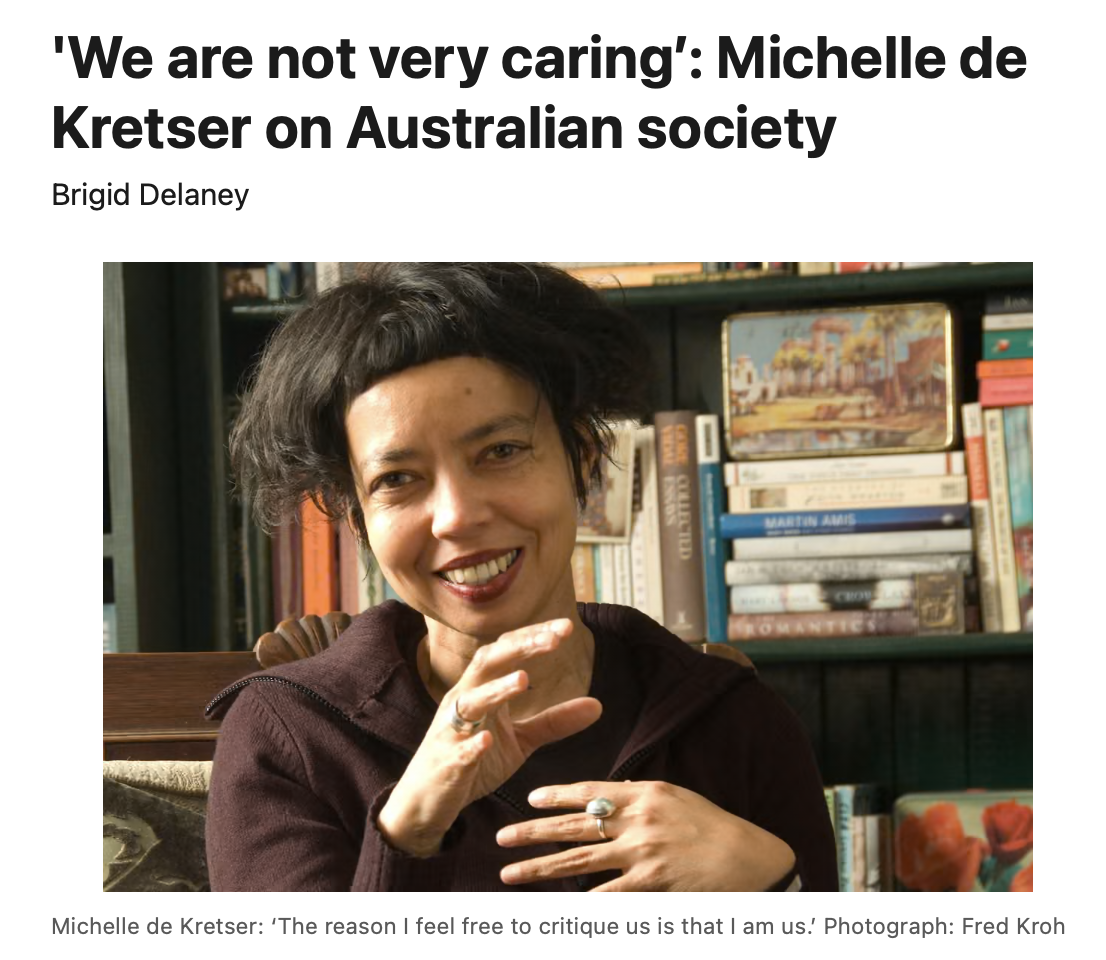
De Kretser, a Miles Franklin-winner, was born in Sri Lanka, raised in Melbourne, spent time studying in Paris and is now based in Sydney. Her book is a big, juicy, enjoyable novel that has plenty of humour – but it is the almost satirical observations about Australia and this particular moment that really stick. After all, it’s usually Australia’s chattering classes that do the critiquing; it is more unusual for them to be the subject of such a sharp and nuanced portrait.
Take one moment from the book, for instance, when Celeste’s French mother explains Australians to her:
“Australians are hard-working and very successful. They are suspicious of their success and resent it. They are winners who prefer to see themselves as victims. Their national hero, Ned Kelly, was a violent criminal — they take this as proof of their egalitarianism. They worship money, of course.”
In another scene, Celeste asks her mother, “Why do Australians always go on about food?”
“Because they live in a country of no importance.” (Guardian, 2017)
When I meet de Kretser in a (warm) café in Sydney’s inner west, she is keen to talk politics. Manus Island and abandoned refugees have been in the news all week and she’s appalled, particularly at the Labor party, which she says has not provided opposition to offshore detention.
“We are not very caring as a society – although there are plenty of caring individuals – and part of this is that Labor has just really given up on a lot of its responsibilities.”
She is cheered by the recent success of Jeremy Corbyn in the UK, and thinks a radical realignment of values is necessary if our society is to get back on track.
“The world has embraced neoliberal politics. Since the collapse of the Soviet union, there has been a move away from leftist politics, which is being seen as loser politics – all those old social justice things such as free education and universal health care.”
Although The Life to Come is not a political novel, it is a book that captures the political, social and economic zeitgeist. The beautifully drawn and complex characters are all creatures of the time.
“I’m not writing directly about Australia and its politics, but I am interested in self and the bigger picture,” says de Kretser, who moved to Australia in 1972 when she was 14.
The book deals with racism in Australia, too – but the sort you might find from someone on the left, who would be shocked at being labeled racist at all.
“It’s not the overt racism of someone abusing a woman in a hijab on a train. With those people we can see their workings very clearly,” de Kretser says. “But there are a whole lot of people – progressive, lefty people – people who generally see themselves as a good people, who will display tolerance and paternalism thinking they are not racist.
“They expect, for example, that refugees or migrants show a certain gratitude. It’s a subtle undercurrent [of racism], but it’s there.”
To truly banish racism, she says, “the tone – in a workplace, a family, an institution – must be set from the top.”
The Life to Come is set during Australia’s boom. Mining money is funding mega mansions in Perth, with parents’ retreats and swimming pools. There’s money left over for frequent overseas holidays and lavish restaurant meals; even the writers are rich.
“One of the problems with Australians having so much money is they don’t have a memory of what it is like to go without. What is taken for granted now was once considered luxurious, even excessive,” says de Kretser.
And it is this over-the-top materialism and the lush experiences that form fodder for the social media feeds of de Kretser’s characters. That, and virtue signalling.
“Curating of the self – people do it all the time in the real world as well,” de Kretser says. She goes into faux-gushing mode, mimicking a tweet: “Oh gosh – aren’t I lucky to have won this award. So humbled! So blessed!”
Michelle De Kretser - Awards, Prizes and Recongintion
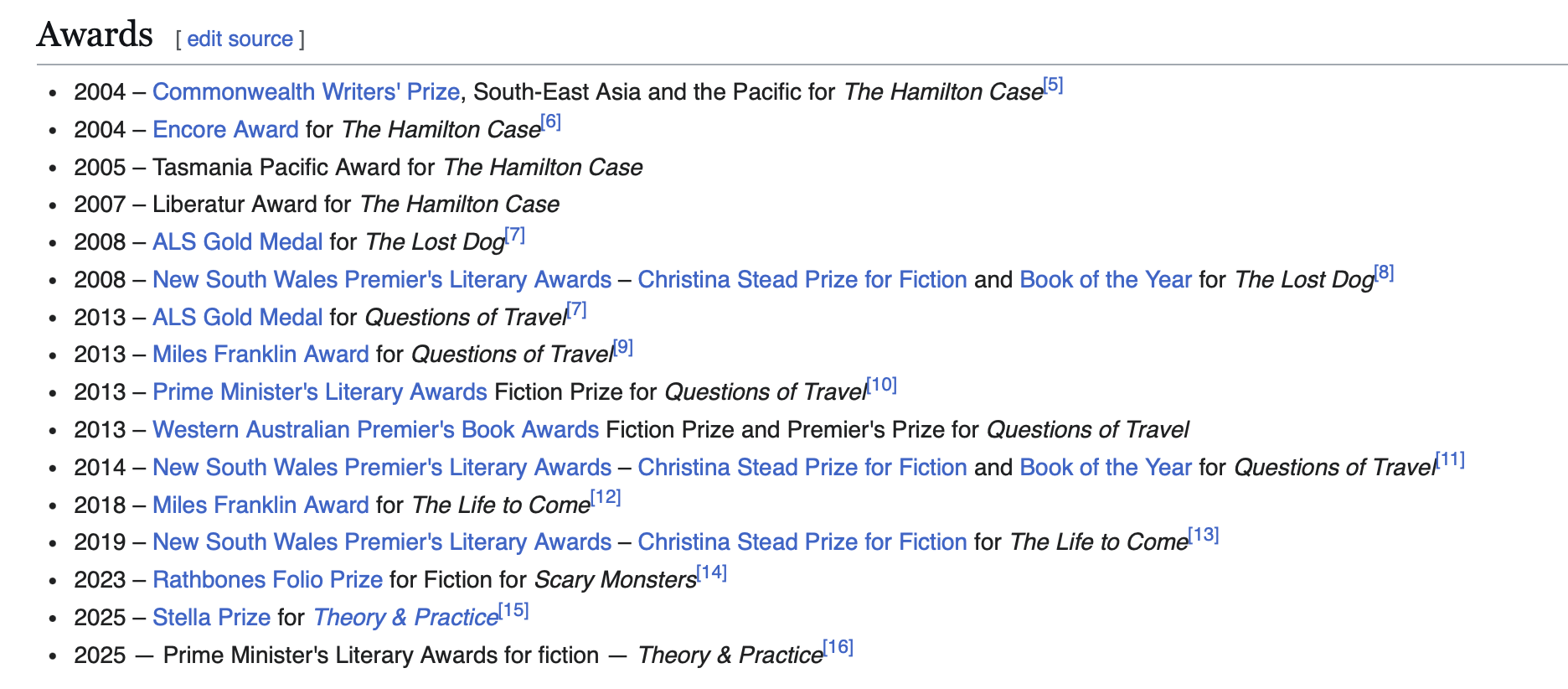
Figure - Source Wikipedia


